1527: Author Success Secrets: Publish and Promote Your Book Effectively with Publishing Strategist Pharice Brown
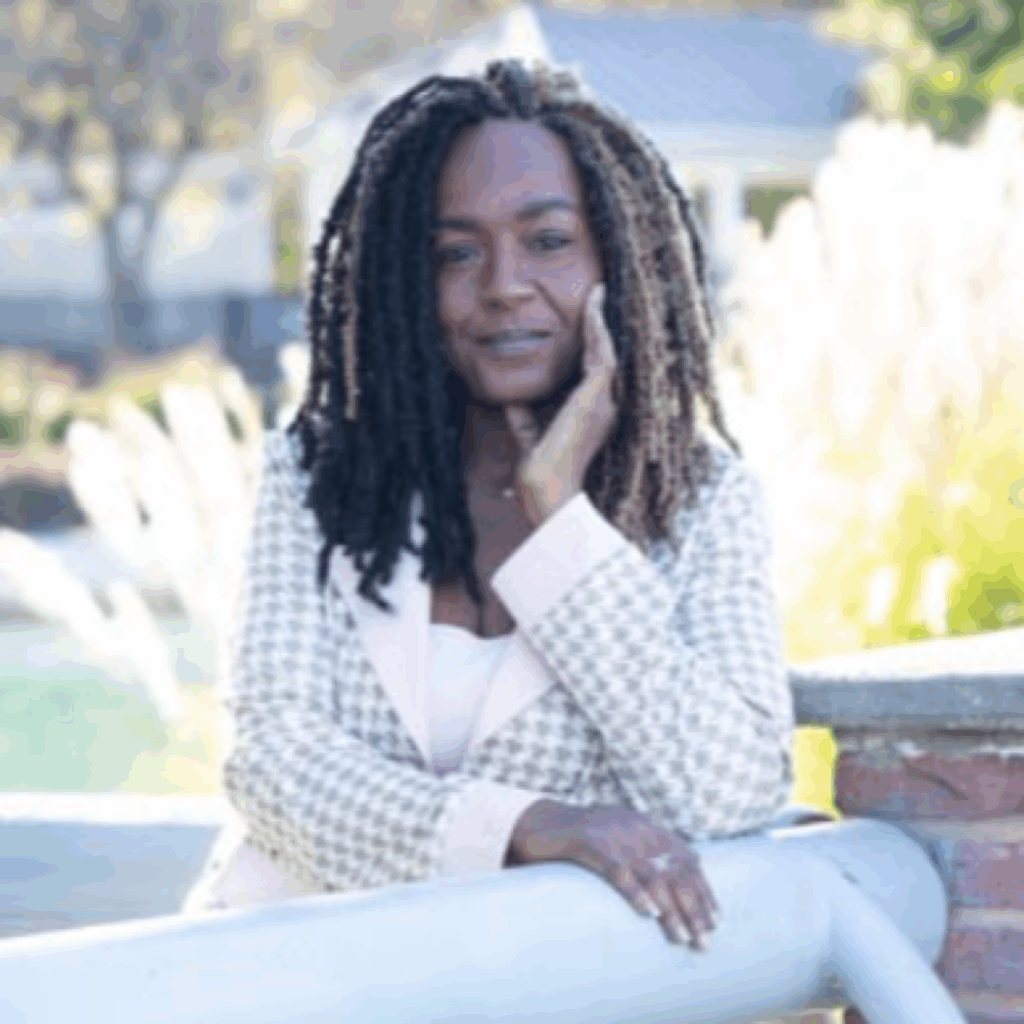
Pharice Brown covers Author Visibility Playbook in this Marketer of the Day episode. Pharice Brown shows how authors turn lived experience into a book that expands influence and opportunity. She uses quick, pointed questions to choose a lane: memoir, or expertise that supports coaching and speaking. Her rule is start marketing before the manuscript is done, picking one channel and posting consistently. Self publishing means you handle everything, but with her team the timeline is usually six to nine months, up to 12 for technical books. She insists on quality and asks writers to accept edits without clinging to every word. To sell, she says do something fun and visible, from podcast interviews to a shirt with a scannable barcode, and she cites a novelette finished in 13 weeks.
Pharice Brown is a literary activist, book publisher, and founder of Pain 2 Prosperity Publishing, a platform dedicated to amplifying powerful Black and Brown voices too often overlooked in mainstream publishing. Leveraging her background in corporate strategy and her passion for professional and personal storytelling, Pharice has created a company focused on legacy, impact, and authentic representation. She helps future authors overcome doubt, discover their stories, and navigate the publishing process to create works that resonate and inspire.
In this episode of Marketer of the Day, Robert Plank sits down with Pharice Brown to discuss the journey from corporate boardrooms to literary entrepreneurship. Pharice shares how everyone has a story worth telling, why personal experiences and professional expertise both deserve an audience, and the importance of visibility and marketing in the publishing journey. They dig deep into the biggest challenges authors face, especially getting started, being open to feedback, and embracing creativity and fun through marketing. You’ll hear about overcoming imposter syndrome, strategies for finishing and launching a book, the differences between self-publishing and working with a publisher, and real-world success stories of new authors. Pharice offers practical advice, motivational support, and free 15-minute strategy calls to help aspiring writers take the first step.
Quotes:
“Everyone has a book inside them. The real question is how you choose to spend it and whether you’ll let it be read.”
“Your core idea doesn’t need to change, but your information might. Growth comes from being open enough to refine the message so it’s truly worth reading.”
“Write the book. Show up consistently. Have fun. Be creative and let the world decide its value.”
Resources:
Podcast: Play in new window | Download (Duration: 25:44 — 35.3MB) | Embed
Subscribe: Apple Podcasts | Spotify | Amazon Music | iHeartRadio | Podchaser | RSS
Transcript
Download transcript (.txt)Maurice brown leapt from boardrooms of fortune 500 giants to founding pain to prosperity. Publishing, they are a platform amplifying powerful black and brown voices that are too often overlooked, and today she turns corporate strategy into literary activism, transforming pain into global influence. I'm Robert plank. We're here on the marketer of the day podcast. We're brought to you by D FY podcast.com we handle the podcast back and so you can focus on the story. And we are hopefully, ideally, going to hear about many stories today, right about fares's story and some of these authors that she's helped. So if you are the kind of person that says, I've wanted to be an author, I want my story to get out. But I need something different. I need someone who is a storyteller, marketer, promoter. This might be the most important podcast you ever listen to. So Miss Faris Brown, painting to prosperity, publishing. How are you? I'm great. How are you, I'm fabulous. Now that I'm talking to you, and it's always exciting talking about authors and publishing and books, it kind of takes something that a lot of people dread, right? It's really a dull subject at first, when you think, Oh, I have to, like, spell check and format pages. But then you get it out there. You get a little bit outside of your comfort zone. You get known. It's your legacy. It's your immortality. You change people's lives. You help people out. You You know. You change moons. You teach. Putting out a book is a wonderful thing, becoming an author. And so what do you have to say about this? If someone is maybe on the brink, on the fence, and they're the type of person whose attention you want to get. Who are your people? What do you have to say to them?
Well, we can go either way with our people. We can either go the story route. If you've lived on this planet for at least 24 hours, you have a story of some kind from somewhere that's interesting to more than just you. And then if you want to also talk about professional influence, we also want to help individuals who have businesses and who have careers and career paths that they're looking for long term legacy money, as far as being able to stand on stages and just put back into the community, what they've actually learned, whatever their profession is it Real Estate or marketing. So whatever it is that their specialty is, either way, we can go with it. We can got a book,
very nice. So there's the because you've done this, you've seen this. There are the people out there that perhaps they have the imposter syndrome they saw. Oh, what do I have to say about a book? I've never climbed Mount Everest, but you say, hey, you've got some things that can help some people out. And even the other day, I interviewed a guy, and he spent 40 years working in like manufacturing plants, doing like plastics and silicone and like in the Middle East and in Mexico. And he just had all these little adventures and met all kinds of interesting people and learned things that he could then pass on to others. And it's it's like, hey, even if we think we've lived a so called boring life, you're saying that it's not boring to many people.
It isn't we go to the movies and we pay how much to sit in a movie theater and watch somebody else's idea fly across the screen. We have Netflix. We have Hulu. So we already sitting and watching somebody's dream come true. We're supporting them. So why not do your own and even if you don't think your story is worth telling, they didn't think the same thing either, but they're telling it, and we're sitting here watching it, so that already kills all of the myths, and that's why I love doing what I do, because no matter if it's, oh, my life is too personal. I don't really want to talk about it. I don't want to put that out there. Okay, well, what do you do for a living? Oh, well, I've been in this industry for 20 years. Okay, so what type of education did it take, or what sacrifice? Everybody has a book, everybody has a book, and it's just a matter of how you want to spend it. And if you do have one of those personal stories where you don't really want to do and tell and based on a true story path. Look, I I'm marketing too. I got a way for you to sell a book, but that's the thing, though. Also the biggest challenge that I absolutely have to speak about is the fact that the authors wait until the book is already written. You have to be doing the things, all of the things, whatever they are for you, because everybody's path to having their book visibility is different, but you have to do something. And in the age of social media, it's easy, plug up your phone, pull out your phone, pull out your laptop. It's easy get it in front of Instagram, YouTube, whatever, and just let them tell you what they want to see and give them what they want.
Yeah, what a concept, right, simplicity. And so when people come to you to get this help, and you know, they say, Well, I've got all these 32 and a half different excuses, and you say, hey, here. Is some possibilities. Here's what we can get done. What is the usual starting point? Are they? Do they have some, like, rough materials written? Are they starting from scratch? What does a person usually have so far when they come to you?
A lot of the times, they just come to me with, I don't know what I want to write about, so just like I'm doing with you. I sit and I ask them a whole bunch of questions, and I give them options. It's all about options. Just like I said, Hey, you want to write a personal but you don't really want to do a memoir based on a true story. You can put all your business out there. It's based on a true story. Nobody has to validate this information, but you know that it's in there. And then to let's just say that you're coming up on retirement age, and you don't really want to do the nine to five anymore, but you've worked in a professional industry, or you've done something with yourself for the last 1015, 20 years. Put it in a book now you become a coach, a consultant, a speaker. Your career has ended in that area, but it has now moved on to something else. So at the end of the day, it brings time, freedom, space, freedom, location, freedom, whatever it is that you're looking for, having a book will help you get there. So I like the options.
Oh yeah, we all do that's exciting and and it's like, maybe if you had a career, you had these decades, maybe you felt like you didn't have many options. But when you get to that scary retirement age, well it's time to figure a few more things out, right? Trying to figure out that your legacy and mentoring the next generation. And I mean, as you're on podcast and you do content, you do YouTube, there's a lot of repetition, isn't there? And if you put it in a book, you can always reference back and say, even though I'm posting and have new things to say, here's the core, here's the bedrock, here's my main ideas and story right here in this book. And so you Yeah, some people say, Okay, well, I don't know exactly what to write about. And you figure out, Is it based on a true story or about your career, or is it leading to speaking or something else? What's the timeline like? Because many times people dread, well, will this take years? Will this be a big chunk of my life? And so what is that process like, going to getting the book written and developed?
Okay, so there's difference, lots of differences, but I'm just going to talk about the main two, self publishing. And working with us, self publishing is going to take you as long as it takes, because there's no real accountability to make sure that you're doing all of the things, but you're responsible for everything, cover design, editing, the everything. There's no part of this book that you don't touch working with us when you come to us with or without a manuscript six to nine months, depending on the topic. Now, if it's a technical or it's something a little more in depth, 12 months at the most, but information is dated. You can't really take 512, 1520, years to write a book, because by the time it comes out that information is no longer relevant, it's not valid. And I'm not saying that stories are the same way, but the way we go about telling stories, you can kind of tell around about the year that a story was written or told based on the language and how they describe things and the way that they they set up the scenery. So you know when things and sometimes it works, and sometimes it doesn't like black and white. Movies work for some things, but some things that doesn't really fit. So you have to really know when the market is hot for you to do what it is that you need to do, and when that thought comes to your mind, that's when it's hot, okay?
And, and so you know when, when there's like so many books out there, right, whenever I look up the numbers, it's overwhelming, where, like every day, every year, there's just like so many and so there's this need to to maybe stand up from the crowd so much, or at least with the right people. And what you see, like little tidbits of some people seem to know what they're doing and go about this the right way, and others not so much. And so when you hear about people that they they really have this attention to detail, or they say, Well, I know who my book is for, or I know what the book will get me right. Like, perhaps it will get me like clients or speaking gigs or things like that. Like, what do you see? Is there anything in particular that maybe drives you crazy about the do's and don'ts of putting out a book correctly?
The main one is, you're the publisher. You do everything. I write the manuscript and give it to you, and I don't do anything else, and you make me rich. I don't I don't know how to do that. I mean, I don't know how to do that. My role is to get eyes on the work that you have done. I help you look good. My job is to make your creation the most beautiful creation. In the world that everybody has to see it, has to have it and wants it. So you have to come to me with some sort of quality. You have to give me something to work with, or be able to be worked with. Because there's a lot of authors that are married to their idea. And I understand this is your book, and I understand this is your baby, but a lot of times when you're critiquing them, even with the best intentions, this is professional. It's no no feelings involved. This is strictly business. But when you explain certain things to them, no matter how gentle you give it to them, it's like you told them their newborn was ugly. So you got to kind of be open to the idea of understanding that some of your information is going to have to change. We're not going to change your idea. We're not going to change your concept. But that grammar or that vocabulary or the background, there are certain things that need to be addressed to make sure that it's worth reading. Because there have been some manuscripts books I didn't really make it through the first couple of pages and flipping through to kind of see if this is a manuscript that we want to pick up and read, No, and then when we had the conversation with the author, no, this is mine. No, I don't want to change it. I understand that. But you came to us for professional input, and we're giving you our professional input. You have to be open to the idea not saying that. You have to accept them, but be open.
Yeah, be open, be flexible. And I can understand how that's a little bit of a difficult situation for you, right? Because you have this author, and maybe if they are being difficult and not willing to change enough, and you say, well, we could go with with what, what you want, but it's based on your experience, like, it's going to be uphill battle, right? It won't sell. Versus you change a few of these things, and that's a better chance of success. And it can, I can. It seems like it's perhaps a little bit of a delicate situation, right? Because there's emotions and Ego involved. And who knows how many years they've had this vision in their head that maybe just needs to be changed somewhat to get to this success. And as you and I spoke about in the minutes before we hit record, there's this idea that, like, the authors really need to get out there, right, and you really need to promote. And I'm always, I feel like, I'm always, like, looking to get inspired in that way. Because there are a few authors I know who are always posting, like, they're going to this networking event, they're doing that speaking, they're doing that podcast. And I really like seeing that. And I'm thinking, like, cool, they're not just resting on their laurels. They're saying, hey, like, this book opens doors for me, but I also open doors to get the book sold. It's kind of like a cyclical loop, but you tell me, is there any sort of like best practices or advice for authors to make sure that they like, stay relevant and keep selling books,
do something. My best advice is to do something. I'm not saying that speaking engagements for everybody. I'm not saying that podcasts are for everybody, but there is something that is for you, and you have to figure out what it is and do it consistently, like this podcast. We could repurpose this. This could be used for so many different things. This could be used as a teaching tool. This could be used for a consultation tool. This can be used for so many different reasons, but I really think that when we talk about authors and selling books, I think the biggest issue is they forget to have fun. This is supposed to be a fun process. I don't care what kind of book it is. Isn't it fun seeing your name on the cover of that book after it took you 12 million years of pain to go through it in order to be able to have this story, and it took you all that it is so much sacrifice and love that went into this book. Why don't you want to tell every get the get it printed on the front of a shirt. I've seen some authors that had the book cover printed on the front of their shirt. So as they're walking around and they're out about in public, people are looking at them and they're asking, like, Oh yeah, I'm the author you want to see. And the coolest thing ever, I saw this author walking around with just a barcode in the back of his shirt. And you should have seen people just scanning it, just to see what it was. I didn't know what he was, but I scanned the back of his shirt. But creativity, have fun with it. It's marketing. Just because you have a book out does not mean that you can't do different things, like I've seen some authors that actually do skits and readings from their book. One that I saw, I can't really remember who did it, but it was about cookies, and it was quite interesting. So it really just depends, like, Be creative, have fun. Don't lose the joy and the love and the reason why you did it. It's more than just money. It has to be more than just money, even if it's because you went through so much pain. And now this is you use this as a tool for therapy, for other people. Cool, be creative. Be creative.
I like it. Be creative and have fun, because that's what it's all about, right? And it's like, Well, life isn't 100% about having fun, but you have to have a healthy amount of it, right? Sure, you have to have hard work and goals and persistence, perseverance, but fun has to factor in with that, and you're saying, Have fun and be consistent. Just do something. And there's really no excuse anymore. Is there, especially with AI and chat GBT, you can ask it, hey, well, I'm an author and pain to prosperity publishing. Put out my book, and I need to know what I could be consistent. It can give you a list of ideas. And if it says post reels on Tiktok. You can ask it, how do I get that done? Right? If it's if it says, Well, you should look into book fairs and networking events, you can ask that and just figure out a plan and and stick with it and adjust a little bit and have fun throughout the process. And so it's been great talking about all the potential and possibilities with you, but I want to maybe ask you about the like, the story aspect of it, right? Because we've been talking about storytelling, but there's all these people that have gone through your publishing company. And is there anyone in particular you feel like mentioning about someone that came to you stuck, frustrated, and you really helped them out?
Yeah? Yes, let me think of one. Well, actually, let me just talk about something that's recently, that's that's going on right now, that I'm kind of excited to see how it's going to turn out. So we're working with a young lady by the name of China Monet, and she's currently working on her first novelette, and she started 13 weeks ago, and she actually completed her whole manuscript in 13 weeks. She tagged us on social media with different clips. She did readings from her book. She posted videos and reels on social media, and we've worked a lot of different ways to kind of fine tune her visibility to figure out what it is that she's comfortable doing. And now that we got her in her groove, she's doing really well. And then networking, we're talking about going to networking events. Networking, she's now been put in contact with another young lady who's working in marketing. She wants to get into the literary field, who's very familiar with different aspects of book publishing, and they're working together. So I kind of want to see, I'm, we're, I want to say maybe 60 days out from her having her manuscript edited. So from there, it should be, maybe February, her book should be released. Excited about that. But as far as other authors that have been successful on our platform, we have a paradigm values, which is our children's math book series. So math is a lot of our our weaknesses, but because of the way that this math book is put together, and it's so simple, even I understand the concepts on how to do the math, the new math is what they call it. Don't ask me. I don't understand it. I let the professionals speak, but by going through this book, I now at least understand the basics on how to perform the basic math of the new math, and I'm really loving the response that we're getting, and I'm hoping to have a little more along the lines of educational material coming in soon.
Oh, nice. So it's not just fiction or memoirs, it's also the nonfiction and the teaching and that new math. I might even make use of that, because I have a five year old, and I know it's just a couple of years away from the Common Core math, right, where you and I, when we went to school, we learned it the way it made sense. But now there's all kinds of weird steps, and I guess it's just like anything else, right? That the only constant is change. So we have to figure out that as well. But even as adults, have to get our heads around some of these new life skills. And if someone out there is has maybe read a book, or has seen the success that a book has created for others, maybe you kind of daydream a little fantasize and said, Well, why not me? I could do that as well, or perhaps do a better job in my own way. And so we've been talking about all these interesting, amazing ideas, but I want to make sure in these final minutes here, miss fariese brown that we talk about what's important to you. So do you think there might be a missing question in our conversation that I should be asking you? I just don't know what to ask you.
I wouldn't say that it's a question to ask me. I would just say that, in general, the one thing that I find myself saying 1000 times a day, write the book. Write the book. Let us determine whether it's good or not. You think that it's bad. Let us determine whether the book is bad or not. So for me, I would dare say that I really want to be that motivated. Conversational piece for anybody who's on the fence about writing the book, or they're still thinking about it, or, you know, somebody told me I should have wrote that. It doesn't even have to be super long. It could be a series. It could be a series of little short books. Get it written, start the process. We are always here to coach you through because we understand sometimes traditional publishing may not be for everybody, but if you already have that book written, but you're kind of stalled for ideas, we're here if you just looking for that motivation, where you can go on LinkedIn and you can book an appointment with me, where I'll help walk you through this is an idea of a possibility that you could actually write your book on are you interested in this, this or this? We're here to help you be successful. All of the gatekeeping and the information that was once kept away from us, I'm going to give it to you. I have limited spaces. I do 15 minute strategy calls where, just like you and I are having this conversation to help you get to the root of what your book could possibly be about, and from there help you move on to whether you want to be self published, whether you want to come to us, or whether you want to find another traditional publishing house. We're not going to stifle you. I'm going to tell you everything that you need to know, and it's going to be up to you to be able to execute it.
Very nice. So you love what you do and you help people out, and you're all about those that problem solving. And so if someone says, Man, this lady sounds like the exact person that I need to talk to. I've been trying to do this on my own or trying to piece things together, and it would really help to have a real excited, dedicated professional who knows this book publishing business to help me out. And if that's the kind of person that's listening right now, where should they go? What should they do?
Visit pain the number two, prosperity publishing.com or you can find us pain to prosperity publishing on Instagram, Facebook and LinkedIn.
Very great. So that is pain number two, prosperity publishing.com they are a dedicated publishing company focused on bringing compelling stories to life. They nurture authors. They provide support to share your unique voice effectively. They amplify underrepresented voices and transform powerful stories into legacies. They are founded on a passion for diversity. They prioritize authenticity and inclusivity, reflecting their mission to turn pain into prosperity for every author. And it can be painful writing the book and figuring out that editing and what it can lead to. But heck, once it's done, that's where the magic happens, right? That's where you can get other people enjoying reading, benefiting from your book. And that's a place where you want to go, because life is short, and if you have been procrastinating and giving yourself excuses, why? Maybe next year I'll work on the book. Well, maybe start now, because it's not even an instant process and get this meeting scheduled, talk to miss for Reese Brown, that website is pain number two, prosperity, publishing calm. And she says you can also find them on Instagram and LinkedIn and those sorts of social places where hopefully you as an author, might also be posting and getting attention on your book, once you have the marketing machine up and running. And so pain number two, prosperity publishing.com and as we're headed there, it's time for the scary part of the podcast. Miss for East Brown, where I tried to stump you. I tried to put you on the spot by asking about a fun or interesting quote or lesson that has served you. So what comes to mind as far as a fun or interesting quote or lesson,
the interesting lesson, I don't really want to say, but it's always something embarrassing, always being out in public, the thing for me is learning how to do my elevator pitch. I remember being in the elevator one time and having a conversation with a young lady who told me that she was in it, and understanding very little about it. Being very young in the business, I'm acting like I understand what she's saying, and I'm like, okay, okay, okay, had no idea what she was. The lesson that I learned in that don't be ashamed to tell people that you have no idea what's going on. It's not embarrassing, especially when it's about their business. Oh, they will make sure that you're thoroughly understood by the time they're finished talking. So my embarrassing moment would be just going along with the program and not really knowing what's going on. But now that I'm older and a little more seasoned in the business, I understand sometimes it's okay to stop and ask questions. You don't have to know everything.
Yeah, that's what the AI and the computer and the cloud and the experts and the networking is for. They can know, and you can stay in your lane, your zone of genius. So don't be afraid to get clarification and say, I don't understand what's going on. On. Can you explain it to me, and especially if you've been trying to forge ahead with this whole book publishing thing and you need some help, it's okay to ask for help from fares Brown and pain to prosperity publishing.com so go there right now. Book that meeting, have that conversation, figure out where you're stuck and where you can get unstuck with the help of Faris and her team so farice, it's been quite a blast speaking with you and talking about all kinds of amazing adventures and stories. Thanks for being here. Thanks for being you.
Thank you for the invite. Thank you. Thank you. All right.
Subscribe
If you enjoyed this article, subscribe to receive more just like it.


