Published Last updated
Read Lori Payne’s bio and speaker profile →
View in Podcast Library: stories, quotes, books, and resources in one place.
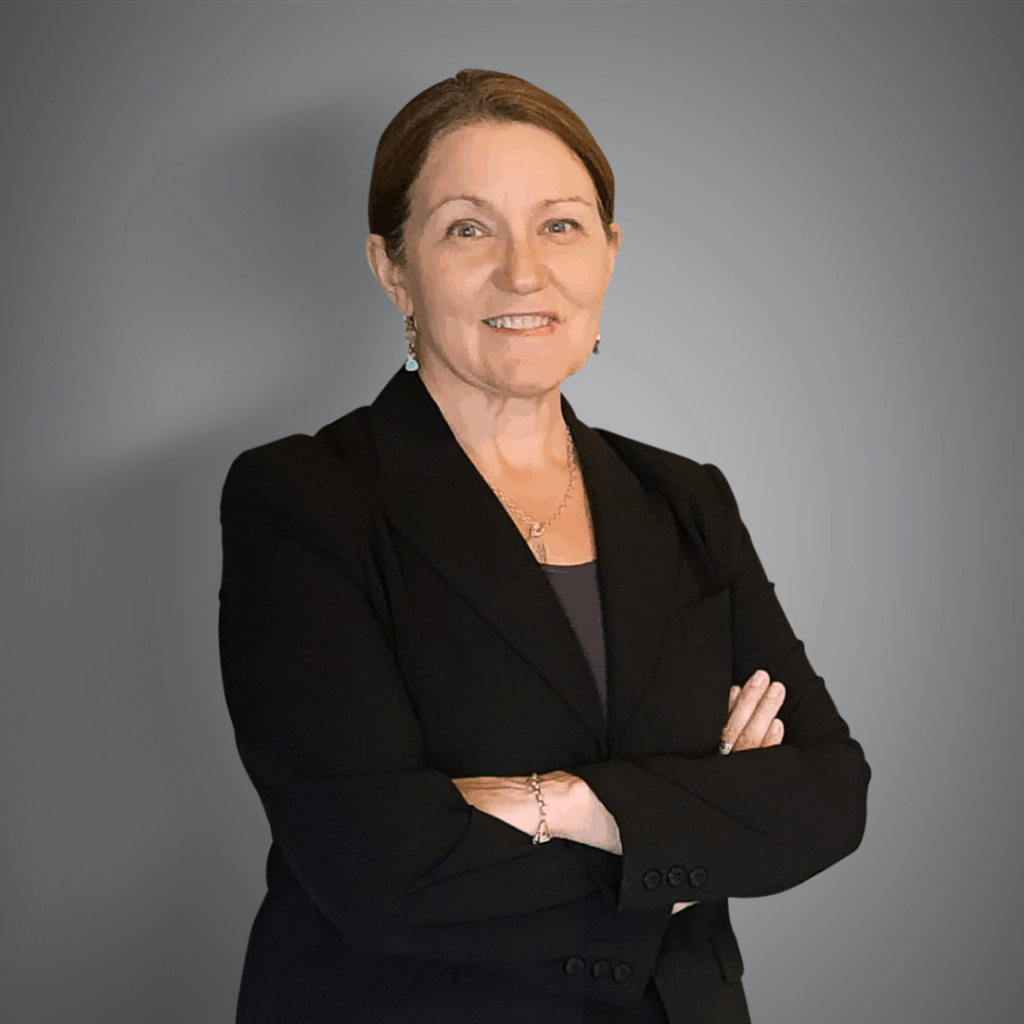
Lori Payne covers Climate Solutions Playbook in this Marketer of the Day episode. Lori Payne explains how communities can reach net zero while improving day to day quality of life. Her approach starts with the Paris Agreement mindset: 197 nations aligned on common targets and shared accountability. Project Blue World uses a Blue Zone lens on longevity and happiness, then maps local energy assets like Manitoba's hydro grid to real needs from border towns to Churchill. Measurement comes next via deployable sensors that track carbon and other atmospheric toxins so leaders can adjust behavior quickly. For hard-to-electrify sectors, she focuses on fuel switching: running gas turbines and turboprop aviation on biofuels and biomethane while manufacturing and distribution scale up. She also treats data centers as infrastructure, capturing waste heat to warm communities and create jobs instead of strain the grid.
Lori Payne is a visionary leader, consultant, and founder of Project Blue World. Driven by the Blue Zone theory of longevity and happiness, she spearheads global initiatives from Winnipeg to foster quality of life, sustainable energy, and community development. Through international collaboration, Project Blue World empowers citizens and leaders alike to create positive, lasting change locally and worldwide.
In this episode of Marketer of the Day, Lori Payne discusses Project Blue World’s mission, the science and inspiration behind Blue Zones, and strategies for linking happiness, longevity, and sustainability. Lori shares insights from energy transformation projects in Manitoba and beyond, including innovative uses of hydro and biofuels, global partnerships, and the critical need for clarity in information. She highlights community-driven initiatives, avenues for direct involvement, and how anyone can contribute to a healthier planet while achieving growth and development goals.
Quotes:
“Project Blue World is about changing the world, project by project, country by country, so every citizen can achieve happiness and quality of life.”
“We have the brains and technology, and the global commitment, to maintain our planet’s atmosphere and ensure future generations thrive.”
“There’s so much being done behind the scenes. When knowledge is shared, and collaboration happens, communities and leaders can create real impact.”
Resources:
Podcast: Play in new window | Download (Duration: 32:23 — 44.5MB) | Embed
Subscribe: Apple Podcasts | Spotify | Amazon Music | iHeartRadio | Podchaser | RSS
Transcript
Download transcript (.txt)From engineering gas turbines that power aircraft and cities to now leading a global movement toward net zero and sustainable prosperity. She is the strategist turning systems thinking into world scale impact. It's Laurie Payne, the President and CEO of Project Blue World, architect of the roadmap to a Blue World, and a veteran of aerospace quality systems and transformational leadership. We're here on the marketer of the day podcast with Robert plank, brought to you by D FY podcast.com we handle the podcast back in editing, publishing and promotion, so you can focus on the interview and grow your audience. And the growth that Miss Laurie Payne is up to these days is literally changing the world, getting to net zero, improving the quality of life for everyone, and being more efficient and and saving the world the planet, because we only have one. So Miss Lori Payne, how are you? Wow.
I'm overwhelmed with that great introduction. Thanks, Robert. It's so great to be here. Yeah, we are changing the world. We say, project by project, country by country, till every citizen is able to achieve happiness and quality of life based on what we've been able to accomplish from Winnipeg and other blue zones around the world that we can we can talk some more about that Blue Zone theory and why we developed Project Blue World, the theory of longevity and happiness, quality of life that some zones in the world have managed to achieve. We think, yes, everyone on the planet can access opportunities now that it's 2025 oh, no, we're now 2026 Yeah, even further access 2022 to bring everyone network and connecting together. Now it's 2026 2030 is right there, and so is 2050 so we're broadcasting continually from Winnipeg, Manitoba, Canada. We're like a central hub up here that's been serving aerospace, defense contracts, trade and commerce ever since Winnipeg has been here because of our logistical central point. Our waterways provide ways for people to migrate and move back and forth for centuries, right? So we're just that hub right in the middle of North America with only about a million citizens in all of Manitoba. So we're a small but very powerful community, is what we are here in Winnipeg. Thanks Robert for having me. What else?
Yeah, and I mean, you talk about being overwhelmed. I'm overwhelmed every time I see you, because we're in the same Monday mastermind, and you're talking about, like, solar powered electrical planes that fly to and from solar powered airports. And I look at Winnipeg on a map right now, and it's, it's like, there's all these, like, lakes and rivers around her, right? So I can see where, how it can be a hub of sorts. But I know I've heard of it, but I wouldn't have been able to identify otherwise on a map. And I know that, like, at least in America, there's so much just weird, like disinformation put out by the average uneducated person, right? About batteries, about windmills, about cars and public transportation. I'm like, Man, I need to get better educated about from the source, about what's possible now, what's happening in the future, the cost effectiveness, the kind of mission towards it. And so you tell me, like, is there anything that you think is maybe, like, misunderstood about? There you have this blue zone thing. There's the fight against climate change, like, what do you think just needs attention right now
that we have the answers? Because, yeah, very powerful nations that have been working together for so many years. At my desk here, I have a copy of the Paris agreement from 2016 which is where I think there was 197 nations at that time came together to say, we're all going to work on this together. Guys, I've been working with an environmental consultant out of Brazil who's been working with the UN for 35 years, Mr. Arnold. He's our CO partner founder with the global development project, actually, as well. So when he brings me news that says, Oh, over here in Germany, we're doing this, and down in Brazil, we're doing that, and we have studied the rain forest. We've worked on a rain forest carbon mitigation project together. Four years ago, we started doing that. We built sensors that we can place around the world to measure carbon and other toxins in the atmosphere. So we can all go, gee, that's not the right behavior. Let's adjust our behavior. And then all the world's industry leaders are leading you see Mister Musk with the electric cars. You see Mister Schwarzenegger putting solar on the houses. Here in Manitoba, we get more hours of sunlight than almost anywhere on the planet. Most folks don't know that it's very bright and sunny here, but because of our long, cold winters, solar is not really our best option. I'm working in a hydro energy planning project right now for the whole province, and we know that we're going to be using our main grids. We're hydro here you see the lakes and rivers. So we we use that for power, mainly in Manitoba, but we're also integrating gas turbines, but and using biofuels and bio methane natural gas to power those instead of carbon offsetting or carbon emitting fuels. So it's lots of complex language all the fuels and how we're transferring it over. But you've got people from all different sectors around the world putting the the ideas together about how to how to roll it out, and Manitoba has their plan drafted for how we're powering communities from the American border all the way to Churchill, which is on the Hudson's Bay, which is also a major port, and we're opening up that port up into the northern seaways. There's just so much going on in the north right now, and how to power it all is very key, and we've been working on that here for years. So bringing those types of projects to the forefront is what Project Blue World is do. Is doing from our website, we broadcast come watch this project so everyone can see these success stories and then implement in their communities as well.
So are you saying that that maybe it's it's helpful just to get this, this continuous stream of education. So that way we get more used to it, like you're making me think that there's at least where I'm at I went, I drove by my old elementary school, grammar school, like, a few weeks ago, and there were these, those huge, like, solar panels that they put over parking lots, where, like, it gives you shade, but it also, like, these huge, massive structures. But it's like, it's unused space anyway, because the cars just parked there. And I think that there's more and more cars, especially the last five years, that drive past me almost silently. I'm like, I used to be,
yeah, the bell on the mall. And thinking the same with the water vehicles. We live in water here, north of Winnipeg, and there's sea doos and boats, and they roar around. You hear that sound? If you're in the water, they're suddenly all silent. Have to put a bell on them, or a buzzer system or something to warn everybody that it's coming. But yeah, it'll be a combination of batteries and fuel. So a lot of hybrid, especially in the north, we need fuel, and batteries don't work so well in the cold, right?
So, but, but, yeah, but there's, there's like, I used to be surprised seeing like a cyber truck or a rivian or something, but now it's like, I assume that at some point it will be weird to see a gasoline powered car, when the electrical will be the norm. And then, you know, you hear a lot of scary numbers and statistics about the data centers, right? They say, like, AI is just like gobbling up all the electricity, and it's so wasteful. And like, how does that development balance against what you're doing?
Was just talking to a fellow that works on the data centers out of Belgium. I phoned him to ask him about it, because we're looking at how those data centers will impact in Manitoba, as well as part of our energy distribution. We recognize we need them. And there's great models where we're using data centers to heat communities. So what you do is you pull the residual power off of it, and then it also gives local people a great job opportunity in areas where there might not be a job opportunity. So you have to fit it in to the whole ecosystem of the whole community, right? So you make sure it doesn't impact the community, but it provides the community some benefit. That's what we're weighing up here. And just designing the whole province, you need to have your political leaders working with the industry leaders. So that's what we're doing a lot from Project Blue World is networking. We're providing live streams and broadcasts just like you're doing with your podcast here. So this is one of our vehicles to get the information out. Is, know, the UN's been working for a really long time. Know, the aerospace community has been working on this. I've been working on carbon mitigation myself 20 years, sitting at my desk in Winnipeg putting gas turbine engines through the shop that we're trying to streamline them so they're not emitting but you could, you have to change the fuel out. That's what you have to do with those. Or you change the fuel of all the other transportation equipment, and then you can still run the gas turbines. I'm talking about run the turboprop aircraft. So any of the small regional jet centers, all your executive jets, all your medevacs, anything with the turbo prop on it is going to be a gas turbine emitting engine. So yeah, they've been looking we mentioned the. About the aircraft that's flying up and down the coast. It's flying off the coast of Vancouver harbor. Air they have an electric aircraft, but it's all batteries. It's the pilot and an airplane full of batteries. You can see how the weight of the battery just isn't working. So the whole aviation marketplace is looking at converting to biofuels, and it's doable, but you have to change over the whole distribution network. We have to build manufacturers. So yeah, Canada and in the US, I'm sure, as well, Brazil, Germany, all these countries are working on manufacturing and building manufacturing plants, integrating that into the forest preservation so we can make sure. So the key we have to maintain the Earth's atmosphere temperature to 1.5 degrees within pre industrial times. So that's 1850 to 1900 is that that time before we started polluting with our carbon emissions, right? We need to maintain the atmosphere to that temperature, and we can do that by growing our forests, reducing our emissions, managing well, protecting our environment. And we're we have the brains and technology and the amount of countries we need working together to be able to accomplish that. I'm confident of that because I watch the markers and work with folks that are going back and forth around the world, talking to the other country leaders. So I bring the information to the world. Is my role, pass like this and doing upcoming webinars and things like that. Nice.
So, so educating us, right? Learning is good, and so is communicating and having a plan and hard work, and what you're sharing with us is reassuring, because you're saying that there are solutions. We have been working on solutions and not just theory, not just plans. There's things that are happening every day and and you just have to look for the good, right? Or turn a bad into a good. Like there's, you always hear stories about, like people that do like the drones, that'll plant a whole forest, right? They'll like, shoot a million seeds down from the drones in these inaccessible areas. And like, amazing things are happening. But is there anything that currently frustrates you? Is there any kind of aspect of this that maybe you feel stalled or blocked
the information to the citizens. Part of reaching out to the world's leaders, I reach out to my mayors and my local political people, and I'm explaining to them this is a nice report that's gone out with the names of all the incredible individuals it's gone to. And when they're they're publishing and sharing information to the local people. There's just not enough information. It's not very clear and concise. Up here in Canada, folks are all complaining about the carbon programs. They don't understand the new network that the United Nations has developed at all. It's we don't understand how the organized the the rich countries are going to start helping the poor, poorer countries, so that everyone can play in the same marketplace, and that's through the money that's going to come from the large corporations, through their purchasing other offsets to these projects. So there's just not enough information coming out, I guess is what I can say. My frustration point is. So hence the project global, the global development project from Project Blue World, is to develop curriculum to interpret the United Nations intent and the intent of the Paris Agreement. I never thought I'd say that to the world that, oh, I'm here to carry out the intent of the Paris Agreement. But here I am. And I think because I've worked with like, defense level contracts and militaries and governments my whole life, and a lot of that is sitting around a big boardroom table with a whole bunch of brass that just needs it explained to them short and sweet. So that's why I've ended up in this seat. I think so it's an honor and also overwhelming at the same time, but I know I have the strength of my network, working with yourself and Mitchell levy out of the credibility nation, we joined that network specifically to learn how to reach your audiences, growing and learning with you each week when we attend that Monday meeting with the accountability Mondays,
and we're all learning, aren't we? And you mentioned something that's, I think, really the most important it's ever been in human history is like compacting the information, right? Like distilling the most important pieces. Because, man, when you look at how exponentially the data of humanity is put out there, right? You look at like the past year and a half, and it's more new data than all of human history combined. It's so overwhelming. And you can, I mean, you could get lost in just an ocean of information about all this green energy and, you know, sustainability and all. This. And so it's like, well, what's important now? And I'm short on attention span and time, and how does it benefit me? It's all this kind of marketing stuff. And also, like, the like, the iterating of it, right? Like, you could say, I could info dump all these things about energy infrastructure on you, but you see what is important now, what gets attention and then you kind of re work your messaging and put it back out there, and at least that's what I value from networking. But what have you discovered with networking? Because sometimes people they don't value it, or they talk themselves out of it, or they self sabotage. And so what do you think people need to know about networking and why it works so well for you,
be consistent. That's what Mitchell would always preach at us, right? Be consistent and steady and participate. It's another thing he's always encouraging. So I've tried to do that on LinkedIn. I'm on Facebook, I keep those messaging systems right on my screen all day long, which makes it very busy as well. I think the whole population is struggling with bombardment of information. And I almost call it the like the year 2000 we all stood by and waited to see if all the world's networks were going to crash. That didn't happen. Now we're 25 years later, and I think there's been like slingshotting around the moon, all of us trying to figure out how to get online, what to participate in. How do we use social media? When are we using websites? It's been that all this noise just coming at us. Lot of shaming about, are you on too much? Aren't you on enough? Are you getting your eight hours people are just bombarded with information. So trying to maintain a steady balance is what I talk to people about most I would say, day to day to day, people are challenged with their with information overload. So I know with my network, I keep track of their names, I keep track of their faces. I make sure I keep them in my contact list. I have one contact list that we're emailing out with is 450 people that we've met over like the last few years. So I'm trying to be consistent with them, because I know most of them are struggling with being able to keep up with their email, keep up with their information. People are really challenged with the amount of accounts they have to have, amount of memberships they have to have. People are feeling flooded. Do you think? Do you agree with that? You think folks are pretty overloaded?
Oh, yeah, 1,000,000% and it seems to get worse every year, and the kids these days will never understand that. You and I used to think the internet was a fad, right? You talk about the late 90s, 2000 we thought, oh, this internet thing, you know, it's, it's like, like, a new a new cable channel, oh, there's HBO, there's Showtime, oh, there's this the internet, and it hadn't taken over, and now it's just like, yeah, there's this. There's this real need for focus, isn't there? Of well, you know that you shouldn't be wasting time or wasting your whole life in front of a screen, but if you don't network and if you don't participate, then it's to your detriment. And it's such a weird mind game, isn't it? That you know that a lot of the posting and networking, a lot of it like won't go anywhere or won't pay off in ways that you can see, but you really can't live without it. And so as far as overcoming this overwhelm with the social media, networking, follow up, email, learning. Do you have any technique with that? How do you cope with the big mountain?
I hire staff to do all those pieces. Your bus has to have so many seats, one of my coaches said that to me a long time. Think of your organization as a bus, and if you don't have people in the seats, it's not going to manage and when you're training leaders, you'd have to train them to let go of all the activity. So I don't do all those things myself. It's my strategy.
Okay, and it's, it's tough to do right? It gives you a blow to the ego, and it maybe tests your patience, because sometimes the work isn't done right. Or the those, those employees, they can't just read your mind right, so they don't know exactly what you want or how you would do it. Or, of course, you could do it better or do it faster, but could you do it all? Heck no. So it seems like you delegate, and you go through this process and you get it figured out, because you need to have an infrastructure of some point, right? The world needs an infrastructure. Your business needs it. You need this team of people to help you. And there's so many just paths we could go in our conversation, couldn't we Lori about the just the amazingness, if that's a word, or it could be a word of the future ahead of us as far as technology and what's going to happen, or what has you excited about the future of your company? But you tell me, what do you think might be the missing question in our conversation? Station that I should be asking you, I just don't know to ask you.
Now, we talked about a lot of things before we came on air to right what's going on in Winnipeg in February was one thing I think people should know we hold, everybody holds conferences. But we got a conference going on in February. We were talking specifically about how we're powering aircraft and other transportation around the world. Everyone comes here from around the world, so we can talk about that and then get going on it. It's not like we're just talking about it, but we're actually manufacturing biofuel. We're actually implementing these strategies, and these things are happening. So that's exciting. Military and commercial worlds are merging. Even saying that out of the Canadian Armed Forces for years now, like the Cold War is long over, the military sectors are modernizing and following the commercial sectors. So that means it's like, hey, Lori, what are you guys doing with Microsoft these days? Because over here we're using Microsoft. We're having challenges with this, this and this. Like everybody's at the same table having the same conversation. When I go to meetings in Winnipeg, Department of National Defense, people are there the Canadian Armed Forces? People are there other militaries. The Australian military leader comes over here and runs the Canadian Armed Forces for a few years, like everybody's that NATO grouping and our defense groupings are so integrated, it just brings me great confidence. But I get to see that because I happen to live by Winnipeg, and I happen to be working in that environment my whole life. If you're someone's living up in two hours, three hours north of here, in a completely different industry that's all completely invisible to them. And it was for many years, those industries we just didn't market to the world, to our detriment. So what could you ask me tell people to come become an aircraft maintenance engineer, become a gas turbine engineer. They're not going away. We need them to power our neighborhoods. We distribute gas turbines out of like Florida and send them down into the keys because of hurricanes and that. So they we've got these things all over the world powering things already. It's just not common knowledge. So let's keep sharing knowledge. We talked about that countries are branding themselves, which is pretty cool. That's pretty modern. What's that? Show? That movie where they segregated areas of the world, and it was like, There's hurricanes here and there's big bugs here, and it's just they had a series on TV. That's what we're like now. Basically, you can look around the world and almost go anywhere decide how you want to participate. You mentioned that city, Neom that's being built in Saudi Arabia. You can build anything that you want now. You just have to unite the people and get the partners together so that they'll put the money in place. We need people to grow their confidence, growing the projects, building housing. When we're short on housing, what else can I lobby for? Since I have you here?
Well, you have quite a list, but what I get is, yeah, what again from this is that the future is exciting, and even with all of the the aspirations and the projects that are underway, they require funding, and in order to get funding, we need to do some kind of marketing. And it's silly when you think about even the milk industry or the beef industry still puts out commercials like, is there anyone out there that doesn't know that milk and beef exist, but they need their reminder. And I saw some article yesterday where, like the singer, Miley Cyrus, was at the Oscars, and she was talking to different record labels to get whatever song or album put out there. So even someone who's like a household worldwide name still needs to get out there and do the networking, do the speaking gigs, or just like, talk to whoever you need to talk to, get in whatever room in order to make something happen. Right? None of us is too good to appear on podcasts or to get on LinkedIn and start those conversations.
Yeah, and I do want to mention to everybody about our projects that are underway. So we're consulting agency, project, blue world. So we serve companies and governments, militaries, anybody that needs work done, but we do provide social projects, so we're working on our charity registration right now so that all the funds that come into Project Blue World from any type of sales move into community development projects all over the world. We're in 15 countries already, and we have projects underway in Burundi, Africa to build houses for widows and orphans. That needs funding. It needs sponsors. It's all set up on our website that you can literally just click a button and become a sponsor of any of these social projects or of Project Blue World Foundation itself. So we built it as a not for profit so that all the proceeds go back into the community. Is what we did with Project. To Blue World going to be bigger than Mr. Gates, sorry, Mr. Gates, but we've got a lot of big partners behind us. Elon Musk, we're coming for you too. I know we'll see you in Winnipeg one of these days, maybe with Mr. President Trump, when we host a conference of the parties here, perhaps in 2030 Yeah. Well suited to lead. Here is what Winnipeg is doing, which is why we're leading with Project Blue World. But please come to the website, look at the social projects and work help communities build agriculture and marketplaces, schools, electricity, clean water, waste management, animal safety we have going on here in Manitoba for our free roaming cats is a social project underway. So we showcase those projects so folks can just see samples of our work and maybe take those ideas back to their communities too. That's why we showcase it on the site, extremely portal for people to get access and plug into opportunities and a network so old. Yes, the new grid is coming as well, so people can register and log in and be in our supplier database. I want consultants and coaches and experts, companies that have great services to come and list with us, so others can find them
very cool. And all this that you're talking about is at Project BLUE world.ca, that grid solutions, database that you mentioned, reading up on the social projects, looking at the sponsors, you can find all about this project, Blue World Foundation, and their purpose is to provide people, companies and community teams, a place to plug into expertise, technology, templates and training, to develop people, programs, products and services, to advance education, improve organizational and overall community wellness, relieve poverty and improve social, economic and environmental conditions and that breakdown You just said there Miss Laurie about all the things that need to be done, like the clean water and the energy and getting out of poverty and all that. I love the way you think, right? I love the breaking down into categories and say, Hey, we're not just giving platitudes and being aspirational, and we're not just saying, like, here's these scatter shop projects. You're saying, Hey, here's actually the problems that are facing the world, and none of this will get solved overnight, but there's all kinds of like micro solutions that they can and should be done. And so it was some next steps here. You said there's Project BLUE world.ca. Is that just where someone should go after this conversation? Or what's the logical next step?
Yeah, come to the website Project BLUE world.ca. Have a look at these the grid to see if you want to participate and be a supplier in the database. See if you would like to become a sponsor for the foundation itself. So you can be listed in our website and also participate like benefactor level gets you into conversations like this, on social media with us, or at conferences, presenting as part of our forums and things. So we're seeking sponsors donors for the foundation itself, so we can power the projects. And then we want sponsors and donors for each specific project as well, I would say so, yeah, Project BLUE world.ca is the website, and then you can find us on LinkedIn, Facebook, X and Instagram, and the email is info at Project BLUE world.ca
Alright, info at Project, Project BLUE world.ca and Project Blue World on all those social platforms, and you can read around, get educated and get maybe reassured, because there is a lot of doom and gloom out there, and help is coming. People are working on it. There are so many different, interesting, amazing projects underway. Space travel is back, right? We're going to the moon, and we're working to keep the planet alive, right? And make everyone's quality of life better. So that way those future generations are better than even our quality of life, and it just continues improving on that scale. So Project BLUE world.ca is the place to go, but before I let you go, Miss Laurie Payne, it's time for the scary part of the podcast where I try to stump you. I try to put you on the spot by asking about a fun or interesting quote or lesson that has served you. So what comes to mind as far as a fun or interesting quote or lesson,
do not go where the path may lead, Go instead where there is no path, and leave a trail. That's the sign I have just above my desk here, and I was thinking about that today that defines what we've done with Project Blue World is there was a time in 2016 where I just was like, how do we accomplish this? How do we manage to do what we want to do? And I went and sat down with a cousin of mine who teaches speakers and leaders and teaches. Marketing. And he said, Lori gonna be like Martin Luther King? You gotta create a movement. You gotta get big and have a big voice. And that's a huge undertaking. That's part of why we've joined up with all of you folks find the California Silicon Valley mister Mitchell Leafy, it's kind of was ahead of his game compared to what I would the network I had here in Winnipeg for how to like, get that international audience on social media style platforms is new for me. So I so appreciate you guys and all the connections and the networks perfect.
And I appreciate everything we're doing, yeah, and I love what you're doing too, of getting outside your comfort zone and finding the courage and saying, hey, I'll blaze my own trail and get it figured out. And sometimes you wonder, well, the world is testing you to see how badly you want it, right? Do you want to work on these projects change the world? If you just kind of Dibble dabble and treat it like a hobby, you won't get far. But if you say, hey, you know, I have to do all these things that are scary and hard work and and frustrating and and getting rejected. Well, how badly do you want it? So you're saying, create that path, make it happen, and you can begin on that journey and that education by going to Project BLUE world.ca and we have been speaking with Miss Laurie Payne about the future, and she's the CEO of Project Blue World, leader of roadmap to a blue world. And she leads strategy and organizational success from years in aerospace, service and maintenance management Project BLUE world.ca. Get educated about the future, and it's been such a pleasure and a blast speaking with you Miss. Laurie Payne,
Yeah, you too, Robert, thanks very much. See you on my.