1567: Core Strength Plan for Back and Shoulder Pain with Phil Ross
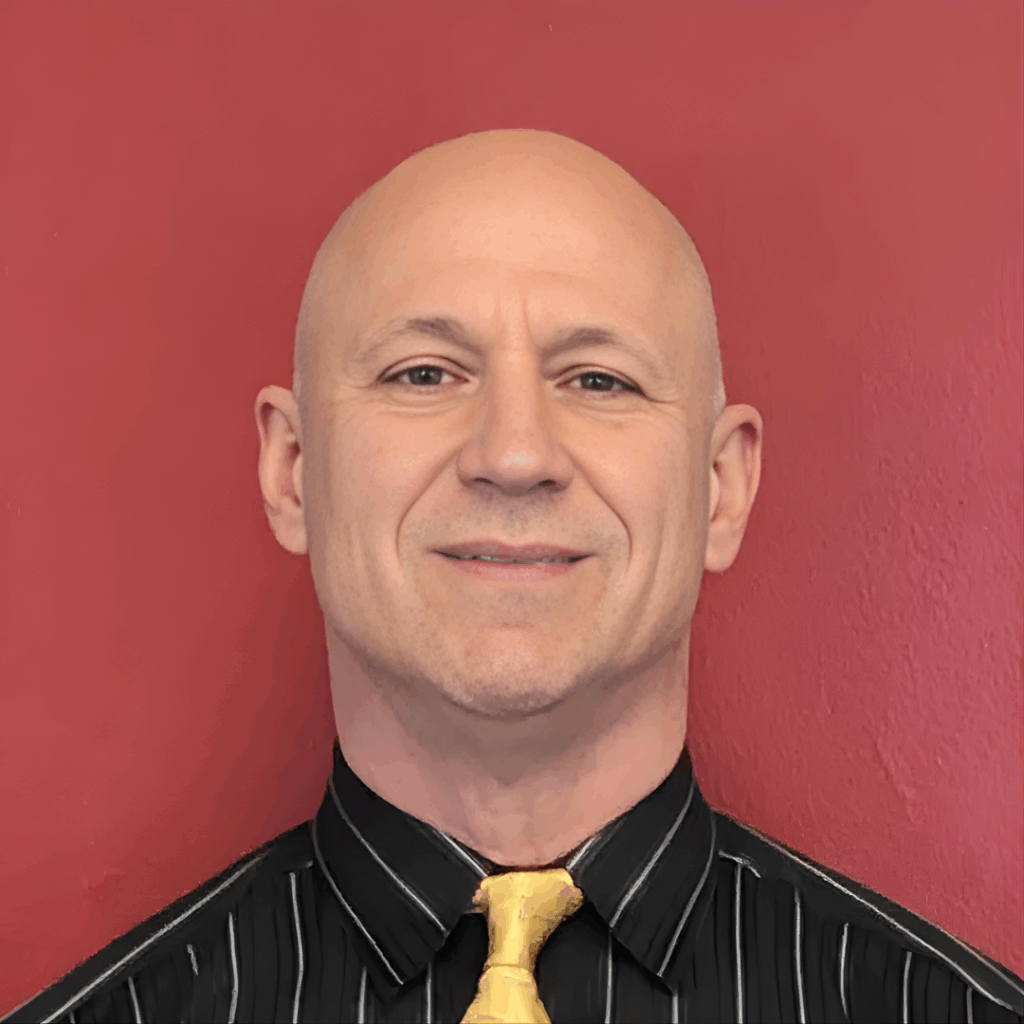
Phil Ross covers Back and Shoulder Fitness in this Marketer of the Day episode. Phil Ross explains how simple strength work can reduce pain, improve movement, and protect long-term health. He focuses on the multifidus, transverse abdominis, rhomboids, and erector spinae as hidden core muscles that stabilize the spine. His approach uses 5 to 10 minutes a day, kettlebells, bodyweight work, mobility, and flexibility before pills, devices, or surgery. He points to a 75-year-old client doing weighted Turkish getups and wrestlers avoiding shoulder harnesses through better shoulder mechanics. The framework includes packing the shoulders, engaging the lats, strengthening rhomboids, and building a strong cylinder of power. He also recommends "exercise snacks" and turning workouts into a game instead of a dreaded task.
From Navy SEALs and top‑ranked wrestlers to desk‑bound professionals in constant pain, my guest Master Phil Ross has spent his career on one mission: fix what most fitness programs miss, your back, shoulders, and “hidden core.” In this episode, I talk with Phil about how he helps people avoid unnecessary surgery, rebuild strength after injury, and stay mobile and powerful well into their 70s and beyond. We get into what most people get wrong about back pain, why devices and quick fixes rarely solve the root issue, and how deep support muscles like the multifidus, erector spinae, and transverse abdominis actually protect your spine. Phil breaks down the difference between flexibility and mobility, why your “cylinder of power” matters more than visible abs, and how five to ten minutes a day can radically shift your back and shoulder health.
You’ll hear how Phil’s “Get Off Your Back” and Body Bell Method programs help everyone from high school wrestlers to Special Forces operators stay strong and pain free, why his elite wrestling team has zero shoulder harnesses while competitors are taped up, and how a 75‑year‑old client now performs weighted Turkish get‑ups. We also talk about motivation, removing the “dread factor” from workouts, and how to reframe exercise as small, fun “exercise snacks” that fit into a busy day.
Quotes:
“People say they don’t have time to train, but you only have one body. When you take care of your body, your mind and your spirit follow.”
“You don’t need a pill, a stimulation device, or a quick fix. Strength, mobility, and proper alignment are your first line of defense.”
“Shoulda, woulda, coulda don’t add up to one little word: did. Now it’s your time to do it.”
Resources:
Podcast: Play in new window | Download (Duration: 26:51 — 21.7MB) | Embed
Subscribe: Apple Podcasts | Spotify | Amazon Music | iHeartRadio | Podchaser | RSS
Transcript
Download transcript (.txt)Master Phil Ross is here, back on the show, and he has trained fighters, Special Forces and everyday people who thought that their bodies were beyond repair, and he rebuilt them from the inside out. He is Master Phil Ross. He is the kettlebell king. He combines combat sports, rehab science and raw strength into one system that fixes what most programs miss. We're here on the marketer of the day podcast with Robert plank. We're brought to you by D FY podcast.com we handle editing, publishing and promotion, so you can focus on the interview view. And today's interview is probably the most important topic imaginable. It's you, it's your health, it's your well being, it's your life and being physically active, physically fit, happier, and all that goes along with it, because it's all interconnected, isn't it? If you move, if you're active, then it improves your mood, and then you want to do more of that. So that's what we want. We don't want to just sit on the in front of the computer all day. We want to get out there and be active, live a long, healthy life for ourselves and others. So Mr. Phil Ross, it's been a few months. How the heck have you been?
Oh, great, great. Great to be here again, and I guess I'm a repeat offender on the show. So yeah, it's always a pleasure to speak with you, Robert. You know you're doing great things out there, and I really appreciate the fact that you're you're trying to help other people, because that's what I do, too. I'm trying to help others to live better longer, just like the shirt says, that's our logo for the body Bell method. You know, it's, you know, a lot of people suffer from back and shoulder pain. You know, if you look at the statistics, 80% of people suffer from back pain, and then another 60% have shoulder issues. You know, what are we doing about it? You as you mentioned in the preamble, you know you have, you have one body. You really do. You only have one body. You need to take care of it. And sometimes people say they don't have time. They they don't make it a priority, whatever. But you know what? Though, when you do this, when you take care of your body, your mind follows as well as your spirit, because we are, you know, triumphant there, right mind, body and spirit. And you know, if you're not taking care of one thing, the other things fall off. But I'm here to really address what's going on in your body. Why are you in pain? You know, I don't know if you've seen this on the internet, but there's people been talking about a thing called the multifidus muscle. Now, the multifidus muscle is something that I've spoken to for years, years now, not just past month or two, and it's featured in our book, The my most recent book, managing back pain for dummies. I wrote that with Dr Pat Roth. He's a head of neurosurgeon at Hackensack medical guys, brilliant, and I brought him in. He's also one of my clients. So I brought him into to write the book with me, but the multithres muscle is one of the support muscles of the spine. And the thing that, the thing that's bothering me right now is that there's a push online for this stim it's a stim device now to me, it's like a 10s unit on steroids. And the thing that bothers me is, look, I'm sure that it does give some measure of relief. I have not used it. I can't say that for a fact, but the thing that bothers me is that the doctor promoting this, this device, says that it's the only thing out there that can strengthen the multifidus muscle. That is disingenuous at best. You know, the human form has not changed much in the past 250,000 years. So this doctor is trying to tell us that we can't strengthen a muscle that we've had in for eternity in our bodies, unless you have this device that just came out last month. You know, kind of having a hard time buying it. Plus, I've been strengthening the multifidus muscle on people for decades now. Now what if you can imagine your spine? You have a support network for your spine. You have the erector spinae. They go from the bottom of your skull down to the top of your hip. They're on the sides of the spine. There's three of them. These are the support, the intrinsic muscles, the ones that people don't see, and then the multifidus muscle, or, you know, multifid eye. They connect two to three vertebrae, and they go all up and down the spine underneath that. Now you also have a thing called the transverse abdominis, which is the lowest, the most inner section of your core. That's the muscle that the lowest abdominal. I'm saying the deepest abdominal, not lowest deepest. But if you're talking in terms of depth, it would be the lowest of your of your core. So these muscles are strengthened through the program that I have called you know, get off your back. You. And I've been doing this for decades. You know, if you go onto my YouTube channel, you can see the testimonials. I've had people come in here that have been to doctors surgery before surgery, to avoid surgery, come to me. And I do have a lot of orthopedic surgeons and neurosurgeons that do refer people to me. They're patients to me prior to going under surgery or to avoid it, and even post surgery as well when physical therapy is done. But the thing is that, you know, we have to strengthen these muscles, and it's not as hard as you think. I have the program that we have, if you do it five to 10 minutes a day, guess what? You're going to strengthen those support muscles. And the cool thing about doing that too is that when you strengthen those muscles, you're not only creating a strength, but you're reinforcing mobility and flexibility. And these are all things we need to do to be able to move freely. And you know, people do get confused between the difference between flexibility and mobility. Flexibility is the stretchiness of a muscle. Mobility is the ability for a joint to go through the full range of motion. So that's your mobility. So they're they go hand in hand, but you need both. And you know, we address those, you know. And when I was talking about the deep muscles, the support muscles, that is something I refer to as the Hidden core. Again, when we think of core, we think of ABS. Oh, I got a six pack, right? Okay, yeah, okay, great. It's awesome, but that's mostly your diet. But the core is that whole trunk area, or what I referred to as the cylinder of power. So you have to have this nice cylinder of power, especially if you're going to be going up with anything, or if you want to lift something up or carry something, you have to have that strong cylinder, cylinder of power. And that's something we address with the program. And you don't need a stimulation device, you don't need a pill, you don't need surgery. And look, do you sometimes need those types of treatments? Absolutely. But the thing is, you want to look at a holistic approach to your back and shoulder health. Try strengthening mobility first, then maybe go to these other treatments, and then as a last course of action, you would get your surgery. But there are far too many people that have had surgery and six months later they're in pain again, or they go through therapy and they're in pain again, or they go to chiropractor and they're in pain again. Yeah, they get the relief, temporal temporarily. But what have they done? Have they taken the measures to strengthen the area, to keep things in place? Have that proper alignment? I don't think so. So this is what we help you with.
Very nice. It makes logical sense to me that we should take our fitness seriously. And when there are these other paths, right, there's other shortcuts. It's like, well, wouldn't it make sense to do the exercise first or in addition, and not just count on that one avenue to solve the problem? And so I'm curious about just the types of people you help, and maybe where they sometimes get stuck. So are like, the people that you help? I'm sure there's all kinds. But like, as far as the mix, the ratio are there? Like, is it mostly like, fitness enthusiasts, they want to get jacked, or they just want to, you know, be mobile in their later years. Like, what would you say is the mix of the people that you help?
Well, it's pretty crazy, because I've tried to find identify my avatar so I know who to cater my marketing toward. But the funny thing is that it keeps moving. I have high school people that I train athletes, and then I have people in their 70s that want to be able to move. I have one guy, he's 75 years old. And you know what Turkish get up is?
yeah,
Okay. Well, if you have a chance, check out Turkish, get up. Now, he's 75 years old. What you basically do on a Turkish get up is you lay on the floor. You know, I generally use a kettlebell. You can use, you know, dumbbell, but kettlebell is a little better. So I use a kettlebell. Roll to the side, press it, keep it here. Stand up, holding the kettlebell above your head, and then come back down holding that kettlebell. He's 75 years old, and he does it with a weighted Turkish getup. Most 75 year olds need help getting up out of the chair. This guy is doing a weighted Turkish get up. Now he didn't do these. I mean, he started training with me little less than two years ago. And, you know, he started doing those took him about eight or nine months to get to be able to do a Turkish get up. So, you know, it's amazing. He loves it. He just thinks it's coolest thing ever. You know, tells his kids and grandkids and so forth. Fourth, you know, I'm 75 doing a Turkish get up, you know? And then I also have this, take my high school wrestlers for for example, I'm, I'm a coach at Burton Catholic as my second year as a strength conditioning coach, which I coach both. But you know, my main focus is the strength conditioning. That's that. That's my baby with them. And it's funny, because wrestling is very, very difficult, particularly on the shoulders. And you can see many of these other schools, the wrestlers, the athletes, have these shoulder harnesses on. And we noticed that at the district championship. So in high school wrestling, particularly in state New Jersey, you have district region and then state, okay, so our district is the local area, so you have 12 teams there, anywhere from 10 to 12 teams. We go to the district tournament, and virtually every other team had two to three athletes with a shoulder harness on. And this is something that I've known about the wrestling and combat sports industry for a long time, that the shoulders get beat up and they train them properly. Most people do not train their shoulders properly. So how many guys do you think had shoulder harnesses on our team?
I don't know all of them.
Not one, not one of my team needed a shoulder harness because they're training methodology that we employ, and that has to do with engaging the rhomboids, packing the shoulders, engaging the lats, creating that very secure environment, not extending beyond the range of strength. So a lot goes into that. And you know, the proof is in the pudding. And you know, you go up to the region, which is the next level in the state championship, these guys shoulder harnesses, shoulders taped up and everything. And none of our guys work, and we have a very rigorous schedule. You know, we're one of the top teams in the country, not just the state. We're in the top 25 in the United States, and that's over 20,000 high schools. So it's we're pretty elite group, and we're out there with the best of the best in the top tournaments all the time, and very, very rough, rigorous competition. But yet, our guys didn't sustain any shoulder injuries. There's a reason for that. We've been doing this, this training protocol, you know, it's one of the reasons I, you know, I was called in as one of the instructors on a team to train our special forces as well, because all the shoulder injuries, 60% of Navy SEALs had shoulder had shoulder injuries. So the group was called in to help them out. So and so there's, there's a quite a wide array of people, right? If you just, if we just touch on that, so it's kind of hard to find on what is my exact avatar. You know, movement is movement. Strength is strength, and mobility is mobility. So everyone can use it, and proper alignment when you're training is one of the best ways to achieve it.
Very cool. This is fascinating, right? There's a science to it in having the proper form. And there's also the mental game to it, isn't there? There's like the mindset, the enthusiasm, the camaraderie, community, and I'm always looking to tap into that. And something that still sticks with me since the last time we spoke is you said, you know how, I mean, I have a I have two kettlebells in my office here, and I have, like, a little one over by the door and a bigger one behind me. And it's like you said, Whenever you just what's up,
that's all you need, yeah, yeah.
And that's what you said. You were like, well, you know, if you just have have a few minutes in between meetings, just like, swing that thing a little bit, and it adds up over time. And just having, having it nearby and handy it, it'll make you feel better throughout the day, and it's more than you normally would. And so, like I said, yeah, there you go, exercise snacks. And so I'm, do you have you noticed, like, how people make it work? Because it seems like there's like the haves and the haves nots, right? There's people that make excuses and the habits don't stick, versus those that seem to have fun. So how do we tap into some of this energy of having fun and making it part of our lifestyle?
Yeah, well, you know, one thing we say about the excuses? I have a saying. You know, everyone has excuses, like armpits, everyone has them, and they all stink. So excuses are easy, you know, give yourself a reason. What is your reason? What's your driver? Why do you want to do this? And then what you do is, don't deny yourself. The thing is, the mind controls everything. Think about that. If you walk in the door and you got your kettlebells on the floor, and there's a bag of chips and a remote over there. Well, you can either go swing a kettlebell or do some presses or squats, or you can grab the remote and the chips and sit down and watch Netflix. It's what your mind tells you to do. The mind is going to control you. So the mind the. The body will only do what the mind tells it. So how you going to do this? How you going to make it fun? You know what you do? Make it a game. Look at it in this way. Every time you go to swing that kettlebell or do your push ups, try to do it better than the time before you want to look at it not as a task, but as an opportunity of improvement. There's an opportunity. I can improve during this session. I can get better with this rep. I can get better with that push up. I can get better tomorrow. I'll tell you, I can't wait for Mondays. People, the song I don't like Mondays. I love Mondays. You know, I I got a whole new week ahead of me, new stuff, new challenges, new opportunities. It's awesome. Like, I can't wait for my workout tonight. I did a bunch of push ups and workout this morning. I got my heavy workout tonight with one of my clients. I'm excited. We're we're texting. He's a big time lawyer. He looks looks forward to Tuesday night. Tuesday is the day that we banging out heavy we're texting about it in the morning first thing, because we're excited about it. It's how you frame it. You have to find you have to remove that dread factor, because if you dread working out, are you going to do it? No, you're going to find excuses. So you have to find something that you really like and look it could be this stuff I do great. I love, I love kettlebells, body weight, hitting a heavy bag, doing Jiu Jitsu. I love all that stuff. Not it's not for everyone. But is it Zumba? I don't know, yoga, pilates, whatever it is. Do it find something that you really like to do, and look, some people are more motivated by classes. Some people like to do it alone. Some people like to have a training partner. It depends, it depends, and you have to find what works for you. Because another thing I abide by is every body is different, and every body is different. So everyone is different, and every person's body responds differently. So you have to find something that works for you. Look at it as an opportunity to get better at whatever you're doing and make it fun, remove that dread factor. And if that includes, hey, joining a fitness group where you can have camaraderie, if it Hey, you want to do it by yourself and have your solitude like personally, I mostly like training by myself, although my son was in this weekend, and, you know, we we went for a run in the woods and we did kettlebells and all that kind of stuff. So I was a lot of fun, but primarily, um, you know, I I'm solitary when I work out, but that works for me. But do I like working out with a partner? Yeah, sure, I do that too.
Very cool. So figure out what works for you. What, what blend of the the activities themselves, plus the style. And if you say, well, it doesn't work for me, well that's more excuses, right? You haven't tried enough of the activities. If it's jogging or if it's Zumba or it's weights, like, figure out what that is. And in the quest to have fun, you say, to reframe and gamify. And so speaking of the systems and the games, I know that you have these innovations like the body Bell method and and so on. So in these final few minutes of our conversation, can you just tell us about, like your programs and what's new and what maybe stands out from the rest?
Absolutely, couple things we're working on right now. One is the body Bell method, and we're actively developing instructors. And cool thing about the body Bell method is, not only is it recognized by all the major personal training organizations, but as far as I know, it's the only one out there that is recognized and approved for continuation continuing education credits for chiropractors and physical therapists, so Doctors of PT and chiropractors can get credits from taking my course. Matter of fact, the one that I'm doing this weekend will be at ICE not the one you're thinking about institution. It's the Institute of continuing education, and they're in Fairfield New Jersey, so there'll be a lot of chiropractors and dpts there. So that's the bodybuild method we're developing instructors this. It's very involved. People want to get involved in it. Just, you know, let me know. The other one is the Get off your back program. This one is, I'm also training people on, on the education aspect of this. But this is more of like an end user situation, where, you know, the people, they get the they get the bar. It's, I got a bar, a back, better bar. And it's, it's collapsible, it's carbon graphite, and you can take it on a plane with you. It's, it's TSA approved. You walk right through, walk right through the security. It comes with over 50 videos. Comes with a special band, an anchor band that doesn't, it doesn't stick to your skin or anything. It slides. It's cloth based. It's awesome. And then you get the strength is a Dale decision book to work on your mind. And you also get the exercise snacks book to give you 55 workouts that you can do, you know, in a six by six area with little to no equipment. And it also gets rid of that objection to, oh, gosh, I don't have the time to work out. Well, here you have all the workouts here, and we teach you how to do them as well.
Very nice. Well, what I gave from all this is how important it is to have an education, right? It's like, if you're not educated about your finances, and it's no mystery why the money's a disaster, not educated about job skills, and you can't work there, right? And it's like, well, figuring out this fitness problem is no different, right? You need to know the exercises, the video, the equipment, and the that mental game, right? The how to stay motivated and how to fix the problem, whether it's your back or your shoulder, and to have these written fitness goals so that way you can override the kind of short term dopamine seeking the potato chips and Netflix, and say, Hey, should, will I get the temporary fix, doing the shortcuts? Well, sure, but what about kind of feeling better long term, and fixing up my body and being stronger and healthier? That's more what we want. And so we've been you and I have been jumping around with all these different various like factors and ideas, right? There's the exercise, there's the mindset. And I know like, you have all kinds of crazy speaking opportunities coming up, and there's no many. There's not enough hours in the day for us to talk about just how you have you find the time and the energy to do all this, but in these final few minutes of our conversation, do you think there might be a missing question about all this? But I should be asking you, I just don't know to ask you.
Well, one thing is, one thing is that people don't realize how important the rhomboids are. The most people even know what they are. I don't exactly. Rhomboids are located in the upper portion of your back, and they help bring your shoulders back and down. Okay, so what we want to do is activate those. If you activate the rhomboids, it's going to help prevent kyphosis, which is that you know that hunched over help you with the tech neck, and also translates all the way down to the lumbar spine. So by knowing where those rhomboids are, you're going to really help your posture and your general health.
Very good. Well, you've given us a lot of ideas good starting points, but on a podcast, you only get so much. Right. You get the superficial ideas and knowledge. And to me, you say, well, we want to dive in more and find out about the Get off your back, program, strength, the daily decision, book, exercise, snacks and so much more. And so to take those next steps, there's Phil ross.com that's the next logical course of action.
Correct? Absolutely. Go to Phil ross.com and you can get me. And also you have all my social media links on Phil Ross, calm. I'm on LinkedIn, Instagram, Facebook, YouTube, so forth, so on. I'm easy getting in touch with I'm easy to find. And, you know, we look forward to seeing people from the audience.
Very nice. And so that's P, H, I, L, R, O, S, s.com, Phil ross.com he has an amazing podcast called Master Phil in your corner, and an even cooler YouTube video where some of these workouts he talks about, like holding the kettlebell way up. I mean, there's just you'll be amazed at these videos that you find, but you get there from the hub at Phil ross.com he's a motivational speaker. He's a fitness enthusiast. He's all about self defense, body Bell method, elevating your fitness and so much more. He's got all kinds of books, including managing back pain for dummies. That's sure as heck a bucket list life achievement, being a four dummies book. And so you want to take your health seriously, or you you're maybe you've heard about the these kind of surgery or pills alternatives, and you say, hey, you know, maybe there's a less scary solution that I could do before or in addition to then really consider the strength training and exercise aspect of things, and it might change your whole lifestyle. Right? If you've always struggled with your weight or you haven't been feeling good or low energy, and get some of that movement started, and you'll feel better long term as a result. So that's Phil ross.com but before I let you go, Mr. Phil, I know that you like to think on your feet. You're active, you're a motivational speaker. I like to try to stump my podcast guests a little bit by asking them about a fun or interesting quote or lesson that has served them. So what comes to mind for you, as far as a fun or interesting quote or lesson?
Well, this is super interesting. Did you know that if you work out, you eat right and work out, you are 400 times less likely to develop a variety of life, threatening illnesses, cancers, crazy. It's an incredible statistic, something I came across recently, 400 times more likely. Just take care of yourself. Get some exercise. Have a proper mental outlook. Now, eat right you are going to you have a 400 time. You know, opportunity to avoid all these, you know, life threatening illnesses,
That's huge. So all that more reason to take the prevention seriously, right? It is boring and it is predictable, but we need to make these things a habit, because who wants to be later in life and say, you know, I wish I just had put in a few minutes a day before it was a huge problem. Well, guess what you can time travel now is the time pretend that your future self is looking back on your present self and put in these, these few minutes for these fitness success habits. And you can begin by getting yourself educated about kettlebells and so much more at Phil ross.com P, H, I, L, R, O, S, s.com you can read. You can get some books. Check out podcast videos. It's all there. Phil ross.com and thank you, Mr. Phil and master Phil, for showing up again, inspiring us, educating us. I'm so glad that you made the time with your video schedule. So thanks for being here.
Oh, love being here. And I will leave with one other thought. Remember that shoulda, woulda, coulda, don't add up to one little word did, and now it's your time to do it. Strength and honor.
Man, what a. Transcribed by https://otter.ai
Subscribe
If you enjoyed this article, subscribe to receive more just like it.


