Published Last updated
View in Podcast Library: stories, quotes, books, and resources in one place.
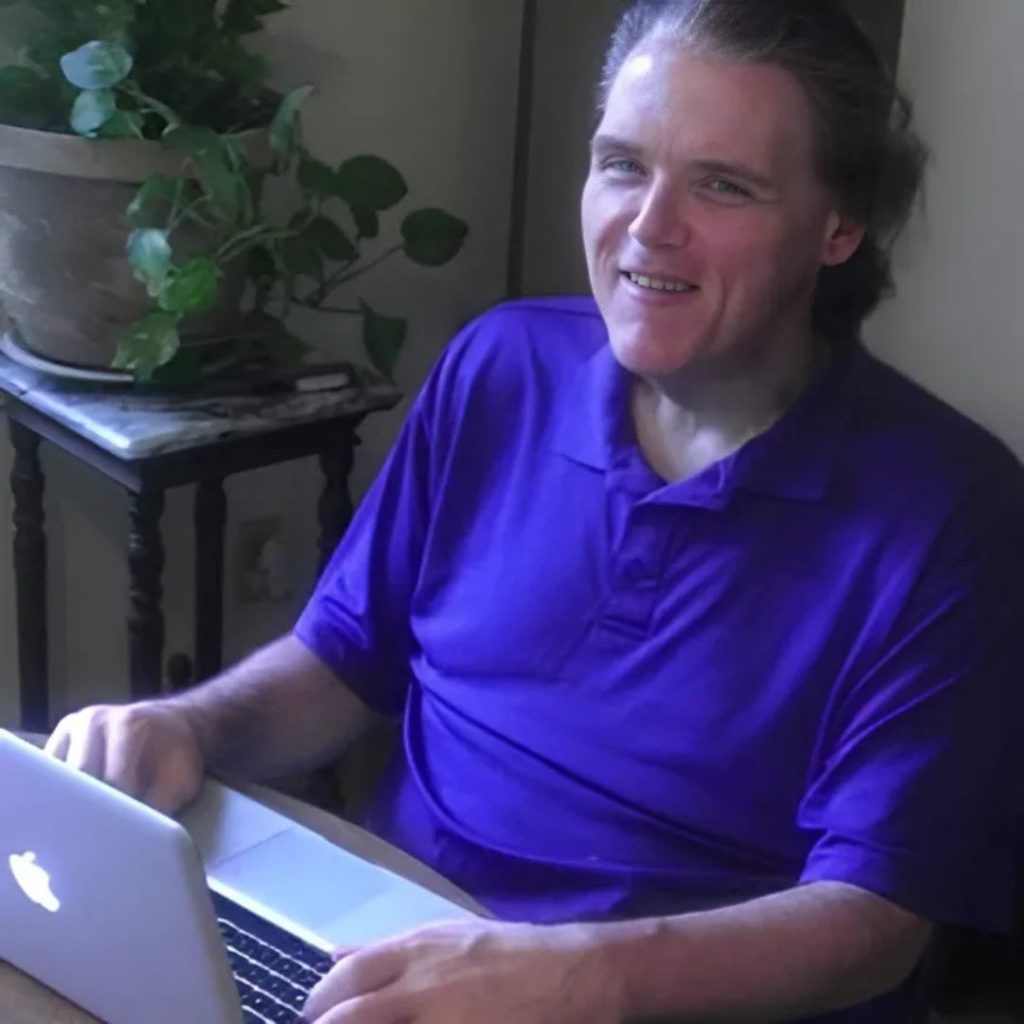
What’s your excuse? Maxwell Ivey is the totally blind former carnival owner turned amusement equipment broker after the death of his father lead to the closure of his small traveling show. He had to learn so many things about business in general and being online in particular.
He learned how to hand code HTML, write copy, recruits clients, set fees, write a blog, record videos, build an email list, and so much more. He is always up for anew challenge, adventure, or opportunity. He is now also a life goals coach, inspirational speaker, and an award winning author of self help books and he loves helping others accomplish their own dreams.
Quotes:
“One of the biggest lies out there on the internet is that you can do all this stuff yourself—that not only can you, but you’re supposed to be able to do it all yourself.” – Maxwell Ivey
“Way too many people get hung up on perfectionism instead of just doing the best they can right now and moving forward.” – Maxwell Ivey
“You never have enough money, enough resources, or enough time. You’re always fighting to get something you wish you had—or wish you didn’t have.” – Maxwell Ivey
Takeaways:
03:36 Focus on what you can do, not what you can’t, even when facing significant challenges.
05:29 Build a support system that pushes you forward instead of letting you get stuck in negative thinking.
09:49 Imperfect action beats perfect inaction – your first attempt doesn’t need to be flawless to generate results.
19:11 Design products and services with accessibility and inclusivity in mind, considering users with different abilities.
32:30 Create flexible pricing models that allow clients to start small and scale up as they grow.
Resources
- The Blind Blogger (Introduction)
- Maxwell Ivey’s Amazon Author Page (Amazon)
- Max’s Online Publicity Service (Get Booked On Podcasts & Radio)
- Max Ivey (LinkedIn)
- Max Ivey (Twitter)
Podcast: Play in new window | Download (Duration: 35:49 — 32.8MB) | Embed
Subscribe: Apple Podcasts | Spotify | Amazon Music | iHeartRadio | Podchaser | RSS
Transcript
Download transcript (.txt)Robert Plank, Show Episode 351, focus on what you can do, eliminate excuses, overcome obstacles, adversity and self doubt with Maxwell Ivy, Hey everyone, and welcome back to the show. Now. Here's a question for you. Do you have an excuse when it comes to making money online, or do you feel like maybe you've had bad luck or a bad hand? I know that I've heard people saying that, you know, they can't make a website because maybe they think they're too old, or they can't make videos because they have too thick of an accent. But what if you couldn't see? What if you were blind? Well, I mean, if someone out there who is blind could make money online, well then what's your excuse? Well, guess what? We have a blind marketer, a blind blogger on the show today. His name is Max Ivy, and he's a totally blind former carnival owner turned amusement equipment broker. And after the death of his father, led to the closure of his small traveling show, he had to learn so many things about business, being online, hand coding, HTML, writing copy, getting clients, hitting fees, writing a blog, videos, email list, all kinds of stuff. And Max is always up for a new challenge, new adventure, new opportunity. And he's now a life goals coach, an inspirational speaker and award winning author of self help books, and he loves to sing on top of all that. So Mr. Max, welcome to the show.
All right. First, it's it's just Max and and hopefully you won't mind me calling you Robert or rob or Bob, whichever one you prefer. Yeah, all right. But yeah, I've, I have become a inspiration to people, because I basically just show up and do the next thing and find a way
awesome. And yeah, and I've noticed that, like, there have been, definitely been times when, like, you know, I try to, you know, code something, or launch a product, or make something work, and, like, being completely stuck. But then once I kind of thought for a second and found a way, may it work, then I could kind of kept going. And so can you sort of tell us, like, I mean, what the heck happened? How did you end up being blind in the first place? I have
retinitis pigmentosa, which is a pretty common degenerative eye disease. I had perfect vision up until four I started losing my vision then, and it went away gradually, until I was in junior high school, when I had quite a big decrease in vision and had to start learning Braille and learning to use a white cane. It stayed constant until I was in graduating high school, and then I lost down to what I have now, which the doctors will tell you I have light perception. But to me, all that means is I can tell whether or not the light in my room is on or not. Oh, wow. So you know, it's one of those things you know, you you get used to doing things with speech or Braille or tactile or by asking other people to either help you do it or do it for you, which you know. Which leads me to one of the things that I talk about all the time, and that is one of the biggest lies go out there on the internet, is that you can do all this stuff yourself, that not only can you, but you're supposed to be able to do it all yourself. And one of the things that really frees you up in life is being blind and growing up knowing, hey, there's probably not much I'm going to do in life, I won't have to get some sort of help in order to accomplish it.
Right? That that's a really good lesson, a really good metaphor there, that like, sometimes we need to ask for help. And so, I mean, it's, it sounds like, and it seems like you now have a handle on things, but in sort of those early days, as you know, your site was going and sort of the future was uncertain. I mean, did you have any struggles, or did you have any frustrations, or did you kind of go into, like a dark place that you had to get yourself out of?
Well, luckily, I grew up in a family and was surrounded by people who didn't really accept anybody going into a dark place and staying there. I think I can remember, you know, I've had, I've had my bad days. You know, the day when a doctor told me that eventually I would go totally blind. That was not a good day. You know, days when, the day that I finally realized that I was no longer going to be a carnival owner, was a bad day. You know, there's, there's, there are lots of those days. But like I say, I grew up in a family of people who did stuff and and and solve problems. And I I tell people one of the, one of the things that I think really helps me a lot nowadays is I spent, you know, I started, I started working on the midway in my grandmother's cotton candy stand when I was five. So I've been around people who are who have operated a small business in difficult conditions because for whether it's a carnival, a farm, a ranch, a printing company. Anybody who's grown up in a family that's operated some sort of a small business, the one thing you learn right away is you never have enough money, enough resources, enough time. You're always fighting to get something you wish that you you had or didn't have. So you know, you learn a lot of really good lessons about. Recovering from setbacks, failures, disappointments, and, you know, finding a better way to do it, or in some cases, accepting that there is no better way of doing it, and that you need to consider a different path in life from here forward. You know, I think that it was said best by David Raif, who has a podcast called join up dots over the UK. So, you know, max your life in the carnival business is like a PhD program in hustle and muscle,
awesome, and so, um, so, so, yeah, so there's some good lessons I sort of heard from you in there. And I think that, you know, what I heard a lot of was to have that support system, like you had your family. And it's really, it's really, like, easy to sort of just be like, you know, stuck in a, in a in your office, or stuck in a little cubicle or something, and kind of think you're all alone, and so sort of along those lines. I mean, with that, that support system, and you mentioned, like, delegating as well. I mean, did you have any, any difficulties getting, like, your first websites online, or, like, building this business, or, like, sort of, I mean, I imagine you did, right?
That's, that's one of my favorite that's one of the stories I get asked to tell quite often, is about my first website. Because, you know, when I was when I've decided that I was not, that I was fed up, disgusted that I wouldn't make it any money with my carnival games. I said, Okay, I'm going to start this business. And I don't have the first clue. I don't even know. I didn't know what a website was, but, you know, I knew I had to have one. This is like at the end of my space before Facebook. If that helps anybody, my internet at my house was still a dial up connection, if that helps. So I'm trying to figure this out. My brother actually created my first website. It had five pages, and it had this thing from source, from source Forge, where I didn't have to know how the site ran. All I had to do was was, was click a button and it would browse, browse through my photo selection, upload a photo in the writer description, and boom. I had an ad online on my website, but my brother got this high paying job moving carnival rides for a company on the East Coast that plays the state fairs. And so I was stuck without a webmaster, without the money to hire one, without the faith, actually, the willingness to let somebody run my baby, even if I had had those first two things. So I had to figure it out. And I went online. I found the W 3c schools. I started doing things one one step at a time. You know, here's how you do a homepage, here's how you do a link, here's how you do a photo. And I got to the section about picking colors. And, you know, I'm blind. I've been blind a long time, but I remember that on the Midway, the carnival games, the back, the the toys used to look good on yellow background. So I said, Okay, I'll go with yellow background. I thought, Okay, I'll go with blue text. And then I said, Oh, you know, red sounds good for the links. Well, what I didn't realize is that when you when you're creating colors on a website using HTML, you have two choices. You can use the what they're called, The hexadecimal code numbers, which didn't help me at all, because I got no idea what color of color goes with what number, or you use the color names, which is what I did. Well, the problem with that is, is that I had no idea that that yellow was screaming. I yellow, that blue was like a real dark navy, and the red was like a real bright brick red, um, and people said, you know, Max, uh, Ray Charles and Stevie Wonder. Could have an argument over this site. It is so bright. Also, the images were not since I had no way to edit the images, people would send me their photos, and I would have different size photos sharing a page with each other. So it, it looked kind of amateurish, you know, it was not something that I'm proud of the appearance, but I'm proud of the work because I, you know, I learned how to do it. I did it step by step. I figured out. But here's the one thing that that people need to remember about this. My website may have been hideous, but I still sold equipment with this website. I still put myself out there and sent emails and made phone calls and posted equipment on on online and shared those links on social media, because I didn't focus on what I didn't have or couldn't do. I focused on what I could do, which was telling everybody, Hey, come look at this stuff. You need to, you know, you need to buy this stuff. And I sold several, you know, pretty expensive rides, including a carousel worth over $100,000 a simulator over 50,000 uh, several of the rides that were sold went, you know, went cross, across the world to their new homes. And that's because I didn't get all hung up in well, my website's not perfect yet, so I can't press upload and put it out on the work out on the internet. You know that's and way too many people get hung up on this stupid perfectionism thing instead of just doing it the best they can right now and moving forward, right?
And I think that's a really good message that you focus on what you could do and not what you couldn't do. So you said, Okay, well, I'll put the text on there. People will send me images and I'll put the images on. There. And then, as far as the colors are, sort of guessing. But then, you know, as you were explaining that, I was thinking to myself, Well, okay, you took some action, and you put the web page on there. And number one, even though it was ugly, it made sales. So who cares how ugly it is? And then number two, all it would take was, you know when, when you're when your webmaster returned, for him to go back and look and say, Okay, you made the web page pretty close to how we want to make it, but change the colors in, you know, 30 seconds, resize the images in a minute or two, and then you were, like, almost all the way there. And so, like, as far as the, like, the technology and stuff like that, of you being a blind person, like, all I know about this is, like, I know that, you know, there's, there's Braille with, like, there's whole books where there's, like, you know, you run your fingers across the dots, and I imagine there's some sort of, like, like, rail keyboard or something. Is that, right? Well, there
is, but most of us were using regular computer keyboards with either a, if you're if you're a Windows user, which I'm not, you have a program called JAWS for Windows, or another one called NVDA, that is what's called a screen reader that allows you to hear what, at least most of what is on the screen in front of you, if you're an Apple user, then the MacBooks, the iPhones and iPads, they have speech built into them Out of the box in the accessibility section. So you have them that that you have a screen reader. Now the the thing is, with a screen reader, you have, you have basically two parts to it. For web, especially for websites, is the screen reader can only really read what's there. So even though Facebook and some other people are experimenting with with algorithms that will give you a description of what the tech what the images are. For the most part, if the webmaster or or Blogger doesn't add those alternative text tags to the images to tell you what's there, then the screen reader does not know that they're there. And if the images are part of links, which is quite common. People you know want their links to look good, so they add photos or graphics to them. If those graphics aren't tagged, then the screen reader can't find the link. But in general, you browse through a web page either by line, character, word, paragraph, and then when it comes to creating your your blog posts. There are two different approaches. Me, personally, I like to use a program called Mars edit, which is basically like a text editor, but it's set up to be cooperative with WordPress and so, you know, you type your document when you're through you it's got function keys you can use to embed your links or add your photos or add your YouTube links, or whatever other people, they go directly to the WordPress dashboard or the GoDaddy dashboard. Or, you know, some people like with Hostgator, some of the the hosting companies have systems where you can do it directly on their website. Me, I find that I get lost in all of the different buttons and menus and stuff. So I'm I'm I prefer to just write it in a in a third party app and upload it. For some reason, people assume that, since I have two websites and two blogs, that I probably know a lot about this technology. But the truth is, I'm one of these guys. I'm the last person to try something new. I'm also usually I prefer stuff that's got a simplified approach, like I record my videos in quick time, instead of using iMovie or Audacity or garage band. Although, recently, I found out that if you go into zoom, which is a meeting program, that you can record your videos on there. And it's just as simple as as quick time, except you get an you get an MP for output, instead of, instead of some other larger, more file size, dense media files, but, you know, that's how I record my videos and my audio. I do have friends who are visually impaired who they'll record their stuff straight on their iPhone or their iPad, which I've started doing myself, but I'm still, you know, a little hesitant. It's not my it's, you know, it's outside my comfort zone, but hey, it's a perfect lesson for people who follow me, that I continue to push myself and force myself to do new things. And back to the website, the Midway marketplace. It was five years before I finally got a webmaster and had somebody go, Well, you know, Max, you need to change the colors and the images. But you know, five years later, we did actually do just what you're saying. But for five years it was, and it still is, a very successful site, regardless of the fact that it was, it was not well designed to start with,
was not well designed to start with, but still made money. And I can relate to some of that sort of stuff. Like, you know, I made web pages where there was, like, a huge. Typo or a broken image for five or 10 years, and it made cells all, like, all the time. And then they looked at it, you know, a decade later, and said, oh, shoot, this thing was broken this whole entire time. But in spite of that, it still made money. So like, you know, I fix it when I see it, but I'm not gonna sweat the small stuff. And then, as you were sort of explaining about those different sorts of tools that you use, I'm sort of the same way in that, like, I don't like to learn new tools, and I pretty much use Camtasia for more most recording. So if I'm recording a webinar, I just use Camtasia for this interview. I'm using Camtasia even though I'm gonna dump just the the audio out of it. But sort of same thing of, like, you know, they're all there's tons and tons of tools out there, and I sort of think that, okay, I could waste all this time learning all these separate tools for these separate jobs, but if one tool, or two tools kind of gets the job done everywhere, sort of, why mess with it? And so if that, as you were explaining the like the screen reader, I've somehow made that appear on my computer at times, like, if I hit the wrong button, it would start, you know, reading the words or the text or like the buttons in a computer voice, and so, so that that part makes sense to me. But as far as like, if you go to WordPress and there are like things to click on, and like you move your mouse and click on stuff, how does that work? As a blind person?
Well, what you hope happens, and in most cases, it does work this way for for anybody who's a webmaster who's listening to me, please? I For the most part, we do not like drop down menus. We do not like selection bars. We prefer check boxes and buttons that actually open new pages as opposed to opening new tabs. It's much simpler to add to navigate, especially if, when those new pages open, they they open over the top of the old page. So I have to close that page, and when I close that page, it pretty much puts me back where I started. I also hate with a passion any website that automatically refreshes every so many seconds, because I will guarantee you before I just before I find the one thing I need on your web page, it's going to refresh. I'm going to have to start from the top and go back and look, look for it again. So those are just some of the things. Yeah, like I said, with links, you hope they open in a new page. Buttons, the same way, I hate those buttons that you press, where it changes other text on the screen but gives you no audio prop to let you know that that's what it did. So basically, anytime you can, I guess what I need is, what I need to say is, if you're designing and you actually care about blind people or people with visual problems, using your website, you should design for the lowest ability level among the visually impaired, kind of like when you write blog posts to say, to write for like, a fourth or fifth grade audience. I don't always do that. I'm guilty of writing for about a college age audience. That's just the way I write. There's no way to change it at this point. But that's, you know, those are some, and those are some of the reasons why I prefer to use a third party app, because I don't have to deal with all the buttons and stuff on the WordPress dashboard, although I have to give WordPress their props, they they actually care. They sincerely care about making their product accessible. Every time they update it, it gets better. They act. They insist on having at least one, if not multiple, present presenters at their word camps who specialize in accessibility for websites. So of anybody out there, they're one of the best going and on the other end of the scale, the worst out there is Facebook, and that's because they change their website so often, and the little tricks that you learn in order to navigate their website every time, just you know, like every few days, week, whatever you have to learn, you know, a few new tricks in order to get to the same information or same groups, whatever on Facebook, which is why I like to refer to Facebook as living in a house where they know you're blind, or they should know you're Blind, and they move the furniture around every day, jeez. And yes, and just so I don't forget to say this, if I ever meet Mark Zuckerberg in the street, I'm going to punch him in the nose.
Nice. Okay, well, that's good to know. So, like, so, so it's worth it for people to if, if they're making a web page, to at least look into some of this accessibility stuff. And like, in the past, I worked at a corporate America job where we had to, like, adhere to certain standards for like, you know, if someone was using, like, a computer terminal and like a wheelchair and like things that, like, if they were deaf or they were blind. So those are good, those are good things for us to sort of think about. And like, you say, even just to the extent of consider if someone with the lowest ability level, someone who maybe even if they speak another language, if they don't know English that well, if they can't see very well, can you still sort of navigate that kind of stuff? And then can you list us one more time, like, like, one of those, those screen readers, so that maybe if people are making a web page and they're looking to make it accessible. You know, of like an easy tool to, like, simulate viewing these web pages as a in one of these readers.
You know, that is an awesome question that nobody has ever asked me before. And I, I love questions that I've never been asked. I tell you, I have a friend. His name is Michael Babcock. He's he's really up on all the technology stuff. I will ask him about a simulator so people can find out if their if their websites are accessible or not. And I will send you an email so you can put it in the in the notes about this interview. Awesome.
I will do that. I'll put that in the show notes. And so sweet. We don't know the answer to that question, but, you know, as you're kind of having to to navigate some of these. Like, you know, some interfaces aren't unfriendly, like Facebook, but some interfaces are friendly, like WordPress. What's your productivity level like? Like, do you think do you get things done at sort of the same rate that you would if you could see? Or, do you think you're slower, or are you faster? Or what's that sort of like?
Okay, well, first off, I need to say that I don't honestly think there is one, one type of blind person. Even people who have my level of vision have different levels of skills when it comes to using the accessible technology that's out there. I would say for me personally, I'm probably somewhere from 20 to 30% less efficient than I would be if I could see but I also have friends who I believe are probably closer to maybe five or 10% less proficient. You know, when you are hearing it, as opposed to seeing it, just the just the delay that's involved in in this, in getting the information from set, from your senses to your brain, requires there be some sort of of, of less, you know, you you're going to be a little slower regardless of how good you use the technology. I just don't consider myself a very, very good user of the technology I have. That's why I put myself at, you know, maybe I'm at 70% of what I would do if if I could see. And that reminds me of something I keep I try to remind myself to mention, and that is that while I am called the blind blogger, mainly because the people that I was running into online didn't know any other visually impaired bloggers, they started calling me the blind blogger for shorthand, and, you know, in groups on LinkedIn and Facebook, and I basically accepted the brand name and and filed for the domain name once I decided I was going to have a second website where I would would talk more about being an entrepreneur who happens to be blind. I am not the only visually impaired blogger, podcaster, YouTube, video maker, whatever you call those people, I'm not even the best or most prolific. I'm just the guy who put himself out there in the public and focused more on meeting the whole world, instead of focusing on the visually impaired community or the people with disabilities community. And I think that that's another important lesson, that regardless of what your target market is, don't get so focused on that niche that you that you you eliminate an entire 7080, 90% of the world out there who might have some interest in what you're doing, right
and I'm glad you brought that up, because I kind of want to dive into that part of it, that it, that there's, like, the this sort of brand people kind of mate, like, you know, thought of, for you the blind blogger. It sounds like that's sort of like, your your attention getter, but it's not all that you're you're focused on. And so, I mean, what did you have any sort of difficulties, or did it take a while to get to that sort of, sort of Revelation? Of, like, okay, like, there's, you're the blind blogger, and that's sort of a way to be like, well, it's motivational. It's like, you know, what's your excuse? But then how do you kind of overcome, how do you become more than just, kind of just, sort of a one note person like that?
Yeah, that is a very good question, and it's something I'll admit to, I'll admit openly to, to be to struggling with, or at least, at least wondering about, because, as I mentioned, you know you, I think you've, you've got my email so you know that I currently sign my emails, known as the blind blogger, host of what's your excuse, and so much more, because that is a problem Where this what was a and still is a very good brand name, because if you look for bloggers and blindness on any search engine out there, you're going to find me taking up most of the first several pages of results. And that's good, but it is kind of like being a tight cast, actor or actress. And I've actually considered the idea of finding another website, I looked into getting what's your excuse in some form, but found that that, though most of those were already claimed, I did register a domain under the name Maxwell ivy.com because I was thinking that that might be a good way to con. Continue being the blind blogger and Mr. Midway, but also have a place where people would would come to me and be open to me being more than the blind blogger, like, for example, as you know, one of the things I'm doing lately that is the one thing that's paying the bills on a regular basis is I get people booked on shows like yours. And some people don't have the time or the energy. Some don't have patience. Some don't realize that they have a great story they need to be sharing. And some people would just rather hire somebody and say, you know, you do all the work and just tell me when to show up. So it has turned into something I did in self defense. I did it in the early days, because I needed a way to meet people without leaving the house, and as a result, I became the expert in this area. And now I am, you know, offering services where I get people booked on podcast, radio shows, other online media. And that's something that doesn't really fit well into the blind blogger, net website. It's it's over there, but it doesn't really fit well. Neither does me being a speaker, and you know, the writing and speaking works, but I do think that the best way forward for me is going to be to find a website where I can let people see me as more than the blind blogger, but still have links, or maybe embed the blogs so they can still find out about that part of me,
awesome. And I mean, what's your plan on, on sort of landing on the the correct branding there is it just a matter of just trying out different names or seeing what's registered and just kind of getting through maybe 50 or 100 bad ideas to find the good one? Yeah,
I hate to say that is, I don't really have a plan for picking a good name. It's just a matter of, can I find something that works with this, with this new person that I'm becoming, and if I do, then, as we, as you and I both know a great brand name helps. But really, what you know, what will make it work in the long run is, do you put the time in? Do you post consistently? Do you? Do you you get yourself out there in social media and face to face events where people can learn the new brand name and what it is, and most importantly is, once you do come up with that brand name is knowing for sure in your own mind who it is, what the story is, and being able to tell people in a in a few seconds, you know what Maxwell ivey.com is, or what the blind blogger is, and you know that that first few words up there on the opening page of your website, it has a lot to do with whether or not a brand, At least an online brand is successful or not,
right? And there's some good lessons in there that, like number one, you said, to be consistent. So like, you know, send out those emails, consistently put out the blog post, consistently put out the podcast, consistently. Because if we just kind of put stuff out there whenever we feel like it, well then guess what? People are gonna only listen to us. Are only gonna buy from us whenever they feel like it, and then, and then, sort of as you alluded to there, of like just getting the the branding dialed in enough where you can have it concise and explain it in a few words, and have sort of that hook so that it's really interesting, and it's a you're able to explain what it is very quickly. And so you mentioned in there that, um, that you have all these different things going on, right? Like the being, like the booking agent pays the bills. And so can you kind of tell us about where people can go if they want to hire you for those booking agent services, and what they get? Exactly?
Okay, sure. They can go to the blind blogger.net/online-publicity or they can also, when they're over on the blind blogger.net they can click on success stories, and that was showing my current clients. And what I do is I work with them to figure out what their story is and create a profile that will appear on my website. I firmly believe, and it's been proven out over the last four years, almost five now, that hosts don't book people or products. They book stories. They want to know that you have, that you have, you have something that you something to share with their audience, and that usually comes out of what is your story and can you tell it? So that's the first thing I work with them on, getting all of their social media, Amazon pages, whatever online presence they have in one place, so that potential producers and hosts can can see whether or not the person is active, and if so, where and how to decide whether or not the person is going to do you know, to be part of the process, because one of the key things about being on the show is is helping the host promote the appearances. I know some people go, Max. Why should I promote? I thought I was going on their show so I could have access to their audience. And I'm like, Yeah, that's partly true, but it's just like most everything else if, if you want to keep getting those appearances, then you have to show that you can help put butts in the seats or faces behind the screens, in our case. So create the profile. I. Find the opportunities, whether they be podcasts, radio shows, guest posts, virtual summits, online magazines, you know, anything online, I find the opportunities. I send out the pitch, and if the if the host or site owner is interested, then I get them together with the client so that they can do the scheduling. You know, I I tell people, I will do everything but show up and do the social media. And I tell them that I, of course, I can't show up for them, and I don't like doing my own social media, so there's no way I'm doing theirs. There's not enough money you can
pay me awesome. So you do everything up until that point, as meatloaf says, right? So the blinder.net/online-publicity, and then, like, what sort of price range are we talking here? Well, so that's
one of the things I recently realized, and that is, is that most people, especially in coaching or services, they have a one price fits all approach, which you know may work great most of the time, but it keeps a lot of people from hiring you keeps keep in and since my ultimate goal is a combination of helping others and making money, I decided to change my pricing model to where I'm going to charge based on what quality level of show or blog they want to appear on. So though, if you want the larger audiences, then you pay more money. So like, if somebody is just getting started, they want to find out if being on podcast or radio shows will even work for them, then they can, I can get them on shows up to but not including 10,000 total listeners, viewers, subscribers, you know, total audience, and that's $100 a month. But if they want me to do everything up to, you know, broadcast television, satellite radio, then it's 1000 a month. It just depends on where they're at in their in their business or life path, and what level of show that they think they need to appear on. So I think that that's a much fairer way to approach this, because not everybody is is ready or even needs to do Oprah. You know a lot of people, they just need to do shows where they're going to get 20, 30,000 people, or they're going to get 5000 people who, most of them are loyal listeners of the show. They need to get themselves out there and get practiced at telling their story, because it'll make them a better face to face networker. So not everybody needs the whole package. And I felt like this was a more equitable way to approach it
super cool. And I do agree. And I like how you you set up that pricing, where people can just sort of start small and then scale up, or just sort of try things out. And I like the way how you explain that, where they can't they can, number one, they can work their way up. And then number two, kind of use those, those smaller audiences, as a way to try out material, or kind of, you know, get their story right, or get that, you know, do enough repetitions or practice, or whatever you want to call it, to get that message down so that by the time they want to move things to more big time stuff, the bigger audiences, then they've already sort of made their their mistakes on on, the little people, sort of like having, like, your first or second or third girlfriend. You make the mistakes early on, and then you you meet someone later on. And okay, like, I've got all the all the bugs worked out. And so once again, for everyone listening in, that's the blind blogger.net, forward slash online desk publicity, and then you've also mentioned that you have like your books and your podcasts and all kinds of fun stuff like that. Are those all easy to find on the blind blogger.net also
right on the blind blogger.net that's where they can find my books, leading you out of the darkness into the light. And it's not the cookie, it's the bag and my upcoming book, the blind bloggers, New York City. New York City adventure, how you two can, or how you too can, can chase your dreams, I think, is what we finally settled on do out Labor Day. Super awesome.
So make sure to get that on Labor Day, or whenever you hear this episode? That's the blind blogger.net to check out Max's books and everything he has going on. And so I want to thank you, Mr. Max for I know you told me not to call you Mr. Max, but I want to thank you for showing up and and sharing all kinds of fun stuff, like your your story, your ups and downs and all these important lessons. So I think that everyone who's ever anyone who thinks they have it bad or thinks that maybe they're having a bad day or bad luck in life? I mean, they should definitely listen to your story, because this is some amazing stuff, how you kind of overcame all these struggles and ended up, you know, getting yourself out there and meeting people and making money and getting a lot more accomplished than a lot of people with with all their senses. So really amazing story. I'm glad you shared it. I'm glad that you came on and, you know, shared all these things you had to share with us today.
Well, thank you, Robert. I really appreciate you having me on the show. I always enjoy the opportunity to discuss these, these issues and and do my best to encourage other people. You know, the one thing that I hear. All the time is if, if Max can do it, then what is my excuse? And I really, really enjoy doing this. And I've I always feel more energized and more excited about the rest of my day, even if I know five minutes from now I've got to do one of those jobs I hate doing. I always look forward to the rest of the day after I do these interviews. So thank you so much for having me on, and I wish you all the best with the podcast. And I can't wait to hear the episode and share it with the community. Well, thank
you very much, and I wish you the best too. Thanks for listening to today's program. Start from the beginning or view past episodes at Robert plank.com/episodes, you.