Published Last updated
View in Podcast Library: stories, quotes, books, and resources in one place.

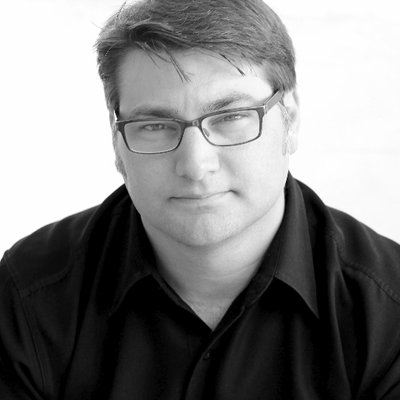
Damon D'Amore covers Executive Legacy Planning in this Marketer of the Day episode. Legacy coaching helps executives build a meaningful post-career future by turning long-term purpose into measurable action today. Damon D'Amore begins with a 60 to 90 minute interview inside a four-hour deep dive covering personal motivations, professional goals, and future aspirations. Clients map specific lifetime, five-year, one-year, and 90-day goals, then identify the "game changer" goal that enables the others. Each 90-day cycle is broken into actionable 12-week deliverables with binary outcomes that are clearly achieved or missed. Damon typically asks clients for 5% of their time, often roughly 30 minutes per weekday or 10 hours per month. Biweekly sessions and 15-minute triage check-ins help clients adjust when business demands disrupt the plan while maintaining forward progress.
To turn the tradeoffs discussed here into a smaller weekly experiment, use the Essentialism in Practice guide. It pairs Damon’s legacy-planning examples with David Ralph’s business boundaries and Dana Malstaff’s approach to fitting important work into an interrupted day.
Damon D’Amore specializes in legacy coaching. By developing custom productivity systems for each individual client relating to their professional and personal development he enables C-Suite and senior executives to accomplish current tactical business goals that ultimately will facilitate their legacy.
He has more than fourteen years’ experience working one-on-one with hundreds of the top CEOs, founders and executives in North America including high-profile entrepreneurs and Fortune 100 firms such as Walmart, PepsiCo, DirecTV, NASCAR, Subway and DreamWorks.
Mr. Damon D’Amore is a serial entrepreneur, founder, board member and advisor to multiple international companies.
He also serves as a mentor and guest-lecturer to Top 25 MBA programs such as USC, NYU and Colombia, and acted as spokesperson and host for an American Express and Discovery Channel show promoting entrepreneurship.
Mr. Damon D’Amore founded multiple startups after long careers deep in the media and entertainment sectors coaching C-Suite executives for programs such as Undercover Boss. He began his career in global finance building internal businesses for the market leading firm Cantor Fitzgerald.
Quotes:
“Everybody has the time. It’s just a matter of what trade-offs you are willing to make.” – Damon D’Amore
“Before I die, hopefully a long time in the future, I want to have made a measurable impact on society that I can measure to a billion-dollar impact.” – Damon D’Amore
“Every goal that I set with clients has to be very, very specific, where we’re constantly tracking it, and we know if we hit it or not.” – Damon D’Amore
Takeaways:
06:15 Most high-level executives want to create meaningful philanthropic impact after their corporate careers.
07:52 Plan your legacy early by dedicating small amounts of time consistently to your passion projects.
09:39 Personal fulfillment comes from making intentional trade-offs in your daily schedule to pursue meaningful goals.
13:34 Successful legacy planning requires strategic networking and becoming a thought leader in your chosen cause.
24:22 Set binary goals that are specific, measurable, and have clear outcomes you either achieve or don’t.
Resources
- Legacy Mentor: Accomplish the Business Goals That Will Manifest Your Legacy (Website)
- Damon D’Amore (Official Site)
- Damon D’Amore (LinkedIn)
Podcast: Play in new window | Download (Duration: 26:43 — 24.5MB) | Embed
Subscribe: Apple Podcasts | Spotify | Amazon Music | iHeartRadio | Podchaser | RSS
Transcript
Download transcript (.txt)Marketer of the Day episode 551, take tactical action, become personally fulfilled and achieve binary stretch goals with legacy coach,
Damon demore, Hey everyone, and welcome back to the marketer of the day podcast. We're talking with Damon D'Amore. And Damon is a serial entrepreneur. He's a founder, He's a board member, and he's an advisor to multiple international companies. His website is legacy mentor.co and he specializes in legacy coaching, and by developing custom productivity systems for each individual client relating to their professional and personal development, He enables C suite and senior executives to accomplish current tactical business goals that ultimately will facilitate their legacy. So we're gonna unpack that and figure out what it all means. David, glad to be talking to you.
Thank you for having me. It's great to be here. Well, heck, yeah.
So, I mean, so as far as so you do this thing called Legacy coaching, can you kind of like, unpack that for us and tell us what that's all about? Sure,
I've spent the last 12 years or so working with a lot of C suite executives out of the Fortune 1000 and getting to know these people on a personal level. In addition to professional the largest kind of challenge I saw was after they had the retirement package, after they had to be able to quit at the event, they would travel for a year and kind of do what they thought was their reward, and then come back and have an emotional crash thinking that they're going to live 30 or 40 years and they have no idea what they want to do. And then when they try to go do new things, they find that it's very hard compared to when they used to be the CMO of blank or the CEO of blank. So what I do is I work with executives to figure out 510, years out from their retirement liquidity event, what they want that legacy to be on a personal level. And then we look deep into their business to find what tactical initiatives they're working on that they can work on today, that they see a clear path in 90, 180 day cycles to get there down the line. So it's basically figuring out a personal fulfillment, uh, later in life, but using your business and the power and resources that you have of that title in that business today,
right? And that sounds like a real problem people have, because it's like you spend all this time going for this goal of retirement, being financially free, having fun, being a workaholic in a lot of ways, and then saying, well, shoot, I just went off a cliff. Now it's time to relax. I don't really like that. So, so now they're like lacking fulfillment and need for things to still mean something. And so when, when people come to you and they say, you know, I'm retired, I've done the travel, I've done the emotional crash. Now it's time to figure out this whole legacy thing. Do they have an idea and you adjust it, or they have no idea, and you throw out things and narrow it down, like, what's the process from people going I have no idea what to do with the remaining 30 years to have something locked in Sure.
So I usually get to them before that point. If somebody comes to me at that point where they're retired, I usually refer them to a life coach to try to figure out more on a personal level, you know, kind of where they're at and the struggles they're having. But I try to work with people that are in their you know, on the founder level for larger scaling companies in their 30s, out to people that are, you know, 45 to 50 on the corporate level. But when folks come to me, they usually have had it's just through a referral in my network, and they've usually had a firsthand experience of seeing somebody that they care about or that they followed a career trajectory for go through that kind of horrible experience, and some people react in semi positive ways. You know, they get into super health and wellness stuff, and they're just kind of like lost you able to pay somebody 10 grand, a shaman to come and bless their new office space to figure out what they want to do. And other people go down kind of a downward spiral of self destructive stuff. So usually it's folks that have seen firsthand what people in their YPO group or people in their masterminds or former executives or mentors have gone through, okay,
and so. So, yeah. So it sounds like it's important to get to it early, and if people are seeing people who are older than than them or ahead of them, or people they know who are already going down one of those weird paths of either, like you said, the downward spiral, or the health stuff, the wellness stuff, then maybe they want to get out in front of it. And so what sort of things are people doing these days in order to have that legacy? Is it a charity thing? Is it a company that has a good cause? Is it something else? I mean, what are people creating here? Or is it all over the place?
There's most of its philanthropy based which, which I love, because most people assume that big, you know, corporate folks that have a lot of money and make a lot of money, aren't charitable people. It's this misconception. When I produced Undercover Boss, the number one comment I would get when people love the show was these people seem so human. And it's like, yeah, what do you think they are robots? They're just like you and I, but they run big companies. So a lot of it comes down to philanthropy initiatives. And, you know, like, one person wants to start a school for gals in India, for young ladies, to teach them stem and then build a scholarship program to come to the US. But it becomes much harder if they do that after they've left their their company in their career, not having the full weight and resources of being able to command an audience. So what I would do somewhat someone like that is, how do they become a thought leader in that space? So Is it writing articles, doing speeches, publishing a book, holding events, holding fundraisers, etc, so that five years from now, when executive, you know, X, retires, people don't say, oh, you know, Bill wants us to donate to this charity, because that's what he's doing. It's like, no, he's dedicated the last five years of his life and made trade offs in his personal life to to find the time to become a thought leader, authority on that. So a lot of it's philanthropy based. Some of it is more personal and ego based. You know, they want to tell their story, they want to write a book, or whatever it might be, but most of it is philanthropy, surrounding causes that they're passionate about, but for whatever reason, didn't align with the company that they were running for all those years.
Okay, and and I want to make sure that I heard you correctly, because it sounded like in there that it's important to plan ahead, and it's important to be strategic. So that way, if the like, if they have that vision, that project they want to have after the working years, that it's important to get that rolling a little bit during the working years, that way they don't go away, become irrelevant, come back and have to scramble. So did I hear you correctly in that maybe people have to maybe 510, years ahead of time get this thing going? Yes,
exactly, you know. And the way that I work with my clients is I don't coach in, you know, daily or weekly or monthly cycles. Everything I do is based on a quarterly or a semi annual goal that we set that's very specific to me personally, goals are binary and they're actionable. You either accomplish it or you don't. So I asked for 5% of my clients time, which might translate into, you know, 3030 minutes a day during the work week. So, you know, 10 hours a month. But that's a trade off that they're willing to make when they're not working out, you know, traveling, doing whatever, but 10 hours a month over the course of a year, that's a lot of time. And you start multiplying that exponentially over the three five years out that you are from leaving your job and between networking and becoming an authority on the topic, you really are building yourself as a as a somewhat of a thought leader in that space. So when you leave, it's not just, oh, you're bored and you want to do something good. It's like, No, this is something you've been passionate about for years, and you've actually made the choice to to to help.
Well, great. Well, just to sort of help to reinforce this whole concept of the, you know, having those goals and dedicating 5% of their time. Do you have any interesting stories from like clients that that came to you, and maybe over the past several years, you've been going from start to finish on something?
Yeah, it's funny. Everybody thinks they don't have enough time to do whatever, you know. And I'm a big fan of essentialism. Greg McCowan book, and all my clients read it, and we do a number of exercises. But I have one client who typical type A, overachiever, C suite executive, $700 million P and L Company, and insisted they didn't have enough time to work on this thing they were passionate about. But I said, Okay, give me your typical day structure. And he got up at 430 in the morning and he worked out for like 90 minutes. He was one of these triathlete guys. And I said, Okay, if you're going to run or do two races a year, you know, let's figure out a more efficient way for you to train so that you don't have to train five days a week 90 minutes. You could change. You could train five days a week at 45 minutes. Is it different modes of exercise or etc? And he actually changed his workout schedule. So he found three hours a week, 12 hours a month, to dedicate to something else. Excuse me, without slipping on the other thing he was dedicated to. So that's kind of a small story I like to tell, because everybody has the time. It's just a matter of what trade offs are you willing to make? You know, are you willing to not? You know, I had one client that wanted to wake up every morning and read fiction for an hour, fantasy novels. And it's like, okay, you choose to spend your hour between five and 6am reading Game of Thrones. You're choosing not to work on something else. So it all becomes kind of a negotiation with these folks on what they're willing to trade off in their time schedules. Interesting,
yeah, it's like, you don't necessarily have to give up some of these other dreams or these other activities, but maybe find ways to to, you know, fit it in better. And I mean, even in the case of that person reading the Game of Thrones books every morning, they could, you know, switch to audio books or something and just listen in the car while driving to and from other stuff. So, so, yeah, it sounds like there's always room in the schedule to be taken out.
It's almost like negotiating with a child some point, like I start off, I'd say, Okay, how about you read it for 30 minutes a day for this week and commit to that, and give me 30 minutes I'm working on our project. Then they kind of grudge and long and they do that, and they realize that they're still enjoying the book. And then it's like, Okay, how about you give me the full hour, two days a week, three days a week. It's like negotiating with a kid their bedtime, but at the end of your cycle, they're like, Wow, my God, I wrote 14 chapters in a draft of my book, or I've actually created the format for my podcast, or I've, you know, scheduled, and I have an event coming up as a fundraiser for something that I'm passionate about.
Right make time for that stuff that's important. So other than finding the time, have there been any real difficulties with people working on their legacy, like, have there been any, like, false starts, or maybe the legacy changed, or it just didn't work out at all, anything like that?
Yeah, you know, they have false starts, which I view as a positive outcome, because a lot of these people, they'll carry a journal or keep a digital file of all these ideas they want to have and things they want to do. And I say that if you commit to a 90 day cycle, and at the end of that 90 days, you realize that's not what you want to work on, that's actually empowering, because it's less stress that you're not doing it. You don't have this fear of missing out, and now it's one less thing to figure out what to focus on. So I have had clients that, over the first 90 days, decide it's not what they want to do, and then shift to another goal. And it does become somewhat empowering, because I know I have a list of things that I want to do every year on the personal side, and then maybe they get to 30% of them, but you have to prioritize. So Right?
I mean, it's like the Thomas Edison thing, right? I haven't figured out 10 I haven't failed 10,000 times. Just figured out the ways that didn't work. So that's really great. That number one, they're committing to this 90 day cycle, so that way they're giving it a chance. And it seems like that, if that removes a lot of the barrier to entry, right? Because maybe they had a certain passion project they wanted to jump into in their 30s and 40s, and they just never found the time for it. And so you're saying, well, just find the time for just 90 days. You don't have to commit to this for five years or forever. Just try it for 90 days and then see how you like it and reevaluate it. And if you want to keep going with it, you can, if not, then you basically start over. But this way, it's like not, it's not viewing like the whole elephant they have to eat, right? There's no none of that fear of biting off moon they can chew. Yeah,
exactly. And all the, all the actionable goals that I set with people, these binary goals after our first session, which is like a four hour deep dive into their personal, professional life, and we build this roadmap and see what's going on and where they want to go, these goals that we set for the first 90 days, they're attainable, but they're a little bit of a stretch. They do actually have to spend some effort, but I would never have somebody say, I want to write my whole book in 90 days, or I want to run a marathon. It's like, it's crazy. You know, they're going to fail, but if you set them up where, if you teach them that they are expending a little bit more effort and energy and making trade offs, and they have a positive response from that, then they're then they're more likely to keep going and dive in and, like, really wrap their arms around it.
So is there a method to the madness in that four hour deep dive, in setting those stretch goals, like, is it a matter of you're talking to them enough to get a feel of them, or you're writing things out on paper and budgeting and figure out, figuring out how much time things would take. Like, I'm just curious, like, how do you make those goals where it's a little bit of a stretch but still doable?
Sure, so I start out with probably a 60 to 90 minute interview, the same way I would interview a CEO to be an undercover boss or apprentice back in the day. You know, I'm a business guy at heart. You know, I worked on Wall Street before I worked in Hollywood. So I love business. And most of these executives, they love their business, in some cases, more than anything else. So, you know, it's doing that deep dive and kind of interviewing them about what motivates them, what they love about their business, why they do it. Then they're more open to talk about personal stuff, and once you kind of figure out what type of personality they are and what really motivates them, then we literally draw a roadmap, starting at the very end of a timeline that might be called legacy or lifetime for three to five very, very specific personal and professional goals. So if they wanted to make a certain amount of money to retire or set up a foundation. What's that number you want to have a house? Internationally? Where do you want to have that house? Et cetera. So we set very specific goals for a lifetime, a five year, a one year, and then 90 days. And then we figure out which one of those goals in each time segment is called a game changer, which, if you accomplish it, will enable all the other ones. So then we do it, we draw a map between all these game changers, and then the game changer for 90 days. We literally sit down in that first session and we break into actionable, realistic goals over a 12 week period, and we assign each goal a week number so that I know what's deliverable to my client. I am, and they know what's deliverable to me. And it's very clear when they walk out of that first meeting, what they're going to do for 12 weeks and what that result is. Well, awesome. It
sounds very scientific, especially with those 12 week chunks mapped out and the deliverables there. And so how, how, I guess, closely do your clients stick to this? Because, like, as you know, it's easy to map out a bunch of stuff, but then sometimes life gets in the way, or sometimes things push back. So how set it in stone? Are those goals? And how much have they change?
Sure, I'd say about 80 to 90% of the time they are on track for those the way they schedule. My work with clients is it's bi weekly full sessions, and then the weeks in between those bi weekly sessions, there's like a 15 minute Skype that's just kind of, you know, I call it a triage, like, what are you struggling with to get to the next deliverable? And, you know, some people have to fly to China, or some something comes up in their schedule. But I feel like by having bi weekly goals and not weekly they can always find that time. Once in a while, they slip on the on the startup founder side, startups that are well funded and scaling. I do 90 day cycles, initially with a client, but on the corporate side, everybody's a minimum six months, because I do realize that sometimes a fire has to be put out internationally, or some crazy thing happens, or some of these people are public officers of public companies, so in a six month time period, even if they missed 15, 20% of those of those deadlines, they're still really well on track. And I will, I'll kind of pivot and and tweak goals over time. I might take one task that's due in four weeks and break it up into a six week task, but some but as long as they always feel like they are making actual progress in a forward direction and and not just spinning their wheels to be busy, because I don't want to waste my time either. I refer to a lot of potential clients to other coaches because they just don't fit my type of coaching style, and they want somebody who's less who's going to hold them less accountable,
right? I mean, yeah, it sounds like you thought a lot of this out, and it sounds like this avoids a lot of the usual stereotypical goal setting stuff, where it's all set up with the best of intentions, but then it's not adjusted over time, and then it diverges further and further from what was planned, and the next thing you know, you totally ignored the goal. So this is great that they have you to sort of whip things into shape and to readjust things and make sure that things are still moving in that forward direction. And in this conversation we've had so far, I mean, we mentioned that you've worked on Undercover Boss and their apprentice, and I see in your bio that you worked for, you know, Subway, Walmart, Pepsi, NASCAR, places like that. So, I mean, what the heck is your story? I mean, what have you been up to last couple decades, and what led you to this whole legacy mentor niche.
Sure, it's a really long story, and I'll try to give you the cadets version. I grew up on the east coast of New Jersey. I loved finance, and I went to work on Wall Street when I was 21 before I graduated college, went to school at night, started as a ticket runner back in the day, when they actually had tickets to print, and within six months, I was running a trading desk because I had a really innate, natural ability to trade bonds. And over the course of my five years on Wall Street, I built, with one other executive, the first live trading platform for this big firm, Canna Fitzgerald, and it was my first time where I had no specific tactical experience in something, but I had a vision, and I was able to corral a team towards that goal. I left Wall Street for 11 years. I worked in entertainment, first in film, and then a lot of reality television, almost all of it strictly business related content, like apprentice Undercover Boss. I got kind of burned out on entertainment after my ninth, ninth year, and started looking for a way out. And I did a small consumer product startup in 2010 quit my job and Undercover Boss. It was successful. I raised a small venture capital fund here in LA, which people told me that I couldn't do because I didn't graduate college when I was on Wall Street, or I didn't go to Harvard, etc. Raised my venture capital fund, did everything from host a show on Discovery Channel for entrepreneurship, to, you know, corral startup ideas that we wound up buying and implementing from people all over the world. And then ultimately that company, way founder, ran out of funding. And it was a, it was a brutal, brutal, horrible way that it went down. But as it was, as it was trending down. Some of these executives I work with, an undercover boss reached out to me and started asking me for very specific mentoring or coaching advice, everything from companies they were requiring to investments, etc, and not personal investments, corporate investments. And at first I felt like an imposter, because I didn't sell my company for a billion dollars. And I never went to Harvard or, you know, etc, but I realized that had a very specific skill set, having this broad experience. And for, you know, over a decade working one on one with a lot of large fortune 506 foot executives, I know how they think. I know what motivates them, and I gain their confidence. And. And this coaching business kind of happened organically, where, before I knew it, one referred me to another, to another, and then I had like, 14 clients at one point in May 2017, and I said, I guess I'm a I guess I'm a coach, you know? And then what do I want to focus on? I didn't want to be a traditional leadership development coach, etc, a life coach. And I said, these people that I've grown to know really well over the last decade, what's the biggest challenge that they have? And it was this legacy issue, and it was really, really sad to see people who were such high achievers kind of wander around lost, and everybody's pulling at their strings for their attention, but they deserve the right to spend their rest of their time doing what really makes them happy. So the legacy coaching really hit a chord, because everybody that I know in that position, these fortune 1000 guys and gals, they've seen people go through it, and it's horrible.
Well, that's pretty amazing. It sounds like quite a journey. And I love stories like that where number one, you didn't just choose one thing and stick to it, right? You went from one thing and one snap, sort of, once you got bored with that, you moved on to the next thing. And that number two, you figured things out as you did it. Right? It's not like you went to school for 1020 years to figure all this stuff out. Yeah, you figured it out while you were in the moment. And I just, I love those sorts of stories where you have that kind of a vision. You build something up, it takes on a life of its own, and then you discover something that's really lacking in the marketplace that not a lot of other people see, and you take a risk, and you go for it, and you kind of carve out your own little space. So I mean, that's pretty cool. And so this all leads me to wonder, Well, do you yourself have a legacy project going, or do you have that figured out yet?
I do at a very high level, but I've been part of a mastermind here for the last 11 years in LA of other entrepreneurs, we've had some folks with massive exits and some with smaller exits and some without an exit, like myself, but the whole purpose of the group is also based on accountability and goals that are binary. So I before I die, hopefully a long time in the future, I want to have made a measurable impact on society that I can measure to a billion dollar impact, and that could be through scholarships, jobs created, through my clients, investments, philanthropy, whatever that might be. But I'm trying to make a measurable billion dollar impact, because people always say, if I had x amount of money, I'd solve whatever problem. And it's like, Well, okay, let's see how many problems we can solve if we actually get to a point where we where we can show that we've had an impact of X dollars. And I do a lot of work with high school kids through ja and nifty and y BA and all these charities, and I have a very specific idea for teaching practical entrepreneurship skills to at risk kids in in high school, and that's something that I want to start funding about three years out from now, when I if I'm looking at my roadmap and I'm able to do it, well,
super awesome. So it's so it sounds like it's not just about building up the bank account, getting the bigger number, but using that stuff, using that money, using those resources and those connections, to do a lot of good, and just to make sure that we're on the same page as we're winding down here, you mentioned a few times binary goals. And when someone says to me, binary goals, what I hear is it's like a zero or a one, right? Yes or a no. You either hit your goal or you didn't. So is that what a binary goal is, or is there more to it
exactly? It's a very specific goal that you know you're going to accomplish or not because of the metric you're using. You know? It's like somebody is saying, who's a runner that says, I want to be faster? Well, I don't care. What does that mean? You want to shave four seconds off your mile. You want to shave a minute, you know? So every goal that I set with clients, whether it's on the business side, it could be customer acquisition, it could be growth, it could be revenue. On the personal side, it could be a range of things, but it has to be very, very specific, where we're constantly tracking it and we know if we hit it or not. So and sometimes you don't hit your goal, and there's a valid reason for it, but if there isn't a valid reason for it, and you just chose not to make those trade offs, then it's on you. And I make my clients own it the same way that I show up at a mastermind every the first Monday of every month. The last 11 years, I've only missed like two of them, because if you miss more than one in the one in a year, they don't care who you are, you're out of the group. So it's like, you show up every month and you have to say, did you accomplish your personal, professional goals the last 30 days? And if the answer is no, you better have a good reason, because everybody else has families and multinational businesses and does whatever else. So yeah, they have to be binary, and you have to own your progress. Well, awesome.
And I agree completely that it's really easy to not have a goal, or to think that you have that goal in your head, or not be accountable, and then miss it and say, Oh, that's okay, I missed it. I'll do better next time. But if you're just a little more specific, and you say, well, here's my goal, and either I hit it or I didn't, if I didn't hit it. Here's a reason, and then I can do better. Then it seems like that's, I mean, that seems like the only way to go, right? Otherwise, yeah, you're just completely directionless. So, I mean, I'm right there with you. I agree completely, and I want to make sure that, as wrapping things up here, everyone knows all about Mr. Damon D'Amore resources and links. So do you have any website? URLs you want to drop here after people listen to our conversation today,
sure it's legacy mentor.co.co is my is my website. My personal website is just my name, Damon demoar@just.com but legacy mentor.co is the best place for people to reach me and my LinkedIn profile is just my name, Damon demore, and I don't just accept random connections, but if somebody reaches out to me and wants to have a conversation and there is a match or something that we can do together, I'm happy to connect with people. And I'm always happy to talk with folks about, you know, what's going on in their lives and their business, to see if there's somebody that, if I can't help them, if somebody can refer them to super cool.
Well, appreciate you doing that. So that is damonddamore.com that's D, a m o n, d, a m o r, e.com and search Damon Damour on LinkedIn. And then if you think you're a right fit, or you're interested in this whole legacy mentor concept, then head on over right now to legacymentor.co. That's L, E, G, A, C, y, M, E, N, T, O, r.co, Legacy mentor.co, so thanks so much, Damon for being open with us and telling us about you know what it all means, what we do with the money after it's all done, and being open and honest with your journey and what you have going on, you've given us a ton to think about. So I really appreciate it. Thanks for that. Thank
you. This has been wonderful. It's a great conversation.
If you're a future
podcaster, new podcaster, existing podcaster, or you're looking to make more money with your podcast with less time, you owe it to yourself to check out done for you. Podcasting.com we handle any or all of your podcasting needs go to done for you. Podcasting.com RIGHT NOW YOU.