Published Last updated
View in Podcast Library: stories, quotes, books, and resources in one place.
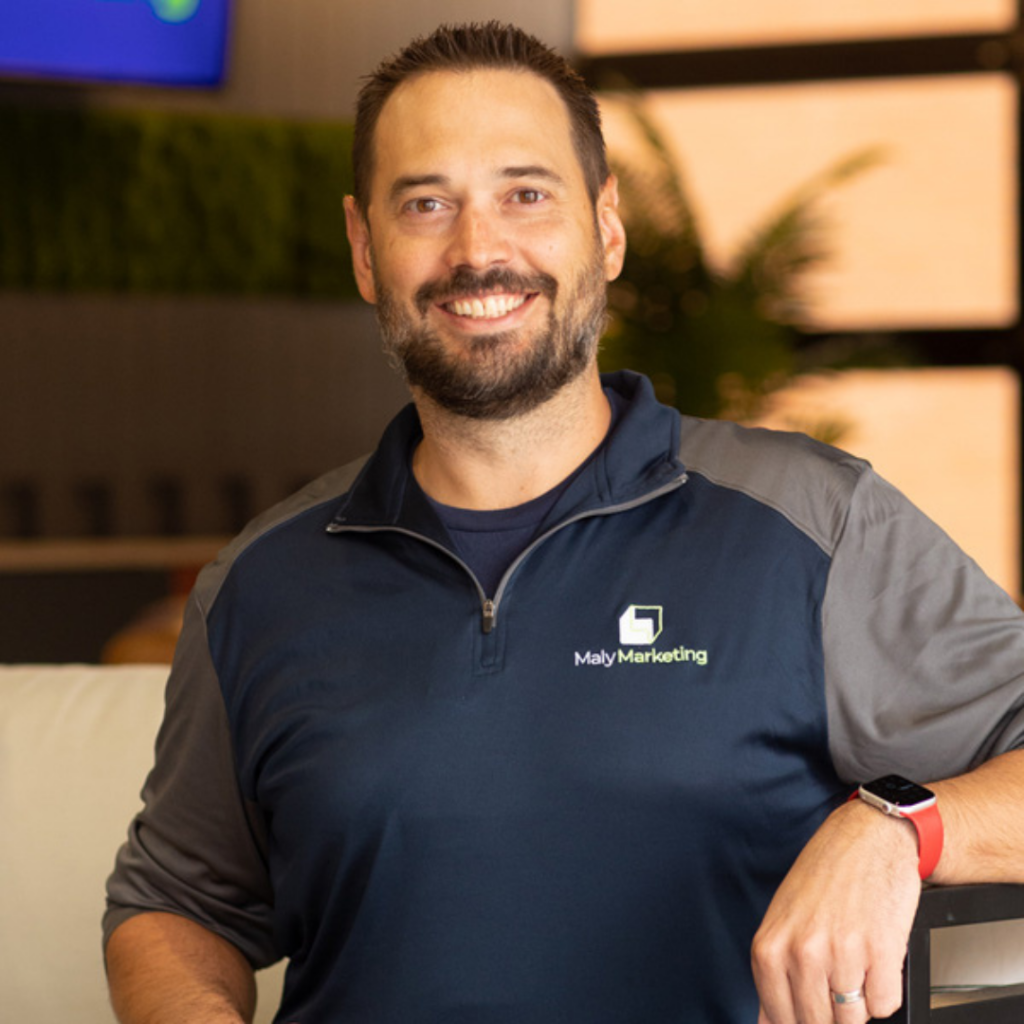
Steve Maly covers Marketing Media Buying in this Marketer of the Day episode. Steve Maly explains how businesses can improve results by blending traditional and digital marketing instead of overloading one channel. He says Meta ads can now be six to seven times more expensive than traditional TV ads, while local TV or billboards can start near $1,000 or less. In one tourism campaign, adding billboards helped digital clicks rise 92% and dropped cost per lead by almost 40%. He also highlights direct mail, including a B2B campaign that converted 32% of recipients into meetings. His framework centers on KPIs, lifetime value, CPM, cost per lead, and channel mix. For tracking, he recommends Looker Studio and realistic attribution rather than chasing perfect proof.
Creativity and ingenuity are the lifeblood of brand development. They enable a brand to stand out in a crowded marketplace by crafting a unique identity that resonates with its target audience. It’s about finding that distinctive angle, that fresh perspective, and that innovative approach that captures attention and creates lasting impressions. Harnessing creativity and ingenuity can not only help brands differentiate themselves but also forge deep emotional connections with customers, fostering loyalty and long-term success.
Steve Maly, the CEO and Founder of Maly Marketing leads a dynamic full-service marketing and advertising agency headquartered in Lincoln, Nebraska. At Maly Marketing, their core strength lies in creative problem-solving, a skill honed and proven across a wide spectrum of industries. Their portfolio spans from comprehensive branding initiatives to cutting-edge digital campaigns, all of which are crafted with ingenuity and innovation to consistently yield substantial and lasting impact. Today, Steve will talk about the mechanics of traditional marketing, the key to all marketing, marketing budget, and shed light on the vital role of KPIs. Stay tuned!
Quotes
“The way the meta was set up initially, you could be a pretty bad marketer but still get good results because costs were so cheap back then.” – Steve Maly
“Part of it kind of reminds me of a circumstance. How do you track marketing? That’s always the question you get: how do you prove this? Various sources will show you data, like Google, but the traditional side is different. With a traditional setup, you can’t click on a billboard to see the full path.” – Steve Maly
“Business truly is about being in the right place at the right time. Sometimes that right room costs money, but it’s worth investing in getting into that room and connecting with higher-level people.” – Steve Maly
Takeaways
03:10 Balancing traditional and digital marketing strategies can lead to better results, as traditional channels like billboards and TV ads can provide credibility and increase engagement with digital ads.
08:12 Direct mail can be a surprisingly effective tactic, especially in the B2B space, where it can drive high conversion rates to meetings.
12:13 Tracking marketing performance across multiple channels can be challenging, but using tools like Google Data Studio can help provide a more holistic view of campaign effectiveness.
12:32 Introducing new marketing channels can often lead to a 30% bump in performance on existing channels, highlighting the importance of a multi-pronged approach.
19:21 Networking and building relationships with industry peers and thought leaders can be a valuable investment, as it can lead to new opportunities and insights.
Resources
Podcast: Play in new window | Download (Duration: 21:36 — 29.9MB) | Embed
Subscribe: Apple Podcasts | Spotify | Amazon Music | iHeartRadio | Podchaser | RSS
Transcript
Download transcript (.txt)Welcome back to the podcast. We're here with Steve Maly from m a l y marketing.com. And Steve is all about strategy and media buying. So we're going to be talking today about how traditional marketing works. And the number one key to all marketing, your marketing budget, KPIs, and so many more things. So Steve, glad to be talking to
you. Awesome, definitely looking forward to the conversation.
Me too. And so just jumping right in, what's your current passion and focus like in the last six to nine months, what has you're fired up excited to get out of bed in the morning?
Yeah, it's been super interesting. So we've been in business 19 and a half years at this point in time. And so when we first got into it, a ton of it was traditional marketing, because the online components just didn't exist, social media and all that type stuff. Then he went deep, deep, deep into the other side, where it's almost 100%. Online, it's been cool over the last nine to 12 months be able to see that balance kind of come back between the traditional and the non traditional, you know, the digital side of things, especially how much cheaper traditional is for people and the impact that it really makes. So most of the conversations that we have with some clients at times, like, Hey, we got this budget, we won't we've been spent this whole entire budget on banner ads, Google Ads ticked off whatever my bid at the moment. And I kind of conveyed to them and showing them, hey, if you take that exact same budget, you make different splits with it, you'd actually get a lot better results. So those conversations were the ones that I absolutely love. And you kind of teased it at the beginning of this podcast as well.
Exciting. And why has this happened? Like why did it seem to go so far in the one direction and combat what's going on?
Part of it, this is even going back three or four years is the way the meta was set up initially, is you can be a pretty bad marketer, but still get some pretty good results through it because costs are so so cheap back then. But they were also a nonprofit company. And so as they've had become a lot more profit with it, their costs have been rising, really a recess. To the extent at times the meta ads can be six to seven times more expensive than traditional TV ads, for example, it just most people haven't seen it. It's kind of at the boiling frog, you throw a frog in boiling pot of water, you could slowly turn it up and then frog never notices and parishes. What's been like on the meta verse, you know, a few well known universe there is the rising cost. Most people haven't noticed it, because they still have that mindset, oh, it's cheap. It's cheap. It's online. It's cheap. It's cheap. And it's just not really true any longer.
And, you know, maybe five or 10 years ago, the whole appeal of Facebook ads was that people said, Well, Google ads are so expensive. They said at first Google ads were cheap. And you could just get away with running a quick app. But then it became more competitive. And they just found ways to slowly increase those costs. And then people say, Well, Google ads are expensive. Now let's go to Facebook ads, meta ads. And then so now that's been seems like been more established. And then it's time to look in other areas. And so what does that look like? You said, sometimes you come with a plan. And you say, instead of all in on meta ads, it's kind of sectioned out. So do you have a fun, like story or a case study to share with us about how maybe you had this kind of multi prong strategy?
Yeah, so it's always kind of interesting, because generally speaking, when working with clients, you always try to get quick wins. As you build out an entire campaign. Long term, those quick wins could start online. So we might be running online ads for two months, three months, four months. But then we know a specific date when TV starts running, or billboards start running or radio starts running or a combo of those things. So we can take a look at those previous 30 days compared to the next 30 days. So one of our favorite ones that we did, and this is a little bit over a year ago, we were running this campaign, it's a tourism client of ours sort of trying to get people to go visit this community. And so we put up billboards in a theater community that sends a bunch of tourists there, as well as some guerilla marketing campaigns. So we put up the campaign names call for a good time. Now the things you see on bathroom walls, or whatever, and we have fliers around town, you can do a pull tab and call for a good time, while we're running those online campaigns for about 30 days prior to but the moment that we put up those billboards, and we didn't change anything on budget, the same optimizations, the same targeting is the same, everything's the same. Well, now that they're starting to see this brand in the real world, that clicks on those digital ads went up 92% cost to get a lead dropped by almost 40%. And we really see time and time again, because you'd have that credibility aspect of like holy cow, these people have billboard money or TV money or fill in the blank, traditional side of it. Like they must be fully legit, and be able to see them both credibility wise in the physical world, as well as kind of the digital world. It just helps influence everything else has taken place online. So that's why I love putting together some of these case studies because there's no guarantees and marketing period. But other case studies we pulled together. We haven't noticed a drop off by introducing new channels, especially new traditional channels on top of what you're already doing on
that's amazing and especially when you are in this instance targeting a geographic area and you couldn't kind of do all these few different platforms. And then one person in this area will be seeing it in all sorts of places, right? They see the TV ads, they see the guerilla marketing. And I'm still amazed when my wife will be looking at Facebook or meta on her phone, or a Google search results. And she won't even notice what the sponsored posts are. And people like you and me, you'll see the little sponsored link, but it seems like is that the average person like they don't even notice that. And then the she also is like, very much easily amazed when the retargeting ads follow her around. And again, guys like you and me know, there's a pixel, there's a cookie on landing page, and then everywhere you go, the ads are there. But it's just, it's a good reminder of the fundamentals that you can do these things to easily follow someone around. And so my limited understanding of some of these media buys is also that the the TV ads in the billboards are much more accessible than they were before. Because sometimes you see like in like YouTube ads, you can buy TV time, and then there's so many billboards, now they look real, but they're just like a huge screen, and you can just buy these time slots. And so am I on the right track with that, that, you know, when you say TV ads and billboard ads, sometimes people discount that because they think, oh, I need like 10 or 20,000 bucks just to start just to get it put up. But you and me say it's digital, you can just buy the time.
Yeah, exactly, exactly. We have some local clients who spend $1,000 a month on TV ads, and they're able to get the results that they want to get. So oftentimes, we do hear that, and I'll speak at conferences, and I'll ask them like, hey, how much do you think a billboard ad costs? And most common answer is between five to $10,000. And then I pull up a billboard from that community and like this one is 800 bucks, this one's 1200 bucks, you know, this one's 1100 bucks. And it really just kind of blows their minds, they think it's gonna be so much more expensive, and it's not a part of it, it's just inventory. There is quite a bit more inventory now on both billboards or TV or whatever it may be. So it gives us an opportunity to kind of buy into that. But it's also just how the digital landscape has changed. People are still consuming traditional media, but it's a little bit of a different way. And so they have to they know they have to compete against the digital aspects of things as well. And so they've been lowering CPM cost costing them to reach 1000 impressions, really by quite a bit to help combat that.
So it seems like a lot of your strategy here is just like we mentioned, in your bio, a little bit of looking at the KPIs. And you mentioned things like cost per lead acquisition. And so you're just like kind of looking at what things cost and you try some experiments. And you say, well, as long as I'm making money, as long as it's working, it doesn't matter if maybe the budget is low, or the bid amount is scary. And so these are some fun insights and surprises that you're sharing with us about how he's just like, hey, this guess what this one billboard costs only $800? And so is there anything in your digital marketing and your media buying travels, that we think is not talked about enough? Is there anything that just you've, you've been like surprised or just amazed by that it's just not getting enough attention.
Um, actually, one thing that pops up a lot when I'm speaking at conferences is direct mail, surprisingly, because a lot of times people think direct mail is dead. And the way that a lot of companies do it, and just kind of dying, it's the same crap time and time again, it's postcard, it's a white envelope that comes across. But we've had a ton of success on the direct mail side of it, especially in the b2b space, where we know we can spend a little bit more per piece because the lifetime value is gonna be that much higher in the b2b space. And if you do it right, when we had one direct mail campaign that went out, is the conversion rate to get them into a meeting was 32%. And which is freaking crazy,
right? Free letters, one meaning, right? Yeah,
exactly, exactly. And so there's things that people are always surprised about, because I kind of know, I don't want anything physical anymore, everything's digital, well, then everything goes digital, and you become so immune to it, just like you're talking with your wife, you just start to ignore this stuff. So go the opposite, where people are going, and you can stick out a lot easier.
And that's a great reminder. And I love doing direct mail every now and then probably every year or two. When I say well, I want to get a few more clients, I'll just send some things in the mail. And it's it seems like, if I only sent if I only did the direct mail, I don't I definitely don't see very much in the way of results. But when I do the direct mail plus a phone call plus an email blast plus find them on social media and all these different things, then it seems like it works and it kind of relates to what you were saying before and a couple of you know conversation hops ago reset. Well, if you're running ads, and all these different ways, and someone just keeps seeing you and different kind of modalities, then it's really hard for them to ignore you. And so there's just a lot to think about so far in our conversation. And so what do you think is ahead for you. And what do you think is like coming for the future as far as media buys and all these things,
it's interesting because again, we've been in it for almost 20 years. And the more things change, the more they stay the same. You know, you have a bunch of eyeballs might be jumping into a tick tock or threads, or whatever it may be, when you still have a huge pour of audience just in Facebook itself, and Instagram itself. And the more of the things going to shift into that digital world again, the more opportunity we see on the traditional side of things, like going back to we were just kind of talking about and this you know, the whole goal and marketing is like, you know, I see you everywhere, you're always top of mind awareness with it, you can take a list, you purchase a list was called 10,000 names, for argument's sake, you can upload that you can send ads to them through meta through email blasts, as well, you can upload that same list to a TV provider, anybody that matches up into that list, now they can start seeing TV commercials on that day. And let's just say on Thursday, you dropped direct mail piece. So now potentially, on Thursday, that same user will get direct mail sia and TV and see in the digital space to make it feel like Oh, my God, these people have all kinds of cash sem everywhere. Now, we're just targeting 10,000 people, we don't know 10,000 People doesn't cost that much money, relatively speaking to kind of targeting which has been a lot more strategic, and more kind of narrow over the top of it with with one's budget. I love that when
especially when you are doing that narrow target in a short time period, then you can afford to just do all all that blasts all at once. And then you still have that effectiveness, you still have that that surprise. And you always hear about how we see like 10,000 ads per day, but we're just we see the same ones, and we don't even notice it. But if suddenly things are different, then we can have a better effect than if those same ads are running over a super long period of time, it could add something new and different and gets their attention. And so I'm just loving some of these stories that you're telling and just kind of the the master world domination plans of like running all these ads and doing all these sorts of things. And so what have your challenges and struggles been like, like when you work on these projects? Is there any kind of situation where you've been like stuck, frustrated? Not sure what to do anything come to mind there?
Part of it kind of reminds me of a circumstance? How do you track marketing? You know, that's always the question that you get all the time, how do you prove this up, you know, men will show you some data, Google will show you some data, the traditional side of it's gonna be a little bit different, because again, it's traditional setup, I can't click on a billboard, to see that full path. And it kind of comes to the other side of that we talked about a lot, is every time you introduce a new channel into your marketing, you generally see about 30% bump on the previous channel that you have running. So if you add, you know, print plus Digital Plus TV, so one plus one plus one equals three, and literally is one times 1.3, add that up, plus, you know, the next 1.3 and it gets closer to four. And because of that you don't have that clip granularity, what is this one ad is person saw that came in to make a buyer become a lead or whatever it is, you know, marketing doesn't happen in a silo or decision making process doesn't happen in a silo. So a lot of times when clients want to be able to get very, very granular into that one thing that made somebody move, just can't do it. You know, there's all these companies promise you, I'll show you this data, I'll show you exactly how this works. And we had one client last last year spent $89,000 in the reporting system to try to close that gap. And then the day, they basically ended up with Google Analytics with another biller whistle over the top. And so sometimes that's kind of close. But that's that's the challenge to be able to kind of explain, because people in their minds have been told time, oh, yeah, you can prove this out, you can put this stuff out. And with human nature, good luck, we worked with wicked reports, we're at that point in time, they tracked about $5 billion in overall ad spend. And I asked him, like, some of his biggest surprises is like, even at that component, you can't match up all this data, you know, we can kind of paint a picture and kind of show a general direction. But we can't pull all this stuff together and and this is a guy that tracked $5 billion in ad spend, let alone a client might be spending $500 in ad spend or $5,000. And that's but
that's interesting to think about that it would be nice if you got all the if you trimmed all the ads down to 0% waste and literally everything you ran made money but there's there's like those intangible there are there's the you some of these ads warm them up or some of these touchpoints kind of got them paying more attention. And then this this last ad is what got the new buyer this last marketing action. And so that's just interesting to think about how there's all these things in play and it's it's you're always experimenting and split testing and changing and it's tempting to like remove all these pieces, but you don't know if those pieces were what, what Mick painted the complete picture. And so how does someone kind of tap into this analytical mindset that you have because for some reason, I'm always blocked whenever it comes time to to think about this sort of stuff to think about like, like my funnel or my conversion or my numbers. Sometimes I just think like me It's it's hard to get myself excited about the numbers and hard to like recurringly revisit. And it seems like the these guys like you that are like really good with the advertising. It's just what you eat for breakfast and you're just always looking at the numbers like multiple times a day. So how do we tap into the sort of numbers energy that you have?
Yeah, so a couple of things, we set up Google Data Studio, which I guess is Looker studio at this point in time to be able to pull in numbers in real time. So we have an idea of where thresholds are at baselines are at and always kind of see that. The other component is we always offer an initially have a free 30 minute audit over anything that you got arguments online of it's offline, because again, we see numbers all the damn time I could tell you really quick, like, that's good double down there. Or, hey, this actually happened about a year ago, you say that this display ad is getting me clicks for $15? That's good, right? No, it's horrible. But again, we could tell this stuff super, super quick, because we don't always find it. Or we always deal with it on a on a daily basis, instead of like, so we more than happy to kind of do a free audit over the top of it. And then for people to kind of build out on their own Google Data Studio is a pretty good free tool to pull in different sources, you always have an idea where your numbers are at collectively. Fantastic. It
reminds me of a in the matrix when the all the numbers are raining down on the screen. And the guy says, you know, you just see code I see blonde, brunette redhead. And so it's like you see you see the data and get get excited about it. And I think so you're saying Google Data Studio. And it also just seems like the kind of the solution here if some company out there says, you know, we know we need to be more dialed in on the metrics on the numbers on the KPIs, it seems like the answer is just to involve people that are excited. And then that way, that's their job. And then also the enthusiasm kind of rubs off. And so that you're saying the logical step forward for some company, if they know they need to pursue these media buys and get the ads in place, or better dialed in or if they're wasting on $15 A click Display ads or on meta ads, then it seems like the logical next step is to contact you and your company and your team and do this meeting, do this audit. That way you can show them what's possible. And how would someone do that? What's the call to action? What's the next step?
Yep, the best part is go directly just to our website, Molly marketing.com. Like you mentioned, ma l y marketing.com. On there, you actually see a couple of free guides as well, they're getting published with those free guides. So take a look through lifetime value kind of give you a better idea of marketing budget and where this relation kind of live, that'd be a good place to start is take a look those guides then reach out to us and they said one of us we'll jump into an audit for you. And like you know, the way that I always look with audits, no judgement, I don't know what your initial strategy was, your initial budget was what the directions were from top down loss was gonna give you our inside look under the hood. And be very honest, in regards to that was awesome. Roll with it, or a little rough, we gotta consider some a little bit different.
Fabulous, Molly marketing, m a l y marketing.com. And that's an interesting, kind of just way to feel better that you mentioned there is that there is that kind of hesitancy say if your financial situation was a mess, you're hesitant to see the financial advisor because you're just afraid of what they'll see. Or like, if you're, if you have really, if you're out of shape, or you have bad teeth, and you are afraid to go to the dentist, it's like, but that's the only way you're going to get help. And these people are professionals that they've seen it, they're excited to help you they want to help you. So that just seems like an interesting minds block to overcome if some business says, you know, the metrics have been a mess for years. We don't know what's profitable, what's a mess, what to work on? Well, it's time to get over that hump. And to take the first step, and to get the right people involved at Mollie marketing at MALYMARKET ing.com. And as we wrap up our conversation here, Steve, I always like to wrap up these kinds of conversations and get a little retrospective and ask if you could think back to 20 years ago, is there advice that you wish you'd gotten 20 years ago, that would have been really helpful on your journey?
Yeah, it's interesting, because I have a student that came in here yesterday and kind of asked me the same thing. And I guess a couple things. One is just really gets known finances of a company in period like intimately inside and outside. So you have a better idea of what levers to pull, and we're making better decisions. But that, too, is getting you to always expand your network. And the reason why we've been able to grow over the years is we do have a pretty good network here at this point in time, but it took me a while and learn through trial and error. We used to have speakers come in at the university and they would always talk about it's not what you know, it's who you now and it's like, yeah, whatever old guy sure sounds great. In reality, it's so much business truly is that being in the right way? Boom at the right time, and sometimes that right room cost some money. But it's worth getting in that room and making that type of investments and connect with kind of higher level people.
An excellent reminder to always be networking. And that's what you and I are doing right now. Right within, it's a two way street. I'm networking with you, you're working with me, we're on a podcast. And it's really tempting to be just stuck in the day to day and to be stuck in scarcity mode, and just dealing with the clients you have dealing with the problems you have. And it can be tempting to say, Oh, I don't need to do that speaking gig or that networking event. Or it's easy for someone to say, Oh, I don't need to run those ads. We're fine with our company at the size we are. But it's so important to just do those extra things. So that way you're growing and not dying and sustaining yourself. And most importantly, it seems like a theme of a lot of what we're talking about here, aside from measuring is just getting the right people in your orbit. And so the very next step to get the right people in your orbit is to add Steve Molly on LinkedIn, last name, m a l y, but most importantly, go to Molly marketing.com. That's ma l y marketing.com. And thank you very much, Steve for stopping by and for giving us some really important foundational lessons and some insights, some reminders, some really great stuff. I was very impressed. I appreciate it.
Yeah, absolutely. Definitely appreciate as well. It's always fun having these tough conversations.
Thank you for tuning in to the marketer of the day podcast. marketer of the day is managed by de FY podcast, claim your 12 podcast boosters at Def why a podcast.com/free.