Published Last updated
View in Podcast Library: stories, quotes, books, and resources in one place.
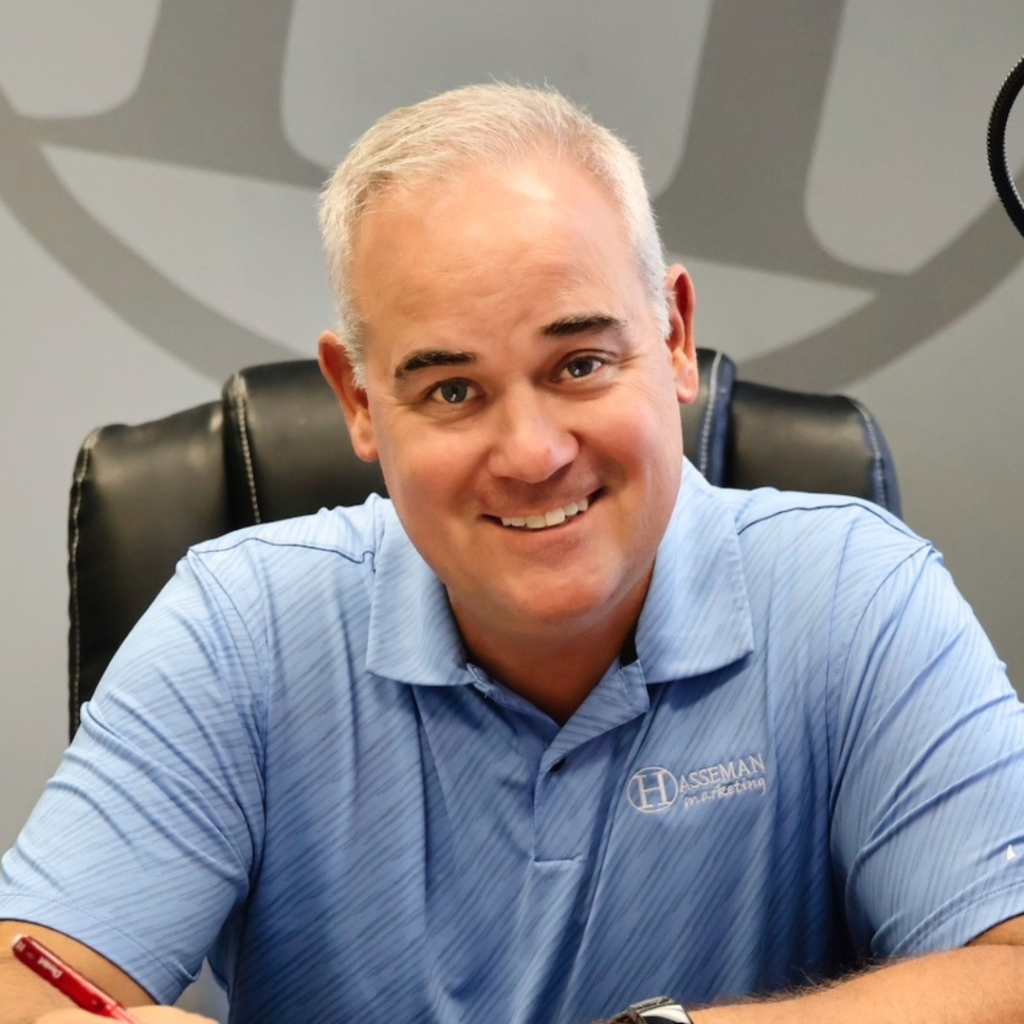
Kirby Hasseman covers Small Business Marketing in this Marketer of the Day episode. Kirby Hasseman shares the TARGET framework so small businesses attract customers who value their work and buy sooner. He separates brand marketing from direct marketing, noting content can work even when it is not meant to convert today. Using the 80/20 rule, he studies the 20% of clients creating 80% of revenue and doubles down on the ones you never dread. That clarity makes list building easier because an email list is owned media, unlike social platforms that can change reach overnight. For lead magnets, he prefers quick hitters like a 19-page playbook over big courses that feel like homework. He illustrates it with an Amish furniture maker who focused on cabinets, targeted custom home builders, and used face-to-face outreach to spark faster orders.
Every entrepreneur, marketer, and business owner knows the struggle of attracting and retaining customers. But what if there was a way to simplify this daunting task? What if the secret to skyrocketing your business’s success was right in front of you, waiting to be discovered? Effective marketing strategies blend various tactics, from identifying target audiences to crafting compelling messages and choosing the right channels to disseminate those messages.
Kirby Hasseman is a renowned author who has penned five books, including the popular “Hit the Target.” He hosts the podcast “Delivering Marketing Joy” and is the CEO of Hasseman Marketing and Communications, a full-service marketing company. Today, Kirby discusses his target marketing framework, the importance of understanding the difference between brand and direct marketing, and the crucial role of list building. Tune in as he delivers marketing wisdom and joy, and be prepared to take your business to new heights.
Quotes
“Identify your perfect customer. If you spend a lot of time chasing people who beat you up on price, it’s because they don’t value the specific thing that you are great at.” – Kirby Hasseman
“The greatest distance in the world is the distance between ‘I know’ and ‘I do.’ We know what we’re supposed to be doing, but we’re not consistently doing it.” – Kirby Hasseman
“To create a lead magnet that works, it needs to be valuable to your customer. If you feel comfortable charging for it, then you know it’s good enough to give away for free.” – Kirby Hasseman
Takeaways
02:28 Understand the difference between brand marketing and direct marketing – brand marketing builds awareness while direct marketing drives immediate action.
08:44 Focus on identifying and serving your ideal customer, rather than trying to be everything to everyone.
15:06 Build an email list of engaged subscribers to own your marketing channel, rather than relying on rented social media platforms.
18:29 Create valuable, consumable content that speaks directly to your target customer’s problems to build trust and authority.
26:05 Consistently apply proven marketing fundamentals, rather than constantly chasing the next shiny object.
Resources
- Kirby Hasseman: I Help Promotional Product Professionals Increase Profits, Streamline Systems, and Grow Their Business
- Hasseman Marketing: We help small to mid-sized businesses attract and retain customers and employees!
- Kirby Hasseman on Facebook
- Kirby Hasseman on LinkedIn
- Books Written by Kirby Hasseman on Amazon
- Delivering Joy Podcast by Kirby Hasseman on Apple Podcasts
Podcast: Play in new window | Download (Duration: 27:42 — 38.2MB) | Embed
Subscribe: Apple Podcasts | Spotify | Amazon Music | iHeartRadio | Podchaser | RSS
Transcript
Download transcript (.txt)Welcome back. It's the marketer of the day podcast. Kirby Hasseman is here, and Kirby is the author of five books including hit the target. And there's a podcast delivering marketing, joy, and Kirby. It has possum in marketing and communications. He's the CEO, they are a full service marketing company. And Kirby you host this podcast. Yes, this book. So we're gonna be talking about the target marketing framework, we're gonna be talking about the mistakes that you may be making as a marketing and entrepreneur, which you may not even know giving first, overcoming sales mistakes, who knows what we'll have time to get to, but Kirby is here to deliver some value share some fun stories. So Kirby glad to be speaking with you,
Robert, thank you so much. I'm so excited to be here. I've had the opportunity to listen your podcast and it's an honor to be here, man.
Well, it's an honor to have you. I'm a little embarrassed to say I have not listened to your podcast. But I have a tab open on Listen notes. I wish I had the time to like go in and tune into one but just kind of jumping off the bat. Like let's say someone is like being they say, okay, delivering marketing joy. Sounds like a great podcast is there and you have over 500 episodes? Is there a logical episode to jump in? Or one that just really like, delivers the best solutions to problems?
Yeah, that's a great question. So I would say, you know, one of my favorite episodes, Episode 100, because I got the opportunity to, to interview Seth Godin, who is a sort of a hero of mine. And, you know, the the cool thing about that is that I asked him, as you might expect, you know, you ask these people that you admire over and over and over again. And he'd said no, but he had encouraged me to keep going after you know, I'd done about 20 episodes. And so when I finally got to Episode 100, I had reached out and said, Would you be willing to be a guest? And so he, he was kind enough to do that. And so yeah, that's, that's probably one of my favorite ones that pops out.
I love it. So just the follow up and getting with the right time and being like, hey, what milestone and like, I've done that myself, like, there's a guy Ray Edwards, where I was like, hey, Episode 1000, you want to do it. And my, my biggest get was William Hung from American Idol. So it just goes to show us as podcasters. And like, you know, we don't have an audience of millions. We're not like one of these big YouTubers, these big influencers, but sometimes you just may, you know, get them at the right time follow up. And so as far as what Seth Godin had to say, like, what did he have a big aha, or anything that like really impressed you?
Yeah, I think one of the things that I have heard him say a couple of times, and he mentioned on the podcast was he talked about the difference between brand marketing and direct marketing. And to me, that was like, a, you know, kind of a mind blowing moment for me, because I had never been able to really articulate why content marketing really works. So his off his sort of example is that brand marketing is like the Superbowl. Right? It's that people don't expect, you know, Bud Light doesn't expect you to leave the Superbowl party that you're at, and go right away to go buy Bud Light. But they want you to have it top of mind the next time you're in the store. So that's brand marketing, the things that you do direct marketing, of course, is those things that you send them an email, you do whatever by now, and understanding that both are important. But if you measure brand marketing by direct marketing metrics, it will always fail. Right? So that was sort of a lesson. And I think that that's sort of how I view content marketing, right, is we do deliver marketing, joy and marketer the day and, and we put content out there, it isn't that we're necessarily trying somebody to sell somebody while we do this. It's just we want to continue to provide them value. And so that when they're in the market for our service, they say, Oh, yes, I remember them. And that's who I trust and want to go to.
I love that. That's a great insight that you're we have like these kind of tools in the toolbox. And we're like, well, we want to convert in different ways. And it's like, okay, well, you and me doing a podcast, we want someone to listen to this and say, Hey, this guy, Kirby, he's great. I'm gonna buy his stuff right now, maybe maybe like we'd love if that would happen. But a lot of times, we're here just to kind of get that first step, right, that first little bit of awareness and for you, like you're here to get some SEO juice, and maybe someone searches your name, and they find this really great podcast that we're about to do. And they kind of say, okay, he knows what he's talking about. Maybe they go to your site, they subscribe to your socials, they get on your list, like we're moving them along in the funnel. And so that's a great insight that there's the brand marketing versus the direct marketing, and there's different goals we want to achieve. And so I can also tell you, you're a pro podcaster because you make it segue to other things. And so let's continue the segwaying. Right, so what do you all about? Someone says, All right, this guy, Kirby Hoffman, he's met Seth Godin. Yes. His podcast, his book, like what should people know about you and what has you just really excited these days? Yeah,
I think like a lot of people will say they're a serial entrepreneur, but like, I do love and study businesses. So one of my favorite parts about what I get to do is that I get to work with different businesses in different industries. So each Time, I love solving the problem, whatever that problem is. And so that's where, you know, we have the marketing firm. So we get to try a lot of our theories and ideas out on our own stuff. And then we can implement it into the lives of our customers. Sort of so so when you think of us, and that's one of the reasons we've written books and all those sorts of things, because it's like, you create these hypotheses, then you do the work. And you're like, Okay, I really just want to share this with people. So whether they do business with me or they, they they never do, they have the insights so that they can grow that themselves.
Wonderful. And as you're a podcaster, you can tell when you have a guest on when they really don't know their stuff, right? When they like, talking about like, Oh, here's some marketing principles. But when they do know, their stuff is when they say, well, you're saying they're like, Hey, I had this client, they were in this industry, we had a lot of fun, we made some breakthroughs. And then you have this cool story to tell plus some, like new knowledge that maybe you didn't have. Because if you're if you're so stuck in your own space, and you don't go and play around in these different industries, then you're really missing out. And so is there a fun story along those lines, you feel like sharing with like one of these clients where you jumped in made some things happen?
Yeah, and again, so one of the things about me is that I am a small business development coach, right. So I have had the opportunity to work with a ton of different businesses at different stages. And so what was great about it is I started to find that I was giving the same advice on a regular basis, oh, you need to, you know, identify your perfect customer, you need to do this, you need to do this. And so I think one of my favorites recently was I was actually working with an Amish furniture manufacturer. And so I walked in, sort of went through these, this target framework, which I've talked about, and I wrote a book about, and when you when you understand that was, I think the moment that I'm like, Okay, I need to write the book, because if this works on, you know, my marketing company, great, but then it works on a retail business great. But I went in and met with a, you know, a Amish furniture manufacturer, which didn't do social media, which didn't do some of the things that we're always telling people to do. But the when I understood that it could work for them. And they were patient enough to do the work. That's and Robert, you understand this is that people want that easy button, they want to be able to go okay, I'm going to do what you told me to do. And I need results within the next week or two, right? Well, they were enthusiastic students of what we were talking about. And so the best coach works themselves out of a job sometimes, right. And so this is exactly what happened. There's I went there, I went through the whole process. And then each time I met with them about every two weeks, they were dealing with a problem that they'd created by solving the last problem. And so as of about a month ago, they said, We need to make time to meet with you because there's always value but we're so busy now that we don't, we don't really have time to dig into the next thing.
And you hear about this idea a lot, right? When you hear about like the like the at the top level like that the craziest entrepreneurs like that, for some reason, like Elon Musk, it's the stereotype of like Steve Jobs. And like Zuckerberg, people like that, where the idea of like, well, you have a problem solve the problem, you have an even bigger problem, you have an even bigger solution. And it's like kind of a never ending roller coaster. But like that's the point, right? We don't want to slowly progress. You don't want to play it safe. But then you combine it with, as you said, like the hard work, don't just learn the lessons of the principles, but actually apply them and make the mistakes and do these sorts of things. And so what can sort of detail can you share about these almost furniture manufacturers? Like where were they stuck? What did your target framework do? And like, how was it at the end? Yeah.
So essentially, what they were doing is they were trying to make furniture for everybody. And they found that it was a crowded workspace and where they really loved. What they found that they love doing was cabinets. So they were like, Okay, we started to hone in not only on cabinets, but also on the just specific manufacturers or distributors of cabinets, because when they worked with certain home builders was they're selling to home builders, because that's who their customers were, like, they were discount home builders, and so they weren't the right. And so they were spending a lot of time chasing down, people that would price match them, that would undercut them. But when they found out they could go to the more custom home builders, those are the folks that weren't kind of beating them up on price that valued what they had to offer. And I think that that happens with all of us, right, Robert, is that we we spend a lot of time chasing people who beat us up on price because they don't value the specific thing that we are great at. And I think that's that's why it's so foundational to to really identify that perfect customer who actually loves what we do. And so they they went started, essentially, a making those lists of people that they could sell to number two started to build their list and say okay, I want to communicate them with them on a regular basis and Since they don't do social media, they needed to build an email list where they could provide value, right. And then they actually created a sales plan where, believe it or not, they got a driver, they went specifically, kind of door to door to those builders so they could have face to face meetings. And then all of a sudden, the orders, you know, like a customer, a lot of custom stuff like that, it would start to trickle in. And then as they got the, the kind of reseller would get the feedback, all of a sudden orders came in faster and faster and faster, because they identified their actual customer, the ones who value what they do, and they double down and delivered like heck to them.
I love it. And you know, that this whole idea of like, finding an ideal customer, it drives me crazy. Sometimes I like I'm not sure if it drives you crazy, because sometimes it's presented kind of academically, right? And what makes a lot more sense to me is to base it on the data or even like an iterative process, right? Like, here's who I'd like my customer to be, you go out and do some stuff get beat up. And then yeah, then you look at like, Okay, well, we like doing the cabinets, we like doing kind of the wholesalers. And that that makes a lot more sense of facing and unreality and not on like the delusion of like, oh, what I would like to be pie in the sky. And so like, what are your thoughts on that? As far as like the some of these things? Like you mentioned a lot of like the 8020 Enos of it, right? Like, you're the customers I want, here's the service that I want. And so, I mean, do you agree or disagree as far as like basing it on the data? The reality?
Yeah, so I like to go through. And again, if you're starting out from scratch, that's it's one thing, right? You want to have a hypothesis and kind of go toward it. But then, you know, the market always tells us the truth, and it will punch us in the mouth, or it'll reward us for the correct data. As you said, We're but if you're in business for any amount of time, I always say that you generally have you talked about the 80% rule is like, generally speaking, 80% of revenue comes from 20% of your clients, right? And so I like to look at that 20% of clients who provide that 80% of revenue, and I look at the industry, the kind of person they are, how do I you know, like, what services we provide for them. And I kind of rate it based on what I call sort of the groan effect, right? If they call me do I groan? Okay, and then like, that's, that's a red mark, I don't want to deal with them. Because those are the people that don't value what I do. They beat me up on price. They don't, all that sort of thing. But then there's some clients who's like, Man, I can't wait for them to call I answer their email first. Because they are the folks that get to do the most creative work for and so identifying those folks and going okay, is it because of the industry? Is it just because of the buyer and starting to go, Okay, I want to build some sort of customer personas, we've heard about that. Where, okay, especially once I see a pattern, wow, in my top 20%, there's like five different ones that hit this one sort of niche. I want to start focusing my efforts there, I think, to your point, Robert, that's when I get a lot of momentum, because you're like, okay, so every time I hit this button, good things happen. Let me find more of these buttons. And I think when you base it on that data, like you talked about, it's funny how quickly it starts to present itself. It isn't just pie in the sky, it isn't just whatever. It's Oh, no, I know exactly the kind of person I'm trying to reach. Now, now that I've done it. And I know the problems they have, so that when I walk into whether I'm a marketer, or putting on my sales hat, I walk in there, and I already know I speak their language, I know the problems they probably have. Like, for example, just for us, like we work one of the the industries we work with is human resources. So I can walk in and go, Okay, I know that you're probably struggling with hiring people, right now you're struggling with retention, you're struggling with running health and wellness programs. Like if you are in HR, and I walk in and start talking about those things, you're like, okay, this person at least has some sense of how they could serve us. And I think once you do that, based on your experience of working with people, that's when you can really kind of understand a niche and how you can exploit it is the wrong word. But how you can you know, grow it.
Yeah, and you can jump into it, kind of already having this savviness of it. And I find that very powerful. And it just, sometimes I get so like, like turned on, like intellectually at some of these Facebook ads that say like, Hey, are you a struggling dental practice? And we know like, here are your four concerns. And what we want to do is we want to run this campaign for this number of days, get this number of customers, I'm like, Whoa, like, they have this like package and this number figured out. And it's like they they know this better than I do. And that's something that that's like, that's an amazing thing to think about. And so you also mentioned this a few minutes ago, this idea of list building, and that's always something where I'm just like, you know, when when I let my my minds kind of fall back and rest on my laurels. I'll be honest, I let the list building fall by the wayside. Yeah. And when I when my business is really cranking when you see other businesses really cranking it's when the focus is on building the list. And so I mean, what are your thoughts on that, especially in this day and age we're like email market Inglis building has been so beat up by filters and social media and the rest, like, what should we know about building list?
Yeah, I think is the number one mistake that marketers and entrepreneurs are making is they are not focusing on that, right? Like, because the example I use, I think it's a difference between rented media and owned media, rented media is what we're comfortable with, right? That's the radio, the TV, the whatever the things that we, they've built the audience, and we rent access to that it's rented media, when we build the list, and we actually get permission and do it the right way, obviously, by giving value and all that sort of things, and we have the opportunity to communicate with those prospects, those customers when we want to what we want to how we want to, there is so much power in that. And that's the owned media. And I think most folks are like, Well, no, no, no, it's fine. I'm building my Facebook following, I'm building my tic tock following, and that's great. But it's not owned media owned. Because the reason I know that is that they changed the algorithm, all of your opportunity to communicate to those people change with it, they own the audience, you're, you might not be paying for access to it all the time, though. Now, of course, with ad products you do, it's like, you still need to do that organic stuff, you don't own it. So I like to build that so that I can build my own list so that I can communicate, I can make offers, I can build value, build relationships, invite them to events, whatever I want to do when I want to do it. And I think that it as another side note, Robert, that you mentioned, like everybody's beaten up email marketing. You know, it's a little bit like, everybody's saying Facebook is dead, right? Like a lot of headlines out there. But you know, when you create a consistent email that actually provides value to the people you are trying to serve, your open rates go up exponentially, it isn't a matter of having 100,000 people on your email list with that only 1000 of them are potential customers. Yeah, your open rate is gonna suck, right. But if you are actually serving, you mentioned that dentist, if everybody on your email list is a dentist that has the same specific problems that has the same specific challenges, if you have 1000 people on that newsletter, it's probably a really powerful newsletter because it is providing them value. So I'm a big believer in continually trying to build a list so that you can communicate and market when you want to.
I love it. And that way you play by your own rules, right? Because we all know that, that the Zuckerberg gods, they don't want you to link to your site, they want you to post that real, and that photo, and they want to keep people on the site. And that algorithm is so fickle. And if you post something, and it's not clickbait and really funny and emotional, then if that little sample size doesn't engage with it, they won't show it to anyone else by email, everyone. I mean, maybe it gets filtered a little bit, but like, you blast it, everyone sees it. And then you deal with open rates there, but it's not such a mental game of, of what gets the views. And so, you know, as far as the the list building, like I know, I said a few minutes ago, like I don't really take it as seriously, as I know, I should write, like, have a few freebies, and I probably made a new freebie. Like every like three or four years. I put it on some website. I don't really remember even where the URL is. I know it's linked somewhere. There's like an introductory sequence. But I'm like, I know. That's all I should throw that out and restart. And so how do we get our list building dialed in? Like if someone says, okay, like, I know, I have nothing or I know, I suck, like, what's the mindset or the action steps in order to get that list crank and again,
yeah, I think it starts kind of the tee and target is identify your perfect target your identify your perfect customer. It's one of the reasons that that's such a foundational thing. Because if you want to create a lead magnet, which I love to do, whether that's a course or a PDF, or whatever it is, it really needs to be valuable to the customer, if you can create something that honestly you feel comfortable charging for, well, you know, you are charging for it, even if you're giving it away for free, because as consumers, we know, man, once we give that email address, I don't want to give it away. Because you know, some people take advantage of it. So you want to make sure that you're giving away something that is valuable. And by dialing in really specifically to those dentists, and you can speak directly to a problem they have, and help them solve that problem. If you can do that on a consistent basis, you can build your list, and you can build it with people you can actually serve. Like you can do some other stuff where you're like, I'm gonna give away free money, or I'm gonna give away this and you'll attract more people to that. But if those aren't people that want to buy your service, then I'm not sure it's a great, great list in the first place.
Wonderful, I love it. So you're saying we need to know this this target customer, right? Yeah, know where they're really stuck and then create some kind of a lead magnet that we would want to charge for maybe we're a little angry even that it's being given away for free, right. So that way it's really good stuff. And I know it's kind of a loaded question, but like because you have a like a favorite or preferred type of lead magnet or is there something that you've created that you're like, Man, this is like The ideal example of like what it should be,
I think it's funny is it's usually not what I think it's gonna be. I did a five day marketing course. And I thought, I mean, I spent a lot of time a lot of energy, a lot of money. It was actually during COVID, I had the time. And I was like, okay, and I thought it was awesome, and it wouldn't perform pretty well. But what I found was simple PDFs that aren't that difficult to digest often work better, because people don't feel like it's homework. If you send them 100 page document, and then you send them a follow up, they're like, Oh, I haven't had a chance to read it yet, I haven't had a chance to do something. Our target marketing playbook is like 19 page PDF document, but it's really a lot of graphics and stuff. So you can get through it pretty quick, I find that something that is a quick hitter, something consumable often performs the best, because when you follow up with the prospect a they've had a chance to look through it. And if it's provided them value, they're ready, they're more ready to talk.
Very cool. So something consumable and that makes it easy for everyone involved, right? You might be shooting yourself in the foot, and like three different ways. If you say, well, it has to be like a 600 hour video, they won't finish it right, you might not even finished making it. And even if you didn't finish making it, you may might be so tired that you don't have the energy left to do all the other things that you need to be promoting. And so we've kind of jumped around on different subjects, mostly because I've been sort of selfish as far as like, oh, I want to know about this and that. But what would you really like attention on? Like, what question, am I not asking you that you really want my audience to know about you and what you do?
You know, I. So I think that the one thing that I talk a lot about is as marketers, as salespeople as entrepreneurs, we tend to spend a lot of energy chasing the new customer. And the new customers great, we all love new customers. But the reality is, it costs more to capture a new customer than it does to create business with people that you've already done business with. I think that you can do some amazing marketing by building your tribe, building your brand within the people who have already done business with you. Studies will tell you that they are faster to buy if you make an offer, they tend to spend more. And those are the kinds of things and they tend to spend quicker, right, they make the decision faster. So I think one of the shifts I like to coach people to make is like, yes, you need of course to continue to look for new prospects, new business, that sort of thing. But most people are spending 100% of their effort on that. And I think it makes sense to spend more effort and time or at least 50% of it, trying to build the brand with the people who you've already served. Because I think that there's a lot there's gold in them there hills, right. And most people are not panning for it.
100% and there's there's the staleness factor of it as well, right, like you have this list, you have these customers, if they haven't bought for you and all these years haven't heard from you, then they might have gotten cold from you. But there's a lot of like, proven this southern even know if that's a word. But like you, you have someone that has bought from you, they're proven to they're in your niche, they they understand you they have this problem, they have a credit card, they're willing to trust you. And with it, there's a lot of hidden boxes that have been ticked here that were just like they're primed and ready to set up for whatever the next offer or solution is. And so that's huge. And I agree with you that you have these existing past buyers, past clients that maybe need to be woken up or like warm back up just a little bit and like see what their current problems are, see how they've been doing and connect with them, have them back on your podcasts, all these really great, helpful reminders. But as far as the problems that need to be solved by the struggling entrepreneurs and business owners out there, right, a podcast like this, it's only a little bit of a window or a little bit of a glimpse. And when they want more, they definitely need to check out your book and your podcast. And so how can they do that? Once they've gotten a taste of the Kirby hosam and Kool Aid? And they say, man, I've already got some value here like I need to, to get some of these things dialed in customer avatar building lists, etc. Where and should they go? And how can they just get some value from you? Yeah,
absolutely. So I have a website, kirbyhasseman.com. So that's an easy way to grab us and then hosam in marketing.com. So h a s s e m a n is the way to spell it. So if you can catch me there on the hospital marketing, we've got a target marketing playbook. I do recommend that because it allows us to dive deeper into what we've talked about today. And again, it's free, there's no cost or obligation. And so it's just me continuing to practice what I preach right there, brother.
Awesome. When it seems to be what what you practice and preach are these marketing fundamentals, these things that and it's so easy to let the cognitive bias creep in and say, Oh, that's too simple. Oh, I've heard of that. Well, if it's so simple, why haven't you applied or if you have applied it, have you applied it continuously or is it possibly time to revisit that kind of thing? And it sometimes you get stuck in your own thinking right and it requires someone like you and seeing how excited you get and seeing the results, you get to say, hey, you know what I've heard about, I've heard about customer avatar, lead magnet, building a list running ads, etc. But to see it in a new way, or get through a reminder from someone who's excited who's done it, that's the missing ingredient. Many times if we're stuck in our own head, yeah, and we can and should go to Kirby hoffman.com and or hosam, in marketing.com, to, to find a path to the book to the podcast, to that consulting call. And we'll be glad that we did, because then we can get the same results as some of these people, such as the Amish furniture company, and many others. So that way we can, we can stop struggling and stop trying so hard, stop being so frustrated, and actually take this online digital marketing business things seriously. And as people are going there to Kirby hoffman.com, it's time to stump you a little bit put you on the spot, because I like to ask my guests for a fun quote or lesson to really get us excited, send us on our way. So as people are going to Kirby hoffman.com, what do you have for us as far as a fun quarter lesson? So
I love that you just kind of what you said, because my favorite quote in the world is the greatest distance in the world is the distance between I know, and I do. And I always joke that I know this is true, because I know for sure how to have six pack abs. And I don't have six pack abs because I know what to do. But I'm not consistently doing it. And I think in many areas of our life, many areas of our businesses, that we know what we're supposed to be doing, right, but we're not consistently doing it. And I think that for me, whether it's your fitness life, whether it's your content life with your marketing, sales, we know what we're supposed to be doing. We've been doing this for any amount of time. If you want to do more sales, you need to make more sales calls. It's like it's not rocket science. I know. But I'm not doing so my my kind of lasting lesson from that quote is just doubling down on the things that we know that are tried and true that work all of the time, and do just a little more of them.
I love it just a little more take action, stop making excuses. And the first step to doing that is by going to Kirby horseman.com. Go ahead, do it right now. You'll be glad you did. And thank you for me for stopping by and just giving us some amazing content and insights.
Thank you so much, Robert, this was so much fun. We'll have to have to do it again sometime. Okay,
it's a deal. We really appreciate you being a listener of the marketer of the day Podcast the place to go right now. If you want to know more about running your own podcast is dfypodcast.com/free. Go there right now claim your free gift. dfypodcast.com/free