Published Last updated
View in Podcast Library: stories, quotes, books, and resources in one place.
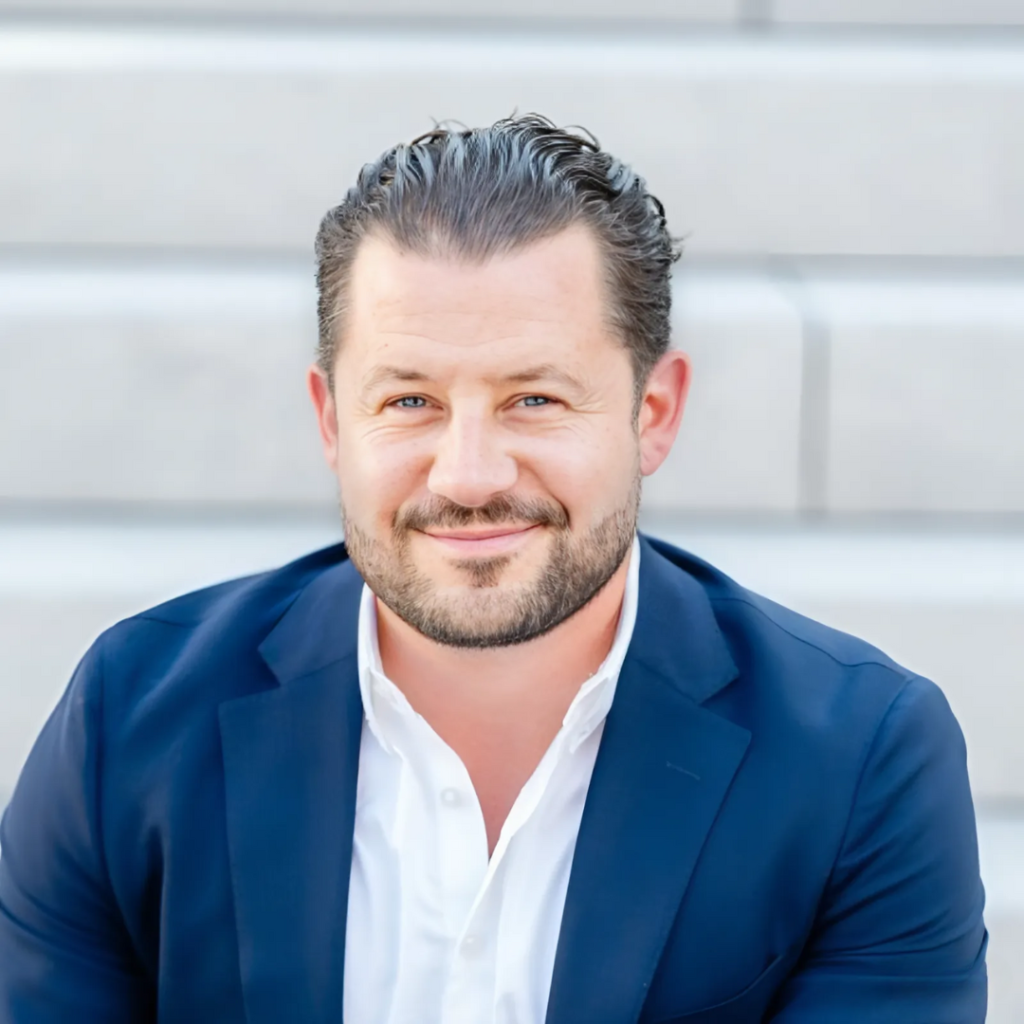
Nic DeAngelo covers Economic Growth Playbook in this Marketer of the Day episode. Nic DeAngelo explains how economic signals and disciplined marketing can grow a real estate investment business. He watches Fed rate moves, a stock-market "melt up," and tariff risk, then asks what actions those trends demand. His "barbell" approach pairs fixed-income real estate debt for steady cash flow with industrial warehouses for growth. When ROI is clear, he scales paid acquisition, once spending about $125,000 a month and tracking ROAS in a KPI report. With SEC limits and only accredited investors, he leads with free webinars to pre-qualify a $50,000 minimum ticket. He targets markers like philanthropy and business ownership, and uses AI for fast 60 to 70% first drafts that humans polish.
Navigating the economic landscape today can be incredibly challenging, with complex market dynamics, inflation, and global uncertainties creating a constantly shifting environment. Identifying the right investment opportunities for a business involves weighing risks against potential returns in a setting where trends evolve rapidly. Many companies find themselves drawn to emerging areas like technology and sustainable initiatives as they search for stable growth paths. In this context, balancing optimism with caution becomes crucial, as businesses aim to remain adaptable and resilient amid economic fluctuations.
Nic DeAngelo is the President of Saint Investment Group and a seasoned real estate investor and finance expert, known as the “fixed income GOAT” (greatest of all time) in the industry. With a $206 million portfolio, he has built a reputation for fusing economic foresight and real estate prowess to deliver value-driven insights to his audience. Today, Nic discusses a range of topics, including the current economic landscape, the importance of viewing business through an economic lens, his unique real estate investment strategy, and the critical role of marketing and growth in driving business success. Stay tuned!
Resources
- Nic DeAngelo on LInkedIn
- Saint Investment Group: Trust, Transparency, and Stability. The New Era of Real Estate Investing
Podcast: Play in new window | Download (Duration: 37:53 — 52.2MB) | Embed
Subscribe: Apple Podcasts | Spotify | Amazon Music | iHeartRadio | Podchaser | RSS
Transcript
Download transcript (.txt)Nic, welcome back. Nic DeAngelo is here on the show from Saint investment.com and Nic De Angelo. He is known as the fixed income goat, greatest of all time in real estate circles. He has a $206 million Portfolio. He fuses economic foresight and real estate prowess for an exciting and value driven discussion for podcast audiences, and he has these two foundational beliefs, which I'm sure we'll get into. The two pillars are that Wall Street is broken, real estate is the cure, and economics tells the future. And so we're going to find out all about Nic story, his expertise. How can he help you, if the fit is right, but also just what he's learned and discovered and figured out, maybe through the hard way, through trial and error. And you know, life is is never easy. Nothing worth it is easy. But perhaps Nic can give us a few of those shortcuts to success, or maybe just kind of make our our business growth process and journey about 10 or 20% more fun, which I think sounds like a reasonable goal for us today. So Nic, glad to be speaking with you.
Robert, great, catching up with you beforehand. Here, I really love your guys show here. I love the topic especially, and I'm excited to talk with you today
and I'm excited to talk with you as well. And I love the personalization. You know, like a lot of if people aren't podcasters, they don't know, like, there's a little bit of time when the, I guess it's the awkwardness, right? The the guest appears, or about the hit record, and sometimes they're gonna jump into it, find no big deal. Other times they're kind of just, I can tell, like they're nervous, but I, what I got from you was really polished, really rearing and go, but like willing to customize for the audience. You have the same show you take on the road, but every stop is different. So there's kind of that, that fusing, that kind of tweaking of the content at So, as it were. So with that said, we introduced you a little bit, hyped you up for the audience, but in your own words, what are you all about? What has you excited, focused, energized, etc,
absolutely. So my background is investing. It's small business, it's entrepreneurship, and it's investing. So the number one thing that we look for today over the years, you know, we've been doing this for a decade and a half plus, what we've seen is that we're typically finding the most success by looking at the economics that underlie industries. Right? Because entrepreneurship is amazing. Small business is amazing. And sometimes the bigger trends things where government decisions are made, economic decisions are made at the Federal Reserve level, et cetera. They trickle down and affect us dramatically. So what we're looking at today are the best investment opportunities that fit into the world that we live in, the economic world we live in. We are I mean, again, I love your I told you this beforehand, but I love your podcast because it's focused on marketing. And I truly believe I'm always on the growth end of our business always, always, 100% of the time. I'm tip of the spear with my team on the growth side. I believe whatever is not growing is dying. I believe that marketing has one of the greatest opportunities in the next decade plus. But that doesn't mean that everything's rosy, you know, in the global economy, in the local economy, etc. So if I can give insight on what that looks like, and kind of maybe, maybe possibly a look around the bend a little bit what the future may hold, especially for marketers, which I love that community, and I love the entrepreneurship side of that, then that's what I'd love to do today on your show.
And I would love to do that as well. And so just some, some first impressions of what you said, just to, kind of like, get myself caught up and then proceed forward. When you talk about looking at things from an economic lens, what comes to mind there is, like the kind of the hard and fast rules, right? When someone, if they're stuck in their their business or life, any sense, it's just a jumble of things. And then when, when they talk to someone like you who's a problem solver, someone like you says, Well, hey, what's your numbers? And so when, when, especially with real estate guys, I'm always impressed when they're like, I have 336 units and I make this amount of money. I'm like, This person watches their numbers like a hawk. And then, like, whenever there's like, a economic situation, the average person, unfortunately, just kind of like, assigns blame, but it's really vague. And then when they say, well, the stock market went up, what does this mean? Or the Feds cut the rate, what does that mean? It's just like, Okay, here's the numbers, here's the cause and effect. And the whole thing with with so there's the economic side, and with marketing, like, there's a lot of counterintuitiveness, isn't there? There's like, you have to, like, constantly be telling people again and again about what you do, and it seems like, oh, do I have to keep doing this? Well, yes, it's like an unrelenting machine. You have to, like, keep doing it and put in more work than you think that you have to do. So just right off the bat, hearing about what you're all about, there's like, the the counter intuitiveness. We all wish that we could just I put in my effort, and then there we go. But there's like, you have to, like, always be supplying the website traffic and the cash flow machine and the PR machine. And so if someone says, I'm so overwhelmed already, Nic, when you have a lot of this real estate investing stuff, figured out, what should the average person know? What's the starting jumping off point?
So I would say the backdrop, that's the that's the shortest answer. What are we dealing with today? What are all of us dealing with? Because if you're a marketer, then you're in probably a small to mid sized business. The marketing world for ultra corporate or fortune 100 is very different than it is for small to mid sized businesses. So what, what backdrop are we dealing with? Right? Like, let's, let's set the stage a little bit the first we're dealing with a rate environment right now in the United States, and I won't over drill down on the inside baseball finance, but we're dealing with the Federal Reserve making decisions of what's going on in the economy. They are saying that the economy has enough concerning points that we should be dropping rates to incentivize growth within the economy. So that's one, that's a good backdrop. Two, the stock market is in a very strange place. We're hitting records consistently, right? So that's good because on one hand, you know, if you have savings, if you have an IRA, you know, a retirement account, if you have many different investments, that's good for you. But the other half of that coin is and we're in a weird place in the United States, where we also are reaching record debt as a country. So there's a idea being kicked around right now in the US, that we're in a crash upwards, right? So the great financial crisis, you look at 2008 we actually went off a cliff. Things went down. They fell from the sky. That we're in a position today being the opposite is the new idea where things are going upward, but they're going upward with equal or greater amounts of debt, equal or greater amounts of inflationary pressures. So we're actually in this weird, like, take off moment, you know, like, instead of a meltdown, people are calling it the melt up. So that's another backdrop of things going on. We're also another backdrop. Is the political backdrop. We're shifting into a Donald Trump presidency, away from a Biden Harris presidency. And there's all kinds of concerns about pros and cons, candidly, right? Like there's some huge opportunities, there's also some huge concerns. What does what do things like mass tariffs mean for us as business individuals, as business people? Does that mean that we have the upper hand on China, where their imports will cost more so US manufacturing goes up, or does that mean that all the goods and services that we have in the US will get more expensive and have upward pressures on inflation. So that's a long winded explanation of the background, but here's what I actually believe. If I'm going to tell you what my inside take is on all that, I believe that through all of this, the US is poised for a growth period beyond anything that we've seen in the past, whether it's fully healthy or not, that's a different debate. But for marketers, for people that are on the growth side of businesses, the growth side of industries, I'm on the investment side, I'm very happy. I'm feel very well placed right now. So that all said a backdrop with a lot of concerning things, but also huge opportunities where, if someone wants to push growth in a small business or a mid sized business, I think there will be great debt opportunities for business growth. I think you'll see growth industries like tech take off, investment take off, and then a lot of manufacturing in the US, whether it's widgets et cetera, that have a huge opportunity at this stage in the cycle.
Well, what are I mean, that is a long, detailed answer, but long detail is good, right? It's not just a cut and dry situation. It's a nuanced conversation to have. And what it tells me is that it's so easy to be stuck, set in your ways, and to, like, make up your mind and say, Okay, well, the economies do that. I just, I won't, I won't start my business. I'll just kind of sit back, wait where things get better. And we need to figure out, well, what can I control? What can't I control? And I need to stay informed, just to kind of know some of the big waves, the big moves that are happening, but also, like, how much will that really affect me? And how will that even really change what I'm going to like kind of persevere and do anyway. And so as far as real estate, everyone has like, a different like flavor real estate, right? Some people like the residential or the commercial or all the like the derivatives. What's your flavor of real estate? Are there many or one? Or what do you like?
So I we have a barbell approach. We consider ourselves absolute top tier operators, best in class in two categories. The first is the fixed income category, which you which you said early on, because the market environment we're in when small businesses, when I was running a few small businesses, we exited those we had a great exit, very proud of our success. Over there. But one of the things that we noticed was it was lumpy. We were having record months, and then we maybe were having, you know, a dip for a month or two, etc, and we kind of have this lumpiness. So I was looking around on the investment side for opportunities to balance out our cash flow, and I found that best through investing. So in the market environment we're in today, where we have higher inflation and there's lots of highs and lows in the stock market, etc. We wanted to step in with the opportunity that our investors were asking for fixed income. So we do that primarily through real estate debt, through real estate investments and things like mortgages. So that's one side. We're a fantastic operator on that side. And then when we do enter a growth cycle as a country, which is what we're stepping into now, we operate also on the on the industrial side for real estate, so gigantic warehouses, gigantic manufacturing facilities. We invest, we buy those buildings, and we have the operators that bring in, you know, import goods and distribute them, or our manufacturing goods from that warehouse. So between those two levers, between those two, you know, the barbell approach that we like, we have a really good growth opportunity as a company for our investors, and then we have a really good, secure, stabilized income route for them. So that's what we focus on, as really best in class, and we leave everything else to everybody else.
I love that. I like the strategy and how you've thought all this out. And so you met, you've landed on this, this really cool niche, this really cool space, and you've also mentioned how you've had the ups and downs you've been in other businesses. So what can you learn since this? Or what have you learned? And what can you teach for us to learn? It's the marketer of the day podcast. We have a lot of business owners, entrepreneurs, and sometimes there's the adventure, the excitement, but also the Oh man, I've got to, like, figure out all this with customers and solve these problems, deal with unnecessary stress. Why didn't I just park it in the s, p5, 100? Why didn't I just find someone like Nic and park my, uh, my nest egg in some of this real estate. Tell us about some business adventures, or maybe the the do's and don'ts what you've learned.
Sure, I'll lean into the marketing side, because I'm so passionate about it. I'm in finance. I'm deeply entrenched in finance, but I really like the growth aspect of business and investment in general. We're seeing pretty remarkable things on the marketing side and the growth side of finance right now. So in the post election world, we're seeing actually Facebook ads being pretty competitive on our side. Took us a long time to really tap into that at a high level, also Google. But you know, in the past our peak, we were spending about 125,000 a month for lead gen. I'm very so I'm comfortable with the bigger numbers. The question is, what's ROI what's ROAs, etc, and we're starting to see that make a lot more sense. Also, I'm seeing, especially in the finance world and on the growth world, a new generation of strategy really evolve, where, finally, the finance world is really leaning into free education. So that has been so powerful and really optimistic. I mean, I'm big on that, right? I was a broke kid. I wanted to be an entrepreneur. It was really hard to find the information that I needed. I'm starting to really see that be widespread and much more free and much more available. So that is a really, really optimistic trend I'm seeing in the finance and in the marketing world around finance. So on our side, what we want to you know, we're seeing huge ROI on putting out most of our strategies, most of our economic analysis, completely for free. So I love that trend. I love what I'm seeing there and then on the business side, marketing is still extremely, you know, it's a pillar of our success in the real estate world. We consider ourselves best in class on the leasing side. And again, these leases are for, you know, some of these are six figure a month leases for different things, right? So finding, you know five to 10% above market lease is 10s and 10s of 1000s of dollars a year, six figures a year increase in revenues. So knowing that marketing is an integral piece of that, even at the most boring level of different financial instruments and assets, I think is pretty cool. So that's where we're tapping into the marketing side. On both sides, we typically beat the market on our leases by five to 10% that has really trickled down to our investors in a really positive way. We typically buy below market five to 10% on the purchase price, by being more widespread on our acquisitions, and when we go buy properties, getting to more people than the next guy who's also buying than our competitors and and then on the other side, when we're working with new investors and trying to get in front of new investors to help we really kind of maybe 20, 30% below what average people are paying for cost per. Acquisition of new investor or new customer, etc. So we really lean into marketing on our our KPI reporting is probably eight to 10 pages long. At least 50% of that is marketing metrics and how we're doing and how we're staying ahead of different things and our conversions on different pages are, you know, our visitors, our views, etc. So I think it's been such an important process. And frankly, the real estate world specifically is light years behind on marketing. It's considered a fluffy, you know, not really super essential piece of the industry, and we've always approached it from the opposite angle
and to your advantage, right? Because you can stand out in all these ways where there's a so many other people in your space who like, they just don't see it, or maybe they don't push as hard as they should. And there's definitely a lot of value in what you said there, how like, because you always see with real estate, right? Like they got a good deal, like I got in it at this price, and I can, you know, rent it out of the other price. And people are always trying to find those sweet deals. And so you think, Well, if you have good marketing, right, you do the PR like you're doing now. Your PR on podcast, it kind of elevates your your status, right? You do the social posting, you do the Google ads that you mentioned the Facebook ads, and you can dump in this money and like, find the right fit. And like, make make more money in the long run, right? Because you're just, like, finding, like, a better prospect, a better property. And so, like, so like, what have you learned by doing that? When you were like, you know, running these ads, I can imagine how like, scary they must have been at first, right? To like, think so big, and it's like, that's always a mindset I'm trying to tap into. When the guys are like, Hey, I'm going to be doing this marketing campaign. I'll like, I'll hire 10 new people. I'm like, I'm like, what like? So I'm always interested in when someone's brain is, like, huge without being stupid, right? They take these calculated risks. And so, I mean, tell us about that. Tell us about your your marketing adventures, and how you kind of think bigger or, like, have this kind of, this numbers strategy, or maybe not everyone else does.
I think we're in a union, and you already know this, and I'm positive I've seen, you know, even past episodes you guys went through this tech is moving so quickly in the marketing world that it's remarkable if you apply it, and you're ahead of the curve, the economies of scale, the advantages, the new tactical advantages that you can have. We're leaning into that because in real estate, like I mentioned, it's always behind in marketing. So if you apply marketing just, you know, basic, high level marketing today, and what's around the corner, that's what we're seeing. So on a base level of exactly what we're doing and what we're seeing, you know, kind of boots on the ground in the real estate side is getting to the right people, has never been easier. Comma, but there's a lot of steps there, right? So whereas, you know, it could have been in the past, you know the country club approach, right? You got to go golf with everybody. And you know you do kind of the shaking hands and kissing babies approach, that's great. And there's a huge advantage to the relationship side and building relationships over time. So we always ask the question, because historically, we just worked with ultra high net worth individuals, just a handful of very successful people. But we said, how do we systematically get to more of these individuals? Because our minimum ticket, our minimum investments, 50,000 we don't even have a lower offer than that. That's it. And really the discussion is, do we bump it up to 100 or 150,000 right? So that's a very unique and then we deal with SEC Securities and Exchange Commission, their regulations of who we can actually access, which they define as accredited investor, okay? So if you look at who Saint can actually work with, it's only roughly 8% of the US population. That's why we give away so much for free, is because the goal is that people are either accredited investors, or we can get them there, we can give them as much information so they can grow their business, grow their investments, etc, to become, you know, now, somebody that we could work with, or we'll just make them really happy and try to make a successful person out of that. So as far as what that looks like, now, we've defined who we can actually work with. Some of that's regulation required. Some of that's people that we want to work with at scale. How do we find those people? There's only a few ways to do that. One is we can go, you know, do a shotgun approach through paid ads, right? That's hit or miss, unless you go a little bit higher level, a little bit more like list building, audience, building, database building. So we've really leaned into that, and we've really found who works best for us. We typically like people that are more involved in philanthropy. Why? Because one, they're already showing that they have extra cash to spend. So that puts them in a tier where they're already donating. The causes and things that they find important. And two, we just find that it's just a really great group of people that we also enjoy working with. So we're looking for a base income level that can afford a $50,000 investment out of the gate, typically a lot higher. We're also looking for individuals that have excess cash they can put in. And then we typically work with an older audience and people, and then the other the fourth is we're typically working with business owners or high level executives. So that's our audience. We that's kind of middle of our fairway that we get to work with a lot. And what we found is a really, really good discussion back and forth with how they view the world we keep you know, we do open Q and A, we do open webinars, etc, with them, and we'll learn as much from them as they learn from us, oftentimes. So that audience targeting, that audience building and that audience testing have been able to ramp us up at scale for below what other people are paying, and much more efficiently when you start hitting landing pages, you start hitting, you know, subscribe and opt in rates on emails, etc, really targeting and really testing to nail down the targeting has knocked it out of the park for us at scale.
That is very cool, audience, targeting, building and testing. And I think after we're done, I'm gonna have to go back and, like, listen to that three minutes on my own. That's, it's, it's very, like, fundamental and not spoken about enough and underrated. Because, like, you know, we've all heard about the customer avatar for like, the past 20 or 30 years, right? And it's, like, the the old school, out of date way of doing it would be like, Well, hey, I'll sell my floppy disk, and maybe they'll buy my CD, maybe they'll buy my book, maybe they'll buy my seminar, and I'll keep, like, making money along the way. And then at some point there was the moving the free line concept introduced by saying, like, hey, you know you're trying to make all these little tidbits of money. Just figure out, like, who your people are, and then give so much of this other stuff away for free. And the way that you put it was like, you know, either you're get what the information you're giving away for free, they're either for people who are not right for you, or they're close and they just need to, you know, increase their income, or maybe, you know, get a few years older into the age demographic, or, you know, get to the point where they're financial enough to be doing the philanthropy, and then they'll be qualified. So you say, Well, I've had these qualifiers. I know who I want. There's this little, tiny space, and then there's this whole other range that are, like, my referral sources, or people that kind of, like, help me and my social multipliers, right? And like, like, because years ago I was confused. I'm like, why is Damon John from Shark Tank like posting all this information? Why is Gary Vaynerchuk giving all this marketing advice for free? Oh, it's because I'll never be the buyer for these guys. But then they're just there to kind of get attention, to attract the people that they really want. And once they do like you said, You know what they like, you know their fears and frustrations, you know what they'll talk about, and then it's a lot more of, like, a straight shot, right, more of a streamlined approach from when they know you and like you and trust you, another marking cliche we've heard, but like, it works once you applied, especially with this kind of new way of thinking of like, I've just got this really very targeted small group of people, but as you said, it's easier than ever to find them with the paid ads and with the buying the list, building the list, AI, etc. And I gotta ask you about these cutting edge resources at our disposal. What's your current like, favorite tool that's kind of new ish for marketing or finding these people?
So I'm going to be honest. I am you. We have a, we have a whole team on this one that was shown yesterday. Ah, man, I'm completely spacing on it. Anyways, we built a webinar deck about 80, 80% complete in, you know, a matter of, you know, 2030 minutes instead of what would normally take us, you know, a week plus so it, you know, I'm really, I'm really spacing on it, because it's a cool tool, but it's a lot of AI generative, you know, things like that. So a lot of our marketing, a lot of our design, is going that way. And what I found is this, is that AI can get to like that, 60, 70% lift. Where the real design driven individuals on your team can tighten it up and really bring forth a great finished product. I don't think AI is anywhere near 100% where it's gonna land on the bullseye, but it can get close and do the bulk of that heavy early lift. We do that a lot for script building. We do that a lot for organizing thoughts. We do that a lot for testing different tones. When we do AB testing on landing pages, AB testing on titling of different videos and things like that. So leaning into AI not to do the work, but to manage testing. It gives us background or gives us feedback of different avenues to present the same title or topic that we would have missed. So that variety, that opportunity and testing really, really, has been supercharged with AI chat, GPT, if you know how to use it, is a powerhouse tool. Let's see what else have we been really leaning into? And then I we we've taken a second look at things like SEO and landing pages in a way that we haven't done recently. SEOs, I still think, is very expensive, but the leads that come in from SEO for us are like, you know, 80 plus percent close rate. So they're just such high quality leads. And then the landing page testing, the landing page conversion side, we've really dug into some new tools that have allowed us to split test at a higher level with some really, really good, you know, segmenting and checking, you know, and attributions between those three. I mean, we're, we're really, really finding the sweet spot with what we want to be doing and being able to test at scale, at speed.
Very cool. And that's a great insight that the AI gets you 60, 70% of the way there. And as you're saying that, I'm thinking like, oh yeah, I was editing like 20 different broadcast emails yesterday where that would have been a week long project, and it took me an hour, but every single email I was like, you know, this needs to go, that needs to go. And sometimes it like, psychs you out, doesn't it? Because you think like, well, if it's completely hands off, I don't really value the output, if it feels really cheap and not hard won. And then when I'm going in and editing it myself, I'm also driving myself crazy on the other extreme, because I'm like, Well, shouldn't it have outputted it for me? But then I realized somewhere in the middle, I'm like, Hey, I'm working together with it, and I get like, 20 times the output I would have otherwise. I spend an hour making a LinkedIn post that otherwise or LinkedIn like, long blog post, article that otherwise would take me like, six hours. So I'm like, okay, I can do these things at scale, get them done faster. And then you mentioned in there about how it sometimes fills in the gaps, or it like organizes in a good way, or it catches things you otherwise wouldn't. So it's like this. It's the with the one of the weirdest tools you've ever seen, right? And it's like, applied in all these different ways. Yesterday, I was on a website that, like, had a directory of all these AI tools. There's 16,000 AI tools out there, like, of course there are right so either we can choose to just be looking at a distance, be a spectator, or let ourselves get overwhelmed, or just use it to get some stuff done. Make those landing pages, optimize the SEO, get people on Aurora funnel, close some deals, change some lives, etc. And so I want to, in a moment, mention a saint investment before I do since you're the star of the show, Mr. Nic, is there a missing hidden question in our conversation that I should be asking you, or you wish I'd asked you that I just don't know to ask?
I would say the number one thing that I'm looking at right now that may be beneficial is to stay it's to look for the growth opportunities that are pushing the economy in small businesses specifically. So I think what small businesses will have the biggest opportunity is access to cheap debt in the future, which, if you look at the tech sector, that's what fuels insane growth. So steal the ideas from the top tech companies and have the opportunity to invest in the company at scale. So I'd be looking at for mass growth opportunities right now as the biggest lever point for small to mid sized businesses in the US without a question,
and you know, you're up to date on all of these, like big like economic news that's happening. What's your secret to not being driven crazy? Because it's really easy to get stuck in the doom and gloom with sensationalism. So how do you filter that? How do you look at all this daily economic news and distill it down into something that's calm and rational that you can apply.
So you could look at it a couple different ways. Robert, the first is, you can sit and we could sit here and say, the US government takes in about four and a half trillion dollars a year. That's the their revenue for the US government. And the US government also spends north of 6 trillion a year. Okay, so that those are alarming numbers, but the other half of that is, how does that apply? How does that matter to us? Right? The pull point is to make actionable insights. How do you pull things out that you can take action on? So imagine the analogy that you know, a family member tells you, Robert, next summer we want to go on a family vacation, but we may or may not be able to pay for that family vacation for you, right? But you got to go on the family vacation. So what do you do? Right? You plan. You plan. Right? You just you march along and you make the best decisions, and you make the best game plan, knowing that. But you may need to pay for that family vacation, and if you don't, then amazing. That's a huge windfall and huge upside. So that's how I plan our business. 100% there might be benefits, there might not. There's so many factors that go into things. I'm largely against tariffs, candidly, right? Trump, he has some pros. He has some cons. This is not a political discussion. Me, personally, as an economic leaning individual, I'm largely against tariffs as a concept. That said there have been some wins from tariffs in the US economy. So if you asked me previously, Nic, what's your bet on tariffs? I'm like largely negative, not good things. But then again, they were successful, and then Biden, the Biden administration, kept a lot of those so, and you see increases of imports of Chinese goods to united to the US, even in the midst of those tariffs. So I think it's hard to fully predict the future, but if you're betting on the fact that you do want to have a vacation next summer, or you do want to retire, or you do want a certain lifestyle, or business achieving at a certain level, etc, you kind of got to plan either way. So for me, the number one question I'm asking is, so what? What does it mean for me? Right it? What does it mean on the actions that I need to take and I really need to plan either way, whether the government pisses money away, or whether we have the most booming economy that we've ever had, or maybe both happens at the same time, which is kind of what we're seeing right now. I need to plan. I have employees. I got many people that look to me for advice and guidance on that side. And I have many amazing leaders on my team that need to pass along information to their team members, etc. So we plan conservatively and we plan for big growth. I actually truly believe that growth and increase and expansion of a business are very often the number one tool to avoid things like recessionary pressures in a lot of different ways, etc. So my encouragement to people would be, hey, I could tell you all the bads in the economy. I could also tell you so many goods, so many opportunities that are coming up, so many great things where the US is head and shoulders above the rest of the world. But the number one thing is, plan accordingly for what you want to do and understand disruptions along the way. So be a little more conservative, but also push it on the growth side, and know that if you're not growing, your businesses die
100% they say, plan for the worst, hope for the best. And I had a friend once who, when he made goals, he would admit, like three tiers of goals, right? He made, like, the worst case situation and the best case would he really shoot for and then something in the middle? So that way he would be, like, emotionally, financially, logically, prepared for what could come and, like, you know, anything could happen. But then that's not helpful either, right? Saying, like, there's 20 possibilities, but if you like, simplify and say, hey, you know, good, bad middle, and then I'll have a game plan for what might happen either way. That seems like a logical place to go. And so speaking of planning for the future money investing, it can be some real hairy, scary stuff. And so where does Saint investment come in? You mentioned how you have, like, this really tight, focused target demographic. But also there's a lot of free information there, because we're in this, this information age where there's podcasts and blog and so what is Saint investment all about? And why should we go there right now?
Yeah, we are really proud at Saint of how much effort and analysis we put into the economic side. You know, this is an amazing discussion. I love the topic. I love, you know, the the community that you've built that said, we go hours at Saint per topic, per webinar, per you know, etc. All that we give away for free because we spend many, many hours on the research. We really just want to put it out in the world so that people understand the world that they live in, the economy that they live in, the business environment they live in. All of that is given away for free at Saint investment.com/resources you can find all of our webinars. There all of our YouTube. There all of our repository of things like economic trackers, things like, you know, what rates are going to go on in the business community. You know where we see certain things, what things are, what business and industries are trending, which directions, all that we give away for free at Saint investment.com/resources and I really recommend people check that out, because it's compiled and all free and really helpful.
It sounds like it. So Saint investment.com/resources and we could all use more education as far as our money, right? Because it changes so much, and you always hear these stories, cliches about how your parents pass their baggage on to you, right? They say, Well, money doesn't grow on trees, or, who knows if they came from, like depression era or 70s era where there's recession, and so we don't want to we want to do better than our parents. We want our kids do better than us, and I think the way to do that is by going to Saint investment.com/resources, and get some new ideas, get some fresh perspectives. Don't just be at the mercy of your own childhood baggage and upbringing or at the mercy of the news you watch or the people that you hang around with. That's the whole point of the internet and social media, right? You connect with people that otherwise you would not have connected. I mean, you and me, Nic, with this whole podcasting thing, we never would have crossed paths, right? We're in different locations, different spaces, but you meet new people, you get new perspectives, get new ideas. It changes your beliefs, opens you up to new possibilities, and you can have the life that you've always dreamed of, whereas otherwise it might have been just like a repeat of what what came before. It might have been mediocre land, but hey, it's time to change your family tree and do some amazing things by going to Saint investment.com/resources, and you know, Nic, I love your imagination today when you're talking about economics and business, it just like felt like you were describing like a living organism, and we want to get some of your infectious energy, some of your knowledge. And I think a good way to do that at the very end of our discussion is with kind of a superficial, little, bite sized sound bite. And that's why at this point of the podcast, I asked my guest for a fun or helpful quote or lesson that has served them in the past that they can pass on to us. And so what comes to mind for you, Mr. Nic De Angelo, as far as a quote or lesson that can help us,
I would say, if you're not growing, you're dying. Focus on the growth side, both personally and in your business, there is more opportunity today than we have seen in US history. So take advantage of it. The pros and the cons, the ups and the downs of the economy are out there, but you have more tools, more resources and more opportunity today than anyone has had before. You
very inspiring. It is time to pursue growth with Mr. Nic De Angelo at Saint investment.com/resources, we see we see you there. And thank you, Nic for showing up and just being a cool guy for giving us some amazing messaging insights and opinions and facts. And I really appreciate it and what you brought to the show today. So thank you,
Robert, great to be here. Always great to catch you up and looking forward to seeing you soon.
dfypodcast.com forward, slash, free go there right now to see what you could be missing in your podcast. Maybe you aren't active enough on social media. Are you writing and broadcasting an email for every episode of your podcast? Do you follow up with your podcast guests? Do you do things to make your podcast interview and content creation easier? Go to dfy podcast.com/free, to claim your gift right now. Transcribed by https://otter.ai