Published Last updated
View in Podcast Library: stories, quotes, books, and resources in one place.
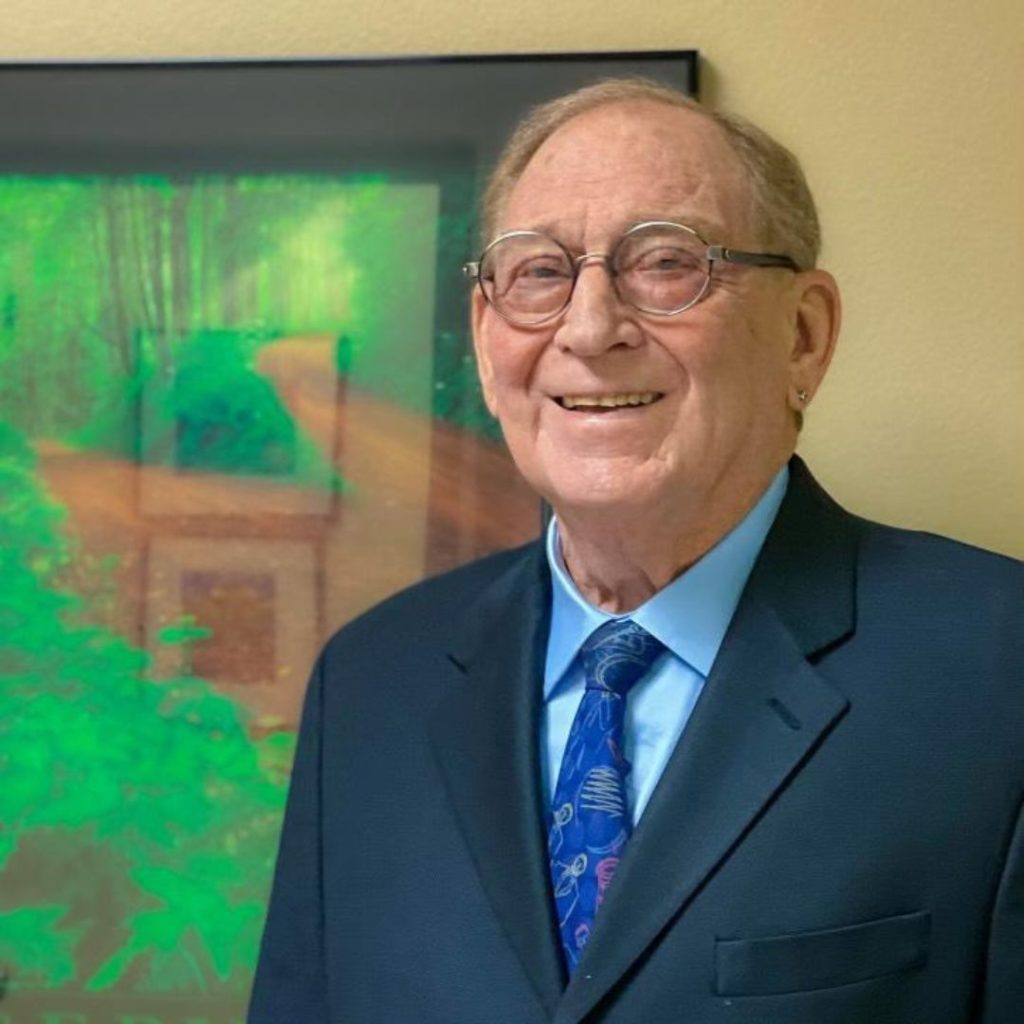
Daniel Brubaker covers Grief Healing Tools in this Marketer of the Day episode. Dr Daniel Brubaker explains how learning the mechanics of grief and forgiveness can turn emotional storms into steadier living. As a physician, he published early work on transfusion-associated graft-versus-host disease while at the University of Oklahoma from 1980 to 1986. He uses the Kubler-Ross stages as a map, but says denial, anger, and bargaining rarely arrive in a tidy order. During cancer treatment, he kept planning downhill skiing at Kirkwood after surgery and later endured a right-lobe liver resection at UCSF plus another year of chemotherapy. When glaucoma started damaging his optic nerve and retina, his 20/20 vision faded five years ago, forcing new sources of joy. In his book he also connects rejection, prejudice, and learned hate to grief, arguing that social acceptance matters.
It’s a different kind of challenge—one not measured in deadlines or bank balances, but in the quiet battles of the heart. Grief that lingers longer than expected. Forgiveness that feels impossible to give. Acceptance that always seems just out of reach. Life can look fine on the outside, yet inside, storms rage. The thought of moving forward with clarity and peace—without denying the pain—can feel unreal, but it’s exactly what so many are longing for.
Dr. Daniel Brubaker, physician, researcher, and author of Grief, Forgiveness, Acceptance, and Rejection, brings a rare blend of science, compassion, and personal resilience to this robust conversation. Having studied medicine in Tibet, discovered a new medical condition, and trained under Mel McKinley, he has spent decades exploring both the physical and emotional dimensions of healing.
Quotes:
“You can’t heal what you refuse to face—but once you face it, you’re no longer powerless.”
“Forgiveness isn’t about erasing the past; it’s about freeing your future.”
“Grief is not the end of your story—it’s a doorway to a deeper strength.”
Resources:
- Follow Dr. Daniel Brubaker on Facebook
- Grief, Forgiveness, Acceptance, and Rejection by Dr. Daniel Brubaker
Podcast: Play in new window | Download (Duration: 25:12 — 35.5MB) | Embed
Subscribe: Apple Podcasts | Spotify | Amazon Music | iHeartRadio | Podchaser | RSS
Transcript
Download transcript (.txt)He discovered a new medical disease. He scaled Mel McKinley. He studied medicine in Tibet, and now Dr Daniel Brubaker is diving deep into those emotional storms of grief, forgiveness and acceptance. We're here to talk about some really deep and powerful stuff, how to overcome these emotional hurdles, how to achieve forgiveness and how to just get through these emotional layers and live a happier, more productive life. So Dr, Daniel, I'm excited to see you. Be talking to you. We'll change some lights. We'll have some fun. How are you today?
I'm doing good. Thank you
very welcome. And so what did I leave out of that bio about you? What are you all about? What just has you so excited these days you miss
mountain biking, sea kayaking, downhill skiing, cross country skiing,
rafting, rock climbing, ice climbing,
none of which I can do anymore, okay,
but you've lived it. You have those experiences, and those are locked in there forever.
They're locked in there forever. And you know that's that's the best part of life, doing those things when you're young, and getting through all the hurdles in life and looking back on it and saying, I had a good life.
Yeah, you can watch TV when you're 100 years old. You can you can have those regrets later, when you're young, when you're acting, even when you're not so young, right? The way that the medical advances are these days, if you're up, if you're able bodied, if you're alive, that's a heck of a lot better than than, you know, many people in the past, right? The even any of the great legend, Ben Franklin, Thomas Jefferson, they'd love to be alive today, but we're so fortunate to be able to go out and have these experiences. And so tell us about your life and your experiences. My understanding that you discovered a new disease.
I did. That was
my first job at Oh, you Health Science Center University of Oklahoma, and I was there from 1980 until 1986
as the first seminal paper for post transfusion graft versus host disease, which I then later called transfusion associated graft versus host disease. Oh,
well, nice. So you're famous, right? You're a part of history. You discovered something that's very important. No, I.
I'm, I don't think I'm famous, really. It's, it's not that big of a deal anymore. I think because of the way
anyway, I did do something worthwhile in my life, finding this disease.
Yeah, and at the very least those decades ago, when you figure that out. I can only imagine how many lives you saved or improve the quality of their lives, right? Avoided these many ailments through you discovered this, and you figured out, irradiate the blood that way. Really radiate the cells that way, the transfusion works better. And whenever you hear about someone that accomplishes a lot, right, like a physician, Doctor, the cliche is that they have nothing else going on, right? No other hobbies. It's just completely focusing on work. So how did you do that? Plus you say you gave that that big list of all the, you know, the downhill skiing and the ice and the climbing and the kayaking. So how do you find the time to do both those things. How can you be a dedicated worker plus have time to have these other hobbies?
Well, I probably would have published more had I not done those other things, but I like to. I love nature, and I love getting out into nature, and whenever I go through a grieving process, that's my go to and,
you know, I would do it on weekends. I mean, on a weekend, I could go off mountain biking someplace, or I could downhill ski. And also on vacations, I would take vacations and do all those things with my best friend that I climbed with.
Okay, so you found the time to do it, and even when you're on a vacation, you do those sorts of things. And you mentioned this idea of grief, and I find it really just an interesting concept, because up until a few years ago, whenever grief came up, it sounded like this big, huge subject, and it was always associated with death. But at some point, someone said, you know, Grief can happen in all sorts of ways, right? You can lose a partner, you can lose a job. And so to help us understand like, what is grief to you? What should we know about it? What's misunderstood about
it? Well, there's, there's, I think today
trying to deal with these various issues. So it's, it's a wide spectrum of feelings that you have in the grieving process, it's not just five different things, it's it's a whole combination of things. And in the book, I tried to bring those things out so people would understand and with knowledge they could cope better with their grieving process.
Ooh, I like it. Education is important, and it does seem that it is frustrating when you have, like, you know, human emotions and our thoughts, they're they're quite messy, and then you go and you look at like, the DSM, or you read some book, and it's all very nice and clean and categorized. It's like, Well, hey, that doesn't help me as much as something like your book, which you're mentioning.
Here, which is called grief, forgiveness, acceptance and rejection, written by yourself. Dr, Daniel Brubaker, and you also mentioned, regarding grief, that when you go out and do these outdoor activities in nature, you use it to process your own grief. And so can you open up with us a little bit and share about what kind of grief Have you experienced that you feel like talking about
Sure? About 25 years ago,
six months to a year, and then they discovered that it metastasized to the right loop of my liver, and so I had the right loop of my liver taken out at UCSF in San Francisco. Went through another year of chemotherapy.
So that's kind of comes back to the Cooper Ross on death and dying type of thing, where she has those five stages, right?
I was pretty much in denial about having cancer. I kind of felt that my
in fact, it was funny, I was, I was set up to go to Kirk will Kirk Kirkwood ski resort in southern Lake Tahoe, and that was going to be over Christmas. So they took the tumor out the day after Thanksgiving, and I, and I wanted to, I had all this set up for a week of vacationing, going downhill skiing, taking my son skiing, and I told the surgeon, I'm, I'm gonna go do it. And you said, Well, I advise you not to.
Well, I went and did it.
And so I, I went through that process just denying that I had cancer. And to to that extent, it helped me get through it quite a bit. So there's, there's all kinds of things in which you deal with it, and that was the way I dealt with the cancer part.
But now I'm dealing with another issue, which is glaucoma, that it was discovered almost a year before I had cancer, and that's when you have a buildup of pressure in your eyes, and it starts damaging the
optic nerve and the retina.
So I could see 2020, up until,
up until, about five years ago,
and that start deteriorating. And then
at that time I was, I was doing a lot of photography and fly fishing,
as as the sports my things I enjoyed doing, so
that all went down the drain pretty much, and I had to figure out, what do I do next to make myself happy and deal with My grieving process? So that's when I started writing books, and
this is my second book, and I'm working on a third book right now, which I hope to get out probably within the next year or two,
very cool, so you're still being productive and still helping others. And when you're telling these stories, what comes to mind is adapting. Like you always hear about denial sounds bad, and denial, for sure, is bad if you have cancer and you're ignoring it and it's something that it will not heal on its own, it will just keep on becoming a worse problem. But then you're saying that as far as the recovery from from cancer, like the work was done so and that was a case of denial was adapting, right? And denial was serving you. And it comes to mind when they say, if you're sad, if you're depressed, open up the windows. Don't just hide under the blankets. So there's those many times when it's important to do the opposite of of what comes natural in order to just get through it. And.
Feel better. And so I really like your approach here. Of you say there's the stereotype of those five stages of grief, which we've heard about, but then you say, Well, hey, there's more to it. There's more nuance, and there's like, a bigger scope, a bigger picture. And my understanding is that there's all these other aspects to it, right? There's like, races, gender, prejudice. So can you tell us about that? Because many times you think of grief as being like a one off event or being personal, but as far as grief being more interconnectedly social, I mean, tell us about that.
Yeah. So the one chapter I had on in my book I had,
I call it hate, and it's all about rejection.
And,
We have this far right Christian ideology going on against,
you know, people of color and different gender and all that business. And I I don't get that because,
I guess with what I do in medicine, I see all different kinds of people, and I
treat them all the same, because we are all human beings, and there's no reason to have hatred towards these people.
A lot of it's learned. A lot of it's indoctrination through, uh, religion and and
parallel
education.
But I put rejection in this because you also have to the
Okay. And when you think about being rejected, you think about like divorce, dating, losing a friend, and this whole idea of forgiveness, and especially forgiving yourself being kind to yourself, it's really important. So can you tell us about that? Like, what should be known about forgiveness?
Oh, boy. Well,
there are situations where you get into where
nice.
And that simplifies that a little bit, right? There's a little bit of a decision tree. Well, can you forgive the person no Well, if not, then it's time to then work on yourself. And it seems like there's just a lot to this, right? There's, there's so much more to it than meets the eye. Sure, there's the Kubler Ross, but then it's like, Well, if that's all, if it was just that simple, wouldn't we just say, oh, five stages. Cool. Now that this grief problem is completely taken care of, and it helps to see the different angles and the situations and the stories and so in our last few minutes of our conversation, talking about grief and just talking about life in general, I'm curious about question that I should be asking you that's just like such a good question, but unfortunately, we've only just met You and I. Dr, Daniel, so is there a missing, hidden question that I should be asking you, I just don't know to ask you.
Yeah, you can ask, What about the five stages of Cooper Ross?
She's saying that there's a group of people that will be in denial, just like I mentioned about myself. There'll be a group of people that are dealing with it in terms of anger.
There'll be a group of people that will try to bargain, bargain with God. Or if you, if God, if you, please, let me live another 10 years. I'll pray every night, or something like that, you know. So that's, that's a bargaining process, but there's those stages, and
really it doesn't go in order, and
activities that you enjoy doing to get beyond the grieving process.
That's a good insight, that instead of wallowing and getting stuck in those same repeat cycles patterns, figure out what you enjoy, right? Do you enjoy reading, writing, doing those outdoor activities, hanging out with friends, do those things to help you get through the grieving process, because it is important, right? And even if you are in that situation where you say, Oh, I just want to live 10 more years, well, why live 10 more years of misery and being stuck in the past. Why not work through some of this baggage? And you can get help with this book, grief, forgiveness, acceptance and rejection, by Dr Daniel Brubaker. That's B r, u, B, A, k, e r, and you can find this on Amazon, but we really want you to go to Dr Daniel brew Baker's website. That's author, D R, B r, u, B, A, k, e r.com, and if you're on the socials, if you're on the tick tocks, like these young kids these days, that username is d r, dot Brubaker at tick tock, you can go there. You can follow him. He's a physician that enjoys philosophy, psychology and politics. He's a published author of grief, forgiveness, acceptance and rejection by Dr Daniel Brubaker, and as we're checking out that website and checking out that book, it's time for the scary part of the show, Dr Daniel, where I try to stump you. I try to put you on the spot by asking about a fun quote or lesson that has served you. So what comes to mind as far as a fun quote or lesson?
I'll quote myself.
Let's do it.
Pain and Suffering is inevitable,
but with knowledge,
you can cope and be presentable.
I like it. So we owe it to ourselves to get educated so we can cope and we can be presentable. There is suffering in human life. There's no point in trying to avoid it. That means just not taking any risks. You want to have fun, want to have adventures, but we're on when on these ups and downs in life. It helps to have this additional tools in the toolbox and additional education and training, and you can get that by getting this very excellent book, grief, forgiveness, acceptance and rejection, by Dr Daniel Brubaker. He writes about all the hatred, pain and suffering that causes grief around the world, and if you are someone who grieves about health, personal, professional, negative issues and so many more things, he discusses the different types of forgiveness, how each functions, and how you can navigate and push through and live a better, more happier life with renewed understanding. The book is grief, forgiveness, acceptance and rejection. By Dr Daniel Brubaker, dr, Daniel, it's been a wonderful conversation. I'm glad you stopped by, and it's been wonderful speaking with you.
Great. Good time. Thank you very much. You.