Published Last updated
View in Podcast Library: stories, quotes, books, and resources in one place.
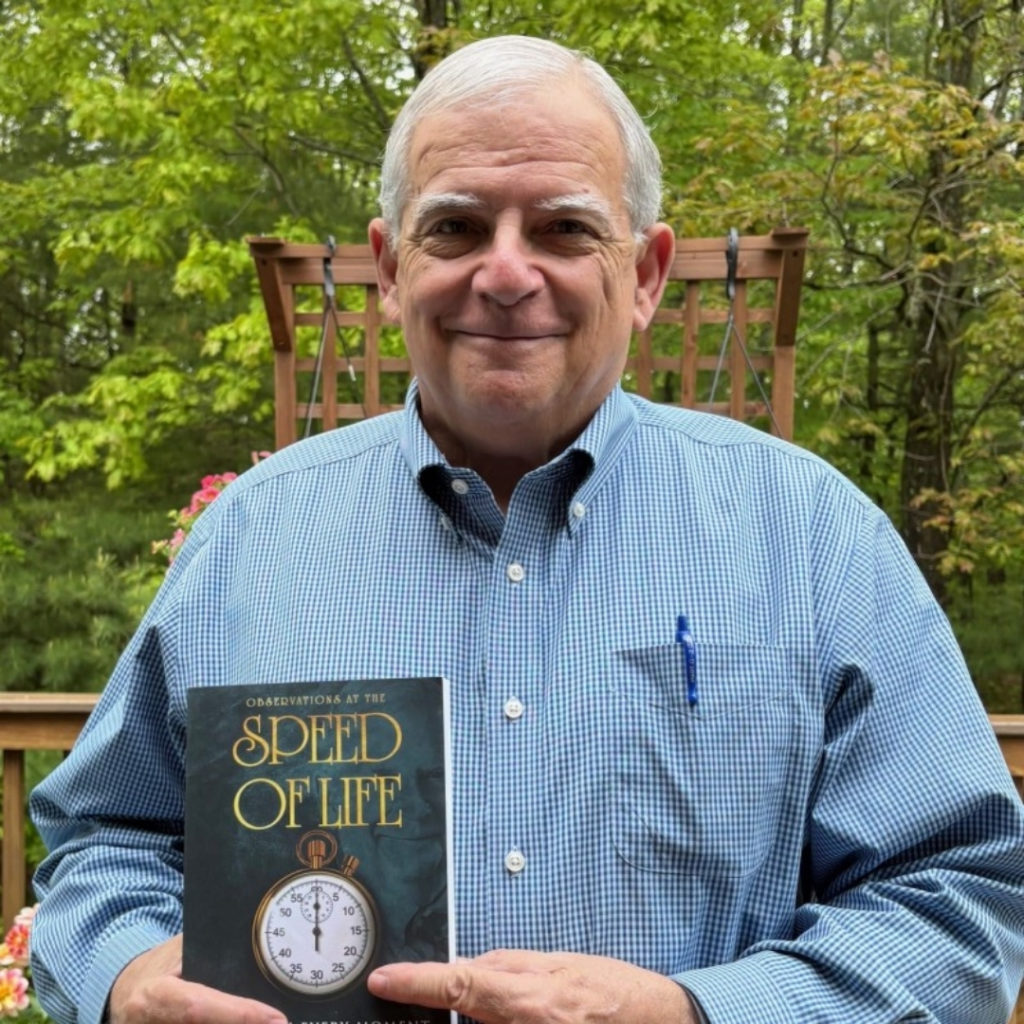
Ed Doherty covers Leadership habits in this Marketer of the Day episode. Ed Doherty distills decades of leadership into habits that help you persist, plan, and lead with credibility. He anchors it in persistence, quoting Calvin Coolidge's "press on" and keeping the line since age 21. To model standards, he dared teams to get a restaurant so clean he could eat off the floor and then did it. He preaches buy umbrellas before it rains and uses the urgent/important Eisenhower matrix to focus on what is important but not urgent. His execution tool is a constant question, "What's the best use of my time right now?", plus 45-minute timer blocks and breaks. For people leadership, he repeats that employees quit managers, and he treats feedback as a gift that becomes coaching.
Discover the extraordinary in everyday moments with Ed Doherty, a leadership mentor, consultant, and author of Observations at the Speed of Life: Lessons in Every Moment. From running his first Boston Marathon at 70 to publishing his first book at 72, Ed has spent decades leading thousands of employees across multi-million-dollar restaurant organizations. In this episode, he shares insights on persistence, leadership, and planning ahead, showing how to embrace challenges, overcome obstacles, and create meaningful impact in both your professional and personal life.
Drawing on his experiences as a restaurant executive, nonprofit leader, and marathon runner, Ed provides actionable guidance for anyone seeking growth. From setting ambitious goals to mastering time management and embracing feedback, his lessons inspire you to lead with integrity and purpose. Whether you’re pursuing career success, personal development, or motivation to tackle life’s obstacles, this conversation delivers timeless advice grounded in real-life stories.
Quotes:
“Nothing in the world can take the place of persistence… Pressing on has solved and always will solve the problems of the human race.”
“Employees don’t quit companies. They quit managers. Managers get the employees they deserve.”
“Feedback is a gift.”
“Buy umbrellas before it rains.”
“Ask yourself, ‘What’s the best use of my time right now? ”
Resources:
Podcast: Play in new window | Download (Duration: 24:49 — 34.1MB) | Embed
Subscribe: Apple Podcasts | Spotify | Amazon Music | iHeartRadio | Podchaser | RSS
Transcript
Download transcript (.txt)He ran his First Boston marathon at age 70, published his first book at 72 and led 1000s of employees across multi million dollar restaurant organizations. It's Mr. Ed Doherty, the man, the myth, the legend, and he's defying age, and he's redefining what's possible. He has an amazing book out there we're here to talk about called observations at the speed of life, lessons in every moment. It's a heartfelt guide to discovering the extraordinary in everyday moments. So Mr. Ed Doherty, nice meeting
you. Nice to meet you. I'm delighted to be here. I'm delighted to
have you. So what did I miss in that bio? What are you all about? What's your current focus and passion? Persistence?
I don't give up. I think that a lot of people give up when they're just on the edge of success, and that's always bothered me. If I give up now, I could have been so close. One of my favorite quotes is from Calvin Coolidge. He's another Massachusetts boy like me, and it's a quote about persistence. He says, Nothing in the world can take the place of persistence. Talent will not. Nothing is more common than unsuccessful men with talent, wisdom will not. A genius will not. Unrewarded. Genius is almost a proverb. Education will not. The world is full of educated derelicts. Persistence and determination alone are omnipotent. The slogan press on has solved and always will solve the problems of the human race. I saw that hanging on the wall in a restaurant when I was 21 years old, and I've kept it in my wallet since then.
Very nice, very inspiring. The whole idea of stopping three feet from diamonds or five minutes before the miracle, and I have to be honest, like it's a good way to get under my skin if someone gives up too easily, right? I have all these bad flashbacks from like, being in school, when you're in a group project and it gets tough, and then everyone else quits, right? Life Partner quit. Business Partner quit, like, right? When you're like, hey, this is the time when you're being tested, this is the time to step up. And you say, Oh, let me just go and find that path of least resistance. So we don't want that. And what we do want a good example, which it seems like you provide, right? You've lived a life. So what kind of accomplishments do you have to brag about?
Well, I at a very young age, I realized how important leaders were. Leaders, you have to have followers. And to have followers, you have to have credibility and authenticity and a vision. And so at a very young age, I said, I'm going to try to be as authentic as I have, and, you know, follow through so that people will follow me. And it's worked.
And what does that look like? Because I imagine that at some time, you didn't have life all figured out, right? Or you you were perhaps in a situation where you said, Okay, now this is my chance to set that example for others, and I could easily flake, or I could step up and do the right thing. So like, give me an example. What's happened in your life?
Sure, I'll give you an example. When I was running restaurants on the West Coast, I had 68 restaurants. I had moved up from Los Angeles, and they were not what I would call clean a clean restaurant was one where I let my wife or my mother use the restroom and I toured around. I spent very little time in the office. I went visiting and teaching. I cleaned some baseboards, I cleaned some toilets. I was trying to set an example, but things weren't going as fast as I wanted them to. So one day at a regional staff meeting, I had everybody in the room, and I said, my definition of a clean restaurant is one where I can eat off the floor. And the first restaurant that's that clean, I'll do it. It turned out to be San Jose McKee road, the man the regional manager had a high school marching band outside. I get a white tuxedo. I went in, I sat next to the counter. I ordered a waffle special with bacon, figuring, because I was going to eat right on the tile, figuring, you know, the waffle would just touch it barely, but I forgot. I had to put syrup on it, and so I'm sopping up syrup from the grout in the restaurant with photographers around, and I almost passed out because the adrenaline was so much, but I I did it, and I didn't have a problem with clean rest. Months after that, I could focus on other things.
Well, very nice. Well, I'm I'm curious also about what you've overcome, because I imagine someone can imagine themselves in your situation, say, Oh my gosh. Like publicity, or having people cameras around me or telling theirs what to do, right? They terrify many people. And so what have you struggled with? What have you had to overcome?
Well, believe it or not, I started college as an English major, and I was afraid to speak in public, and there was a speech requirement, and I delayed. I delayed. I delayed, and finally they added a speech course that met the requirement, where you could study great speakers. So I I took that one. I was deathly afraid of getting up in front of people or being interviewed or whatever, you know, whatever the case may be, and I realized that sooner or later, if I wanted to be successful, I had to suck it up and give it a try. And so I did. And you know, I've spoken in front of 1000s of people, and am I nervous when it happens? Yeah, but as soon as things start, you know, when I was younger, I was nervous. I played sports, and I was nervous until the game started, and then when the game started, bang, it was over. You know, I was into it, and I did the same thing in sports that I did when I had to speak to a large group. You know, the other thing that I would in terms of overcoming an obstacle, I'm legally blind in my right eye, and when I went to college, my original goal was to play hockey. I only had one year of soccer in high school, but I had a lot of hockey experience, and I flunked the physical because I couldn't see out of my right eye well enough. And the doctor said, You can't play contact sports. And I said, I won't hurt myself. I've been doing this for a while, he says, Oh, we're concerned you'll hurt someone else. And so there was some negotiation. And finally he allowed me to play soccer, and I went on to become co captain of the soccer team as a senior. Very cool.
So you've overcome so much here, and you figure like it's it's so easy to squander what it's just handed to us, right? You imagine people that they're they could get on the, at least get on the hockey team, like with less difficulty than that, right? Or they are capable of delivering that presentation, but they just let the the nay saying, the what ifs, the negativity, the self factor, let it all get to them. And so as far as, like, turning our attention to the the people that you helped or the people that are out there, like, what do you see is maybe the most common, like, one or two problems out there?
Well, one of my most famous mentoring stories is there are only three times you can buy an umbrella. You can buy an umbrella before it rains. You can buy it while it's raining, or you can buy it when the rain is stopped. They all have different consequences and prices. You know, before it rains, you might get it on sale, but not while it's raining, and if you wait, you got wet. And so one of my mentoring things is buy as many umbrellas as you can before it rains. And that requires planning. You know? What is the expression perfect planning prevent sport performance or some cliche like that?
So there we find ourselves in these situations where there, there are events that are inevitable, right? So you're saying, get your money figured out, get the health checkup, get your career on a path, because there are all these difficulties, like public speaking and so much more that? Well, we could wait until the last minute, or when it's too late, and then we'll be scrambling. Or just say, Hey, I know that I will have to save for retirement in order they will have to give a presentation. So why not conquer it early? That way, I don't have to put myself through an unnecessary ordeal, right?
And some people call it the Eisenhower matrix. Some call it the covey matrix. But if you, if you create a matrix and one axis is urgent and the other one is important, urgent and important stuff you have to do right away. You know that's close of business, or there's a child is sick at school. Mm. Yeah, but important and not urgent, like that's going to college, that's planning ahead, that's where you make the real advances. Something that's not important and not urgent is watching television reruns. I mean, there's no value in that at all. And so I try to focus on things that are important and not urgent, because the urgent stuff is just coming your way. Have no control over it. But guess what? Things that are important but not urgent, you have total control. Oh, yeah, 100%
and we need to be thinking about these things. And I'm just, I'm shocked when you consider like the average person, whatever average is, they don't even consider the future, right? They're not thinking ahead. That's why people are out of shape or in debt, because, like, they're just thinking about the right now, what's the monthly payment not what am I headed towards five or 10 years in the future, and to help us get on track? Like, are you the kind of person where, like, do you like, write down your goals daily? Or do you have a planner, or this Eisenhower matrix? Or, like, what's your technique, as far as, like, taking these life goals seriously and sticking to it?
Yes, yes to all of your questions. I have, I have a planner, and I designed my own planner based on my particular situation and my needs. And yes, I have goals. And do I have weekly priorities? Yes. Do I have monthly priorities? Yes. Do I have quarterly priorities? Yes. Have I already done a budget for 2026 Well, as a matter of fact, I have, and I'm a consultant, and right now, I am working on proposals for my major clients for 2026 because they're important, but not urgent. In December, they're going to be urgent. And I just as soon have them done where I have I can think about them.
And do you ever consider, like, what's the percentage, or what's the ratio? Because I'm sure there's someone out there that says, Okay, there's, there's that Eisenhower matrix, and like the bottom two is what we want to avoid, right? The the unimportant and urgent and the unimportant and not urgent. That's kind of just garbage on the top two, we've got urgent and important. You say that's just what comes at us that we can't control it. But that sweet spot is the important, but not urgent, though more longer term. But I can just only imagine someone saying, but I'm so busy with the day to day. So like, how do you conquer that? How do you make time for what's more, longer term?
When I was in 1974 I was very concerned about time management. I was I had graduated, I was married, I had a job with a restaurant chain, and I just couldn't imagine how I could get everything done. And I found this book called How to control your time in your life, by Alan Laken. And one of the things, one of the seven principles that he covers, and one of the things is ask yourself, What's the best use of my time right now? And I do that all day long. The other thing I do, and I share this with people that I mentor. I have a 45 minute timer on my desk, and I use it two ways. I say I'm going to finish this project in 45 minutes, and I have the timer and I'm watching, and it keeps me focused, and if I know that I'm going to be working on something for longer than that, I still set the timer, and at 45 minutes, I get up and take a break and walk around and get a cup of coffee or something. And I found I've been doing that for decades, and it works, and it enables me to focus and break and focus and get things done. The other thing I do is I spend a lot of time driving, and when I have a particularly difficult problem, I get in the car and say, by the time I get to Boston, I'm going to have some insight into this problem, and I just dwell on it while I'm driving. And I'm really shocked at how many ideas I come up with, or how many solutions I figure out because of that time. I don't waste that driving time listening to music, right?
Use it for thinking and use it to make that human brain computer work. That is a problem solving machine. We just have to put it to use. And you say you put it to use by asking yourself questions, because questions must be answered. And then you give yourself a deadline, and you force yourself to kind of not think about it forever and get to a good enough spot, right? And you think about, how many silly, pointless homework assignments would we have just not. Finished, if not for okay, this is due on Tuesday. I have to get it done. And so you're reminding me of all these kind of, like time management tools in the toolbox that, at least for me, kind of come and go, right? I forget about some of these things, like setting the timer and getting the artificially made scarcity. And the kids these days call it the Pomodoro Technique. And I remember hearing about it, thinking, I've been doing that for decades as well. Before that was a cool technique. And so it can be applied to anyone and anything. But I know that as far as your life path, you did this corporate stuff with the restaurant, and then you switched to non profit, and then to coaching. And so what was that career transition like and why did it go that way?
Well, I grew up in Massachusetts, moved away for 25 years California. I lived in Memphis and Cincinnati, and both of our moms were still alive, and an organization that I had volunteered for needed an executive director in Massachusetts, and kind of sort of on a whim, I applied for it and I got it so I moved back. It wasn't near the pressure that I had before, but I was home, so to speak, and I was able to excuse me. I was able to apply business practices to the nonprofit, and was very successful until covid came along and I was furloughed, and I had to decide what I wanted to be when I grew up, and I decided to become a consultant. I love my boss, by the way, I'm a one person shop, and for almost six years now, I have been working with people on leadership development, strategic planning and employee engagement, and my clients think I'm smart because of the color of my hair, and I don't mess with that. Well, well, awesome.
So there's this thing called transferable skills. Isn't there? Where you say you You figured stuff out in one life and then it works somewhere else. And even if you change states, careers, industries, covid hit, you moved to something else. Then you still picked up things along the way, and then people listen to you, because you have the receipts. You have the proof. And so you've gone through all sorts of life adventures that we can find out in this book, observations at the speed of life. I understand that you were a young, unskilled Pipe Fitter in the Vietnam War. You filmed a commercial with Larry Bird. You ran the Boston Marathon at age 70. There's so much packed into this book, and definitely not enough time to get to all of it in this conversation. But hey, you're the star of the show, so you tell me what's important in this conversation that we're having. What's the missing question? What should I be asking you? I just don't know what you're asking.
Well, I think, I think the punch line for anybody interested in self improvement who's in a leadership role is that employees don't quit companies. They quit managers, and managers get the employees they deserve. And that's kind of a core concept of me. The other thing I will tell you, and it's related to the marathon. Do you think anybody's going to walk up to a 70 year old and say, I think you should run a marathon
where you break something,
and so I believe that you should be setting your challenging goals, that you shouldn't rely on other people to set goals for you. You should be setting your goals, whether they're professional or per personal. You know, if I, if you ask me, what my greatest accomplishment in life is, I had my 51st wedding anniversary this summer, and I'm still in love. So that's my story. I'm sticking to it. Yeah, you
figured many things out. And I think that the the subtext of this conversation is that there's a lot of bleed over between there's like your work life, and you spend a lot of time working, making money around co workers. But then these life skills, or these personality traits, these standards you set for yourself, it seems to apply in real life as well, doesn't it like you figure? Well, if you say people don't quit managers. They quit people. What goes through my head as well. You think about failed relationships, break up, divorces, family members, not getting along, things like that. It's like, well, there's what you figure out managing and leading and following. It applies not just in a job situation. It applies with any. Kind of relationship, person to person that you come across. And so this applies for many people, right? If you need this kind of self help to figure out, there's humorous encounters, there's poignant reflections. This collection of vivid, unforgettable stories inspires you to embrace challenges, lead with integrity and lead with purpose. The book is called observations at the speed of life, lessons in every moment. And if someone Mr. Ed Doherty says, Okay, that's it. I've got to check out this book. I've got to go check out more about what Ed has to say to me, where should they go? What's the next step?
So it's available on Amazon. It's also available at the website, which is observation at the speed of life and and my big news this week is that the audio version is being released, and I narrated it myself, because one of my friends says, you write like you talk and when he's 500 miles away, he says, when I read it, I can hear you. And so I wanted to do the narration myself. It's not perfect, because I'm not a professional narrator, but I get into it,
but it's authentic, and it's from the source directly. And what a time to be alive, right? When you can have a bucket list and check things off if you were born 500 years ago, maybe you'd be a blacksmith or a fisherman, and that was it, right? That's all you could hope for, is to not die of dysentery or diphtheria. But here you say you're running a marathon. You published a book, you put out the audio book, and this is a book that if you know that you are capable of more, but you just need a little bit of help along the way. We've been mentioning in our conversation about there's this mentor, there's this device, there's this quote, there's this book. Just look at what others have done and look to replicate their success. If you say that the successful people in the world have figured out public speaking, well, then figure that out right, figure out your emotional intelligence and so much more. And so whether you're a professional seeking insights on leadership, if you're a dreamer looking for motivation, or you're someone who loves stories of triumph and transformation, this excellent book by Ed Doherty, observations at the speed of life is your perfect companion. You can get it at observations at the speed of life.com or just search observations at the speed of life by Ed Dougherty on amazon.com, and before I let you go, Mr. Ed Dougherty, it's time for the scary part of the podcast where I try to stump you. I try to put you on the spot by asking you about a fun quote or lesson that has served you. So what comes to mind as far as a fun quote or lesson,
feedback is a gift. I think the people who reject feedback don't realize they're building a glass ceiling. I'll tell you one more story. I had 60 restaurants in Southern California. I was a regional manager, the Vice President toured stores with me, and on the way back, we stopped for gas. I had a receipt envelope. My credit card was in the visor. I had a log, everything. And as we were heading to the office, he said to me, Ed, the thing you do best about your job is get gas, but if you don't start developing these other things, you're not going to make it. So I turned what could have been a beating, or could have created resentment, into weekly tutoring sessions with him, and about a year later, he needed a regional vice president in San Francisco. And guess who? He picked me, this guy, because I listened to him and I applied what he taught me. Feedback is a gift.
I love it, so feedback is a gift. Don't be so rigid, stubborn, thick skins, and take that in stride and pick up that life lesson and many more with this book, observations at the speed of life, by Mr. Edward day, D, Ed, Edward J Doherty, there's a tongue twister through over 40 years of leadership, mentoring and personal reflection. Ed Doherty shares a lifetime of lessons. Get it in this book, observations at the speed of life. Mr. Ed Doherty, it's been wonderful speaking with you.
I enjoyed it. Thanks for having me. You.