1530: From Hustle to Scalable Systems: KPIs, Fast Pivots, Digital Footprints, and Turning Expertise Into Recurring Revenue with Jason Criddle
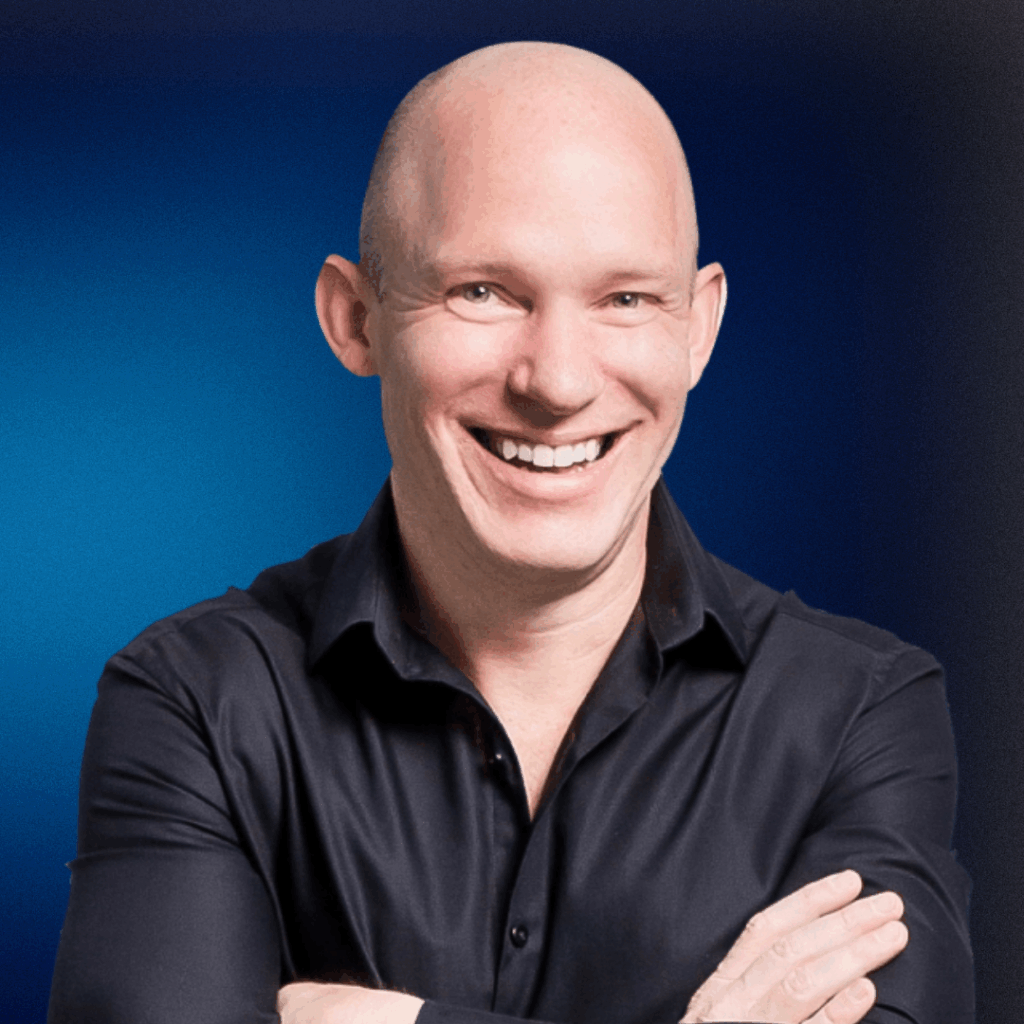
Mark Donnigan covers AI-first Marketing Ops in this Marketer of the Day episode. Mark Donnigan shows how AI can help lean B2B marketing teams ship faster and still hit what buyers care about. Instead of only using AI as an editor, he pushes marketers to use tools like Perplexity to research markets via earnings reports and papers. He steers the model with domain context, then verifies facts and cross-checks with a second LLM when stakes are high. He refreshes pre-2022 content by adding new data and letting AI tighten structure without losing voice. On enterprise deals from $500,000 to millions, a pod of three to five experts can go deep in digital, PR, or events on demand. To avoid "AI slop", he insists on buyer immersion: listen to Gong calls and sit in on three sales calls a week.
Mark Donnigan is a B2B tech marketing strategist, startup growth expert, and leading advocate for intelligent adoption of AI in marketing. With a track record of helping technology companies overcome resource constraints and secure multimillion-dollar deals, Mark is known for building and accelerating nimble, effective teams. He specializes in leveraging AI for research, content creation, and productivity, empowering marketers to be T-shaped, deeply knowledgeable, and highly adaptive in a rapidly evolving landscape.
In this episode of Marketer of the Day, Mark Donnigan joins Robert Plank to share how AI is enabling small marketing teams to punch above their weight, create high-quality content, and deeply understand their buyers. Mark elaborates on the transformative power of LLMs, the overlooked capabilities for market research, and the vital importance of combining AI with genuine market insight. Discover why embracing AI is crucial, how to update your processes for maximum growth, and what makes resilient teams thrive in tech's fast-changing environment.
Quotes:
“AI gives marketers a superpower; anyone can become T-shaped, expanding depth and range exactly where the moment demands.”
“What once looked like under-resourced teams now looks like untapped advantage. With AI, small teams can break through big limitations.”
“Don’t chase every new AI train. Spend that time learning your market, show up, listen deeply, and understand what your audience actually needs.”
Resources:
- Mark Donnigan on LinkedIn
- GrowthStage Marketing (official site)
- GrowthStage Marketing (Blog)
- Mark Donnigan on YouTube
Podcast: Play in new window | Download (Duration: 26:20 — 36.2MB) | Embed
Subscribe: Apple Podcasts | Spotify | Amazon Music | iHeartRadio | Podchaser | RSS
Transcript
Download transcript (.txt)Mark Donnigan built $500 million in enterprise value by turning deep tech into dominant categories, and now he's doing it with AI first marketing teams that scale faster and execute smarter. Mr. Mark Donegan is the force behind the marketing pod system, and he's the host of the marketing execution podcast. And we're here on yet another podcast. We're here on the marketer of the day podcast with Robert plank. We're brought to you by D FY podcast.com where we handle your back end so you can scale your front end. And we're here to figure out how to hang on for dear life to this amazing tool that changes daily called AI. It can be our best friend or it can be our worst enemy. Mark is here to help us make sense of it. So Mr. Mark, how the heck are you, hey, doing?
Well, Robert, that's a great intro. And yes, AI, hang on, it's taking us for a ride, isn't it? Yeah, because we're a couple of podcasters, and I'm always like, Okay, how do I use it better? And like you're I think this is episode 1531
so I'm like, I'll go back. I refresh the show notes, make new promotional emails. I turn each one into, like, a chapter, a book, a book cover. There's my mind is always like, spinning out of control, and there's never enough time to, like, get it cranking and so but then I'm like, we use it for like, strategy and sales copy, and for like, all those pesky client proposals, right? You meet someone on Zoom, you dump the transcript, you add a little bit of massaging. You say, Okay, here's what we talked about. Here's what I can do for money. But I'm always like, I'm getting fumble all the time because I'm like, a 90% chat GPT. I'm like, It's my all in one tool. And I always hear about what's possible, but even with what I'm using, I'm always like, starting stuff, and I'm always worried about having those half finished projects. So I'm sure you have thoughts on it, but what's your starting point, or what do you have to say about where AI is, and what has you just so excited about it? What's your take?
Yeah, so my take is that AI is the great accelerator, you know, to great ideas and and I know one of the things, you know, pre show that we were kind of chatting about before we hit record, was okay. You can also spend all your time exploring all the latest, you know, models and tools and all the cool stuff, right? And so how do you not get trapped in that? And I think we'll get into that conversation. But yeah, you know, AI for a marketer is it really unleashes a superpower. Because I think the best marketers are are those that are curious. They're generally pretty broad in scope. So, you know, you talk about someone having kind of a T shaped skill set, you know, broad, but yet in a in a important and relevant area, they can go deep. Well, with AI, you know, anyone a can be T shaped, and you can almost be T shaped wherever you need to be at that moment. And that really, for me, is the superpower that AI unleashes.
Well, very nice. Well, you know, when we were talking just now, before the show, we're also kind of talking about this idea of, like, anything is possible, right? And we have, like, all these huge resources. And you made me think about, like, remember when you had, like, an apple two, or a Commodore 64 and you turned it on and you had to come back, like, five minutes later, and then sometimes it would crash halfway through, and like, yeah,
power cycle it again, yeah? And
like, you have the nostalgia about, like, the dial up days, or about your old 486, and it's like, yeah, but if you busted that out yourself, Robert, what, yeah, but, but, like, if you
use all those things, yeah, but you'd
be bored in 10 minutes if you use it right now. Because, like, now we have just, like, beyond instantaneous stuff at our disposal. So the kids these days, they don't know how good they have it. But like, what do you think is maybe, like, underused because there's all this news, all these things you could do. But you say, like, you know, marketers have this broad range, but like, what do you think is maybe not done enough with AI?
Well, I think everybody, anybody working in marketing by now, I certainly hope, is using it as a writing aid, you know, using as an editor. So I'm gonna, I'm gonna assume that everybody is doing something on a regular basis, or regular enough basis to utilize the power, you know, of having a world class editor, and, by the way, an editor who can be, you know, any tone, any style, right, in any way that you direct it to, right? So I'm going to assume that's the case. What I found, or what I'm finding. Talking to other marketers, and especially marketing leaders, is they're under your under utilizing the research capability of the llms. And so I give a, you know, just very practical, you know, Application for me, I'm finding that more and more I'm leaning on perplexity. Now, you know it doesn't mean perplexity is the only tool, but perplexity has done an amazing job of indexing financial records, public you know, quarterly reports, annual reports, they index a lot of academic papers, and it is amazing what a superpower you know, that can bring when you're trying to do research on a market. And now, rather than just only looking at what's based effectively on Google, you know, what's been indexed in that LLM now it's going, and it's pulling public records, you know, it's pulling, you know, earnings reports. It's pulling all of this and, you know, I just even this last week, you know, I had an example where I put together a report on, you know, a view of a market over three years. And I knew, because I have a lot of experience that space, that I was going to be able to kind of get to a pretty good result, because I kind of knew where how to direct it. But I was shocked at what perplexity did and, and I think that's an area that a lot of marketers need to explore, you know, and just need to really learn how to, how to become a supercharged researcher, you know, with these amazing tools.
So we need to use the research capability. And I have to admit that doing, like, the the deep research in chat GBT makes me feel a little bit better about it, because when, like, first of all, there's a you hear, like, the stories about, like, there was, like, the lawyer that cited cases that didn't exist because it hallucinated, yeah, but then I feel like when I do a bunch of steps, and I suffer a little bit as far as the waiting with the with the llms, I trust a little bit more, right? Like, when it spits it out, instantly I feel like there's not enough of a sunk cost for me, and I don't take it seriously, and that's why maybe sometimes i i don't have the confidence, or maybe I abandon the projects if they're too easy, but then I'm like, okay, if I'm commissioned to, like, write a book on this. Then I'll do a deep research query, and I'll say, you know, write me five more deep research queries, and I'll take all that, and then I'll mismatch it, and then I'll, like, be like, Okay, now I feel like I've put enough of the work in myself to get it done. And like, yeah, so that's I use that a little bit, but not as much as I should, and probably not as much as
you Yeah, you're right. You know, clearly you need to fact check everything that comes out. So, you know, I'm not suggesting just, you know, go run it and then, you know, copy paste and you know, and say, Hey, here's, you know, here's our plan for the next three years. No, you know, you need to understand the market, or, you know, whatever that topic is you're researching. But I just really encourage, you know, marketers to to really lean on that. The other area that I am, you know, finding great success is where I have, you know, maybe some old content, and I want to update it. I want to refresh it, and I'll tell you, especially if it was written, you know, pre the chat GPT moment. So pre 2022, in other words, is written by humans in a lot of cases. You know, yes, there's probably, you know, new case studies that can be added, or there's new data, there's new facts that can easily be surfaced, you know, they'll just make the content stronger. But I have found that just the overall quality of the writing and just it's like, it fills in the gaps, and you just say, Wow, this is just so much better, you know, and in some cases, you get to those results in a very short period of time. You know, I don't want to say minutes. Everybody says, oh, in five minutes, you know, I got there, yeah, okay, you know, maybe you got a result back in five minutes. But, you know, I am always doing editing and fact checking and sometimes even taking that result and running it, you know, through another LLM with a specific, you know, prompt, either for fact checking or just, you know, to say, you know, how would you improve this document? And it's incredible, what
you get back, oh, yeah, and so and like, you bring up, like, a little bit of a, like, the psychological factor, right? Because there's, there's, like, the pre AI era, and then there's now, and I feel like we've all gone through being fooled by it, right? Where, like, you watch that, that YouTube, and doesn't even have to be like a deep fake, it can just be like a voiceover. And you're like, you get to the point where, like, Okay, you fooled me for five minutes, but I'm in. Six something was just weird enough. And like, I feel betrayed. And then you can't not see it right? And then you go on to LinkedIn, and every post looks like AI, and every and it's probably not all AI, but because, like, your brain was fooled, and you feel you felt a little stupid and a little mad and a little just like, lied to that. Then you like, maybe jump the gun on it. And so you're saying, if you're looking to avoid that in your own writing, especially, you can read and write right? If you're too afraid of it just changing stuff, you can just give it, that writing from 2015, or something, and say, hey, you know you don't, you don't have to rewrite it. But tell me what you would change. Tell me what you can improve. Yes, yeah, like, yeah, like, so it can just, like, give you the guidance without it having to mix stuff up and change stuff. And so it's, as you said, it's there to multiply, amplify. What is that we're doing? Not replace us. But instead of having these big teams, as you say, you say you can have a handful of people that can do a better job. And so you've been doing things that at scale I understand, where you've got the marketing pod system, the marketing execution podcast, and so, like, What's all that about? What has your adventure been like in creating and speaking with people?
Well, you know, Robert, when you work in startups, which I have spent my whole career working in startups or kind of growth stage, small to medium size. You know, companies, tech companies, really exclusively. You're always resource constrained. You know, there's never enough time, never enough money, never enough people. You know, it's just the definition right now. The irony is, is it today? You know, as companies have really oriented around getting around productivity. You know, I think this is true of even the largest corporations. So I So, I think no one is untouched by this phenomenon, that there's always more to do than there are, you know, people or resources. So. So for me, you know, I think, I think the the big advantage is, is it now that small team, or smaller team that before was viewed as under resourced, you know, and you kind of did the best you can, you can, you know, with the size of the team or the money you have to spend, or, you know, wherever your limitations are now, you can break through a lot of those, and if you have, for example, three or four industry experts on a marketing team. Now, I work exclusively in technology. I work with B to B tech companies. The companies I've worked with, and I work with today, are selling products with very long sales cycles, heavy consideration. These also are very, very big deal sizes. So you know, these are, you know, half a million to millions when a deal closes. And so you know, therefore it warrants the type of, you know, sales cycle. But now you can take three or four industry experts who are very knowledgeable in marketing, but again, maybe sort of broad. So they're not a complete expert in all things digital marketing. They're not a complete expert in PR. Maybe they're not a complete expert in events marketing and you know, you kind of go around, you look at the at the various buckets of activities. However, they're broad in their scope. You know, they have good knowledge of all those areas now, with those tools, with the LLM specifically, now they're able to go deep and to apply, you know that knowledge when it's needed, you know. And that's really, you know, that's the unlock for small teams to be able to continue to move fast, get that accelerator, as I said a few minutes ago, which is what I'm most excited about with AI. And so, yes, yes, it's cost effective. But what's super interesting is, is that in many, many, many situations that I'm in, it actually isn't an issue. I'm not being asked specifically, you know, Mark, you know, you know, we would have normally spent, you know, this much on a budget, you know, for marketing, but we're only gonna spend half, so go make it work. Oftentimes, it's, Hey, Mark, if we were to spend more, you know, do you need it? And sometimes my answer is, well, of course, you can always add more people, but no, I don't need it. And I kind of don't want to add more people, because it adds complexity, you know, in some cases, that adds overhead in terms of management, complexity in terms of, you know, now you have that many more people to, you know, keep track of, you know, to to guide and direct. And so it really is about doing better work, doing it faster, being super nimble, and being just really, really effective. There's always been. Business books written by Navy SEALs you know, or you know, or special operators AND, and I think there's a reason for that, you know. It's because the whole way that the you know SEAL teams and the special operators are built is, you know, why don't you send a platoon of, I don't even know how many soldiers are in a platoon, but you know, 50 soldiers, or whatever, 100 soldiers in Why do you just send a team of like six or eight people, you know, who, by definition, have to be generalists, right? If you think about it, you only have six or eight. So, you know, each one is kind of an expert in maybe one area, but they can't be an expert in all things you know. So how is it that that small group of people can go in and do sometimes the impossible, you know. Why wouldn't you send 100 soldiers, you know? So it's really fascinating when you when you get in and you start thinking about it, it's a little scary at first, you know, because guess what? You don't have the air cover saying, Hey, I have my digital marketing team, I have my web development team, I have my, you know, I have my writing team, I have my, you know, PR and comms team, you know. And there's, and there's a whole set of individuals across all of those, you know, there's comfort in that, right? But, boy, it sure is fun. You know, when you get three or four or five, you know, folks in lockstep, who are, you know, who bring their respective skills to market. And, you know, you just go out there and you execute. And I'm finding the companies right now, they're doing great marketing and technology. A lot of times you get under the hood and you find out it's like one or two or three people, you know. And, yeah, you know, depending on who the company is and the scope, you know, sure they may have some agencies supporting them, you know, I'm not saying that they're doing all the work, but you say, you know, it's really only two or three people that are driving this amazing marketing for a 500 million cyber you know, Arr, cyber security company, you know, how is that possible? That's how it's possible.
Yeah, possible because we have the cloud and we have these tools, and a lot of this is reassuring. You're making me feel a lot better, and you give me flashbacks, because even 510, years ago, like, if I would pay for, like, a sales letter, I'd be like, well, it's $2,000 they'll get it back to me in two weeks. And now it's like, hey, chat GPT, and you go back and forth, or you pay someone, and they get it done in a day, and that's what the expectations are. Or, like, I hired a graphics guy, and I think, I think I paid him maybe, like, three or 400 bucks a month, and I just said, like, Hey, can you come up? Can you make me one graphic every hour? And now, with something like Canva, you can bust them out yourself in a few minutes. Or, like, if you have a general VA, that can just be like, kind of like part of their their day. And if they make 30 graphics, that's not too much to ask. And so it's like, just, it's crazy how things have changed. But are you concerned about the future, because you think five or 10 years ago versus now, I don't even know what five or 10 years from now will look like, especially with it going exponential, just like what is to be expected and should we be concerned?
Me, personally, I'm not concerned about the future. I'm super excited. I mean, like, Uber excited. However, I'm concerned about the future for a couple groups of people. I'm concerned about the future for those who, um, you know, you don't have to be a techno optimist, but you can't be a techno pessimist, you know. And, um, and I'll tell you, I continue to be really surprised. Again, I work with technology companies. So you would assume that, oh, you know, you know, Mark, everybody you work with, just must be on the bleeding edge of every tool. And you would actually be shocked, you know, at how that's not necessarily true. You know. Again, everybody comes from, you know, they have their own perspectives, their own backgrounds, their own, you know. And that's okay, by the way, so, so again, it, it's not that there's anything wrong with that, but, but I'll tell you, for those people who are sort of techno pessimists, you know, and I'm not even saying going all the way to AI is going to take over and kill the world. You know, that's the extreme version of it. But for those who are still holding on to, I like to say the good old days, you know, the good old days when copywriters were, you know, were, you know, able to command the biggest fees and all of that. That doesn't mean it's the end of copywriting, but wow, if someone isn't an AR AI supercharged copywriter, they're, they're just simply not going to be able to compete. There's just I can't, you know, make it any more clear, I'm concerned about those people. I'm also concerned about those marketers. Who might be embracing the tools, but they don't understand the market, and they don't have a command of who their buyer is. And this and this actually dovetails into the research where, you know, a few minutes ago, I said that I feel like marketers are actually under utilizing AI for just research, understanding your market, understanding your buyer. And to be really specific, I am not talking about personas, you know, marketers, we love, you know, oh, we sell to middle market companies of 50 to 500 employees. And you know, this title and this job type, and, you know, and I understand my market, that's who my buyer is. Like, okay, fine, maybe it's true that, largely, you know, companies are that size, they fit that definition. You sell to someone with that title, but do you really understand, like, how does that person make a decision, and what do they really care about, you know and, and maybe you're you know, you meaning, you know our our product, maybe our key value proposition is important to them, but it's actually not why they make a decision. But it is amazing to me how many marketers don't actually have command of of those, I'll even say relatively simple, you know, facts, you know, is, how is my buyer really making a decision? And so the reason why this is a big deal is that I think this is where the AI slop, you know, that's a term that gets thrown around all the time. Now, you know, AI slot, I I actually believe that AI slop is a little bit different than what then what most people think it is. Most people think it's just, you know, write me a blog post. Keep it under 400 words, you know. Go, you know. And that's one version of it, right, where you just get this super high level really says nothing plain vanilla, you know, kind of writing that's definitely AI slop. But I've seen things that people would categorize as AI slop, or sometimes not call it slop, but it is slop actually pretty well written. Actually gives some insights. Very readable. Doesn't have all the tells that it's AI, you know, doesn't have em dashes and every other sentence, you know. But yet you read it, you go, you know, that's actually a really nice article. Too bad that's not what your buyers cares about. You know. In other words, the content itself was actually well written, well conceived. It it, you know, but it the but to the buyer, they don't care about that, you know. And so I think that there's, there's two parts to this. I you know, in fact, my advice to marketers today is, do not take another AI train marketing training course. You know, do not, you know, go get lost in another marketing substack you know about, you know, all of the tricks and the tips of generative engine optimization. You know, Geo, yes, it's important. Yes, you need to know something about it, but go allocate some of that time to go learn about your market. Go to a trade show, you know, beg your sales team to go do ride alongs if possible, or to, you know, get on calls or to listen to Gong calls. You know, insist on it. Don't just, you know, hey, it'd be cool if you could invite me and say no. Every week I want to be on three calls. I don't care which three, but put me on or send me the gongs or, you know, or the recordings, and then carefully listen and really understand. Wow. Why did, why did that buyer say that? The salesperson said this, you know, the account executive said that the field application engineer, but then the buyer responded, why is that? Do I really understand why? And if you get answers to that, you will become a better marketer, and you'll grow your career, and you're going to be able to to compete with the machines. But if you don't do that, competing with the machines is going to be more difficult, you know, maybe not impossible, but it's going to be more difficult,
yeah, having the human connection factor, and you would hope that if the AI frees up some of our time in a way, or frees up our thinking in a way that we would then apply it to something that the AI can't do, which is what you're talking about is, and because, like, when, when I'm using AI for writing, and I, like, break down the steps where I kind of guide it on the surface, I'm like, I get stuck in the writing a term paper in school mode, right? Since school, they'd say, Okay. Well, what are your talking points? And breaking it down, it's great for a school assignment, but for adding the emotion and getting a sale and persuasive copy and email writing and all that, it's like, well, you want to have the the emotions and the stories and the magic. And so you say, well, there's that, that step I always forget about, in guiding the AI in which is in, okay, like, Who is it? Who's that audience? And you say, well, that's on the right track, but then it's, what do they care about? What makes them buy and that's such a such an important nuance there, especially as we want to avoid the AI slope in our own marketing copy. If we're getting entertained on YouTube, well, that's fine, but if we don't want to be just putting out a bunch of mindless stuff and then wondering why it didn't work. So you're saying, have that human factor and use your brain. It's still there. It still has a purpose. And if you can focus on that humanity, then the AI can worry about the word choice or the order of things, or it can do what it does, and you do what you do. And so it's been such a fun like philosophical conversation with you, Mark, but how does this relate to your audience and what they care about? Who are the people that should listen to your amazing podcast, and who are the people that should maybe contact you for some next steps? Cool.
Well, I work with tech startups, and you know who are in a growth stage. They've reached product market fit, and it's time to put the pedal to the metal, so to speak. And you know, I can help them, either, you know, bringing teams and resources or even just systems. I will give you a little secret. Robert, the marketing execution podcast is 100% AI generated myself and the host, I've never recorded any of those words in a microphone. So I encourage everyone to go listen to it, because I'm not saying that there won't be tells. Okay, so it's not about, oh, let me see if I can, of course. Now you know what it is, but it's an example of where it gives us the ability to begin to put content out. And here's the fascinating thing, I have gotten feedback on the marketing execution podcast, first of all, from a few people who didn't pick up the tells that it's actually AI, which I had to smile and say, Oh, wow, that's pretty cool. Pulled them. But in a few cases, I had people call who, who did contact me, you know, reach out LinkedIn, usually, and and say, Hey, I think it's, I think it's AI. But you know what? I love the content, and I continue to listen, you know? And so I think we're reaching this, this point also, where, yes, in some cases they're just bad, AI content, right? And bad, you know? Why are we going to waste our time? But at the end of the day, if value is being exchanged, and if the listener or the reader, even if they detect or if it's even disclosed. You know, hey, this was, you know, this article was largely written using AI or, you know, or in the case of a podcast, or you might listen and go, I heard it that probably isn't a human that would do that. You know, in that case, then, then the user simply says, But am I getting value, you know? And so what I have learned through my own experiments, and by the way, the marketing execution podcast is an experiment. It's, you know, it's not because I'm trying to build the next biggest, greatest show by not going on shows. Or else I want to come on your show, I'd send my avatar, but it's, it's because, you know, I'm experimenting, and right on the front edge of, you know, learning, how is the market going to respond? You know, what types of content will they receive? What types of content will they not receive? You know, where's that threshold where someone says, You know what? I know that's AI, but I'm still getting value. Now here's the thing about marketing execution podcast, there is so much human in the loop that some days I ask myself, why am I not just recording this? Because guess what? The time it takes to produce at this stage is not really that much shorter than if we just recorded it, but, you know, it's giving me the learnings. And you know, there's lots of other benefits, you know, I can be sick, or I can be out of town, or I can be not, you know, in my nice podcast recording environment. And, you know, and a show gets produced, right? You know, somebody that works for me can go produce the show, but that that's, you know, the kinds of things that I just would encourage. You know, I can help companies with. But, you know, if you want to go off and experiment yourself, I would really encourage that what you do is that you find an angle, you know, find. A tactic that you said, we really like to double down, but we don't have enough resource, or we just don't have enough time. Or, you know, we have a podcast, but we're doing good to get one episode out a month, or one episode out a couple weeks. Find a way. Maybe you don't go all the way to speech generation like I did, but there is a lot that you can do to generate show notes and generate scripts and generate so that maybe now you can get a maybe once every 10 days, you can get an episode out, you know. So push, push, push on that. Use the tools, and I guarantee that you'll see a very, very positive impact, you know, to your business and your marketing.
Oh yeah, put the AI to work experiment, and at least work on the SEO of your podcast, or talk about strategy or new traffic or new platforms. And I think you're touching, I know we're getting near the end of our conversation, but you're touching on kind of that weird paradox with using AI is that you can spend two hours writing a really good article or blog post without AI, or you can spend two hours with the AI massaging it, and sometimes it drives you crazy, and you think like but I'm spending the same two hours, and you'd hope that the result is 10 times as better, because there's more attention being paid to it, and that that two hours is consistent, because we've all been there, we're trying to write erasing deadlines. And sometimes that blog post takes eight hours and you have to come back to it again and again. But if you use the tool, you can keep on pumping it out. Or, like you said, with the podcast cadence, you might be putting out episodes inconsistently and with the help of AI and you have it strategize the hooks and the schedule or the topics or the format, you can get it coming out consistently and have a real, repeatable business that scales, what a concept, something that we want, what a concept? Yeah, so if you are a startup and you're looking to scale your marketing impact. If you're struggling to grow revenue, then Mr. Mark Donegan can help you to launch, build and scale, and you can find out about that at growth stage. Dot marketing with content that connects all in marketing execution and leading with experience. And then to find that AI based marketing podcast. Where can they find that?
Yeah, so that actually is on the website. So you can go to growth stage dot marketing, and there's a podcast tab, and you can find it there. Also, if you just go search Google Marketing execution podcast, it's indexed, and you'll definitely find episodes. You'll find all the episodes, and then LinkedIn. I'm very active on LinkedIn, so you can search marketing execution, podcast. You can search mark, Donegan, growth, stage marketing. You can find me. I'm I'm very accessible,
very cool. So check out that podcast, and it's like, you'll we wish there was a way to UN to give you amnesia that it was aI generator, right? Because that's it's a funny concept, and you can go there and imagine how you might have been fooled if you didn't know it was aI but it is AI generator, but it still provides value, because there's a lot of human in the loop, and you can find out all about this at growth stage. Dot marketing to find it about Mark's company and what he does helping startups. And then in the navigation, you go to the marketing execution podcast and check out some of those episodes where he talks about TED Talks and how leaders communicate their ideas, public speaking, product market fit. It's not made up. It's based on what is known and what's proven and what works. It just kind of does the research for you. And it's like, even with the genius whoever thought of when you do a Google search and it adds like the AI summary or like the four questions should get enough money to retire, because, for some reason I don't mind that they kind of automatically AI ing for me, and then I can choose to use that instead of the search results if I want. It just feels kind of like it's it's that halfway point the the overlap between the computer generated and the human generated. So AI is here to stay. We need to use it to get ahead of our competitors and to grow the company of our dreams, and not use that resource limit as an excuse. So get educated, find out about this at growth stage. Dot marketing and find Mr. Mark donegan@linkedin.com slash, I N. Slash, Mark D O N, N, I G, A n, and so Mark, you and I are a couple of podcasters, and you know that the problems and the stories and the drama are interesting, but what's really, really great is to have little sound bites, little quotes and reels and things like that. And so that is why, in the final moments of our podcast, it's time to ask you the tough question, the. The stumper, the scary question, which is, do you have a fun or interesting quote or lesson that has served you that you can pass along to us?
Yeah, I do. You know, there's always a lot right that we all have. But you know, years ago I had a I had a really, really interesting conversation with, actually, someone who was a former boss of mine, and he was a company founder, really, really smart guy, Tony Morans, and he we were talking about an opportunity that was presented to me. And this is a universal, you know, this was in the context of me joining a company, taking a job, but it's something, his comment, I found to be universal, universally applicable. And so I was talking to Tony about this opportunity and describing it, and, you know, basically saying, Oh, it's good fit, and it would do these things. And he listened. He said, Oh yeah, Mark, sounds. Sounds perfect. He said, But let me just say this. He said, the job itself, the title, all that kind of doesn't really matter. It's choosing the right company that you can then go and serve and you can bring your skills to this kind of, ultimately set you up for, you know, whether it's career growth or, you know, again, working in Silicon Valley, there's, you know, especially at that time, you know, there was a lot of focus on, you know, stock options and equity and things like that. And it served me incredibly, incredibly, incredibly well throughout my career, not just, you know, as I've chosen various paths, you know, professionally, companies join companies to work for, but even just thinking like, you know, maybe this particular thing I'm being asked to do is not of great interest, or it's not kind of what I've naturally say, Yeah, sign me up for it. But is, is there something about that company that really resonates with me that I can join that's going to then set me up for maybe that next thing, you know, that would really be, you know, something more fulfilling. And so, you know, as I look at even company, you know, it's fascinating, because now I shift the lens, and now largely it's companies coming to me saying, hey, we'd like you to, you know. And so I listen, and obviously they always approach me in the context of marketing, but I'm always thinking like, what do they really need, and how can I really serve them? And then how is that going to benefit them? And when I look at it kind of, kind of flip this around a little bit, I just find that I make higher quality decisions that tend to, you know, the outcomes tend to be bigger, you know. And again, that doesn't always mean money, you know, just, even just the enjoyment, the satisfaction, you know, is generally better. And so that's something that I would just encourage everybody is like, rather than get fixated on, you know, what deal Am I getting? What's my position? What's how much they paying me? You know, yeah, I'm not saying those things aren't important in various times, you know. So, so clearly, I care about those things too, but, you know, but it's really about, you know, is this company going somewhere, you know, do I believe in them? Is there something that they need, that I have that's truly unique, you know, so that when I, you know, when I work with them, there's going to be an outcome that they're going to say, Wow. You know, we expected good things, but this is beyond our wildest dreams. And if you choose companies to work with, companies to work for clients, to work with, even companies to hire based on that thinking. It's a little bit of a twist in how you look at in, you know, these sorts of engagements, but boy, it'll really, it'll improve the quality or outcomes, at least it has for me.
Oh yeah, that's powerful thinking about the next steps in any context, right? Because it's like, there, there's always that pesky blue ocean strategy, right? They say, well, what's the thing that you're doing now that might, maybe might become out of date or slowly getting too crowded, and what's the new thing? But then there's the worry, the danger, that too much education or experimenting or doing the new thing will distract from what's already working for you. Now, right? It's back to the the AI add we were talking about before, but if you take on that client, or that job opportunity, etc, that sets you up for the next thing, that's the prototype or the proof of concept for something new and bigger that's more cutting edge, where there's more space, less competition, like that's some powerful stuff, but it requires us to strategize and to think ahead, and sometimes, if we're stuck on our own thinking, we can't do it alone. We need to have that outside help. And you can find that outside help from Mr. Mark Donegan at growth stage. Dot marketing or find him on. LinkedIn, and man, I feel like I need to take a nap after this, Mr. Mark, because we really ran the philosophical and the business gamut. We talked about some of these big ideas and big solutions of what we need to be aware of and doing in this crazy AI age. So thanks for helping getting us a little bit of sanity, and thanks for being you and for being here. So I hope you have wonderful adventures and and you know everything that
you do absolutely well. Thank you for having me, Robert. I really appreciated it and enjoyed the conversation. Heck yeah.
Subscribe
If you enjoyed this article, subscribe to receive more just like it.


