Published Last updated
View in Podcast Library: stories, quotes, books, and resources in one place.
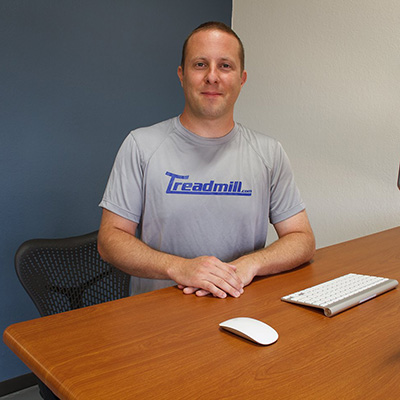
Michael Jackness talks with Robert Plank about moving through affiliate marketing, premium domain names, and ecommerce as conditions changed. His story is a practical account of spotting opportunities, testing an idea, and recognizing when a once-successful business model needs a different direction.
Mike’s early affiliate business grew from discovering a poker referral program and offering books to people who signed up through him. Industry changes eventually made that work less attractive. After stepping away and traveling by RV, he applied his search marketing experience to keyword domains, considering search demand, advertising costs, comparable sales, and the possibility of developing a real business around a name.
The domain examples include WebsiteHosting.com, WordPressThemes.com, and Treadmill.com. Mike explains that a strong name still needed a useful business behind it. With Treadmill.com, sending visitors away through affiliate reviews was confusing shoppers who expected to buy a treadmill on the site. Turning it into a store created a clearer experience and brought a different set of operational challenges.
Learning ecommerce meant evaluating platforms, talking with manufacturers, testing suppliers, and dealing with the realities of shipping heavy products. Mike eventually moved toward lighter products and his own brands. Throughout the conversation, he returns to learning through manageable experiments rather than committing everything to an untested assumption. The episode is especially useful for entrepreneurs deciding whether to improve their current model or redirect their skills toward a better opportunity.
Knowing when to develop, test, or change direction
- Evaluate a domain as part of a potential business rather than a name alone.
- Pay attention when visitor expectations and the buying experience do not match.
- Test suppliers and operations before expanding heavily.
- Treat changing market conditions as a reason to reassess the model.
Resources mentioned
Podcast: Play in new window | Download (Duration: 41:11 — 37.7MB) | Embed
Subscribe: Apple Podcasts | Spotify | Amazon Music | iHeartRadio | Podchaser | RSS
Transcript
Download transcript (.txt)Robert Plank Show Episode 161 affiliate marketing, domain investing and E commerce, think, act and adapt as an entrepreneur with Michael jackness.
Hey everyone, and welcome back to the Robert Plank show. This is the podcast where we talk about making money. Our guest today is Michael jackness. Now, Mike got his start online in 2004 doing SEO and affiliate marketing. Starting in 2010 he started purchasing keyword domains, including treadmill.com and in 2012 he decided to get into E commerce. And I mean, some of the names that that Mike is going to tell you about, and some of the names that that Mike owns are nothing short of amazing. So, I mean, I can't wait to introduce you to him. So Mike, how are things today?
I'm doing great. Thanks for having me on the show. Fantastic. So, I
mean, it looks you do a lot of stuff. I mean, you own domains, like, I mean, graphic design.com, online, degree.com gunsafe.com, if you've done a lot of stuff, as far as you know, SEO and E commerce, so as far as all those things go, when you look at what you do and what maybe some of your lesser competitors do, what makes you stand out from all those other people who are doing similar things as you
Yeah, I think the biggest things for me is just being very tenacious and not willing to give up on something. And also, when I see an opportunity, I'm kind of a go all in kind of guy. So, you know, in entrepreneur life, not everything's always going right. And you're kind of trying this and you're trying that and let people hem and haul and don't quite ever, you know, jump into it and or they don't ever really take advantage of something when it's going right. So there's been been three major things I can kind of look back at in my entrepreneurial life, business opportunities that once I identified them and they were doing well, I was just bet the house on it.
So what were those three things
I would be back in the day when I was doing computer consulting, would be the first, the first thing I did. And then when I got into SEO and affiliate marketing, it was the online poker affiliate marketing space specifically. So, I mean, we, we grew astronomical and built a really big company on the back, so that there's actually probably a fourth thing that the domain investing thing I think would be, would be the next thing you know, I identified an opportunity, and thought long term that even though different TLDs are coming out, I think that the premier.com domains are going to be, continue to become worth more and more money. There's, there's a definite thing around the SEO space that a keyword domain isn't worth as much as it used to be. But I actually disagree. I think that the premium, like the real premium, keyword domains, are worth more than ever, because because the way Google's like, done their algorithm and stuff, you can still link to your keyword domain in a way that that other people can't. And I see results of us getting higher and search results with less links and other people. And then the thing lately has just been, has been e commerce. I mean, we have a niche right now that is working very well for us. It's incredibly capital intensive, which has been the first time I've run in a business like that. It's all been affiliate marketing up to this point, or cash just kind of comes in without a lot of expenses. So we're learning the ropes of that business. But I do think that there's an opportunity in E commerce right now, if done right to really excel, and we've been doing that nice.
So it sounds like you've been, you've been actually living the entrepreneurial lifestyle that a lot of people talk about, but very few people do, and that you're, you're kind of like you're, you're like you said. You're going all in, you're writing whatever, whatever, you know, two or three year wave is currently, at any given time, you know, passing through the internet, like you said, whether it's SEO, whether it's, you know, domain investing, or flipping, or E commerce and things like that. And what I'm hearing from you is that as you as you've been going through this journey, starting from, you know, the consulting and SEO stuff to now the E commerce is that you've been, you've been enjoying the problems that are in front of you. Right? Like you said that before you had to you were used to affiliate marketing, where there was a lot of a lot of cash coming in and very little expenses. And now there's a difference, sort of nut to crack. So could you, sort, Could you walk us through, maybe, like, the the history, or whatever, like, I mean, get, can you take us back to the beginning? And, I mean, what even got you started in this entrepreneurship, in this whole internet game,
you know, I think that just being kind of growing up in the 80s and 90s, you know, I graduated high school in like 94 and computers were just kind of coming around. And I was just always a techie, nerdy kind of kid, and so I adopted technology, and I think that every kid today is still kind of the same. You look at how a kid these days picks up an iPhone or iPad, and they just kind of naturally gravitate towards it. I think that we were all one generation removed from that, but, like, it was different technology. And I. Really adopted it. So I had, I was lucky enough to already have a tech background. The technology part didn't scare me where, I think, you know, some people are kind of scared of the technology and, you know, so I was on the internet in the early days when it was kind of first coming up. And also just happened to be lucky that I also was into playing online poker and put the two things together. That was that part of was kind of a little bit lucky. But, yeah, I mean, I think that the thing that really helped in the beginning was being technical, you know, knowing, knowing the platforms, knowing, not being, knowing enough about the technology to be able to get someone to help me and not take advantage of me if I needed help. Those things certainly made, made a huge difference.
Awesome. So what I'm hearing from you is skill plus passion, that the skill was the technology stuff, and then the passion was online poker. So you're good at technology stuff. You liked online poker. So then what did you do from that point?
Yeah, so we, I was playing online poker, a lot of behind poker at the time. And one night, I mean, poker tournaments are kind of boring. You do a lot of folding and just waiting around. And I was clicking around on party pokers website, and this is back in 2003 and they had a thing called affiliates. There was, like, a little link on the bottom of the page. And I was like, what does that even mean? You know, just kind of, I was clicking through reading everything. I was really bored. And and it said on the site that if you send us zero to or one to nine players a month, we'll pay you 65 bucks per per sign up, and if you send us 10 or more, we'll pay you $75 a player. And when I saw that like it blew my mind. I'm like, That's just an insane amount of money for just sending Party Poker some players. But I was like, I only have so many friends, so I can only I'm always thinking in scale. And as I was playing in that poker tournament, I'm like, You know what? Like, I think I can come up with an idea where I split this, basically this commission that they're going to pay me and give some sort of a free gift or item to someone if they sign up for me and see if I can get that to kind of get some traction. And that's exactly what happened. I mean, we, or I should say I, at that time, because it was just me. It came up this idea to give away Doyle Brunson super systems, if you're in the poker that was like the poker Bible at the time. And so I gave away that book if you sign up for Party Poker through me. And it caught on like wildfire, and it just kind of got crazy from there.
Well, cool. So as far as you being an affiliate and you giving a bonus in exchange for someone for signing up through your link. Was that something that you stumbled upon on your own, or was that something that you learned somewhere, like, how did you decide to do that to give an affiliate bonus? Yeah,
I mean, it was definitely something I came up with on my own. It's been copied a lot since then. I think, you know, you look at like Ebates, or a lot of these other companies were purchased through our link, and we'll give you some money back. As far as I know, that had not been done at all at the time, and I'm positive it hadn't been done in the online poker industry. And there certainly wasn't anything that I saw to kind of trigger that. So it was definitely innovative, and unfortunately, it gets copy printed quickly. We had a lot of copycat websites pop up that really infuriated me at the time. But I've taken a different approach to business and life at this point, which is just kind of worry about what I'm doing, and if someone else can catch me, if I was the first one, then I probably got too lax and allowed them to do that. And if you just keep on pushing the gas pedal and looking forward instead of behind you who's coming at you, you'll probably do better at least, at least for me. I mean, obviously you still want to know who your competition is and things like that. So I'm not saying through complete caution to the wind, but I definitely don't worry about people copying me and those types of things as much anymore,
right? And I mean, the way that I've that I've heard that explained by people is absorb the changes if you're dealing with competitors and and that works both ways, right? Because, yeah, you did this affiliate bonus thing, and other people maybe had been struggling affiliates, and they saw where you were doing, and they just kind of modeled what, what it is that you were doing, and then at that point, then, if, if you then get, if, you get over the infuriated stage, or the looking behind you stage, you can say, Okay, well now someone else copied me, but maybe, maybe they did a better job, right? Or maybe they then took it one step further, and then I can copy that. So did you see any kind of, that kind of thing where maybe you did something that was a pioneering type of move, others copied you, and then did you find like a way to one up them once again? Or did you find like a way to, I guess, like do something in response to that?
Yeah. I mean, this is gonna sound pretty like cocky or ego driven or something, but honestly, that that was never an issue. It was always people copying us, and we never, we never copied anybody. It seemed like we were always doing the innovating and coming up. Innovating and coming up with something new, and then someone else was was copying that, at least in the online poker industry. And you know, a certain extent, there's only so much you can do, right? So, I mean, there's only so many ways you can innovate. And we had come up with three big things. It was the incentivized gift sign up thing that we did. Another thing called instant bankroll, where we literally just gave people free money to play poker if they sign up under our link. And then we did another thing called right back, which probably gonna get glassy highs with your audience here, but basically, for people that play a lot of a lot of poker, we would give them a percentage of their playback. And those are like, and still to this day, are still the only three innovations that ever really happen in the in the poker affiliate industry that I can that I can think of. So it was, we had all that stuff copied, and that was just kind of the way that it was. And I do understand exactly what you're saying. I think in other industries, for sure, someone else might do something better than you, and it's your turn to copy them, maybe. But in the only poker space, at least, that never happened to us, okay?
And even the way that you explain that, I mean, even if someone is listening and they don't quite understand online poker, I mean, those three things that you described, it was, it's almost like if, if you look at whatever offer you're trying to get someone to sign up for under you, if you say, Well, if I was the buyer, what else would I like in that package? Right? Like, I mean, what else would I like? Well, I'd like a gift in exchange for signing up. What else would I like? Well, I'd like some money so that once I sign up to play poker, now I have some money to to gamble with, and I don't have to take it out of my own pocket. So, I mean, even though, um, even if someone listening doesn't quite grasp online poker, even I kind of still understand what, it is that you did there is that you just looked at and you said, Well, what is, what's it called poker players,
for the affiliate site, or for this
site that you would be at
the time was called pokersource.com, if someone goes and looks at today, it's ugly, it's it's embarrassing, but I don't do anything with it anymore. But I mean,
you look at that offer a poker source, and it's like, you can always look at it from the from the lens of, well, what are they what are they missing that I can fill in the gaps. Is that right? Yeah,
for sure. And I mean, that idea has been copied in pretty much every industry. I mean, I've seen a lot of it's kind of kind of been kind of curtailed a little bit now, because what ends up happening with these incentivized sign ups, it's not something that I really thought through at the time, but it makes a lot of sense, when you take a look at it from a business perspective, is that they're not going to be as high a value a customer as someone that wasn't incentivized. Because you end up with people, there's going to be a certain segment of those people that are just looking for something for free or for a deal, and they're going to do the bare minimum requirements to get it and then leave. So there's been a lot of affiliate programs that have put the kibosh on this, where they basically have in their terms now that you can't do any sort of incentivized marketing, but in industries where it's still allowed, to this day, it can be quite lucrative if you, if you do it right,
cool. I mean, that's a good strategy. So you did that, you did these, these three things and then, so, like, what did that lead to? Did, did the poker stuff. So that kind of, did you get bored that, or was that too crowded or, I mean, what was the next step after this for you? Yeah, I
mean, there was a few things that kind of pushed me to want to do something different. I mean, first of all, if you can think of, like, all the stereotypes that you might think of in the online gaming industry, the type of person that might be hanging around in that industry, unfortunately, the stereotypes kind of true. You know, it's a bunch of kind of sleazy people that have questionable morals and stuff. And after hanging out with those types of people and being in an industry for six or seven years, I really had just had enough. That was probably the number one reason that that I wanted to do something different. The other thing that was really frustrating was we always had these outside influences that were hurting our business, particular government agencies trying to pass laws or whatever to stop people from playing poker in their home. So, I mean, I kind of equated to building a business on quicksand. You know, every time you think you you've got an over hurdle, whatever your business kind of sinks because some other outside influence hurts you. So that's something that I've been really cognizant of, of when I've done anything moving forward in any of my businesses, is to make sure that it's something that is as boring and, you know, agnostic as possible. So somebody isn't like, going to say, like, oh, people can't color, do adult coloring anymore, or something. There's, there's no one that's ever going to say that's one of our, one of our businesses that we do now. So that was really frustrating and and it was also just frustrating being in a shrinking business, and I enjoy creating something from nothing. That's really where I get my thrill and excitement from doing a business. So there wasn't really anything new when there wasn't any real growth opportunities. And part of it was I just kind of had enough. I was ready to take a break. So, I mean, we did take a break for a couple of years after after doing that, we bought an RV and RV around the country, and that's actually when we started buying those keyword domains. And, you know, I took all the experience that I had from affiliate marketing and SEO. And I was like, Okay, well, I'm gonna go out and buy these really powerful, big keyword domains and and apply the knowledge that I've, I've gained from from doing affiliate marketing to to these domain names. And that's
a pretty good insight there, that that, I mean, a lot of the things that we do, you know, or express. On the internet, you know, work well, one year, but then you fast forward two or three years, and then it's kind of dried up, or it's built on quicksand, as you say. But what's cool about that story that you just, you just told me there was that well, even if that happens, which in a lot of niches, that does happen, that even if something dries up, or, you know, is too crowded, too regulated to whatever too expensive to do business. And there's still the there's still the money that you've generated during that time. So then if you then decide you want to go on a vacation, that's great. But then there are always skills that you've built up during that time that you can then move over into other areas. So So buying domain names, you decided to do this. So I mean, at this point, what year was it? And are we talking about, you know, finding unregistered domains, expired domains. Are we talking about buying domains from a marketplace? I mean, what were you doing for this business model?
Yeah, so was 2010 2011 we had, we were living abroad from 2006 to 2010 so we had just come back, like I said, we bought the RV, and I just started poking around, looking for opportunities. I mean, the things I was looking for were either parked or underutilized domain names that I could get at a really good price. And as you said, I mean, the previous few years had been really lucrative for us financially. So, I mean, we, we had the cash to go out and buy, buy the domain name. So in the domain industry, it's a very illiquid market. So when you have someone that's that's got money that's looking to buy a domain name, you can, typically, you'll get a lot of interest, because these people have been sitting on these names for a long time and probably are looking to get rid of them. So and we also just, we had some contacts, and we made some friends with domain brokers, and I became a wholesale buyer, or fire sale buyer. And I didn't really, I had some criteria that I was looking for with the domain names, but they weren't I didn't want to get anything too specific. So, like, I wasn't really niche specific. It was more it has to be like a one or two word domain name that is something that people might type in without even because people don't even understand how to use the internet. And there's a my parents are going to they don't understand how to use the Google, so they might just type in graphic design.com right into the search bar and not even understand that they think they're searching for something, but then they end up at graphic design or online degree or any of these types of things. So those were, those were the other things that we were looking for. I mean, obviously treadmill.com, was another one of those that we picked up that that fit that criteria. But you can see that these are, like, all over the place in terms of of niche and industry. So when I saw a good deal, when I saw something where I'm like, Okay, I'm buying this for half of market value, what I didn't be market value, that, if it's someone were to come to me and want to buy the domain name, what could I assert that it's worth and be able to sell it? If I wait long enough, you know, I want to, I want to buy it for at least half of that or less. So that was kind of our criteria. And we just slowly but surely, over over the last few years, have picked up some, some pretty cool domain names, and some of them we've since sold, and some of them we still
have awesome, yeah, and I mean, like we said, when you open this call, I mean, you have some, some crazy stuff. And even when we were first talking via email about getting you on the show, I noticed that, I mean, you own, like, tactical.com like taryn.com just all of these. These are super crazy domain names. So, and the way that you're describing it, it's almost like you're, you're like, a real estate developer, a real estate owner. Like, you know, you find these things that are are undervalued or underused, and you can, like, buy them. And so, so a couple things about that. Like, first of all, like, what kind of price range were you paying? I mean, are we talking about the hundreds of dollars, the 1000s dollars, 10s of 1000s, even more, or what was it a certain price range? Was it all over the place?
Oh, it was, it was all over the place. I mean, we've paid anywhere from, you know, $18 to register a hand registered domain. The most I've ever paid was 190,000 for a domain name that was for website hosting.com, but I purchased several six figure domain names over the years, and definitely not afraid to do so, because I I know what they're worth, and I know what what they can be worth if they were, if they're built out. And that's one of the things that we also like long term. When we buy the domain names, we're not looking to just squat on them when we typically have a long term plan at some point to develop it into something.
Okay? And is there a way that you that you calculate these, the value of these domain names, like, when you say that you want to find something that's about you can get it for about half of what it's worth. I mean, do you have a formula as a matter of looking at, you know, like, keep like, keyword search volume, or like, what's the process behind that? Yeah,
so it's really difficult, because unlike when you are selling a house or a car, I mean, when you sell a house, you have comps, like, all over your neighborhood, and it's like, really easy to say, Okay, well, this. Else is worth $640,000 based on sales on this block or within a half a mile radius. And same thing with a car. I mean, you have an infinity G, 37 from 2012 with X number of miles, you can pinpoint a value pretty, pretty darn close. But, but domain names don't trade very often. It's like the opposite of the stock market, if you think of like Apple, it's trading millions of times a day. Very easy to pinpoint a price on that. But a domain name might trade once every five years or or some you know were registered 1015, years ago and never, have never sold. So it's it's difficult. So all the things that you mentioned are definitely a part of that equation, that the search volume. The exact keyword search volume is definitely a big part of it. And then the other thing we look at is, what is the PPC, you know, the price per click on, on, bidding on something like Google for that keyword. So, you know, there's some things like we own. We just sold online degree earlier this year, but online degree is a good example of something that's got a pretty high volume, but the cost per click, the PPC price for online degree is something stupid, like 60 bucks. So if you can rank on the first page for something like online degree with organic traffic, you're getting 10s of 1000s or hundreds of 1000s of dollars a month in free traffic that you would otherwise have to pay for. That's a pretty big competitive advantage. So that, that's kind of the way that we look at it. And the other thing that we look at is a thing called dn journal. I think it's called, it's, it's got a list of all the domain transactions over over the course of the year, and they have historical transactions, so you can look at what, what's been buying and selling, and what the kind of going rate is for other domain names that might be similar, even though it's they're never going to be exactly the same. You can at least point to them and go, Oh, well, you know, XYZ, xyz.com, like, sold earlier this year for for $50,000 like, Why the hell are you trying to sell me abc.com for 5 million? Like, your price is out of, you know, absolutely out of control, and at least you have a basis for for negotiating with the guy that's selling or the guy that's trying to buy from you. And
that's cool. And I had no idea that that resource existed or that you could get it, then scientific. So, yeah, it's, it's like, if you were going to sell online, degree.com and you said, Well, you know, someone sold online dash degree.com a year ago for 100 grand. So then that kind of sets somewhat of a range for what to price yours at. Is that right? Yeah,
for sure. And there was definitely, was like, it was kind of like, if you think of the real estate boom up until 2008 or whatever, because I was buying a lot of real estate. I mean, every week a house could be worth like five or $10,000 more. It was crazy. And there was a lot of that type of precedence with domain names. There's definitely been a fall off in the value of certain domain names. But I again, I still think that the the premier domain names are worth just as much, if not more than than ever.
Oh yeah. I mean, I agree with that, yeah. And my thinking, too, is that I never remember anything other than a.com if someone says, Go to treadmill dot info, first of all, I'm thinking, Okay, well, that doesn't seem like a really legitimate site, and then I'm going to forget the info, and I'm going to go to whatever competitors@the.com and so, I mean, kind of going along with this real estate analogy. So you mentioned that you, you don't just buy it a name, and you don't just squat on it. You, you guys like to to build something up there, and so do you build them up with the intention of, of doing a quick flip, or with, uh, making your own money for the site? Or what's your thought process behind that. Yeah, like,
our strategy is definitely changed over the years. Mean it's now almost 2017 I started doing buying these domain names seven years ago. So a lot has changed over the last seven years. When I originally started buying them, my intention was to turn them into affiliate marketing sites. So the first domain I actually bought was WordPress themes.com and just turned it into an affiliate marketing site where I put up reviews for themes up there and and that was doing really well. So then I went out and bought and the idea was to basically build some passive you know what basically would be passive income, or close to passive income through doing affiliate marketing. And the next one I bought was website hosting.com, and I did the exact same thing, but that one actually turned out to be a quick flip, because I had someone come offer me, like, a bunch of money that I couldn't refuse, like, seven months after we bought it, and I was like, All right, well, bird hands kind of, you know, kind of attitude, so I took the money, what it's kind of evolved into these days. I mean, my outlook on affiliate marketing has changed pretty substantially, mostly because of the way that Google looks at affiliate marketing. And I think that there's certain types of affiliate marketing that are alive and well and will always be very strong if you have your own media property, or something like your own podcast. And show like you do. You know, people are coming to it and they're there. You have products and services that you can offer them. And obviously there's, like, a good opportunity there for affiliate marketing. And I think that that is alive and well, but what I think is pretty much gone for forever is, you know, treadmill.com is a perfect example. When we bought that, we thought, Oh, we're just going to make this an affiliate marketing site. People will type in the word treadmill, or best treadmill. Or best treadmill, or treadmill review, or whatever, whatever keywords we are going after, and they'll come to treadmill.com and click a link and go to Sports Authority or some other site and buy. But Google's really made that difficult these days. I mean, when Penguin and Panda came out and, you know, I kind of took a step back and thought like, let me think of Google from their their perspective. What are they trying to do? And they obviously want really good results. They want good content. They want people when they when they click on a link or they go to a website for them to find the information that they're looking for, and not be misled or confused. And that's exactly, you know, it takes a kind of a big man to admit you know this, I think that's exactly what we were doing. You know, if we had a site that said it was called treadmill.com and we had these reviews or different treadmills up there, and all we were trying to do is get people to click on the link and then go buy it somewhere else. That doesn't really add a lot of value. We weren't really helping someone's buying experience. We were probably confusing them. They were on our site, they clicked Add to cart or buy now, and all of a sudden they're on Sports authority.com, or amazon.com or wherever, wherever it is, it's just like, What the hell just happened here? You know, again, you got to realize a lot of people don't even understand how the internet works. And again, I think that we weren't adding any value. And when I sat down, I kind of had to come to Jesus meeting with myself, and was like, I want to, I want to be a better person than this, than just trying to, to be a leech on the internet, if you will. That's, that's when we made a big change to start selling stuff directly to consumers. And that's how treadmill.com kind of was born or reborn, I should say, at that time, nice.
So once again, the pattern is one thing leads to another and that, you know, when this one lucrative business kind of got the Google slap, or, you know, whatever slap came across, and it started to kind of crumble the way, instead of either giving up, or instead of trying to get around it and doing something black hat, you took us a second to sit back and think. And you said, okay, like, why is this thing happened? Right? Google brought the hammer down. But why did Google do that? Well, Google had, you know, did it because they want to have a better experience. So instead of trying, like, now that you know the reason why, right, why Google is doing what they're doing. Then, once again, now you knew what chess move you can play to, then to, then still make money, because it sounds like if you hadn't then, then the value of treadmill.com or the value of some of these sites that you had previously been creating would have dropped, and then it might have been like a money losing venture. But instead of letting that happen, you then moved on to the next logical step, which was e commerce. Is that right?
Exactly? And in a lot of cases, we had a lot of properties. At this point, most of our properties were fine. We didn't actually get in a lot of Google and penalty problems. We had a couple sites that did, but we made a pretty bold move. It just said, like, we're gonna do this. And there's a book that I love called Who Moved My Cheese. And I'm a big believer, you don't just like, wait for your cheese to go away. You kind of go find new cheese before, before it does go away, kind of attitude. And, you know, the only thing constant in the world is change. And it was also because I didn't really feel good about myself when I kind of had that realization or epiphany that I wasn't really adding value to the world and wasn't doing I mean, I wasn't doing anything unethical. I mean, it wasn't anything like on that end of the spectrum. The spectrum, but it certainly was. You know, I could be better, right? I could be I could have a site where I'm legitimately selling treadmills to people, and I'm looking out for their best interest and trying to make a happy customer and adding value to a manufacturer by ranking high for the word treadmill and providing a good customer service experience all these different things, versus I just have a site that people click on, and then they go elsewhere to buy and I do nothing else in that process to make anything better. So that was the biggest reason for the change, and it's worked, worked out really well,
it sounds like it, and so, so when you had to make the change, and in particular this, this treadmill.com site. What kind of challenges did you face when you said, Okay, well, I want to start selling my own treadmills. I mean, what? Where did you even start? What? What did you What did you do from that point moving
forward? Yeah, so, I mean, we knew nothing about e commerce, and this is very typical of me, or just like, just because I don't know anything about something isn't going to stop me from figuring out and doing it. So I so we started evaluating different platforms like Shopify and big commerce. At the time, we ended up selecting big commerce. I evaluated some programmers, we got a site built, and we just did it. We went out and contacted every manufacturer and started working with the ones that would work with us, and. We just kind of figured out a way to do it, and we've actually since sold that site. And because we figured out quite a few things about e commerce, the biggest being, we just don't want to ship big, heavy items. We don't want to be doing drop shipping. And we've now gone to the other end of the spectrum, where we just, we've created our own brands, and we bring in our own products from China. And I mean, we've kind of gone off the deep end here, and it's that's why I think we've had so much success. And obviously, like, building your own treadmill in China and bringing those in is not like really in the cards for someone that doesn't have hundreds of millions of dollars. So that wasn't one of the many reasons we ended up selling that site. But, yeah, I mean, in the beginning, we knew nothing about it, and in the last, you know, three, four years since we've been doing e commerce, we've gotten to the point where I think we're in the top, certainly a top 1% of people doing e commerce. I run a blog now about e commerce and a podcast about e commerce, and get invited to speak at a lot of industry events. I'm actually speaking next month at a great event at E commerce fuel as a keynote. And that's just kind of my life. I mean, I think, like I mentioned, you mentioned at the beginning, like, what makes you different, and that's what makes you different, and that's certainly one of the things that makes me different. I don't let the unknown scare me. So just like, I'm going to do this and I'm gonna figure it out, and until I do, I'm gonna spend all day and night figuring it out. And that's kind of how, kind of how
it happened. Yeah, I mean, that's what I'm hearing from you, as far as, like, you're you're at your at your positive attitude and and your thought process. As far as saying, well, here's this, this goal, here's this thing I want to set up. And it's not something super crazy, it's not something super unattainable. It's just, you know, I want to promote this poker site. I want to find these domain names and buy them low and sell them high. Or I want to take this domain name that I have and, you know, sell physical products on them and find suppliers, and then maybe even move to the next step of getting them customized. But from everything I'm hearing from you today, there is that you, you choose a a goal that stretches you, but it's also reasonable. And then what I'm hearing from you over and over, as well as that venue, then you break down maybe just a handful of problems that that must be solved in order to get to that place in a logical order. And now, and there might be, you know, some bumps in the road. Might be even a certain factor of uncertainty and how those things will be solved. And I heard from you things like, well, you needed to get find a manufacturer from China for treadmills. So then you, you know, contacted a bunch of them, knowing that only you know, a small percentage will reply. And then maybe you narrow it down to the one. But, and if someone was was looking at all this with a non entrepreneurial mindset, with a non Mike Jack and his mindset, then they might be just get completely overwhelmed. But because you found something that was, you know, was working good enough, you got to that point, and then if that was, if you got bored with that, or if it became too difficult, then you just said, Well, how can I, you know, more or less pivot to the next thing and then build that up and the next thing and the next thing, I mean, that's just what I'm hearing from, from your story, from going that, you know, the whole whatever that is, that the whole, like, 12 year journey from, you know, I mean, and it all just started from you clicking on a random link, right? And so it all started from you having this, you know, this, this action taker, problem solver, kind of curiosity mindset, and then this, this absolute focus. So, I mean, it's having said all that. I mean, what are your thoughts on, on people have, having the mind, having the mindset of, like, you know, being focused and being obsessed and, you know, having that singular drive and not having the entrepreneurial ADD, but also not going down with the ship. And not, you know, not trying to make something work, that's not going to work. So, I mean, I mean, what are your thoughts on that? Like, I mean, how, how does someone know if they should keep doing a certain thing, or if they should change direction, or if they should give up? I mean, what? I mean, how do they know that that sort of thing?
Yeah, that's a tough question, because it's obviously that's a whole bunch of it depends in that for me, the way that I kind of do things is I start out a little bit slower. I mean, even though I'm I'm always willing to jump in two feet crazy without a parachute. I don't do that without some education and knowledge and data, right? Something like with E commerce, we kind of slowly started with one site, and now we have five that we run, and we've since sold treadmill.com so we have five others that we've we have after treadmill, you know? So it, there's a lot of that, but you're kind of talking of when things kind of run out of gas, like, when's the time to switch gears, and it's, it can be really tough, because as an entrepreneur, and you're spending stuff, your time with these things, day in and day out, it kind of becomes like a kid, and it's hard to just be like, I'm gonna like, let go my let go my kid, and just forget about this business. So I don't know, like, I mean, luckily, I haven't really had to face that issue. There hasn't been a situation where. Were we were we were doing something for an extended period of time that was losing money, and we just didn't want to give up on it, and it ended up being a huge financial burden. Typically, we've realized that this is just whatever it is isn't working, and we're just going to stop doing it and and not been married to it. And I think I have a pretty good feel for that. I mean, some people just get completely married to an idea and won't let it go, no matter how unsuccessful it is. And for me, you know, there's, there's been a whole bunch of things that I haven't talked about on this podcast. Is we don't, we only have so much time. But there, there's probably a whole litany of things that I tried that just didn't work. You know, I might have lost $1,000 here, 500 bucks there, $10,000 there, whatever it might be, just trying this down the other and I think there's, like, there's nothing wrong with that, but, like, I didn't continue to pursue it if it wasn't working right? So it just you move on to the next thing. You try to find thing that does work, that you can look at and go, that's a multi, multi million dollar business if, if it pans out the way that I, I think it can, versus, you know, trying to get involved as some, like, hobby thing that that might make you hundreds of dollars someday, and but, but has the potential of losing you, uh, 10s of 1000s or hundreds of 1000s of dollars, if that kind of makes sense.
Yeah, it does. And from So, what I'm hearing from you is sort of like, there's a difference between kind of, like dabbling on something and treating it like a hobby and not not taking it seriously, versus taking it seriously and doing the education and the research, but starting off in a small scale. And it also sounds like you've, you've, you've done this enough times where, where you kind of have a good enough judgment of you can, you can look at something and kind of tell what to do next based on your past experiences. That's, that's kind of what I'm hearing as far as, as far as knowing you know when to sell a site, when to change a site, when to change your whole business plan, all that good stuff. Yep.
And those you know, those types of things, I think are kind of like once a decade, or certainly no more than like once every five years. We were making a major pivot like that. I mean, it was, it was tough, but as I was saying, I mean, when I kind of, when I realized it, when I realized, like, the things I mentioned earlier, especially the whole like, I can do better for the world kind of thing, and I'm obviously not, you know, curing any diseases or anything by doing e commerce, but I feel like I'm legitimately adding some more value, making people happier and providing more value for my partners than just being an affiliate in my and also, I agree with Google's thought process, like, when you when you have that epiphany, rather than just being like, Oh, I go along and do this for another 234, years, and drive it until I can drive it into the ground and get as much out of it, or you can make a major change in a pivot, even if things are going okay right now. Like I said, love the book Who Moved My Cheese, where you got him, and Hall the mouse him, and hall that kind of are constantly coming into the room, and there's cheese there every day. And they just get complacent and comfortable with that, until one day they show up and there's, there is no cheese anymore. I don't really want to be in that position. So we've never allowed ourselves to get get to that point with any business that we've run.
Well, yeah, and I mean, bringing it full circle and tying it back to the poker stuff we talked about, talked about stock market, real estate, in all these cases, you kind of quit while you're ahead, right? Like you could run it into the ground. You could hang on to it for two or five years and squeeze the last drop of blood out of the turnip. But you know, why go down with the ship? When you look, you look a few years in the future, when you say, Well, if the trend is is in this way, then you can kind of make those better decisions. And so, I mean, as far as if people like like your message, they like all this, all this cool stuff we're doing. And I mean, man, to be honest, like you're one of the coolest and most interesting podcast guys I've had in a while. So where can people go to find out about I mean, you mentioned like your blog and your podcast, where can people find out all the cool stuff about you?
Yeah, so I run a blog at a site called E com crew.com. E, C, O, m, c, r, e, w.com, it's just a blog about, we blog about, I have a partner grant that helps me with that site as well. He's also an E commerce grants. Been a partner of mine since the early poker days, so we've we're kind of like brothers. We do a lot of stuff together. He's an awesome guy. We also do a podcast called The ecom crew podcast, where every week we're talking about e commerce. And on that blog, there's basically the entire journey that I just kind of talked about, but in written form, we talk about the sites that we bought and how to start them from the ground up. And there's been a couple sites we bought that were, like resale sites that we bought on a platform like sudo or something or Flippa, and then we turn them around so that we have some stories about that. And we're just pretty open. I mean, I mean, I think I've gotten the point my life, like I mentioned before. I don't worry about people copying me or what other people are doing, and I do feel like there's a point of giving back. It feels good. And I what I really discovered is by by doing that and helping a lot of people out with E commerce, that it's actually helped me out even more, because it pushes me and drives me more. To you. Constantly keep the bar high and grow our sales. And it also has introduced me to people like you, I mean, and being able to be on the show and things like that and be speakers at these events. And so I think it all comes full circle. So yeah, that's basically where to find me and my current story these days in the E commerce world. Awesome.
And, yeah, and, I mean, like you said, Mike, like we talked about a lot of things in this podcast, and for people to kind of unpack the details, or if one little part of it kind of got their attention, they want to drill down deep, then E comm crew.com. Is the place for someone to go in and just listen to just about, you know, Shopify, or just about Amazon, or all these different types of things. So I mean, thanks so much for being so open and honest and generous with the, you know, the the difficulties you've had and the breakthroughs you've had and the abundance mindset. So I really appreciate it. Mike, of course, yeah, it's
been awesome being on the show. Thank
you so much. No problem. So e comm crew.com, everybody go there right now and thanks for listening. Hey, it's Robert Plank. We have a brand new Facebook group, so thanks for listening, and head on over right now to Robert plank.com/group to join that secret community right now. You.