Published Last updated
Read Mitchell Levy’s bio and speaker profile →
View in Podcast Library: stories, quotes, books, and resources in one place.
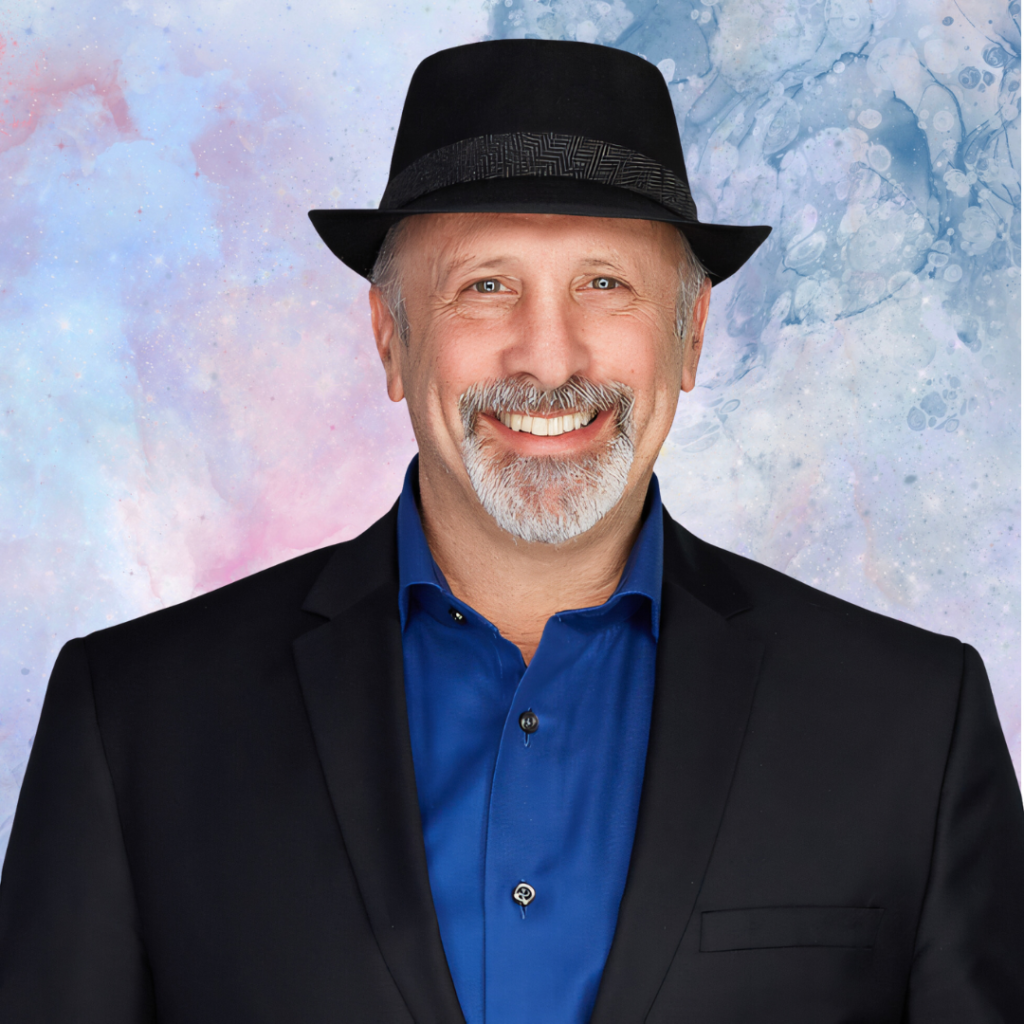
Mitchell Levy covers Credibility and Thought Leadership in this Marketer of the Day episode. Mitchell Levy explains how professionals can build credibility by clearly identifying the customer point of pain they solve and communicating it quickly. He calls this problem the "CPOP," or customer point of pain, and recommends expressing it in a concise pitch that identifies the audience and need. Credibility also depends on basic behaviors such as arriving early, preparing for meetings, and being ready to explain what you do. His interview experience showed that some professionals struggled to describe themselves even when given advance preparation materials. Mitchell also uses a "black box" framework that focuses on defining desired inputs and outputs before changing the process between them. He recommends keeping promising but non-urgent ideas on a parking lot list so they do not distract from current priorities.
Global Credibility Expert Mitchell Levy is a TEDx speaker and international bestselling author of over 60 books. As The AHA Guy at AHAthat (https://AHAthat.com), he helps to extract the genius from your head in a two hour interview so that his team can ghostwrite your book, publish it, distribute it, and make you an Amazon bestselling author in four months
He is an accomplished Entrepreneur who has created twenty businesses in Silicon Valley including four publishing companies that have published over 800 books. He’s provided strategic consulting to over one hundred companies, and has been chairman of the board of a NASDAQ-listed company. Mitchell has been happily married for twenty-nine years and regularly spends four weeks in Europe with family and friends.
Quotes
“If you find what you love doing and can demonstrate clear and articulated value, the more you narrow your focus, the higher prices you can charge, and the more people will walk in the door.” – Mitchell Levy
“When you love what you do and do it all the time, it no longer feels like work. And if you’re making money from it, that’s even better.” – Mitchell Levy
“30% of people come to meetings late. If you’re going to come to a meeting to try to sell me something, and you’re late, you will not close the deal.” – Mitchell Levy
Takeaways
01:19 Maintaining a consistent online presence and sharing regular updates can help build trust and connection with your audience, even if they are not ready to buy.
03:26 Crafting a short, compelling pitch that clearly communicates your customer’s point of pain and the value you provide is crucial for making a strong first impression.
06:52 Narrowing your focus and specializing in a specific area can lead to higher prices and more clients.
10:49 Being prepared and punctual for meetings and interviews is essential for establishing credibility and professionalism.
17:04 Establishing a structured process for interviews and content creation, with clear inputs and expected outputs, can help ensure a positive experience for both the host and the guest.
27:44 Embracing the journey and being open to unexpected opportunities can lead to valuable aha moments and positive outcomes.
Resources
Podcast: Play in new window | Download (Duration: 36:49 — 33.9MB) | Embed
Subscribe: Apple Podcasts | Spotify | Amazon Music | iHeartRadio | Podchaser | RSS
Transcript
Download transcript (.txt)Marketer of the Day episode 689, become a thought leader by identifying and solving a customer point of pain with global credibility expert Mitchell Levy, Hey everyone, and welcome back to the marketer of the day podcast. We are here joined by expert author and outside the box AHA thinker Mitchell Levy. You can find his previous appearance on our show at marketer of the day.com, forward slash 482 and you can find his central hub of a website where you can get to anything we mentioned today, at m, I, T, C, H, E, L, L, L, E, V, y3, sixty.com that's Mitchell Levy, three sixty.com we're going to talk about a lot of fun ideas, and especially how you can get a book out there that's not the usual format, and you can express your ideas and connect with people in a lot of ways that maybe you hadn't even considered before. So Mitch, glad to be talking to you again.
Robert, always a pleasure. I love watching the evolution and what in the green room before we started. One of the things that you mentioned, which was really powerful, and I so agree with it, is, although we haven't actually physically talked in, I don't know, a little over a year, I believe what's interesting is when you see somebody on social media, if they're you see them continually talking like, Oh, I see their path. I see what they're doing. I feel like we still have a connection, and it's just an interesting way the world is for those people, if listen, if you want your fans to just continue to know like and trust you, even if they're not ready to buy today, if you continually adding value, if you continually showcasing things that that they can think about when they're ready to go, you're like a trusted old friend because you've been in their living room or home office or their physical office, because they've seen you and and Robert, you're no different. I see you all the time,
and I see you all the time, and I can completely relate. There is a meetup that I drive about two hours to get to that is held once a month, and I haven't gone in six months. And there are a couple people in that meetup where, like you said, I feel like I saw them last week or a few days ago, just because then this day and age where everyone is almost, in a way, expected to be on video or live stream, or at least have some short clips here and there for that, that select few that just knows about that importance to hop on there hit record for even a few minutes and just share some updates, share what's going on, even if It's a repeated lesson. Doesn't have to be this huge, crazy, two hour long webinar like in the old days, just being there, being consistent is so huge, and it's easy for us to do, as long as we instill these good habits, right?
Absolutely. So since we spoke, I have to have to tell you the new short pitch, and it feels so first of all, I want to use a term, C pop, customer point of pain. So let me share with you my C pop, my customer pointed pain. I work with busy, successful professionals who recognize the need for more credibility. They want that credibility with a book, but they have no time. So that, if you think about that, that's three seconds, four seconds. So do you know anyone that wants more credibility, that doesn't have time that's successful today, right? So those are the words that I put in there, and then let me give you the success story, right? And once again, the whole thing is less than 15 seconds. And so this is what we do. What I ask you to imagine, if this is you or, more importantly, if you have a friend who needs credibility, who doesn't have time because they're so busy at what they do, what I ask you to imagine is four months from today, we have ghost written, published, distributed, made you an Amazon Best Selling Author, and you've spent between five to 10 hours. So then I'll encapsulate it with, yeah, that's exactly by the way I encapsulate it with, we press the easy button. But what I often have want to have happen when I say that latter part, I want to hear the wow, oh, I wish I did that right. And it's, it's one of those things that when you think about this for yourself. When you think about how you communicate with this is probably Robert. The best way to think about it is my wife, doesn't she thinks I'm like, always on and I'm always selling. And I don't think I'm always selling, per se, but, but maybe I am, because I'm always trying to present who I am and what I do in a good light, even if it's with friends and family, right? So, so let's say I'm at a wedding or some family event before we go and my wife got no selling. So imagine if I know that one of the relatives at the event has a spouse that may or may not be there, who is a super huge chiefs and a potentially big prospect for me. Yeah, so I can't sell because, you know, I've been told I can't do it. And let's say that person's not there, but their spouse is there. What my goal is is to present something in such a way where they go, Wait, that's my whether it's my wife or husband. That's my wife or that's my husband. I want to present something, and I want to spend less than 10 seconds, and I want them to go, you know, I got to introduce you to my and fill in the blank, right? And that's the goal. It's not to bore like when you say, what do you guys do? Or who do you solve, or what's your it's not, I don't care about the two minute stuff up front. What I care about is give me context and and the most important context in today's world is who are who are you, which me, who are the customers that you serve, and what problem do you serve
for
them? And I like your attitude there, because, like you said, it compresses things down, right? It makes things 10 seconds, and the the urgency is in there, and the time factor is in there, and the need is in there, and that exact person, the characters in there. And you don't have to load it up with some big, long story, or all these stupid leading questions, or all that all the usual cheesy stuff. But I like how you're like, you kind of said like, you're kind of always on, in a way, right? You're always selling. And I think that a lot of people are looking to tap into that, into into not being, like, like a pushy salesman, but in just like, being so passionate about something, or being so, like, wanting to solve some kind of problem, where it just leaks out of you, and you have to, like, tone yourself down, but then at the same time, like everyone knows what you do. So do you think there's a secret to that? Is there any kind of a self awareness, or is that just something that comes with time, or something where, like just comes to practice?
That's a beautiful secret. And let me tell you, I've come into my own around 2018 and and particularly now the so 2000 so what happened between 2005 and 2017 I published over 800 books, but I realized I was serving the wrong audience. 2018 I put the infrastructure in place to serve the appropriate audience. What we talked about before, and 2019 and beyond, I am just, it's, it's, I, you know, 2020, 2021, here's what's really fascinating, if you find what you love doing, and you can demonstrate clear and articulated value. The more you narrow in on the focus of what you do, what's shocking and by the way, for me as a generalist who likes to do tons of things, the more I narrowed what I did, the higher prices I could charge, and the more people who walk in the door. And so what I want to say is find the most important thing is find what you're passionate about and make sure there's an audience that's willing to pay for you to share your passion because and so right now, where I'm spending a lot of energy, I'm a global credibility expert. That's the new title that that I'm, that I'm working with, and we're actually doing 500 interviews, 100% focused on people's credibility. Robert, I'd love to have you back on one of my shows. I'd love to do it. I'll give you a URL for people who want to go to. I'm inviting selective people, but if you think you want to be on my show, which is thought leader life, it's a 10 minute interview. It is very structured. When you sign up, I'm going to send you a video on how I actually am going to interview you. So essentially, how to prepare. So if you go to its ahada Pub, a H A dot pub slash credibility interview, you can sign up directly to be part of this. And what's fascinating is, as I'm interviewed, so I'm now statistically significant, you know, so I'm early enough in the game. We're at 3233 when you hit 30 that's when you can actually make observations. So I'm going to make some observations. And what's really interesting to me is when I now see somebody and they share with me their credibility. Because the the particular focus of this show is very straightforward. Who are you, and, more importantly, who what is your c pop, what is the customer point of pain? And we just focus on that. And it's a 10 minute segment focused on the guests, where they get to talk about who they are. And it's absolutely beautiful. So one of the observations, and this is really, this is a negative observation. So if you actually do any of the either of these two things, please stop, because it is the opposite of being credible. It is uncredible. Here are two things. So I had a day, and we'll just say a stand. 100 interview day on a Tuesday. Typically, I end up with three to 20 zoom calls a day. This particular day, I had about 20 calls. Seven of them were this specific format of interview of the seven people, two people came late. Okay, so, so I have to say, if you're going to be on a show, whether it's a radio show, a video show, going in a studio, you can't be late to a meeting, right? It just, it just doesn't it's not appropriate. I've been on 180 shows in the last 18 months. I'm always five to 10 minutes early. Okay, here's the second thing that happened, three people were not ready to talk about themselves. Three people, right?
So can you not be ready?
Well,
when I said to them, what is your c pop, what's your customer? Point of pain? Oh, I didn't watch the video. So okay, so you go to a meeting where I'm going to expose you to a lot of people, and you didn't prepare, okay? That makes that's not credible, either, right? Or they couldn't do it in five or 10 seconds, or they had two or three and they couldn't choose, right? So, so for me, what's interesting is having the conversation with them, to try to focus them, and rescheduling. I'm okay with that, right? Because they just weren't ready to present themselves. But let's, let's assume that those numbers hold, because we're now at a statistical significance let me tell you the state of the world now, small sample size, so, so let's assume this doesn't count yet. But here's the state of the world, 30% of people come to meetings late. I'm telling you, if you're going to come to a meeting to try to sell me something, and you're late, you will not close the deal. Okay, let's just be clear. Come late to one of a meeting where you're selling me, you're not going to close. And 43% of people were not prepared to actually talk about the most important product that they were selling, which was them. So no wonder so many businesses fail. So here, listen, you want to be credible, come on time. Come on time means a couple minutes early, okay, come on time and be ready to present, which means that you've researched the person you're interacting with, that that you you have a short, compelling pitch, and that you then allow the conversation to go in the direction that the human you're talking with leads you, because you're not you can't sell them what you're pushing. You need to share with them what you do, because you have this passion about it. And they go, Hey, that's interesting to me. Tell me more.
And there is a little bit of the, I don't know if you caught like the like the Ouija board, but it's like, when there is what the way that you each person is probably expecting, in some fashion, the conversation to go a certain way, and then you have these two people clashing, and it just goes off in weird, unexpected but fun directions, and, and, yeah, and you're so right that we need to be ready to go with The flow and have a little bit of the improvisation and unexpectedness. But so what I'm hearing from you is that we can just set ourselves up for success by doing some of these simple things, be prepared and come early. And then when I'm hearing about your thought process here is that you are a people person. You see the value in people and to be honest, like, uh, since I've been on video chat here, this kind of relates what we're talking about earlier, it's helped me just to remember to show up, right? Because it's easy to flake or be late or reschedule just a regular phone call. I used to do these interviews on just over Skype. And now that we're in on video chat and we're real people face to face, it's harder to to let that slide right? You want to take it more seriously if it's a real person. And then I'm also getting a lot from your thought process. Is you're very like procedure oriented. You like having the form the software to make sure that the trains run on time, and that you're also big on observing those test results afterwards to say, Okay, I've done 32 interviews, and now there's enough where now I'm statistically significant. I'll say, what are the factors I'm looking at, or how are things going? And you know what? Just as a little like side note, you're a software guy, you say that the bottleneck, or the problem is that people register and they fill out this room, but they don't watch a video. I mean, you're a software guy, you can have you can see if they watch the video, right? They can see if they played it X number of seconds or got to this timestamp in the video. Maybe that's something to go back and improve the procedure, right?
It's a great it's a great question and a great observation, and what's I think there's part of me that that says, could I fix the process so they automatically get it and they automatically understand it, and at the end of the day, because the way you and I do interviews, we don't necessarily have it. At a specific point of time in which the audience is specifically waiting for that to happen, and they're upset if it doesn't happen. So because we don't do that, what's fascinating is, if somebody is talking with me and they're not prepared, and we say, you know, and we agree together, let's part. We'll just reschedule, whether or not they rescheduled or not. I'm hoping they realize to themselves, I came to a meeting and I wasn't ready. I'm not going to do that again. That by itself, if that positive positively affects them for the rest of their life, I've added value,
fair enough. And when I'm getting from you is like just kind of almost like a computer programmer's mindset, because kind of also along these lines, earlier on, when I was doing these interviews, I'd have a lot of no shows. I'd have sometimes 40, 50% no shows. And the temptation there is to let emotions take over and just give up and say this whole thing doesn't work, but the more analytical programming side of things. Says, What's the bug in the system? What can I do better? And then what I ended up doing with that was in the scheduler, in Calendly, I ended up sending more reminders. I think at first I had a reminder that was like three days before, and then I said, there will be a reminder two days before, there will be a reminder 20, like, 23 hours before, I had it something weird. So it wasn't like, I didn't want to send the reminder on the right time wrong day, because then they would think it was like, you know, on happening right then I had a reminder coming, like, four hours before, one hour before, send a text message, and then just that stuff like that alone, just clicking a few buttons, adding a few settings, made it more like 90% show up rate, and then if people couldn't make it, they'd reply to one of those earlier reminders. And so, so yeah, just even hearing your kind of logic there is, like, sometimes we just need, sometimes the thing that we think is bad isn't so bad, or it just a small tweak to the system makes things go from not working to working right?
Well, I have to, so we, I'll finish with this one last thought process. Since you mentioned a computer, computer mindset. So my actually, so, so I'm not young, I got a couple gray hairs. I'm not old either. But what's interesting is my undergraduate degree was stochastic and deterministic models of operational research. Now, when I was taking this program in the way back, I think, God, I'm never going to use this stuff. I use it all the time. And I want to give you my special how I go through life that just makes everything so simple. And if you, if you draw on a piece of paper, just put a box. So drawing it down a piece of paper, a box, and just call it the black box, and then you have a line going into the box, it's called input, and you have a line going out of the box, it's called output. So what you want to describe is,
so
ignore the black what? Happens is everyone gets so caught up in what the black box is. So you want to, you want to describe what you want as your input and output. So in this case, I created a show. It's special credibility episodes of thought leader life. Go to thought leader life, calm. You could start watching some of these. These are spectacular. It's 10 minutes of people talking about their credibility. And it is, I'm just loving it. And listen, you listen to two or three of these things you're gonna Oh, well, a, I want to meet this person. Or B, I need to talk better, right? So the input is, I had this show. Everything was I thought later life I wanted to craft credibility episodes, so I the input is humans. Now what's the output? Well, obviously, like what all of us want to do, I want to eventually upsell to something else. So that's a nice output. And so part of the other outputs for me is I have a team where, for my company, Mitchell levy was always the primary Rainmaker, and I wanted the team to be involved. So I didn't build this process and and and say, Hey, this is it. We as a team built it together. We as a team of celebrating metrics. We as a team are enjoying so as we as we upsell, as we close business, we're celebrating together. So that's another output, is that the team is enjoying the process. The set of outputs are, you could look at it mechanically, like that first day where three of seven people didn't show I was, for a moment I was upset, because I'm thinking, Man, how am I going to get to 500 I need to produce this content. And then I realized that the output doesn't actually have to be the show itself, right? So for those three people, if that interaction with them was so brilliant, so life changing for them, because they. Realize they came to a show to talk about themselves and they weren't ready, and they never make that mistake again. That's a beautiful output, right? So you So measuring different forms of output is allows you to, then, when you look at the black box, how do you change stuff? And so every interaction I have in life is a black box, right? It's, it's what goes in, what do I expect to come out? So before, when we were in the green room, my question to you, Robert, what, what do you want to come out of this? I What's the output? I don't know what the words are that I'm going to say. I don't know what that black box, in this case, is, simply our interaction. So what do I expect to come out of this? I'd love to have a couple people who are listening to this to go on the show. It's a hot up hub slash credibility interview. I'd love to have you on the show. You can see the processes that that I've put in place. We still have to find something for us to play with together, so we're going to make that happen. So I'm thinking that What's my output of spending time with you today. It's those elements. And so when, before I go to a meetup group, before I talk to anyone, before I start my day like, what is my expected? It's not, it's not so granular that I'm saying, Oh, I didn't miss my output. It says, What's the overarching goal of today? And I'm just going to tell you that from the credibility episodes, from what we're doing here, when you start watching it, you start seeing the mega outputs. It is a beautiful Oh, can I I'm gonna tell you one more thing you're gonna love this. There's an output that I didn't expect when I first crafted the episodes. So I was originally expecting just to have good content for people to watch, and have people come to my destination, whatever that is, whether it's because what we're doing is, is we have a physical location. We do we do all the, you know, we do all the appropriate stuff. So you have a physical website, we have iTunes, we have YouTube, a slide share LinkedIn, what I hadn't realized, and then I repurpose some of that content to a podcast, and then the podcast goes on all the all the particular stations that for my podcast, I'm taking three episodes and combining them together, so now I have 30 minutes. We're at three people time, so that's kind of cool. What I didn't expect as an output was crafting a 10 minute video that the person on the other side is so excited about that they put it on their website. That's now a new so I'm restructuring my initial video on how to prepare to let them know that if we do a good job, because it's all about the guest. So if we do a good job, we're crate we're creating something you put on your website, and I'm not charging for this, because it's a good way for us to demonstrate a I'm giving back to the world. It's a good way for demonstrate what we do. And for those people who say, Oh my god, that was great, because it's 10 minutes with Mitchell and they and they go, I want more. Well, if you upgrade and get two to three hour interview well, then write a book for you, and so it's a nice way to demonstrate that. And at the end of the day, if I if nothing else happens, but I've positively affected 500 people, and some subset of them have this video on their website to get to know them better, that would be fantastic.
And you're so right that there are so many unexpected outputs from the things that we do, especially when other people are involved. And, I mean, you're, you were talking about all those different things that happened, and I can completely relate. I mean, even, uh, I was at a meetup yesterday, and there was, there was one lady there who the previous meetup. She she couldn't come on my podcast, but she had this client who was a retirement planner who lived in, like the Northern California, Sacramento area, and I interviewed him, and then that interview, I posted it, and kind of SEO optimized it and made it like retirement planner in Sacramento area. And I found out yesterday he got a client from that and so did. It benefited him, and then it benefited me in the unexpected way. Of I was in this room of people, where they were all hesitating to be on podcasts or be on my podcast, and because that lady whose client had been on my podcast, and I never met him in person, he wasn't even at the meetup, but just there was, like, you know, four different unexpected outcomes, and even things like, um, when, like, when I have someone on the show, I tweet out the episode and put it in the Twitter rotation and plug it forever. And even as you were, like, explaining stuff like that, it had a light bulb go off in my head that I need to go and get my graphics person.
Robert, you had an aha moment go off in your head. Not a light bulb, but, but, okay,
okay, gotta stay on. Fran, yes, aha. Not a light bulb. Screw it over the light
bulb.
It was a light bulb that was disguised as a really. It's an aha moment, but, okay, sorry,
but, but, yeah. So made me realize, like, I need to have someone listen to some of these. Episodes for quotations, and then make Twitter graphics and just put them out there to help plug the guest who is on my show and and help them out in different ways and and also. So from, from this thought process, from from what you're saying here, it seems like it's very healthy to think about, well, the person that's coming here on my on my show, to, like, in your case, to become a credible expert. It's like, How can I help them? Or what are some, what are some areas of expertise where they hadn't even thought of this thing, or they hadn't even done such and such on social media? And like, just, you're like, thinking, well, what are some extra untapped ways to help them out and get them to their goals. And like you said, sometimes it's a matter of selling them or upgrading on something else, or just teaching them that harsh life lesson of, don't be late, don't be prepared. So it's like, yeah, I can tell that your your mindset here is a lot of just in terms of, like, improving stuff, rising tide lifts all boats, kind of thing.
It works. And then as just by having this conversation, you're gonna, you're gonna change and modify some of your processes. And that's pretty cool too,
yeah, and, and just something that's been on my do list for a while is just to to go back and look at some of those processes, right? Like, even, like you were saying you have that website where you can get to all those different areas. And sometimes it's easy for us to throw simple website on there and keep blogging or keep adding the podcast episodes, but sometimes we need to go back and revisit and smooth out the rough edges, right? And so like something that's been on my to do list for a while is to make a page on my site saying, if you want to be a guest on the show. Here's, here are some things you need to know. Here's like, a dedicated page for that, or a page where, if you're having Robert plank on your show, here are some of those materials, right? Here's my contact information. Here's my bio again, here's some possible topics, like just, and it doesn't, it doesn't take that much work. Just, it seems like a little bit of thoughtfulness. And just circling back to and revisiting things. And that relates to another conversation we had in that green room. Of being in business involves changing directions sometimes, right you go and you say, Here's my goal, here's my strategy. And you get there, or you're on your way there, and then you have to realize, well, maybe I'm serving the wrong people. Like, how you had that aha, and you had to pivot a little bit. So, I mean, can you unpack that a little bit and kind of tell us, like, what do we need to know about that, that mindset of, like, you know, we have to kind of have that, that right distance goal, but then we're going to have a lot of bumps on road along the way, just kind of change direction sometimes.
So we're, I'm being cognizant of time, because we're, we hit our we hit our end point. So I'll share this, but I'm so if you go back to what, what was said earlier in understanding, if you truly are doing what you're excited about, you're doing your passion, right? So if you love what you do and you do it all the time, you're no longer working, and if you're making money for it, that's even better, right? So that's what you want to do. You want to find what you do that you make money for and is fun. Now what you have to recognize in life, and this is true for everything, is you got to recognize that the most important element is the journey, not the destination. Right? If I give you any one hit whatsoever, what often happens is people say I want to get a college degree, or I want to work at this company, or I want to write my book, or I want to just film the bike, and along the way, they're handed all these presents, and they don't see the presents, because all they're focused on is getting to the destination. And what I'll I'll say, if you, if you keep your mind open, you're getting aha moments. You're getting presents every single day, and you got to pay attention to them, because any one of them could say could be something. So just for the hint, for the person who's just so busy they don't know what to do the in Silicon Valley, what we often say is, keep a parking lot list. So what, what you can imagine is, let's say, some great ideas come up and you want to do it. So Robert, the two things you want to do, you know, how do you be a guest on my show? And how can I be a better guest on your show? Those two things, they should be in a parking lot list. And that parking lot list is something that you look at maybe once a week, or even, worst case, once a month, and you go, Okay, what task on my parking lot list should I? Should I try to cover this month? Well,
why is
it called? Why is that called a parking lot list? Is that, like every time you're a parking lot take it out. Look at it.
No, it's called a parking lot. Because what happens is, we sorry. I keep getting, I keep getting phone calls. So we got to wrap up so I could take it. It's important one.
All right,
what happens is, we have in life a we're so interested in what's in front of us every now and then, when a topic comes up that's really valuable, we we then start diverting energy on something else by putting it in a parking lot. It means it doesn't go away. It's just in a physical location that we know where it is. We just park the idea for a period of time so that we now no longer need to spend energy on that particular idea, and we and we know it's at a place that we'll come back to it, otherwise we'll forget.
Okay, well, well, good advice, so and like so, in a way that's like an idea swipe file, or a swipe file for projects where it's there, it's safe, it doesn't distract us from the goal, unless we are in a mood someday, to be distracted or chip away at something, or like, like you've noticed. Sometimes things, some things, it's a good idea, but just the wrong timing, and then later
on, cooler way to express it.
Yeah, and then, and sometimes just that opportunity presents itself, or it's like, you come across the right person, or or whatever happens. So yeah, I think that's a really great life lesson in general. Just be prepared for, like, look around, be observer, and be ready for the timing to be right to pursue some of those ideas. And we talked about a lot of fun things today. I love the idea of the black box and thinking in terms of inputs and outputs that parking lot list, making sure that we pursue things that make money and are fun, and we're gonna let you go in a couple minutes here and let you go to that important phone call, but it's very important that people know once again, where they can book that credibility interview. And then also, what I mean, what's this whole thing about? Like, what's the next step? What I mean, if people are like you said at the beginning, busy and they want to get noticed, they want to get recognized, they want to get that reach that influence, where should they go and what should they be looking at when they go to Mitchell Levy, three sixty.com
so thank you. Great question. So let me, let me repeat, since we did it at the beginning, and some people come in late. Listen, we work with busy, successful professionals who recognize the need for more credibility. They want that credibility with a book, but they don't have time. So if you want to imagine four months from whenever we start, four months from today, if we're starting today, we have ghost written, published, distributed, made you an Amazon Best Selling Author, and you've spent between five to 10 hours. So we actually press the easy button. So when you go to Mitchell Levy, three sixty.com if that sounds interesting to you, one of things you do is you could see a customer testimonial, and you could see, think it's five customers talking about, how did they benefit from being part of that. If that is enough to then say, hey, I need to learn more. Tell me about my situation. You can specifically go to my calendar and book time on my calendar. And I'm excited to be able to talk to you about your situation to see how it applies the websites. If you want to see more, the interview itself is at Aha, dot pub, a H A dot pub slash credibility interview. And one of the things that that's going to happen is it's going to point to a video you could watch, the video on how to prepare at Aha, dot pub slash credibility prep, right? And so, so I'm just trying to brand all that together. If you go to I'll give you one last URL. Aha, that.com/author that's where we have videos on how to write your book, How to customer testimonials. There's we have a three step writing process. So it shows you what you can do if you do it yourself, but more importantly, if we do it for you, once again, it shows you our prices and how to make stuff happen. So we are very focused on allowing you to establish and demonstrate your credibility through this asset called a book. But we now integrate all other social media as part of the book, and Robert, we're doing the same stuff as you. We also have a anthology version, and so we also work with what we're doing with people who want to be part of an anthology is I'll grab the person who wants to drive the anthology. We have a small upfront initiation fee, and then after that, we split profit 5050 with that person, and we have software that now makes the ability to both collect money and collect content for an anthology work. So if somebody wants to take a journey, and that journey just happens to be interacting with people and collecting money for an anthology book. We do that too, and I'm happy to talk to you about it
fantastic, and you're so right that it's important to not go it alone, and it's important to keep in mind that customer problem you're solving, and to have that common. Conversation and not just let, not just get stuck behind the phone, the tablet, the computer, get out there and actually help real people and have those real conversations. And so the place for those author tools is Aha, that.com/author the podcast with those discussions is thought leader life.com the place to check out those interview details is Aha. Dot pub slash credibility interview. And if that seems like too many web addresses, that's okay, because the hub is Mitchell Levy, three sixty.com we always have a lot of fun together, you and me, Mitchell, just kind of spitballing ideas, embracing the randomness, but then also touching on those important life lessons and business lessons that people need to pay attention and focus on, because it's so important. Time is limited in more ways than one. You might have that important phone call, or you might just not know how much time is left in your life to be significant and get the word out there. So if you're one of those busy people who would like to get published four months from today, have it on Amazon and just get it done. Stop, stop wasting 510, years your life wondering what could have been and make it happen. Mitchell Levy, three sixty.com, is the place to go, and thanks for stopping by and having a lot of fun today. Mitchell
Robert, my pleasure. Let's continue to have fun, and eventually we're both evolving, but eventually we'll do some project evolving together.
It's inevitable. If you're a future podcaster, new podcaster, existing podcaster, or you're looking to make more money with your podcast with less time, you owe it to yourself to check out. Done for you. Podcasting.com we handle any or all of your podcasting needs go to done for you. Podcasting.com right now.