Published Last updated
View in Podcast Library: stories, quotes, books, and resources in one place.
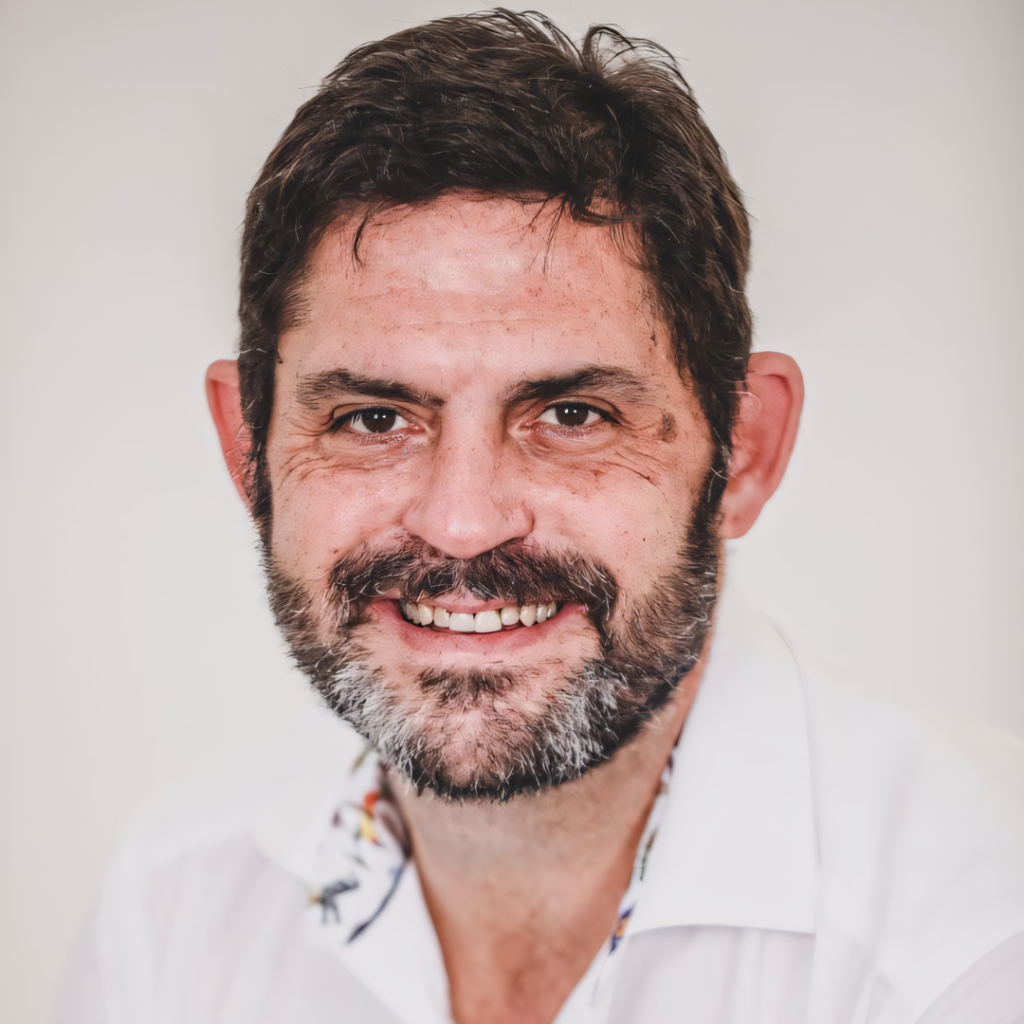
Hannes Jordaan covers Learning Strategies in this Marketer of the Day episode. Hannes Jordaan explains how struggling with traditional learning became a practical system for learning faster and building better habits. He starts with the idea that information must be processed into knowledge, using audio books, podcasts, video, and email read-aloud tools when reading is difficult. His core filter is "reduce to produce", which means saying no, writing distractions down, and focusing only on what matters now. In work, he applies the same thinking to ERP, integrations, workflows, and the rule to optimize, automate, and only then outsource. He uses anchors like three deep breaths before starting the computer to avoid distraction. He also values support groups, tiny habits, and celebrating wins instead of chasing perfection.
Hannes Jordaan is an ERP software implementation expert who has overcome learning difficulties throughout his life. Today, he shares his strategies for optimizing his learning process and creating a successful career. Hannes further talks about the importance of finding personalized methods for consuming information, such as using audio and visual resources, as well as building a supportive network to help overcome challenges.
In this episode of Marketer of the Day, Hannes Jordaan shares his approach to overcoming learning difficulties and creating effective habits that support personal and professional growth. He emphasizes saying no to distractions, valuing your time, and celebrating small wins as essential strategies. Hannes is working on a support program to help others implement these techniques, encouraging people to optimize their processes, create routines, and develop a community for accountability and encouragement. His advice centers on actionable, simple strategies for building momentum, embracing imperfection, and finding personalized paths to learning and productivity. For more insights, listeners can visit hannesjordan.com to explore his work and upcoming initiatives.
Quotes
“Information sets us free, but you need to find the way that allows you to process it and convert it into knowledge.”
“Learning to say no is the biggest skill you can have—it allows you to focus on what truly matters and avoid overwhelm.”
“You don’t have to be perfect; celebrate the small wins and the tiny habits that compound over time.”
“Do it afraid. Take that step, be kind to yourself, and know there are people who will support you along the way.”
Resources
Podcast: Play in new window | Download (Duration: 29:42 — 27.4MB) | Embed
Subscribe: Apple Podcasts | Spotify | Amazon Music | iHeartRadio | Podchaser | RSS
Transcript
Download transcript (.txt)Hey, welcome back to the podcast. And would you like to be the kind of person that achieves everything that you know you could achieve? And more? Have you ever struggled or thought you maybe weren't that smart or thought that you just were not cut out for learning? Well, you're going to be super excited here to talk to Hannah's Jordaan today, because he has an amazing story to share with you that you will relate to when it comes to finger picking up new skills, creating a business doing well in school, whatever your learning difficulty currently is, Hannah's has experienced it. And Hannah's has achieved a breakthrough that he wants to talk to you about today, as far as having your support system, and as far as kind of learning and thinking outside the box. So Hannah, glad to be talking to you today.
Hi, Robert, thank you very much for allowing me to speak to you. It's great to be here and help out some people. Hopefully what I can share it will be useful for somebody else out there, like me, might not be for everybody. But yeah, let's have a chat, basically. All right.
I'm excited. So can you tell us what what you do what your profession is? And most importantly, what's your current passion? What has you super excited these days?
Um, well, I implement eirp software, which is enterprise resource planning for major companies like bt, and all the big people, also smaller companies. What got me excited, is, you know, the ability to use integrations and workflows and automating things. And, yeah, I'm always looking for things to as I would say, optimize, automate, and only then outsource them. I don't like to go straight into outsourcing because you often have problems, what I've learned in my experiences, it's better to optimize those. And we're learning a lot about that at the moment.
Okay, so optimize before outsourcing. And as far as you and your optimization process, you tell me that you have had experience problems with learning and experience problems with getting things done, you feel like many times, there's this common problem of, there's a problem to be solved, there's something to be taught or learn. And a lot of people just cannot conform to watching videos or reading books. And you told me earlier that you have come across difficulties with this. So can you tell me when that started, when that happened? When did you hit this brick wall and say, I have this thing to learn? I have this assignment. I just can't get through it. What happened?
Okay, Robert, yeah, um, I think it started at school, when I basically had learning difficulty. And, you know, I grew up in a very conservative environment in South Africa, where, you know, you're given a book, and you should be able to process that and go to an exam and actually get an A, basically, there wasn't really, you know, any help available for how that is processed. I realized in my life, that finding different methods of processing information, so that you can convert it to knowledge. Because as I said to you earlier today, information sets us free, you know, knowledge is great. But, you know, there's so many frustrations of processing that we get bombarded with a lot of reading material. And if you, you have problems with reading, at school, I actually didn't do too great, I never got the grades. I was taken to reading classes to read quicker, still had problems. However, over time, I've realized that you can consume it with things like audible books, like this podcast, you can listen to things, you can also implement certain things on your work environment, like I've done my emails, now get read to me. So, you know, there are automations that make things easier to process. also prefer visual to to, you know, the written word. So that's basically what I've implemented. And it's helped me achieve, you know, a successful business allows me to consume and implement things a lot quicker. So optimizing, I've implemented different methods of how I, you know, consume and optimize the content that I get into, into this noggin of mine, as I can put it, basically.
And there's a couple of interesting things that you said in there that and it seems like you're the way you picture things is there's there's information and then You process that into knowledge. And when you're explaining that it sounds to me, it's like, when you open up your kitchen cupboard, and there's all the food there, well, you can't eat all the food at once you'll get sick, but you still have to eat something. And you can't even really eat a little bit of everything. If you open all the all the cans in the boxes, everything will go bad. So you need to have somewhat of a strategy. And it can't all happen at once. And from what you told me, just now, as far as like your your successes is that you have figured out what specifically works for you, right? Like you're talking about ways you can implement things. And you're talking about how there's an audio component sometimes to make that work for you. And I think about that a lot I think about, there's always like so much information. And I'm thinking about how can I weed out the 98% of information that I don't need? And how can I apply things like to use but also there's also sometimes like the patience of if I'm learning all kinds of concepts, I have to like, stick with it until I can implement it. So how did you land on this idea of reading some things and listening to others? How did that come about?
Um, I think a lot of influences has been with the program that I did with Padma CD. And one of the things that got stuck in listening to his audio was reduced to produce. And I think, as you said, with a cupboard, is learning to say no, is the biggest thing that you can do in your life, saying no to email saying no to all kinds of things, and focusing on what is needed. In the moment. only focus on what you need to learn right now. That gives you the ability to, you know, get yourself, let's put it some way to say maybe someday your brain then processes that stops thinking about it, basically, because it knows it's been parked somewhere that allows you to focus on the now. So some things you say no to like all those pesky emails you get from everybody. Other things you've marked down in a list that I've done successfully. And it's been it's been proven by research, that your brain actually keeps processing something until you write it down. So write it down somewhere, say I will make that special food next week. You don't have to have it today. You don't have to become that Master Chef today. So what I did is, that's the first thing I did, decided, what was it that I needed. And then I I incorporated in my life, when I go for a walk with a dog, I listen to audio, you know, so I'm processing that. When I'm listening to my emails now, it like it actually goes a lot quicker for me. And then I love video. Because it's just a way for me to actually see what happens. And again, there's something in my brain, I found, it just works a lot easier if I can see it being done, instead of trying to do it all by myself, and then having to deal with the mental baggage of not being able to do it correctly. And then as I mentioned earlier, finally, I've got some really good people that that are there for me when I need them. You know, and that gives you a lot of reassurance basically. Hopefully that answers the question for you, Robert.
It doesn't and that's great. Because it's really easy to think of information learning all this as very flat one dimensional, right as there's just there's there's a list, there's facts and figures I need to learn. And you're saying that there's, there's, there's all this dimensionality to it there is first of all you're saying write it write down what you're thinking otherwise, those thoughts will just stay in your head and you'll be spinning your mental wheels. And you'll be expending all this mental energy on just the same thing over and over. So write it down. And you're saying write down the things that that you you want to do but also the things that you will say no to and this seems to me like having a strategy of planning for distractions ahead of time and planning for resisting distractions ahead of time that way you know that you won't be distracted by all these emails or limit your time to emails and also like how just your your attitude here is to get the information coming in different forms, right there's and it's easy enough to say Well listen, instead of reading or watch a video instead of reading but you even said Little things like we'll put the the podcasts or put the training in your earbud and then take the dog for a walk and so that way it becomes part of your habit your routine. You incrementally get this information drift out to during the day but what's what's even better is that you even said, it's not just about written and audio and visual, but sometimes you really get stuck. Or sometimes you're not even sure if you're asking the right questions. And that's where the people in the support system come in. And so now you have me curious, okay, when you, you came from the South Africa, very strict, Corporal punishments, very, like old fashioned type of schooling. And you have had since evolved into your software career and building these MRP systems. So how did you go from from there to being stuck to having all these these new strategies that you have now?
I think it's my passion to create, Robert, I love creating, you know, when you implement an automated process, you're creating something new. So it might not be Leonardo da Vinci that paints Mona Lisa, but I'm creating. And that's what I love about it. It's, that's my passion. That's why I like to learn because I like to teach. And, you know, what I've done is put these anchors in place, that, you know, when I started my, my machine in the morning, I take three deep breaths, and remind myself not to be distracted. And those are anchors that I put in place. And that gives me more time to create gives me time to actually go. I've got too many hobbies, but I think a lot of people do. But at the end of the day, I like creating, and I think that's my passion, what I like about the software that we do and the integrations. So that's where my passion comes from.
And that's interesting to think about because as you know, we all go through multiple careers in our lifetime, or even like multiple lifetimes, right? You might, you might have this job, and then learn this new skill and then create this business. And many times those skills carry over. And so I like how you you see yourself as a creator, someone who creates, and not just someone who's stuck in just one profession, just one career, just one thing for the rest of your life. And I imagine that this passion for creating, it kind of tickles the brain and just the right way, as far as like you said, You love to teach you love to code software, I'm sure you that you love to code problems. And so I imagine that this creating itch that you have can be applied in many different ways, like you said, even hobbies, right?
Absolutely, yes, I think my mom still doesn't matter how her radio fell apart when I was in primary school. I took things apart all the time, basically, didn't get them back together always. But, you know, it's again, I like to, it's really a passion of mine to learn stuff. I'm always interested. I love space, SpaceX and the likes. You know, it's, it's amazing. And it's often going back to that learning thing. It's not everybody wants to learn and become a rocket scientists have a book, you can become a rocket scientist, by consuming information in your own way. That helps you absorb it, you don't have to read a book, you can listen to that book. And that is the same. And if that gives you the knowledge, and that to facilitate your creativity, and your passions, then I think that's what I've learned is stop thinking you have to read a book, to be able to process information. I love using the word clever, because I think clever is unmeasurable? You know, I think it's what your passion is. That's important. And that should be enough for you. What are you passionate about? What is it that you like doing, and you will learn in the right manner, to be able to do what your passion is, basically, and create, like me, maybe I don't know, I think everybody creates every day. I just don't know.
And you and I are creating right now. So this is great. And this is very reassuring that it's important to find a way right there's where you are now where you're stuck or you don't know something or you need to figure out how to be a rocket scientist or whatever skill or problem and there is some path that will get you there and it might be watching videos. But if you can't figure it out, just from reading a book, it doesn't mean that you're dumb or you're wrong or you're broken. There just is a better path for you which is you know, nowadays it's it's far easier than it was before right now with with YouTube and many universities like MIT put their course curriculum on So we have a lot of new opportunities, open doors for us all. But then some people are still stuck, right? Even with this abundance of content, even with all these new resources, people still get stuck. So like, what why do you think that is? And have you become kind of stuck or frustrated? Or have you stalled out at any point dealt with maybe like perfectionism, procrastination? Have you gotten stuck anywhere along this process of enjoying the creative process?
Oh, absolutely. And I think there's so many influences out there. I think a big one is reciprocity. You know, you often get given this free information, and then you feel like you have to learn it. You know, you've got to learn everything, you've got to consume everything. And that's a human thing. You know, it's very well used by a lot of people in the wrong way, maybe sometimes. And again, I go back to what I said earlier, learning to say no, is the biggest skill that you need to learn that I've learned? And if you can't say no, because you find it, you know, essential to your learning path, write it down somewhere, and come back to it later. You don't have to get into that overwhelm that we all get. You know, there's nothing wrong with saying no, you know, again, society makes us Well, you've got to say, you've got to know everything, you've got to know what's going on in the weather. You got to know what's going on in the Middle East. What's happening with cryptocurrency? You know, are you making enough money? Or Yes? Are you a, you know, a super chef in the kitchen, you can run a marathon? You know, there's so many things that we get, you know, judged on saying, No, I don't need to be a marathon runner. I walk my dog every day. And that's enough for me. And I think being able to do that brings a lot of calmness. For me. It's it's basically done that it's being able to say no, because, you know, I don't think that there is toxic people out there either. I think there's toxic behavior. So knowing also, which people to say no to, and avoid that toxic behavior, for me is super important. And those are the things that you just need to learn to say no to, you know, and you'll find what you what you need to and your method, which is what I've done, basically. And I don't feel bad about saying no anymore. I'm doing it the right time for myself.
And how do you think you got to that place? Okay, it's easy enough to say, well let let go of these things. Let go of your ego, let go of the fear of missing out and keeping up to date on the latest Middle Eastern news. It's easy to say, well cut out the people in your life who are just really dragging you down. But was it always easy wizard? When there are difficulties in saying no, we're there false starts like how do we all get to saying no, and actually sticking to it? Because it's one thing to say it another thing to do it?
Yeah, I think for me, I got to a point where overwhelm was so bad, basically. And one day, I just kind of sat down and thought to myself, why am I giving my time to this action? Is that actually for my goal in the future? And that helped me to get to that point where I could start saying no, when I could value my time, versus what the value was in front of me. So that email I get about, you can say 5% at Costco, if you buy something today, I start now asking myself that question, the time? How much time will I have to do? versus I can go out and enjoying my camper, Van Gogh walking with my dog? Or am I just basically sitting there? Hearing out inboxes and emails. So I just basically got to a point where I said, What value does it bring to my life, basically? versus do I want to give it the value of my time. And I think if you realize that your time. That's the biggest thing you have to value is your time, how much is it worth and when you invest it? As we all know, the cliche, you can never get it back. So make sure you're getting the right value for us. And I was working seven days a week with COVID. Nothing like a lot of people were because we were keeping that. But I just realized, you know, at the end of the day, life's going past you and you cannot do everything. Basically, you've got to focus on it. What is your passion? basically. So I'm, I'm still every day growing and pivoting. I'm not 100%, right. And I think the day that you believe you are, you're being dishonest yourself. All you can do is little habits every day, tiny habits, put them in place, make small changes. And also remember to celebrate them. Because we don't celebrate enough what we achieve. We only need to be driven Oh, you got to do the next thing. And the next thing and the next thing. You don't hear people talking and normal conversations about Wow. Wow, you've done some great stuff today. You got up, you walked your dog. You know, you didn't eat that bad food out of the kitchen. You didn't eat the chocolate? Yeah, no, we don't do that. All we do is Ah, you're overweight, you're bad. You know, it's always a negative start celebrating, you know. And that's another thing I learned. So as you can probably hear from this conversation. I'm constantly improving. And that's okay. There's nothing wrong with not being perfect. And, you know, I don't want to work with people that always think you have to be perfect to be worked with. So. And I think tomorrow I'll learn another thing. I'm trying to learn a new skill. I'm a radio amateur licensed. I'm trying to get my intermediate. And yeah, I'll do it in my time. Like everything I want to do, basically.
I like that a lot. But this is really deep and powerful as far as celebrating the small wins, and maybe overcoming our own internal programming in a way because it's very easy. It's very tempting to only focus on the negative, like you said, that make the negativity that the danger, the problem, that's what naturally gets attention. But then that's a miserable way to live your life and chasing, when you chase perfection, you'll never reach it. And you'll always be just having this negativity cycle of, well, it's not good enough, it's not good enough. And so you're telling us this very important message that it is good enough, you are good enough, you'll get there on your own time. And also you mentioned in there, this whole idea of being dishonest with yourself. And I think from from hearing you and speaking to you today, it's like a lot of us are dishonest about how how things might might change, right as far as making a change in our life. And thinking that we don't need to make habits and just one day, it'll automatically be different, it won't be different, until you make the time to gradually get into these small habits that you set up of walking the dog or doing a little bit of learning or a little bit of research or getting your your radio certification, just doing a little bit per day. And having that that honesty about ourselves. And I think that's, that's huge for me as far as the just like knowing what what reality is and knowing how you're actually doing and not being in it all. Because it seems like it is very easy for us to get caught up in the day to day, right. And you mentioned a little bit earlier of how you just you end up getting stuck in this rut and you're getting stuck in this routine. And next thing you know, you're paying attention to every little email, you're paying attention to 5% off Costco, just because that is the way that it has been the last several weeks. And that is what led you here. So this is great, because now if people are unhappy with what's led them there, and it's time to make a change, well, then they need to be thinking about these these deep, really important questions that you've mentioned of like, what what do I value? What's my purpose? What's my goal? What is this leading towards? And as far as you personally had as what is the the newest thing on the horizon? What are you working on? What's coming up for you?
I'm Robert, I'm working on a program to hopefully help other people learn from my experiences. And I would like to create a support group of people like minded, that are looking to constantly improve and celebrate the wins in between the day to day life. They can help each other with, you know, putting in place the anchors, those important things that if you open that email, you're anchoring. What am I going to do next? You know, if I stopped my PT in the morning, what is it that I'm going to do take three deep breaths and remind myself of what my aim is of the day. So those are the things and then I have somebody on the side and a group that can talk to each other without judgment. So I'm hoping to get that up and running where You know, if you're standing in your local shop, and you can see all these temptations around you, the chocolates and the costs and the bad food, it's, it's finding that support that you can maybe just take somebody and say, Oh, I'm dying to buy that chocolate, but I shouldn't. And just having somebody to say, look, you know, it's fine. If you get a dark chocolate, eat a small bit every day, because it's good for your heart. Just make sure it's more than 80% cocoa. And that's what I mean. It's okay to have a chocolate. You just don't have to eat five slabs at the same time. And again, I think we're all supposed to be perfect. I don't know a different word for it. But you know, and that's not acceptable. We need to start being able to, you know, open and deal with the mental side of being okay, and being not perfect. If I can put it that way, Robert,
I like how you put that. And I like that idea a lot that it does not have to be one extreme or the other. Right? Yeah. And you don't even really have to sacrifice, it's not a matter of, well, we could never eat chocolate. Again, just think it through and figure out a way to get what you want, in a smart way. Anyway. And also, what's also refreshing about many of the things you're mentioning here is, it can be simple, right? So many people make things a tangled mess and make things complicated. And you're saying something as silly and simple. As you sit at the computer, you take your three deep breaths and ask yourself what you're going to accomplish that day. It seems simple, and it seems almost like almost silly or superstitious. But if it works, why not continue repeating what is serving you and not doing what is not serving you. And the same idea of having a support system or a mentor or friends who are in it with you. It's such a simple concept. But it's so simple that so many people forget or miss out or just disregard that very simple advice that it works because it's simple. And so as far as people are taking the next step with you and finding out what you're all about and contacting you, we said that hon as Jordan calm is the place to go correct? That's correct. Yes. And to spell it out that is h a n n e s jordan.com. Correct. Fantastic. And as we are as everyone's going to hunt as Jordan calm, and as you and I are wrapping up one a downer conversation, do you think we missed anything important today? Or is there just one lasting piece of advice you want to tell listeners as we close up the show?
Um, I think I would sum it up, as do it afraid. You know, take that step. Be kind to yourself. And don't worry about trying again. It's okay. You know, and there are people out there. And there are ways that you can take care of yourself and what your needs are, basically. So I would say, that's the first thing you've always got to tell yourself. You might be afraid to do it. But you know, there's people out there that will support you and they will help you find a way for you to be able to, you know, do the things you're passionate about.