Published Last updated
View in Podcast Library: stories, quotes, books, and resources in one place.
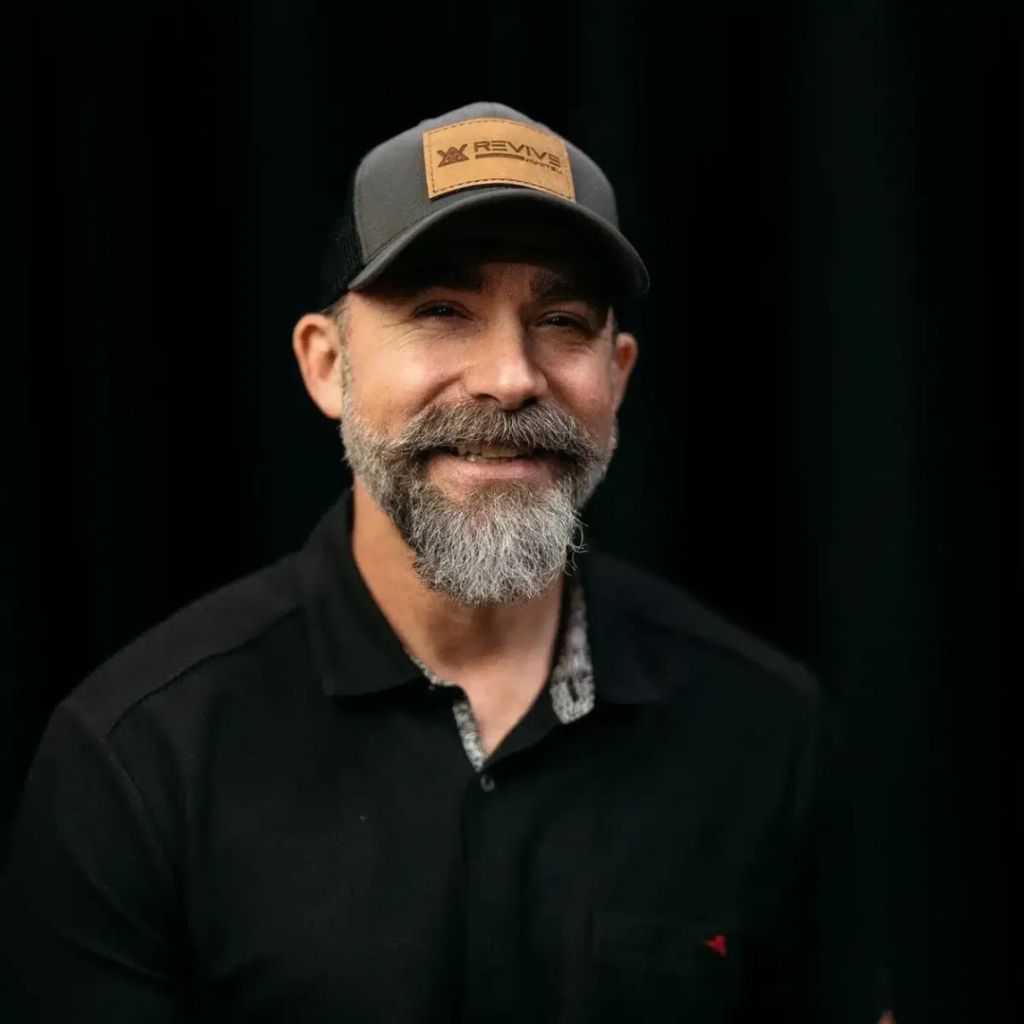
Matt Beaudreau covers Modern Manhood Education in this Marketer of the Day episode. Matt Beaudreau argues real education builds sovereignty, helping families build the life they want instead of receiving one. His approach anchors on the Bushido code, turning courage, compassion, honor, loyalty, and self-control into daily actions. He uses 'factory settings': protect kids' curiosity, and help adults unwind trained obedience before rebuilding habits. The system is a 12-month roadmap with monthly themes, projects, readings, and weekly guest mentors. Members lean on each other like a jujitsu gym, with shared language, standards, and accountability. He calls conveyor-belt schooling a Prussian military model later adopted by industrialists, noting 92% diploma rates do not equal education.
Do you ever feel like traditional education systems aren’t serving your true potential? Many people are realizing that the old ways of learning may not be the best fit for everyone. In a world where we’re taught to conform and memorize rather than to think and innovate, it can be hard to find your path. This is where alternative education systems come into play. There’s a global community built around these shared values, providing a roadmap and network for those seeking self-improvement.
Matt Beaudreau is a keynote speaker, consultant, and coach who has worked with organizations like Wells Fargo, Honeywell, and Lockheed Martin. He is the founder of the Apogee Strong Foundation, which provides scholarships and leadership opportunities for young men. Today, Matt discusses his focus on educating individuals and families on defining sovereignty for themselves through mentorship programs, physical campuses, and a community built around shared values and the Bushido code.
Quotes
“Blind obedience is ridiculous. If you enter a relationship saying, ‘Hey, there’s an element of this relationship where I’ll be obedient to you because…’—great, that makes sense. But don’t confuse blind obedience with being educated. Education is about moving toward sovereignty.” – Matt Beaudreau
“I change my ways every year. You’re under no obligation to stay the same. If you’re not growing, you’re going backwards.” – Matt Beaudreau
“There is no such thing as perfection. I’m far from perfect—I’m not the perfect dad, not the perfect husband, not the perfect entrepreneur. Those things don’t exist. But what should exist is the pursuit of perfection.” – Matt Beaudreau
Takeaways
05:49 Cultivating a strong code of values and living by them is essential for personal and community growth.
07:23 Restoring the “factory settings” of human potential, rather than conforming to societal norms, is crucial for individual sovereignty.
16:52 Unwinding old habits and rebuilding critical thinking patterns is a necessary step in the journey of personal transformation.
19:41 The modern education system was designed to produce obedient workers, not thriving individuals, necessitating alternative paths to learning.
21:36 Building a supportive community with shared values is key to sustainable personal and professional development.
Resources
- Apogee Strong: Apogee Exists To Reseed Freedom In Our Children And In Our Nation Through Education For The Entire Family
- Matt Beaudreau on Facebook
- Matt Beaudreau on LinkedIn
- The Essential 11 Podcast with Matt Beaudreau on Apple Podcasts
Podcast: Play in new window | Download (Duration: 26:46 — 37.0MB) | Embed
Subscribe: Apple Podcasts | Spotify | Amazon Music | iHeartRadio | Podchaser | RSS
Transcript
Download transcript (.txt)Welcome back to the podcast. Matt Boudreau is here from Apogee strong.com. Now Matt is a keynote speaker. He's a consultant and he's a coach to organizations around the world. His clients have included Wells Fargo, Honeywell, Lockheed Martin, American Eagle, and so many more. And Matt has a podcast called The essential 11 geared towards emerging leaders he Garner's advice from the world's leaders in business, sports, music and entertainment. And he's the founder of the apogee Strong Foundation, which provides scholarships for school experience camp and leadership opportunities for young men around the world. So we're going to figure out, we're going to crack the code today of the secrets to life to manhood, fatherhood, being your best being a decent person, and everything that goes with that. So Matt, excited to speak with you, man,
that that last piece right there of cracking the code. That's some that's a big task, but we'll see what we can do now. Thanks for having me, man. Appreciate it.
Yeah, well over promise will over deliver. And I don't even know how many years we've been running your podcast. But sometimes I look at the episodes that get put out and you've had, like, Ken Coleman from Dave Ramsey, and Alex are Mozi. And Tulsi Gabbard, and I was like, Who the heck is this guy? He talks to all sorts of amazing people. And so what are you all about? Like you talk to all these people, you have all these cool activities going on? If someone is first hearing about Mr. Matt Boudreau, and they say, this is someone I need to he's going places I need to pay attention to what he's up to, what are you up to? What's your focus and passion?
I appreciate it, man. So I tell everybody, I'm a career educator. Now people hear that and they usually think schools, I'm very quick to say school and education are not the same thing. Education should be towards defining what you see as sovereignty for yourself and for your family. And so everything we're building is around giving people the tools, the resources, the roadmap to defining sovereignty for themselves. We were really dedicated to building strong families, that means strong men, strong women, strong young people who are sovereign, that means they understand where they want to go, they understand how to build a life, not how to sit back and receive a life, how to build the life that they want, so that they can be happy, healthy, productive, you know, in service to others. So everything we do is around that. So we've got verticals, from mentorship programs, to actually physical K through 12 campuses, we got 50 campuses that are launching in 2024. We've got another 100 that are launching in 2025. These campuses, young men, young women go their mom and dad get connected to our men's and women's program just by their child's going there. So it really is everything we do is education for the entire family. All those verticals can stand alone or they can come together and so you know mentorship programs for men, women, young people, and that's where we bring in guest mentors every week. Like you mentioned, like Tulsi, like Bryan Callen boss Rutan. Yesterday we had the actor Sean Patrick Flanery came in yesterday, we just every week, man just the best of the best of the best humans who come on and pour directly into our mentees. So that's what we're doing, man. We're building strong families. Very
nice. And I think what you just mentioned, there is so important to have the city supply of good advice and positivity and people who have made it you always hear all the platitudes about how we're just overloaded with information, you open up social media, and you can see a bunch of crap, you turn on the TV, and you kind of it's like, it's like your own mental nutrition, right, you can put in the bad or you can put in the good. And it's not you can't just eat healthy one day and expect to be healthy forever. You have to continually supply and you know, you think about all these great programs that are out there, whether it's like, you know, Boy Scouts and Kiwanis Club boys, girl club, all these things. And so what sets you apart? Why should someone go to you instead of one of those other ones?
Yeah, that's a really good so first and foremost, we have a strong code, I will argue and a lot of people aren't really happy with the Boy Scouts is now also the Girl Scouts are the girls who are boys or boys who are a girl scouts with no luck. And I'm not here to knock anybody but the reality is we have a very specific code that we live by. And we are putting together a roadmap. That for us is a couple of things one put together not just by us going oh, you know my my business partner has a gentleman named Tim Kennedy who a lot of people know who Tim is. And it's not Matt and Tim going, Oh, this would be cool to put together. It's Matt and Tim connecting to all of those people we mentioned to the Jordan Peterson's in the Patrick, but David's in SF Golden's in quite literally the people who are leading and all of their industries and going, Hey, if a person truly wants to be educated in this way, what is the roadmap look like? So we have a very specific roadmap that's been put together by all them, we guide people through it. But then we also have this network. We want our folks we live by this code you're going to put in the work, but we're all going to go on this roadmap, this journey together and then you You're connected to a network now of other people. So I actually like in our organization much more like CrossFit, or a jujitsu gym. You know, if somebody's into jujitsu, and they land somewhere in a new state, and they've never been there before, they can go into a jujitsu gym and go, Hey, man, I've been doing jujitsu for 10 years, under this, you know, lineage or whatever. And it was a cool document automatically, boom, let's roll. Let's go. We're building communities like that CrossFit, very much the same thing, right? You can go from one crossover affiliate to another one. There's similar lingo, same similar language similar. That's what we're doing is we're building a global community of people who have similar shared experiences, but more importantly, they have shared values.
And can you explain some of the values or the code like I'm sure we can't unpack all of it, but there's there like, is there one or two aspects that really deserve some attention?
Yeah, it's really all it is, is the Bushido. It's the Bushido Code, man. So it's not anything that we've necessarily, it's something we co opted from them, right. So like courage, compassion, respect, honesty, honor, loyalty, self control, it's those kinds of things, kind of these traditional sort of value sets of, you know, kind of these classic values, like that's really what the code is. And then in the process of going through all of the projects, the challenges, the readings, it is cultivating, what does that actually look like in action? Right? So Socrates says, the beginning of wisdom is the definition of terms. Well, some of these things need to be defined by how you show up in the world. How do you treat others? What does your day to day look like? You can say all the right we live in a meme culture where everybody thinks, oh, Jock discipline equals freedom, man, because Jocko says it? I'm like, Cool, man. Sweet. Yes. Also, what does that actually look like in your life? Because if it doesn't play out, and how you live and behave, but you're saying it that's called hypocrisy. Can we don't roll with that? Right? So it's what does that actual application look like? But it's the Bushido code that we live by.
I love it. And that's an important point you just made of living your values. And we all know, we all have known someone like that. And maybe that was us at some point, right? Where you say, like, oh, well, I've heard this lesson. Oh, I've memorized that one. It's like, Yeah, but do you actually live it? And so when you're helping all these men and boys kind of be kind, but also strong and living their best life? What sort of problems? Do you see people having these days? Like, what are where are people hurting? Where are they struggling?
That's a really great question, man. So it really depends on so we highlight a million different areas, especially for our men. What's interesting is, I believe very much in these factory settings, we actually have a home education group too. So we lead about 300 families through home education. And I believe in what's called these factory settings. So people I very much believe are born in relatively intelligent, they're born curious, they're born relatively compassionate, we get a lot of these things trained out of us. So what we say is for our young people, our young men, we are trying to keep those factory settings for them, for our men, and we're trying to get them back to the factory settings, we've added our women's program now to it's the same thing, we're trying to get them back to these factory settings. So the biggest issues we see on the young person side is that we live in a world that distracts them with so many other things that they don't push forward on their own pursuit of an actual education. And by distractions, I mean, video games are a huge distraction, especially for our young men. There are, you know, a lot of toxic activities, there's toxic foods, there's a lot of things that we are pushed towards culturally that are now quote unquote, normal, that distract them from getting an education, by the way school, traditional conveyor belts schooling. I'm very open and honest. And I believe that is also a massive distraction. I have literally had young people go, I can't make the call this week with Andy for Sella, because I gotta go take this math test. And it's like, Yep, got it, school gets in the way of the education. Right. So for young people, a lot of it is that for old, older, as the old people, I'm talking about the adults, you know, 25 to 55, and our, our men's and women's programs, the biggest struggle we see for them is just habit of whatever they put as their their normal, you know, we dive into their personal psychology, well, they have a habit of thinking a certain way. So we're trying to unwind that first, before we can rebuild actual thinking patterns that are going to be critical and actually help them move forward, we have to unwind the schedule of normal that they are used to and rebuild a schedule that prioritizes differently, we have to unwind what they think they know, when it comes to, you know, and by the way, they may know stuff, but we unwind it and unpack and go do you really know what you know, on the physical on the spiritual on the relational, and then go cool, what do you want to keep and what do we want to change? Right? So it's a lot of unwinding old habits to rebuild. And that's the hardest part people don't actually like to do the work of rebuilding. It's it takes consistent effort to the biggest pushback we get your programs are 12 months can we Do something shorter No, no, no, because we want it to work.
That's very unapologetic of you. And that's great. And I think about some of these ideas all the time just and even just the way that you describe some of this, like you're using, like a, you know, imagery and imagination. And it's kind of a fun way of thinking about the deprogramming, right, like, if we were just animals, like I heard the roosters in the background a few minutes ago from you. And it's like that rooster can never one day wake up and decide, like, I want to do something with my life. It's just set in that way. When us as humans, Homo sapiens, the sentient beings, we can choose to change our path, but it's painful, right? There's the momentum, there's the comfort zone. And even if the change was a quick fix, well, then it would be just as quick or just as easy to fall back in it. So some of these things take time. And so So this idea of the factory settings, right, we were born with this, with this greatness with this epicness with us, and then, you know, all these kind of mistakes and bad habits, bad influences sort of beat us down. So have you gone through a transformation yourself? Were you always like this? Or did you have to change your ways, and I
changed my ways every year, you're under no obligation. If you're not growing, you're going backwards. I in here, I very much believe that there is no I do not want my children to watch me live the same year, 2030 years in a row and call it a life. In my eyes, you are either growing and changing and pursuing something else, which includes failing and falling down but falling forward, right? You're pursuing something or you're inherently going backwards, I don't believe in a net neutral time spent. It's either productive or it's counterproductive. So my mentality has been cultivated over years and years and years of mistake after mistake after mistake after failure after failure after failure after being like, doing all the wrong things, and then going, okay, who's doing things right? How do I adopt that? So there is no such thing as perfection. I'm far from perfect. I'm not the perfect dad, not the perfect husband, not the perfect entrepreneur, not the perfect, those things don't exist. And if I was saying those things existed, you should run far, far away. But what should exist is the pursuit of perfection. So every year we are analyzing going, Okay, what needs to get a little better this year? We've got all these balls that we're juggling, right. But the the in between this in between the years here? Do I feel like I'm at peace here? Do I feel like I'm happy here? Cool. Yes. No. What does that look like? I've got that piece. I've got my time. I only have 24 hours in a day this year, just like last year. Okay, what does that need to look like? How do I get to be the most efficient? What do I need to? What do I need to eliminate out of my diet or out of my, my calendar right now? Like, what do I need to eliminate? What do I need to automate? What do I need to delegate? Take a look at the physical How am I feeling health wise? What do I need to increase or decrease here spiritually? Where am I? Am I diving in and getting better? relationally? How can I be a better husband this year? What practically cannot look like fatherhood legacy? Finances? Like what do I need to know? Every year looks like that? So yeah, no, I every year looks different than the year before.
Very nice. And this is like entrepreneurialism, one on one, right? The idea that, of course, you would love to avoid the mistakes. But that shouldn't like the avoidance of mistakes shouldn't be a motivating factor, right? You shouldn't let the fear turn into the self sabotage. And, of course, we don't want to make stupid decisions. But we kind of need to do do a lot more and push ourselves and break things and figure out those boundaries and figure out those failures to then get to the even bigger successes. And it takes a while to rethink our minds, right? Because we're used to playing it safe and being like an employee a nine to five, but we need to accomplish great things. And you hear about this from like Elon Musk, Steve Jobs, Henry Ford, all of them. And so when it when people are going through, say these 12 months, and they're adapting to this new way of thinking of like bettering your best, and like examining all these different areas of life, like, where is the resistance? Like where are people saying like, well, I don't want to do this and they finally break through, is there any like sort of aspect in you teaching them to do the education instead of school where there's just like, such a rough go of it? Yeah,
that's a great question, man. And so it really depends on the on the human being, we touch on every single component that we that we believe is important in terms of growth. And so there are some months, right every month has a different theme. And this is the value of the community because every month has a different theme. One month will be something where Robert goes, oh my gosh, dude, I'm a ninja here. Like I'm actually crushing it here. These projects, these challenges that you set up for this particular month. This reading these mentors, dude, I'm like, I'm actually like, I crush it. I crush it. Cool. Awesome. Then I'm gonna also lean on you to help the other men in the program for this month, because you are a ninja there. That's awesome. Because guess what's going to happen? Maybe you crush it this month and you get to the next month where that's the He does this and you're like, Oh, I got a lot to learn. Right? But somebody else, it goes, Oh no, this is where I'm a ninja. Cool. Now I'm gonna count on you to this right? Like this is the value of the group to some months you are very much going, I didn't even know this game existed around, you know, health or finances or whatever that looks like. And then some months you're like, Oh no, I very much know this and I can pour in here. So it really depends on the person as far as where they're needing the most insight. But they get the community no matter what, what if I was going to pick one thing, at least for the adults, that was common across the board. It is what you mentioned, it is the schooling thing school for us. God I say us meaning the collective culture has become a religion in this country and nobody likes their religion question. People don't understand the genesis of schooling conveyor belt schooling, why it was made, the way it was made, who made it what the intent was. The fact that it was not designed for human development is something that most people do not understand. It's actually the antithesis in a lot of ways to what human development actually should and could look like. So that is one of the hardest things I can get people in a conversation go long enough I can get people to understand intellectually what I'm saying. And the blank got it. Yep, totally makes sense. logically makes sense. But emotionally, they're still wanting to go back and do the cold stuff of what school is always looked like. That's probably the most common thing that we see that we have to help people through.
And can you unpack that a little bit? I mean, we don't have like three hours to do it. But like, you hear about some of these things about how like the when they first invented like what we think of a school like the they stole it from the Romans or like they tried to train kids to be factory workers with the bell ringing in the rote memorization. You hear a lot of bad things. And so what, why the heck did they invent school? And why is it so weird?
Yeah, it was a Prussian military system is what it was. So there was, you know, the folklore goes to and John Taylor Gatto is is the foremost expert in this he passed a few years ago, but reading his books will will open people's eyes GA T to John Taylor Gatto. Go read anything he ever wrote. And you'll get on you'll, you'll understand the history behind things. But in a nutshell, it was a Prussian military system, that Prussian soldiers who were starting to question their obedience and loyalty to the Prussian military, they were losing a Napoleon and they were like I kind of so there was this kind of a collective push from the nation to go, Hey, how do we train up obedient soldiers? And so that's sort of where it started is like, hey, how do you get a hold of somebody really, really young, and really make sure that they are obedient and loyal to the state or to whoever claims authority. That was the general idea of where that came from. And then you've got all these industrialists, you know, capitalist industrial, so it was just fine capitalism, great industrialists. That's where we were in the industrial revolution. But they're like, Oh, cool. I like that idea. I want to make, and by the way, Rockefeller said this thing, I want to make a nation of workers, not a nation of thinkers. So he put in the equivalent of $1.3 billion into founding the conveyor belt, public schooling system, under the guise of this is going to be great for everybody, it's going to get everybody trained to have a great job, and is going to get kids out of the factories, right. And we kind of use this whole child labor thing as and we kind of group it as it's all bad. And so then it was, you know, it was born and for a time, there was an element of that that actually was helpful. You got to ask yourself, the world has changed quite a bit in the last 100 years, why does school look almost exactly the same? We've got 92% of our people that are 18 or older who have a high school diploma, would you look at our nation and go Yeah, 92% highly educated for sure. No, no, it's not just schools fault. But schools not doing anything to combat it either. And it's not going to and I say that, as a former public school teacher, public school administrator, being inside the game, understanding that the game is there talking to educators, teachers, administrators all over the world every single day. It's not designed to make humans thrive, especially as the world continues to change. An educated human can do that. A schooled human has a really hard time getting past habits, blind obedience. You know, having to figure out making decisions for him or herself is a hard thing. They've gotten into the habit of obedience. And that's a hard thing to break.
And is it safe to say that that obedience could still be useful, but just like when you choose to be right, like if you, you know, join the military and have certain orders have an assignment, it's good to jump into that zone to get something done, but not all the time and not so just for that to be our entire character.
blind obedience is ridiculous. If you go into an involuntary relationship going, Hey, there's an element of this relationship or I'm going to be obedient to you because, right, great, that sounds good. But don't pretend to being blindly obedient is the same thing as being educated with education as moving towards sovereignty. Right? So there are positions you can put yourself voluntarily and go, Hey, I'm gonna go ahead and submit to an authority here for this particular thing, because and hey, by the way, I understand there should be barriers. So if somebody's goes to the military, and they, they're like, Hey, I'm signing up for this voluntarily, and then all of a sudden, their commander gives them an order, hey, you know, see that kid over there? This is what we're doing. Now. This is war, man. I know that kid's not doing anything, but go shoot that kid. What are you gonna do? You're at a moral like, you're at a moral standpoint, do you do blah? Are you blindly obedient? Because your authority said to do it? Or do you start to wrestle with that, right? And education allows you to wrestle with real concepts and figure out where you stand on things. That's all I want. For people. I don't want anybody to think like me, I just want people to think most people do not think.
Right. And I agree completely. And I love this sovereignty concept. And you just hear these scary, shocking statistics. Like, there's a huge percentage of high school graduates, they never read another book ever, not even one book their entire life. College graduates, I think it might be like, 40%, don't even read one book. And it's like, I mean, school has failed us in a lot of ways. It's better than nothing. But is that really something to aspire to? And the you know, the school machine, the the industrial complex, you hear about how it's just like this huge and changeable thing. And it's scary to to mess with the education system. And so it seems like what you've done is here and said, Well, here's, here's something else that you can opt into, right? And if this is for you, then you can choose to take this other path and think for yourself and get a real education. And so how large is this? Like, how well is it grown? There's just nationwide or like, what's the scope of it?
That's a great question. And so right now, for our young men, we are probably five 600 young men and about 20 different countries. For men, we're at about 1000 men for our women are about 400 women, for homeschool families, we're about home about 300 home education families, we have 50 campuses, physical K through 12 campuses that are launching throughout the US, Canada and Australia and 2024, we got about another 100 that will launch in 2025 are kicking off live events in every single state starting this fall. So we're global ish and getting more global ish stuff, we'll go as far as we can go. But that's exactly what it is. It's building the alternative. And inviting people to come and making the alternative, accessible and affordable to people too. We know that the downside of privatized education is you got to pay for it. So we're also working on we have two different foundations to make things accessible all the money in the foundation's goes directly to scholarship, young people, none of it is kept for any kind of administrative fees or anything like that, right? Like we it goes to people. And so you know, we're making it accessible as well.
Very cool. And so how does someone know if they're like a parent or a kid? Like how do they know if they're the right fit for looking into this? And is there like a directory? How can they find a campus near them?
That's a really good question. So everything is on the website, Apogee strong.com, there's a little documentary that's in there, it's about an hour long that talks really about what we're doing. There's a directory that's right there as well. You can go into find a school and there's a map with all of the locations for the actual campus. If you're not near an actual campus, we still have all of those other programs, the men's, the women's, the young men's, we got young women's on the way the home education, those are people that are all over the world don't have to be next to the campus, you can be involved in that. But go through the website and take a look at some of the things we're saying and some of the things we're espousing you'll know pretty dang quickly. If it's like, yeah, this is we're kind of in the same value set, we really believe in sovereignty and freedom the same way you do great. If not, hey, we still want you to have all the best in the world. Like we're not here to convince anybody of anything. And we're not here to, to beat anybody over the head. We're leading in a very specific way. And we're inviting people to come along. Very
cool. And there's no harm in being open to new ideas, or even allowing your existing ideas to be beat up a little bit. Because if you remain ignorant, then you're just destined to have this path of sameness. And who wants that, right? You want excitement, we want to challenge ourselves. You want to build the muscle. And as people are checking out Apogee strong.com, do you have what you would say is a secret to your success? Or do you have a favorite quote or lesson like what would you say? Does it really all boil down to it's a really
good question, man, so I have a favorite poem. We actually just made shirts on the apogee strong website on the merge that's going to all that goes into the foundation for scholarships as well. And it's a poem by DH Lawrence in so this is my favorite poem slash quote of all times we've got on this shirt. I'm excited man, I'm ordering like 20 of these shirts today. But it says I never saw a wild thing sorry for itself. A small bird will fall frozen dead from a bow without ever having felt sorry for itself. And I've always loved that poem. Now as you know, I've got the Man in the Arena behind me. I've got like there's a number of things that I do. inspiration from but that poem in particular, I think about that bird quite a bit. That bird didn't have to feel sorry for itself because that bird lived every moment being a bird. It wasn't trying to be a lion. It wasn't trying to be a tiger wasn't trying to impress the other birds. It wasn't. He was just doing what birds do. It wasn't looking for attention. It wasn't looking for anything special wasn't looking to try to be something that wasn't it was just looking to be the best possible version of that bird on a daily basis. It stayed present it stayed in the moment and because it did that it was able to die free and sovereign, as close to a definition as I can think of. So for me, that says it all right there.
I love it that's very deep and very inspiring. Be You be the real you be the best you and the very next step to make that happen is we go to Apogee strong.com That's eight p o g e s t r o n g.com Apogee strong.com Leave the conveyor belt of schooling behind and check out that unstoppable growth and transformation for the young heroes in your life. Matt Boudreau. It's very nice meeting you. And speaking with you. I had a blast. I hope you did too.
Well done. Thank you for all the good work you do. I appreciate you very much. You are a part of this team to man so thank you so much on his mind.
Wind podcast.com forward Slash Free. Go there right now to see what you could be missing in your podcast. Maybe you aren't active enough on social media? Are you writing and broadcasting an email for every episode of your podcast? Do you follow up with your podcast guests? Do you do things to make your podcast interview and content creation easier? Go to d of y podcast.com/free to claim your gift right now. Transcribed by https://otter.ai