Published Last updated
View in Podcast Library: stories, quotes, books, and resources in one place.
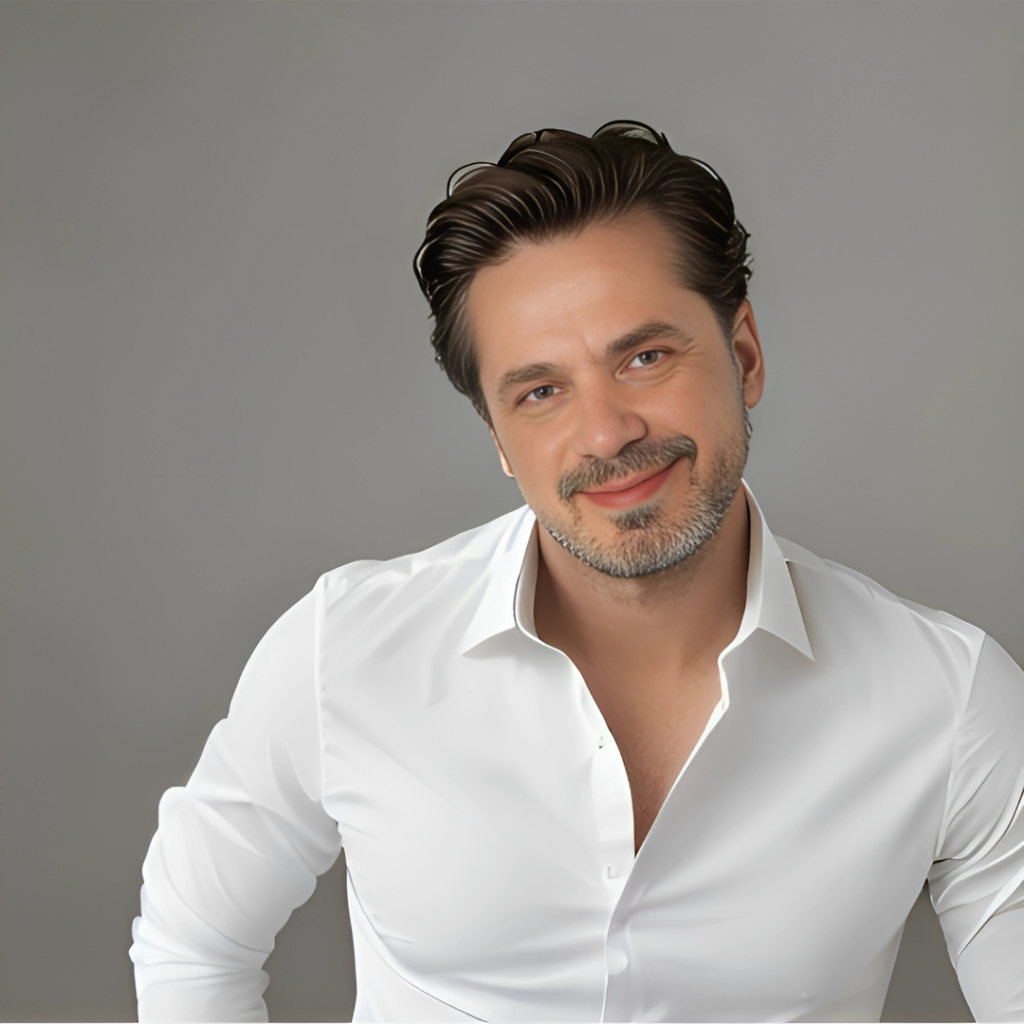
Christian Ray Flores covers High Performance Coaching in this Marketer of the Day episode. Christian Ray Flores explains how to build an 'Xponential' life by turning uncertainty into focused momentum. He frames career growth as four seasons (student, practitioner, master, sage) and notes the friction shows up in the transitions. A common trap is addiction to certainty, when your 'soul' signals a pivot but you cling to salary, status, and predictability. His antidote is marathon calibration: lower your burn rate, go 'Spartan mode,' and commit to one thing at a time. Expect the next venture to cost more and take longer, with three years to be known and five years to know what works. Acceleration comes from coaching as apprenticeship plus the 10/20/70 rule: 10% formal learning, 20% with others, 70% by doing, using your daily 16 chips wisely.
Feeling stuck can be frustrating, especially when you know you’re capable of more but can’t seem to break through. It’s easy to get caught in routines, second-guessing yourself or waiting for the “right” moment to take action. The truth is, potential isn’t something you find—it’s something you build, step by step, through small but meaningful choices. The moment you stop waiting and start moving, even in uncertainty, is the moment real growth begins.
Christian Ray Flores is an entrepreneur, international recording artist, philanthropist, and high-performance coach. He hosts a popular newsletter and podcast called “Headspace by Christian Ray Flores.” Today, Christian shares his extraordinary journey, from being a child refugee in Chile to becoming a successful pop star in Eastern Europe and leading philanthropic projects internationally. He talks about the importance of overcoming personal challenges, achieving greatness, and contributing to the greater good. Stay tuned!
Resources
- Ascend Academy: LIFTING CHILDREN OUT OF POVERTY
- Xponential Life: Performance Coaching for Purpose-Driven Leaders
- Headspace by Christian Ray Flores: Weekly Strategies for Success and Significance
- Follow Christian Ray Flores on Facebook
- Connect with Christian Ray Flores on LinkedIn
Podcast: Play in new window | Download (Duration: 30:11 — 41.7MB) | Embed
Subscribe: Apple Podcasts | Spotify | Amazon Music | iHeartRadio | Podchaser | RSS
Transcript
Download transcript (.txt)Music. We're here with Christian Ray Flores, who is an entrepreneur. He's an international recording artist, a philanthropist and a high performance coach. He has had an extraordinary journey from a child refugee in Chile to entertaining millions as a pop star in Eastern Europe, and he leads philanthropic projects internationally. He plants churches. He founds entrepreneurial projects in the US. His website is third drive.co and we're going to find out from Mr. Christian about success on autopilot. We'll find out about the Xponential life, about spiritual and contemplative practices and so much more. So that way we can have a excellent life, fulfilling business and everything that goes along with that. So Mr. Christian, glad to be speaking with you.
It's a pleasure. I'm delighted to be here
and delighted to have you. It's always good to talk with someone. It's far too simple and easy to regress back and just be behind the computer screen, be behind the phone. So here we are having this person to person communication. And what did I leave out of your bio? What currently has you just super excited, jazzed up, energized,
I think maybe two. Well, maybe you can now tell the I'm confused about even my answer, because I'm excited about more than one thing. So I would say number one, I really enjoy doing the high performance coaching that I do through Xponential life, which is a company I lead, and that's one, and the reason for that is I just really enjoy helping people transcend themselves. You know, most of us under we really, don't really believe what we can do at the extent of what we're able to do. So that's one. The second one, probably media creation. I host a popular newsletter called Headspace by Christian Right Flores in a podcast. That's exciting, because that really sort of, I'm able to, you know, deliver great value at scale to a lot of people. And the third one is different, the philanthropic effort I we started in after school academy in Mozambique and Maputo Mozambique a few years ago, and just, you know, interacting with the volunteers, the kids that are getting character help, English, computer literacy in a place it's one of the poorest countries in the world, and it just takes, you know, like 100 $100 a month to sponsor a kid and to help him have a completely different life. So that is just probably one of the most fulfilling things I have right now.
Well, it seems like it's like, like three stages or three amounts of this transcendence you're talking about, right? There's like, overcoming your own stuff, and, yeah, achieving this, this greatness. Then there's like, the publicity factor you're saying that you kind of have this podcast, and you get the word out, and then there's even past that. And it's like, the greater good, right? There's like, what it really means, and helping out these kids, you really need it. And it seems like just that there's definitely a need to get some awareness from you about what's possible and what you've done and what we can do. And it seems like there's a need to just get over our own excuses, right? And the people that say, Oh, why have such low self esteem? Or I can't do this, or, well, what, what change could I really make in the world? And so like, what do you come across? There's always the the naysayers that either need educating or just need to be out of our lives. But like, what kind of just resistance do you come across when you're spreading your positive message.
That is a great question. Okay, I would say, you know, in no particular order, but I think the top ones that I see are these. The first one is people that are in between seasons, right? So I see in professional development, I see four seasons. One is a student, and we're actually in some to some degree, in all four at the same time somewhere. But generally speaking, right broad strokes, your student, you're thinking about life. You're studying about life. You're not participating in life actively. Then you become a practitioner. You use you become this young person, joining a company or starting something, or creating something, then you become a master, then you become a sage. In between those four seasons, there's always tension, there's always lack of clarity, confusion, fear, anxiety, things like that. So the people that I usually work with are in between those stages, almost always. So that's one sort of seasonal, right, almost like a seasonal recalibration, kind of attention there. The other one, I think, is when people, one way or another, really doesn't matter why, but they become addicted. Certainty. You know you really value predictability certainty. You know your monthly salary, status, position, respect all of those things, and your soul is telling you, hey, you need to turn right, to turn left or go up, and you need to switch. You need to evolve, you need to transition, and that overlays actually with the seasons, and you go, No, you know, I would prefer certainty over this sort of messy middle of uncertainty. That's probably another one. And the third, what I would say, is not paying attention to your individual, unique sort of wiring, right, almost, programming, what you were put on earth to do. And you sort of start living somebody else's story. And the story could be your society, your parents, your peers, keeping up with the Joneses, that kind of thing. And you live somebody else. I mean, you always start by living somebody else's story. All of us do because we're not mature enough to understand exactly. And it's also a moving target. It evolves over time. But I would say there, there are these moments where you go, you know, you live in somebody else's story that you're sort of dissatisfied, like a fulfillment. You know you can do better and more or more aligned to your makeup, and you just don't make that move.
Ooh. This is some deep stuff. These are some big ideas this. There's the cognitive dissonance, right? The conflicting ideas of saying, Well, I like the certainty, I like the safety, but I'm also slightly miserable because I know I could do more, and I'm kind of fighting the risk, and it also seems like there's this idea of inertia, right? Like you get stuck in a relationship, a career, a business, a certain path, and it serves you for a while, but then when those seasons change and it's time for that uncomfortable period, then we need to step up and make a change, all in service of this idea of, like, discovering your true self. And I like what you said there about how you start off living someone else's story, right? You get inspired by someone else, and they do this thing. You're like, well, I need to start somewhere, right? There's all the things that could be done in life. They've already, kind of already been done, right? People have invented these businesses or launched this career, you say, Okay, here's kind of my spark, and then I'll go on that path, but I have to start living my own life and kind of use that as the template or as the starting point. So as far as it relates to you and the amazing journey that you've been on, now that we have a beginning of an idea here, like, what are you all about? What kind of things have you seen? What have you gone through?
Well, yeah, it's, it's, it is a wild story. So I my origin story is so unusual, because I was born in in Russia. My mom's Russian, my dad's Chilean. So we moved to Chile when I was a baby, and then there was a military coup, and I was a five year old, and my dad was in a concentration camp, and my mom is in hiding. And then we were refugees and refugee facility, and it's danger and death, and like 10s of 1000s of people are getting arrested and killed, and you know, all of that, and we end up making it out, out of there safely, got asylum in Germany, then went back to Russia, back to sort of this miserable Soviet existence in a communal apartment, or very poor. And then my father gets a gets a job in Africa, in Mozambique, also one of the poorest countries in the world. But for us, it was sort of a little bit of a of an improvement when it comes to our sort of level of living and that kind of and then there's a civil war there, right, like a year in. So I saw so much change, so much uncertainty that, you know, after overcoming the trauma of it, and it's a process there, what's left is a lot of strength, a lot of abilities that are, you know, would be considered, you know, out unfair advantages in the marketplace, and it all sort of plays out. When we go back to the Soviet Union, we see the whole thing collapse again, tanks in the streets. And my very first I got an education as an economist. I have a master's in economics. I speak four languages, but I did this very sort of lateral move, going, I'm not going to do this. I'm going to do music, because I was musical my whole life, and all of those sort of very strange seem, seemingly on the surface disadvantages came together as an advantage, a lot of creativity. You know, I don't have an aversion to risk, so I became one of the top pop artists in all of Russia, and helped elect the president, produce other bands, and started churches there. I became a Christian sort of in the middle of there, so I started doing a lot of philanthropic work. And because of being exposed to the third world my whole life, it was easier for me to do that right to go to places that are most. Sort of middle class Americans probably wouldn't want to go to and when we moved to the States to about 20 years ago, that same sort of set of qualities helped me start two or three businesses. One of them failed, two of them are still around in a couple of nonprofits. So that's sort of the quick, fast forward journey on of my crazy story.
And that is a crazy story, and I like it. It seems like wherever you go, something falls apart, and you have to pick yourself up and figure out your resilience. And yeah, there's no way to go but forward. And so I'm really curious about, how do you reconcile sticking something out and making it work versus giving up. Because there's so many times when we're like, Well, do I do I keep on pushing forward with this cause, with this business, and sometimes there's that fear of like, well, am I sticking around too long, or if I give it up, am I throwing away something good? So with all of your just like, you know, phase after phase, season after season. Do these thoughts come into mind as far as, like, your judgment about when to stay and when to quit?
Well, all, all the time. And it's both for in my journey, and also when I mentor and even coach entrepreneurs, founders, people like that. And yeah, I've seen so much, so many patterns emerge from from those things. And I would say maybe in no particular order, these are the things that really stick out to me. One is almost always the thing that you're trying to do next will take longer, it's going to cost you more, and it's going to be harder than you think. Almost always, it's just, I don't know what the nature of the whole thing is, but it just, that's how it is, right? So if you want to do that, what you need to do, I think, is sort of calibrate your life for a marathon rather than a sprint. And, okay, what does that mean? What you mean, for example, you can low you have to lower your burn rate to the very, very minimum, like go Spartan. That's sort of what we call it in our family. Go to Spartan mode. And why? Because you'll last longer financially, right? Don't focus on three things or four things. Focus on one thing if you want to take get it off the ground eventually, when it's up, and you can have it set up so other people run it, you're sort of above the business, not in the business, then you can switch. And that's totally fine. But I make that mistake chronically, like I'm totally professionally ADHD and I can start two things and three things at the same time. And because of the just the sheer, you know, willpower, faith and grit that I have, I can make it work. But it doesn't work really, really well, you know? And so what I've come to the conclusion is, is one thing at a time, always one thing at a time, and whatever, whatever. And it's very hard to do when you're passionate about two or three things, right? So, so the stuff that I do now, I have very, very well calibrated in the sense of delegated. My role is very specific, limited this thing, and that's it, you know. And the thing that I'm building, I'm all in, and I go, like, as close as possible to every aspect of the thing, in detail, experimenting, and that is the thing. You obsess over the thing, and you obsess over the thing, I would say, on average, look three to five years to even know what you're doing. I mean, honestly, like three years to just get be known for something, five years to to figuring out what works, you know, and then on top of that, now you're now you're flying right, if you stick with it. And so the, I guess this is a bit more of a nuance to answer, right? But I hope it helps people understand that there's more twin than just hey, do the same thing over and over again or give up too early.
It is helpful that, and it's almost counterintuitive, isn't it, as far as the the work required, it's always more than you imagine. And like, you look up like any kind of achievements, right? You think of like what it took to land on the moon. And at first match, you're like, oh, couldn't they just have said, hey, the moon's up there, launch the rocket, park it over there. And when you look into it, it's like, man, like, it's amazing that that something like that even happened. There's so many steps involved, and so many times it can get frustrating, maybe because our expectations are always incorrect, and it does help to be overly optimistic. That's like, a very American thing to do, right, to be way more optimistic than we deserve. But then sometimes that that gets you there, right? That's the fuel. And so as far as you powering through the setbacks and the failures and getting, like, your enthusiasm going, do you have any secrets of that, like you mentioned about like, having, like, the daily obsession? Are. You someone that says, Well, you have, like, a coach or a mentor. You have people on board with you. How do we keep that excitement sustained long enough to get to the finish line?
The number one is having a coach or a mentor. Number one, and I'll tell you, why is You? You? You're objectively, subjective. If you're starting a new thing or switching right your objective, you just don't know what you don't know. So having somebody who is outside of your thing looking and have a consistency of contact accountability in back and forth and back and forth will literally quintuple your speed of movement. It really will, or more actually, you know, like I was talking to a client, what 334, days ago, who I was helping to set, set up his personal brand, sort of, you know, the technical part, the infrastructure, the thinking, the pitching, the messaging, The positioning. And I'm like, I basically said, so, and we're making progress. He goes, Yeah, okay, okay, we're making progress, and it's slow. And I go, Okay, so tell me something if you if we're doing what we're doing together right now, instead of taking you two months to get there, would it take you five months a year? And he basically thought about he goes, actually never. It wouldn't. It would have never happened. And sometimes that's the difference you you have in you, what is necessary for success. But you do need somebody to catalyze that, somebody to accelerate that, amplify that. And sometimes it's the difference between six months and six years. Sometimes it's a difference between three months and never, you know. So I would say 100% is it's this? Is it? This is the thing people, I had another thing and I forgot what I was saying. Oh, okay, you, I think you referred daily rhythms, right? It to me, it's like, the reason I do high performance coaching, right? Why is that? Well, because we all have the same amount of time, like, that's the only unscalable thing we have, and we have the same amount each one of us. So the one thing you can do is to become a high performing person like as a lifestyle, as a capability, as a skill. And to do that, you have to basically, okay, you sleep for eight hours. You have what, you know, 1616, hours. This is 16 chips are putting put on your table, and you need to bet them a certain way. How are you going to how are you going to use those 16 chips every single and it expires at the end of the day, right? How are you going to use them? So developing the skills, the mindset, the rhythms, the all of those things, the lifestyle, the capability even to you to put to bet 16 chips every single day with the maximum probability of success in winning, that is a massive thing, right? So the person who is high, high achieving can do four times what the person who is not is. So okay, invest in that. How do you get there?
And how you do get there? It's, it's not a straightforward answer is it? It takes some of the work and to figure out all that nuance, but I imagine that most people aren't even thinking in this way. Right? Well, I imagine a lot of people, they don't have a strategy, they don't have the awareness. They're just kind of drifting through life. And this is why it's so important that you're here delivering this message to us, so that way we can kind of ask these hard questions that might be uncomfortable, but that's okay, because it's leading us to that change and transformation, getting us to where we want to go. And so in a few minutes here, I want to start to wrap things up and mention the philanthropy and some next steps. But before we do, I want to make sure that we cover what you think is important. So in this conversation we're having right? I'm asking questions, and I'm guessing, but I'm sure there's, like, a really good question that I just don't know to ask you. So what comes to mind for you there, Mr. Christian, what's like the missing, hidden question in this conversation that I should be asking you, I just don't know to ask you?
Okay, so maybe one step deeper than the mentoring and coaching thing. There's, there's this one thing that I think might be helpful to you. You know, we are all products of this very post industrial way of learning, right? Even if you went to to private school, in a very good school, a lot of the times, we have this conveyor belt of a system of formal education. And we think that that's how people learn. And the truth is that is actually not how people learn. Grown Ups people learn. 10% only through formal 20% through doing things with others. So it's, it's sort of a relational learning experience. And 70% by doing the thing. Oh. Over and over and over again, right? And what we what, what most people read, almost, it's almost like an escape. You read all these books. You have all these people on Twitter, going, I read 50 business books, and this is what I learned. It's going to be completely it's impossible for you to learn to read 50 business books and to actually learn what you need to learn from them, read one and then do the thing, then read another and then do the thing so that in concert with coaching. How does that work? Well, people sometimes perceive coaching as you're going to tell me what to do, I'll do it. I'll be successful. That's not how it works. Coaching is an apprenticeship. Coaching is you doing? Immediately, doing what, what somebody is recommending for you to do. And it works. It sometimes works. Sometimes it doesn't work very well. And you experiment. You do it over and over again, and you do what the other person, the 7020, is covered by that, and only 10% is telling you what to do and giving you some advice. So it's much it's a much more immersive way of learning. I call it deep learning. And this is the thing, though, if you, if you allow yourself to just learn how to learn that way, you will be completely unstoppable.
You're you speak it like a true musician, right? That's huge with music is that it's tempting to have the shallow knowledge and say, Well, let me just learn a little bit of each instrument. Let me learn a little bit of each song, and then when it gets a little difficult, then let me just pack up and do something else. But the when you get through that, that aggravation, right? You can't figure out that chord with the guitar. You can't figure out that difficult song. You experiment, you have fun, you put in your reps. I think that's really powerful, and that's interesting to think about.
You're absolutely exactly right. And I think making even the comparison of your sort of, your vocation, your professional life, to art, isn't it's a very appropriate way to think about it, because the people that win, the people that succeed, people that get that flourish, that become Xponential. You know, that's why I like the word exponential, that they start having that kind of impact, are the people that really create, transform the way they work into part, you know, that's unique to you. That's unique to you, and that's what gives you. You can command premium value if you transform your work into art.
That is an incredible concept, transforming your work into art. And I can relate to that because I do computer programming, and you can imagine, sometimes I'm like, you know, let me just code up this thing and let me see what it creates, and let me have fun with the with the AI, or with this plugin, or with this app. And it's like you kind of, and it sustains you better, right? Because you're not just like, you know, the making money and getting people to use what you make, that's an important component, but also just like your own personal enjoyment and accomplishment, it's kind of, it's intangible, and I'm like, it can't quite, like, you know, quantify it, but it's something that we should be pursuing, right? That this enjoyment of our one singular life, and so speaking to that and getting this Xponential life figured out, what are some next steps here? Like we're on a podcast, so there's really only time for a taste or a tease. But if someone says, Man, this guy, Christian Ray Flores, he's like Yoda with his life advice and with the kind of the ahas he's delivering. So if someone wants to find out more about the philanthropy, the book, the podcast, the website, what are some logical next steps here?
Oh, thanks for asking. So I would say this philanthro. Let's, let's talk about philanthro. Because I'm, we're now, I'm in that mode of now raising, sort of the financing for the next school year for these kids in Africa who are, we're redirecting their lives by giving them character formation mentoring, which is, by the way, that's sort of a key thing there, English and computer literacy. So for that, go to ascend as I'm going up dot Academy, that will take you to the website. You'll see the project. It's a small project, but it's powerful, and it just takes 100 bucks a month to sustain a kid, right? And so you can participate. The people that donate sort of significant amounts, can go on trips with us every once in a while, so we can be fully immersed with this world. So we think we're planning a trip for November to Mozambique. So that's one, if you feel like, hey, this this Yoda like type personality. I'd like more of the Yoda like insights. You can just subscribe to my newsletter. It has almost 20,000 subscribers as of today. It's in christianray flores.com it's a sub stack newsletter, and it has sort of a, it has a free a post that goes every week, and then one in the middle of the week, just for paid subscribers. And that's a deeper dive, if you're like in the 1% of the people that go, Okay, this guy, I gotta get to know this guy. And I gotta, I want to. Work with this guy, go to exponential without spelled, without the E that life. And that's the coaching, coaching program website. And you'll just see testimonials, the things that we do, the how we focus on things, the problems we solve. How do we how we coach people? So and you can reach out through there, oh, there's a free assessment, that's another thing. Ooh, there's a free assessment takes, like, five minutes to complete, and you get a report in your inbox on the strengths and weaknesses that are actually the most important things for you to consider.
And we can definitely use that sort of help, that feedback, right? If we keep on plowing through and saying, you know, there's there's no problem, I'll just keep on continuing on this linear trajectory, then you might get the same results as you've gotten, if maybe even a little worse, because, like, life changes around you, and some of these techniques that did work might not work. So it's a scary place to be, and why not be proactive and get ahead of these future problems? And so we gave you these three buckets, right? There's a sends dot Academy, where you can find out about that after school program in Mozambique. Their mission is to lift children out of poverty by giving them the skills to succeed as future professionals. Then there's Christian rayfloris.com which is that sub stack you mentioned, if you are in podcast land out there, and you like to keep up to date with everything Christians putting out. There's your place to read that. And then we said Xponential dot life, that's exponential without the E, so X, P, O, N, E, N, T, I, A, l, dot life. That's where you can find that assessment and find out about performance coaching for purpose driven professionals. If you're feeling stuck at a plateau, gearing up for a new victory, or you're coachable and ready to go grow and go, grow and go, then go to Xponential dot life and find out what Mr. Christian Ray Flores has for you and can help you get there. And before I let you go Christian, it's time for the scarier part of the show to maybe stump you a little bit, put you on the spot. This is where I like to ask my guest, let's let's do it your game. You're down. I like to ask my guest about a fun quote or lesson that has served them in business or in life that they can pass on to us. So what comes to mind for a fun quote or lesson?
Okay, one of my favorite ones was, I was 13 years old. We were traveling in Africa, and we were snore, we're going, we're flying in this little plane to snorkel in this on this island in Mozambique. And there's, we see this guy, this, this person in the water. We're like, what is this? Oh, that's Joe. That's he fishes, he spear fishes lobster for us for the hotel. And he was like, miles away from the shore. So we land, and we hired this guy to show us the good places. We hang out with him for a day. And one of the biggest lessons is that he he was like this really, like real life Aquaman type of guy, like the way he swam, the way he Spearfish, was just unbelievable. So he would tell us, there's the lobster congregate under rocks, usually, and then there's a type of shark that also rests under the rock, and it's in, usually, in the way of the lobster. And I'm and we were like, so what do you do? How do you get to lobster? He goes, I just shake the shark. And to me that the term shake the shark became this term of basically saying, look, the things that you you want to get to, some lobster in life, there's going to be a shark laying in between you and the lobster at any given time. And it's you could be something that scares you, something that gives you this impression that, oh, I want to stay away from this. And the truth is, the shark almost never actually attacks and bites. And all you have to do is swim to the shark and shake it by the fin. It's going to swim away, and you can get to lobster. And that's I find that to be absolutely true for most things in life. People just don't approach the shark. They don't shake the shark, so they never see the lobster. They never get to the lobster. And if you learn how to, sort of mentally, emotionally, almost like, calibrate yourself to do that, like this guy. His name is Juan, you can be extraordinary. You will be unstoppable.
That's great advice. They say, always do what you are afraid to do. And It sounds counterintuitive, but the average person avoids fear, and then they don't really take the risks that they should. And so it's like, Well, do you want to be average, or do you want to achieve so much in life, but you only have one up and you can't go back. There's no do over. So embrace today and use those 16 chips you have every day and make the most of it, especially with the help of Mr. Christian Ray Flores from ascend dot Academy from christianrayfloris.com, and Xponential dot life. Very entertaining and enlightening. Having you here, Mr. Christian.
Oh Robert, thank you so much for having me. This was great.
Thank you for tuning in to the marketer of the day. Pod. Cast. Marketer of the day is managed by dfy podcast. Claim your 12 podcast boosters at dfy podcast.com/free.