1335: Empowering Women’s Sexual Health Through PRP Therapy: The Science Behind O-Shot and Platelet Rich Plasma Explained with Medical Director Dr. Charles Runels
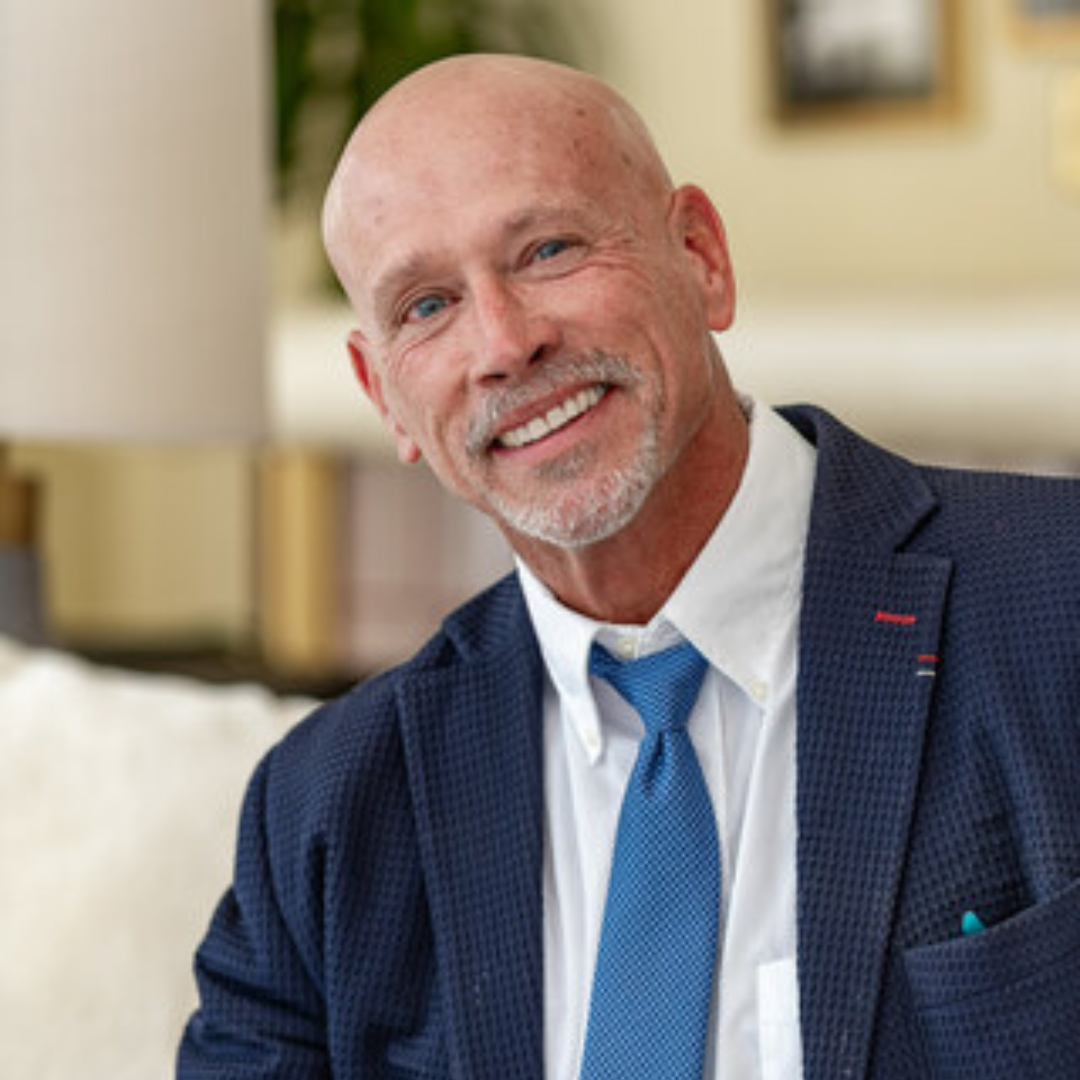
Charles Runels covers Regenerative Sexual Medicine in this Marketer of the Day episode. Dr. Charles Runels shows how platelet-rich plasma injections can revive sexual function and confidence when standard options fail. After treating over 3,000 hormone patients, he found only about 14% ever discuss sex with a doctor. His method pairs balanced hormones with PRP placed in the clitoris and anterior vaginal wall. In a roughly 30-minute visit, the patient's blood is processed into PRP to improve blood flow, sensitivity, lubrication, and incontinence. He emphasizes patient selection, FDA-cleared processing devices, and a standardized protocol so results are safe and repeatable. To protect quality, his program certifies providers, supports thousands in 50+ countries, and removed 505 infringing sites in 2024.
There’s definitely a gap in how seriously women’s sexual health is taken compared to men’s. For many, these issues aren’t just physical—they hit self-esteem, relationships, and emotional well-being. But when they finally do speak up, they’re often brushed off or handed solutions that barely scratch the surface. It’s frustrating, especially knowing that real science exists—just rarely applied with women in mind. There’s a growing sense that things need to change, not just in treatment but in the way the entire conversation is handled.
Dr. Charles Runels, best known for inventing the O-Shot and Vampire Facial, is transforming how we approach sexual wellness and aesthetic medicine. Today, he talks about the science behind the O-Shot—a PRP-based treatment helping women with low libido, sexual dysfunction, and other intimate health concerns. It’s a non-surgical, regenerative approach that uses the body’s own healing abilities. With a background in chemistry and internal medicine, Dr. Runels blends hard science with practical application. His mission is to normalize conversations around sexual health and give women real, research-backed options. Stay tuned!
Resources:
- The O-Shot® [Orchid Shot®] can help…
- Health Lessons by Dr. Charles Runels, MD
- Follow Dr. Charles Runels on Facebook
- Connect with Dr. Charles Runels on LinkedIn
Podcast: Play in new window | Download (Duration: 1:00:40 — 84.2MB) | Embed
Subscribe: Apple Podcasts | Spotify | Amazon Music | iHeartRadio | Podchaser | RSS
Transcript
Download transcript (.txt)Hey, we're here. We're talking with Dr Charles Runels, who is an American physician researcher and an innovator in the field of regenerative medicine, sexual wellness and esthetics. Now, Dr Charles Runels is best known as the inventor of several trademark medical procedures, including the orgasm shot, orchid shot, which is called the O shot, the priapus shot, which is P shot, Vampire Facial vampire facelift and other procedures that utilize platelet rich plasma PRP therapy for tissue rejuvenation and healing. So Dr Charles and I are here talking to doctors, physicians, providers who have maybe have heard of this, maybe haven't heard of it, but could definitely use this in their practice to help a lot of people. So Dr Charles, glad to be speaking with you. I'm glad to speak with you. Robert, wonderful. There's a couple of guys speaking and so as far as what the Oh shot is like, I believe that a lot of physicians maybe have heard of it, but just in case they haven't, or that, we need to get caught up and clear up misconceptions. What is it?
Well, I think it's better to start with a story of how it came to be. Because if you just start thinking about, you know, why the heck would you draw blood and do an injection in places where you don't normally put a needle? It's it seems outrageous, but if you back up and think about where it came from, might be the best place to start. I actually trained it and worked as a physical chemist for three years before medical school, and then did er medicine for 12 years, and then opened up a private practice with my boards Internal Medicine in 2025 years ago, hard to believe and my my marketing plan was if I could just be the best internal medicine doctor to 40 year old women that are 40 pounds overweight feel tired, having trouble with sex and thinking that my office would fill up, because that is the person who controls medicine. 40 year old women decide where the husband goes, where the grandmother goes where the children go. I don't care if the if the father is head of the department of a Ivy League Medical School. His wife decides where he goes to doctor. So in doing that, I started researching as an ER doctor, how to take amazing care of 40 year old women. And it led me to a lecture by gynecologist in 1999 26 years ago. It was one of those life changing lectures. And I hope the people that hear this will say will have the same change in their life that I had from this man, because the idea, I think we're presenting as as powerful. But he presented a paper where he had shown that using testosterone in women would help them with migraines, and he was using testosterone pellets to get a easy flow, easy steady, get a to get a steady serum level. And that was so ahead of its time back then, most people, if they were giving women testosterone alone, they were giving them primpro, which was primarin combined with testosterone. And body builders won't even take testosterone orally because it lives to have leads to hepatomas and it changes to estrogen. It's just a mess. That was the standard of care, if you gave a woman testosterone at all. But he was doing pellets. And back then, to get the really good pellet, she had to order them from Europe. So I ordered them, and I and I got the, this autoclave, little trocar from a surgical supply house, and I started drawing blood levels, and Robert it was like Insanity. Suzanne summers had not written her first books yet, but just word of mouth, my office filled up from women flying in from all around the country, just word of mouth, because now we know that testosterone leads to so many wonderful things for women, clarity of thinking and better sex like crazy and and helps them with energy and and weight control and anyway, so my office filled up, and within a very short time I have conservatively done this was 20 years ago, hormone replacement for over 3000 women, which would mean that I had to talk to 3000 women about sex. So it never set out to let me and create, invent something that helps women with their sex. It just happened. And in the conver in anyone who breaches that conversation which most doctors want. Research shows that only 14% of women ever have the conversation with their doctor, and if they start the conversation, the doctor changes the subject, usually over half the time after the first question. That study has been done and but I made it safe for them to talk. And I found out there's a lot of women out there that don't tell their husband, don't tell their preacher or their best friend. It's like a psychiatric illness. If you got a psych psychiatric illness, it's not like if you've got cancer, you tell your your friends and family and they pray for you. But if you've got schizophrenia, you don't put that on Facebook. If you break your arm, people sign your cast you got, you get diagnosed with major depression, you don't talk about it. And it's the same thing with sex. It's there's a social stigma to it. People don't talk about if they do, they don't get much sympathy about it. And and a lot of doctors are uncomfortable talking about it, but I wasn't, and in the process of talking about it, it became plain to me that there was a really, a great need for help, and I, and I and I'm did a lot of saw a lot of good things happening with hormone replacement and tailor making, in a way that's becoming much more common practice 25 years later. But that was sort of the backdrop. And then there was no FDA approved drug at all for women to help them with sex. Now there's only three, and two of them are psych drugs. One makes you vomit, the other can't drink, and it only resulted in one extra episode of Sex per month, and the other is just a DHEA cream that and none of them are to help with orgasm, and none of them really are. They are they're useful, but they don't really solve the problem for most women. So that was the backdrop. And so we had no drugs. And then around, well, 2010 so 10 years later, I I'm introduced to plate Ridge plasma by a drug rep. Now I'm embarrassed because I'd run a wound care center when I was at your doctor at a hospital with a hyperbaric chamber treat a lot of wounds, but I didn't really know anything much about plate rich plasma. So he tells me that it's been used in wound care and increases blood flow and increases volume, and I should use it. I could use it instead of juvenile I'd started doing cosmetic work because women would complain when they lost weight that their face looked over. So I learned to do fillers so that that put the volume back, and then they keep losing weight. And this was before the weight loss drugs that are out now. So it's even a bigger problem now. People, sometimes women, want to gain their weight back when their face looks older. So so he told me this, and I thought, new volume, new blood flow. I'm a man. Where do you want new volume and new blood flow? So I, I did the thing with the face, and out of that, I developed, I experimented with how to make it work the best, and I found it work better if I combine it with an HA filler. And out of that, I developed these procedures, and I called the vampire facelift and the facial but behind the curtain, I was trying to figure out a way to use it for men to help with the penis. I thought, Man, if I can make everybody's penis grow an inch and work better, I'll live on a private island somewhere. And I never did find a reliable way to give every man an extra inch or two, but it did prove to help with erections. And sometimes you gain the inch, but not reliably enough to advertise it for that some growth that's been shown, but not reliably in every man, but it worked for erection and and now we have a stack of papers at three meta analyzes, another review recently, and the stack of papers showing else with cronies and Ed. But I was thinking penis, right? But I was following the Sexual Medicine of women, and I was and I had treated many more women than men then, and I was actually following Dr Matlock work, who came up with the idea of injecting the anterior vaginal wall with an HA filler, like an orthopedic version of Juvederm, basically to make a bump there. So when the penis goes in and out, it pushes against the urethra. It was a brilliant idea, but it was, it was really the idea was not. It was eventually banned by the American College of the statutes of gynecology, because it can lead to granulomas. It's not regenerative. It's just a big blob or a blob, and it can lead to obstruction that requires surgery and and it's just a mechanical blob. So but I was watching his work and thinking about it, and then one day, my girlfriend, at the time said, Hey, let's try that in my vagina. And I said, already had thought about where I would put it. The clitoris, the doctors will know, but most internists don't. It takes the gynecologist really understand the clitoris. Just looking at the tip of the iceberg, the average clitoris is five inches long. It goes it curls down, and then goes along the pubic Rami. And there's a lot of it, most of it can't see. And I thought, well, let me put it not only in the anterior vaginal wall, but let's put it in the body of the clitoris, so that we make that healthier. And I had already written a course that if you look around, you'll find it online, but I had read a lot about a. Female ejaculation, which there's more out now, but it's a real thing. It's amazing how many people don't recognize it. But women have a prostate gland. It's just called the peretho glands, or the schemes glands. And I had had the the privilege of having a girlfriend or two that had were able to do that, and I had noticed there was a different emotional response to an ejaculator orgasm. There's a more of a emotional connection that happens. So I read everything that you can do it in a week. I read everything that's ever been written in the medical literature about it, and the first time I can find it described was Dr, actually Dr groffenberg, who wrote about the g spot, for whom the g spot is named, he wrote about seeing women have an ejaculatory orgasm by stimulation of the urethra and by pushing against the anterior vaginal wall. So in his first writings, he wasn't talking about a spot, it was the whole ureth, the whole urethra access by pressure on the anterior vaginal wall. It's a thing. It's amazing. And it's not like the life shouldn't be the life goal of every woman, but, but it is a is definitely a phenomenon, and it's a beautiful phenomenon. So I read, I thought, well, if women can do that, let's figure out how to facilitate it. So I read everything about it, and read every book on Amazon about it, read everything the medical literature about it, and and figured out how to facilitate it and and that was already there as a baseline. So when this the girlfriend said, hey, we'll do that P shot on me. I thought, Okay, well, let's do, let's put it in the clitoris. That would be like a P shot. But let's also put it in the anterior vaginal wall where I can I'd already taught her to ejaculate. Let me put in the anterior vaginal wall where I can feel the fluid accumulate before you have an ejaculator orgasm, which is very distal to the bladder, very close to the introitus. And that's what it did. Thinking two, three weeks later, maybe something happened. It was off the charts. Off The Charts. And now, now we know I've had multiple patients in their 60s experience ejaculator orgasms for the first time after having the O shot, because you're stimulating and you're rejuvenating that area. Now it's not a magic shot. You still have to have hormones in place. You still have to, like, if you had a pituitary adenoma with a hyper, hyperplanemia, I can do 6o shot today. You're, you're just gonna not have a sex drive. But it definitely helped. And so that that's the long story. I know it's a long story, but that's the back. It's the really the it was accumulation of really a lifetime, because it was com combining what I knew about too many girlfriends and reading a lot about hormonal the whole orgasm system and and working and talking with 3000 women and understanding chemistry and and wound care and what was happening with the PRP and why my the neovascularization and neurogenesis might take place other places than a diabetic wound. You know, blood vessels are blood vessels, and what works there and what works in the face might work in the genitalia, and it did. So now we have a stack of papers about that as well, and I feel blessed. I I was just in the right place at the right time and took good notes. I might have been a little obsessive compulsive about about it, but it's because there needs to be more people angry about a few things. More people should be angry that men have more than 20 drugs that are in devices that are approved by the FDA to help them with sex, and many to actually improve the genitalia. And women have nothing. They have nothing. Basically, they have two psych drugs and a cream. So it's, can you hear that noise? No, okay, all right, my wife had just turned on the hairs. She's in the other room, but I could hear it, so I don't know if you could hear it anyway. And my wife now is a gynecologist. I've trained over 5000 doctors in 50 plus countries, and that's how we met, and we've done some research now to build upon that. We have new ideas, and others have done research all over the world. So if. Feel very blessed of have come up with the idea. But any new ideas really not new, because it's based on other people's work. So other people developed the dentist and orthopedic surgeon really developed plate rich plasma, because they're dealing with tissue that has no blood flow. So you operate on a knee cartilage, well, there's no blood in the knee. It's just synovial fluid. So they thought, well, it's not healing very fast. Well, what's in the blood if we had blood to help it heal? So they thought, let's go get the platelets, because that's where the growth factors are, and the hemotactic factors, neurogenes, all the things that cause things to heal. Let's go get that and put it in the knee. And the dentist have the same problem, and they operate or do a procedure on a jaw bone that say, been radiated for throat cancer or something. So they worked out the science of PRP and others, Dr Sclafani and others, did research in the face showing the new blood flow and and makes the tissue healthier and and all the wound care studies. And so I just came along and thought, Hey guys, why don't we try it in a more interesting place. We all have genitals. We don't all have sores on the bottom of our leg. Let's see if we can make it work there. And so I just feel blessed. I came along at a good point in time and had the right background to maybe see a way to help women, and I was already angry that these 3000 women I took care of women still do not have an FDA approved form of testosterone, and I doubt it will ever be approved. There were young women of childbearing age are expensive and dangerous to to do clinical trials on just like children, and so a lot of times the or you can't blame the pharmaceutical companies will prove that it works in easier to study population, like men, and then they'll let knowing the research. They'll just let it be written off label. For example, one study showed that nine out of 10 children who are in the hospital have at least one drug written for them while in the hospital that is used off label. In other words, not FDA approved for children, but probably never will be FDA approved because you can't it's dangerous to do and expensive to do clinical trials on children. And so if you do say, if you did a clinical trial with testosterone on women, and they have to get pregnant while you're giving it to them, it could be a disaster. So so the pharmaceutical companies skip it and and it's and the same way, the FDA has different requirements if you do a study on men, you just have to prove this third leg gets bigger. But if you do a study on women, you have to prove sexual satisfaction, which is very difficult to show. For example, when we did our first clinical trial on the OSHA, one of the women reported decreased satisfaction, and when I asked her why, she said, Well, now my husband can't keep up. I want sex more often. He can't keep up with me, so I'm frustrated. Well, that would be decreased satisfaction by the FDA that would make the drug not get approved. So the understandably, pharmaceutical companies are hesitant to do the research, and women are left with not a lot of options. That's a very long story, I know, but otherwise, if I you know, I don't really know a short way to say how I came up with the idea of drawing a woman's blood and giving her a shot in the genitalia,
but it's good to have awareness of this, right, especially with the doctors out there that they want to help. And there, there are all these women that are underserved and need this extra help, and so we, you and I have been talking about this procedure that you provide called the orchid shot, the O shot, which is a non surgical procedure designed to enhance female sexual function and address issues such as urinary incontinence. And it involves drawing a patient's blood, processing it to isolate platelet rich plasma and injecting that PRP into specific areas of the vaginal and clitoral region. And the goal is to stimulate tissue regeneration, increase blood flow and improve sensitivity. And when you have the doctor that comes and signs up with you as a provider. I imagine that you hear a lot of repeat patterns, right? A lot of the same things. And so can you tell me, like, Is there, like, any thing that you hear over and over from doctors who finally found you and signed up and said, Hey, okay, I want to provide the O shot. What sort of things do you hear?
Yeah, that's good summary of of what it's capable. There are other things that are possible that I did not anticipate. You know, my first idea, literally was, let's see if it'll make orgasms better. But my my second patient, and that happened with the first patient, who was my sweetheart at the time, my second patient had been this is partly and. Answer to your question, should been physically abused, and there is a lot more abuse than most people think about. One study shows eight out of 10 women in Egypt, to take an example, have had genital mutilation, eight out of 10. I've had several women who've experienced that come through my course. We were now physicians or nurse practitioners in the United States. One of them told me, for a 13th birthday, she and some of her friends laid down supine in the grass, and someone came by with a knife and one at a time, without any anesthesia, chopped off their clitorises. Now, of course, the part that subdermal is still there. But then they, those ladies come to this country and and marry an American or even a another Muslim husband. But they there want to have normal function. And since then, as an example, our we have studies showing that we can actually help those women have better sexual function, even after genital mutilation. But my second patient had had mutilation of the sorts, and she had been abused by her previous husband. Physically, she had so much scar tissue and pain with sex that she couldn't really get an orgasm, and I so I thought, Oh, well, it helps. It helps with, we know it helps with scarring and tissue remodeling from the wound care studies. Let's see if it helps you. So I gave her the injection on her lunch hour, and four weeks later, she texts me to tell me she just had an ejaculatory orgasm. They were easy to come by, and she wound up, six months later, marrying a high school sweetheart. So there's a there, and that's the kind of stories I get. The there's 40. The research shows that somewhere around four out of 10 women are psychologically distressed by their sexual dysfunction, and they're depressed by their relationship strained, either pain or trouble with orgasm, trouble with with sex drive. And then what happens? And back to your question, what do I hear from the from the doctors, once you make it safe for people to talk and then you help them. It is so life changing, because it changes the whole family. Changes the whole you know, if we do wonderful things, you help somebody. You know, I'm almost ready for cataract surgery. I'll be able to read better after I get my cataract surgery in a month or two, but my whole family won't change. But research shows that when sex between when a woman has sexual dysfunction, her children are not as happy, that's been shown. And so when you when, when you make that better, what I hear from the doctors is they have a lot of happy tears, and they get the so more of that soul satisfaction that they hoped for when they went into medicine to begin with. For example, when I was an ER doctor, yet we had to save lives. And there was, there was a lot of soul satisfaction when you went home, but the primary emotion in the ER is anger and worry, and it's not people crying out of gratitude. They get that later. And so when you have that marriage that gets put back together, or the woman who's not been able to feel lovable because she's got so much pain she can't have sex from lichen sclerosus, or just peroneal from other causes or or are or she's making love to herself, like one lady I spoke with, she had just put her wife in the nursing home, and she said, I love that. Oh, shot. She said, I even though I can't be with my wife anymore, I make love to myself, and when I have orgasm, masturbating at night. I sleep better. I'm happier, I'm more creative. Why Should men have all the fun and and so it's it's really life changing for at many ages. But there's another, there's a statistical nuance that I think most, even gynecologists, don't think about, and it's embedded in the definition. When I say four out of 10 women experience psychological distress because of their sexual dysfunction, you might guess what might be, mostly older women. It's not and that, and it's because to be classified as sexual dysfunction. As a woman, you have to have psychological distress. It's the only medical problem I know in medicine that is like that. So for example, if your blood pressure is 180 over 110 you've got hypertension. If you're not worried about it, you still have hypertension. You. If my penis will not get hard, and I don't care, and I tell the doctor that I still have erectile dysfunction. But if you have dyspareunias A female or you cannot have an orgasm, but you don't care, by definition, you do not have sexual dysfunction. And that comes out of, I can see the reasoning behind it. It comes out of the idea that if you're if your choice is to make love to women, then and you don't really want a penis in your bedroom and a penis hurts you, then who am I to tell you have sexual dysfunction, because a penis hurts and so the the definition was, and was changed or defined to be that unless you're psychologically bothered by your dyspareunia or your anorgasmia or your loss of libido, you do not have sexual dysfunction. And so what happens is, a lot of women who have already had their relationships, they've had their children, they're not bothered by the by those things anymore. So the it's a proven statistic that there are more females with sexual dysfunction who are younger premenopausal than postmenopausal. But what's really happening is we're not counting the post menopausal women. For example, you'll have a woman come in, I feel tired, I'm overweight, and you say, okay, one of the things I might need to do is fix your hormones. But a side effect might be, you might get a sex drive again. Oh, I don't want a sex drive anymore, and that would be the woman who also does not distress while she doesn't have an orgasm. But then when you give her the testosterone, and she gets a sex drive, and she gets her energy come back, and she comes into your office with a new boyfriend that's five years younger than her, with a big grin on her face, then you think, Well, okay, her life looks like she's having more fun and more life, and now She's glad, but she wouldn't have wanted that fixed, and that's exactly what's happening by that definition. So it's another way I think women are sort of shafted because the pharmaceutical companies don't want to pay for the research, the doctors don't want to talk about it, because most of them don't think they have anything to help. And so the women usually get patted on the shoulder and said, That's just kind of how it is now that you've had all your babies and you're 60 years old. Well, no, I got patients that are 80 that are have boyfriends and having great orgasms and ejaculator orgasm for the first time, and they're having a good old time traveling the world with their their boyfriend or their husband and and it's anyway I'm ranting now, but it angers me that there's no bad pharmaceutical companies. They're just doing what makes sense for them financially. There's no bad doctors, but we do have new tools, and it's an opportunity for doctors to embrace this new idea that what that we didn't have 20 years ago. You know, when I was training in my in the 1980s you had antibiotics, you had medicines, you had surgery and you had medicines that attenuate the Autoimmune System. You had chemotherapy. You had nutritional, metabolic, hormonal, things. You did not have a regenerative therapy where you could stick a needle in the tissue and inject it and make it healthier. That was not an option. So the idea of directly affecting the cellular health in a in a small area by an injection was not an option. And now we have that. So there's a, there's this revolution in medicine happening that I call Cellular Medicine. Some people call it regenerative. And it's and it's not the cure end all, cure all, because it just helps the area that you inject. But sometimes that's all that needs to be repaired to make things better. So it's, it's part of the tool box. The other revolution that's happening, of course, is that women are demanding that they they be treated too, not just men, and they're more open about it. You know, when I was a kid in the 60s, women carried their New Testament around, and then they started carrying 50 Shades of Gray around, and that so the the whole the world is changing, and women are expecting their doctors to know better how to take care of them, and those who are being left behind or being left behind, right? So back to your answer to your question, the those things that are going to happen in the office, and the what I hear from the doctors who have trained with me is that there are having amazing soul satisfaction from what's happening in the lives of their women patients, and they're being financially rewarded for it.
Very nice, well, changing lives. And so as far as some of these doctors, physicians, who maybe they. Heard of the O shot. We've just educated them a little bit, but there's always those last minute hesitations. So have you seen like, one or two common objections from a doctor who like, they're so close they're thinking about it, not quite pulling the trigger? Do they sometimes, for example, say, well, I'll just mark it, PRP, but not the O shot. Or are there any other usual hang ups from possible providers of the Osho.
Yeah, remind me to talk more about the the name versus generic PRP, but I'll start with some other not business things. One is that there's this idea that I think the biggest one really is, do you really want to talk about sex? You know, if you have a sore throat, I can talk to you about sore throats without anything to do with my personal life, but if I ask any question about sex, is why most doctors change the subject. If I ask you a question and I have any sexual hang ups, if I'm not ready to be willing and happy and glad to discuss any type of sexuality, no matter what the genitals in the room, long as you're doing legal things with adults and you are, I need to be willing and happy to celebrate sexuality, however, that is with your and your bedroom, and if I'm not, then I'm not going to want to talk about it. And not everybody needs to talk about it like I had a gynecologist. Tell me I don't want to talk about sex. I wish you would name your OSHA at something else, because I know it helps with incontinence, but I don't want to talk about sex, and if I call it the Oh shot, I will have to do that. Well, that's okay if you're a surgeon and you mostly treat, say, ovarian cancer or then you need to think about that. But if you really want to help women with their sexuality, and you're able to have that conversation, and you're not going to freak out or be afraid of what comes up. That's the first step. And then once you pass that step, it's well, is this it comes what will my colleagues think? Because, believe it or not, there's some social there's still some physicians that don't that will. They're just closed minded. It's like, you know, plank said that science advances One funeral at a time, that there really are no St Paul conversions in medicine. You just have to wait for the old ones to die off and then the new people come up. That's plank talking. You got to wait for the old generation of die off, and then the new one adopt it, and then that's how changes happen in medicine, so one funeral at a time and and the truth is that they may not be ready for it, if you're not ready for it and you're afraid that your colleagues are going to look down their nose at you, at the next You know, uppity benefit ball you go to and keep doing your cookbook medicine, and keep sucking up to insurance and do whatever you do, because the truth is, you have to have a certain amount of bravery to talk with your patients, and you have to be willing to know that someone's going to criticize you just because you're going to actually offer to help women with Sex. You would think that would not happen in 2025 because women are demanding it. But I'm telling you, within the medical community, there's a stigma to advertising and letting people know it's okay for a pharmaceutical company have a big, giant ad at this on the Super Bowl about a pill that makes your penis get harder, but let a doctor make a little YouTube video educating his patients about or her patients about how he can help a woman with sex. He will, He or she will get criticism, I promise you. So that scares you. Don't do it. Just don't do it. I don't really want to talk to you anyway. I only will have coffee with you, because if you're not angry enough to take up for women. I mean, it usually, if it doesn't anger you that women only have three drugs, two are psych drugs, and one's bogus, DHEA cream to help them with sex. If that doesn't anger you, you don't really belong. You don't need to even do it. But if it does anger you and you want to take up for women, then the next thing would be, well, does it really work? Okay? And for that, I can show you science all day long. And what it boils down to is you just, you know, it's not learning to do some complicated surgery that you need to go spend the next three years studying. It's a very simple injection, if you, if you know the anatomy, it wouldn't be I compare it to showing a piece of sheet music to someone already knows how to play the piano, and an elementary piece of sheet music, not a Bach or something, it's an elementary Cold Play piece and and so I can't teach you the piano, but if you already, if you could put in a Foley catheter, and you can do a pelvic exam. You know the anatomy well enough, and if you have enough physical dexterity to stick a needle in the end of a pencil eraser, you can do it. And so it's a simple procedure. It's almost deceivingly simple. It's simple enough that people will think they can just figure it out on their own, and that's where I'll come back to that. But back to is this something that actually works? Well, I'm not, you know, this isn't the cost of a house to learn how to do it. It's not a two year residency. It's, you know, it's two nights in a hotel room, is the cost. And watch a few videos, and then you will be convinced, but if you're that it's simple and safe, but then go do it. And a lot has to do with patient selection. You treat the people that I recommend you treat and and I'll get to that later too if you want. But patient selection matters with everything you treat the people that I tell you, it's most likely to help, and I will tell you that in the course and you're going to have people crying in your office because it changed their life. I mean sobbing, loving you, sending you a Christmas card the rest of your life. So. So the truth is that you can read the science all day long. Every doctor knows that, but you don't really know until you see the person come back and say, Wow, this changed my life. So the other thing was, would be, there's actually a certain amount of just plain old I don't want to give another doctor money. It's interesting. They'll pay 1000s of dollars to a pharmaceutical company or buy a big device, but they somehow think doctors should just train each other for free. Well, I don't remember going to medical school for free and that, and there's some expenses involved that come back to why you should have the no shot instead of just figuring out on your own or learning it from somebody else, because as expected, and this is what happened when I learned to do fillers and Botox, I found the best person in the world. And at the time, Juvederm was not improved in the approved in the US by the FDA, but the top Allergan account in the world was Mark Bailey in Toronto, Canada. So went up there twice and trained with it and started offering it. And then I realized, well, other people are advertising this stuff, but they're not doing the same thing, and they're making goofy looking faces and but they're both advertising the same thing. And I realized it's like, it would be exactly like if you went through a town, went through New York City, and all the signs said beef, but you couldn't tell if it was McDonald's or Ruth Chris or one of those gourmet, you know, Michelin star restaurants. They just all told the ingredients, not what the chef was going to do. That bothered me. So confession, when I did the Vampire Facelift idea, I thought, well, this will probably last, you know, whatever, I'm just experimenting with the idea of using a name to mean a particular method for when I roll out my penis shot, because I have anticipated people doing stupid things to genitalia and just calling it a PRP shot for the penis. And buddy, they did. And so our what we did was we, we trademarked it, and then we formed a group and that everybody that licensed, that advertises with our names, P shot or o shot has to demonstrate that they understand the protocol. It's simple. You watch a video or two, or you do a hands on class, you demonstrate. You got the proper licensing, and then we approve you to advertise with that, with our name, and then people who use our name that are not in our group. We spend about a million dollars a year making websites disappear. We made 505 websites disappear in 2024 combine websites with social media accounts from people advertising who are not in our group, because occasionally I will get an email from a woman who says, I had a no shot. It was horrible. I bled. It hurt like crazy. It didn't help and and and my staff is trained to deal with them in a very meticulous and careful way, because this is a woman who is harmed. So we always ask them, Well, who did it? Always it's someone that was not in our group. And so then we have to tell her, I'm sorry, somebody tricked you, but tell us who it was. We will stop it. And so then it turns into my trademark attorney in Chicago, and a company called Brand shield out of Israel. So worldwide, we go after them. And that if I were not doing that, if our company was not doing that, then you would be have people doing stupid things, but you still have people doing stupid things. We had a we and so that's the reason for the mark. And the money finances that. It finances three full four full time people that that take care of our members and make sure they will get to the training that get them certified, give them a certification that they can show their malpractice carrier. Because we have now over a decade, almost 15 years, we have over a decade of millions of procedures and no serious sequelae that led to any sort of legal thing or that we know about and that that we have, you know, there's problems every side every procedure has side effects. We have no permanent, serious sequelae that we know about, and so much so that we can get, if people have the proper licensing, we can get them insured for their malpractice at a at a good rate, if they have a certificate that they trained with us. So we have a journal club we do every week so that we keep everybody up to date. So our procedures, they they have evolved over time, as the people in the group have taught me things, like a gynecologist in Manhattan showed me a better way to keep to make the clitoris not hurt. And then my wife learned from a dermatologist, also in our group, and even another better way. And so we have, we've had an evolution of the science and evolution of the procedures. And so if someone just says, you know, if they advertise generic PRP, they may be doing something better. I don't know, but maybe not. And then the other thing that has happened, not often, but it's happened so far 12 times, two out of the country and 10 in the country where a doctor became so no bad outcome, none had no doctor become under scrutiny for a bad outcome. But we had 12 that were challenged by a doctor down the street, like one was one of our family practitioners, injected and retired optometrist. The optometrist loved it, but his son was in a medical school, was in residency and told his urologist what his dad had, and the urologist got angry, and I can't blame he didn't really understand what we were doing. If people research it, they realize, oh, this is good science, but he reported our member to the medical board, if you're doing generic PRP, who you going to call? But because he was part of our group, I wrote a letter. I quoted all the research. I listed a long list of doctors in our group who are professors of urology, Gynecology, dermatology and multiple medical schools around the world. And then I was able to say he does what we do, and he's got a standard protocol. Another thing happened. This happened in in actually, I guess, two years ago now, Jama put out an a research article where Some neurologists in California surveyed people offering PRP and the P shot for erectile dysfunction, and they put in theirs in their article in journal American Medical Association that there was no protocol, there was no standard of care, no standard of licensing. And so I, I called up the Well, I had my Attorney, call up the attorney for the journal and say, Hey, that you know that's not right. It's right for people who are just doing generic PRP for not for people who are licensed to do the P shot or the private shot. So they printed a correction. If you Google Jama and P shot or private shot in my name, Charles Runels or or just Jama and P shot, you'll find that article. And they did a correction, said no, and we had to demonstrate to their attorney, yes, we have a protocol. Yes, all of our providers sign that they will follow that protocol. It varies a little from patient to patient, but within the bounds of our protocol, everybody offers a money back guarantee if their patients aren't happy with it. So we're not ripping anybody off. We have the protocols, not just where to put the needle. It's how to choose the patient. We have requirements that has to be FDA approved device to process the blood. What do you do after the procedure? It's a whole, a whole sequence of things that have to happen to ensure the best chance of success. No procedures guaranteed to work, but we guarantee a certain protocol, or we kick you out of the group, and so we have, we're like the Rolls Royce of of procedures, guy down the street, advertising generic PRP, I don't know maybe he's doing something better, but he doesn't have those and other benefits to back him up with a with a protocol that now has a decade and a half of of a million procedures behind it, so that that's what they get. And it's for almost freaking nothing. It's just almost nothing. I mean, I'm sure whatever they're looking at, when they see this, they'll see the price of it, but it's ridiculously low, which is why also gives me i. Have no moral problem with making someone's website disappear, because if you will steal that small amount of money, I'll worry about what you'll do with your patients. So and you know, to give another example, there were some people running a hair salon in New Mexico. You can search it up and find it, and what they did was, we didn't catch them soon enough. They were advertising the Vampire Facial and they got they wound up transmitting HIV. They weren't following our protocol. They were and they were, did. They had some a non FDA approved device, and they wound up just transmitting blood from patient to patient to patient, and they caused HIV. And thankfully, those people are in prison now. But then it recently hit the news again a few months ago, because people got HIV, wrote the people who had HIV. And so, you know, this is not is exactly what I worried about. If you're putting Botox in weird places or juvenile weird places, yeah, you make weird faces. Do you have a procedure that involves blood and you're sticking it in genitals, you better know what you're doing, and if you want to go figure it out, good luck. There's a good chance you're gonna have to take your diploma off the wall and start getting a job selling shoes because you're taking risks you don't even know about. Or we got more than a decade of of 1000s of doctors sharing notes every week on a call. We got a stack of research, some of that we did, some of it was spawned by others who looked at what we did. And so you're getting that for the price of, you know, little more than a tank of gas. So just if you want to be cheap, I don't even want to have coffee with you anyway. This we're talking about major, major changes for almost nothing
right? Well, you've given us a lot of awareness here, just about the medicine itself, and about business and life advice. And in these last few minutes here, sometimes when I educate myself on any subject, I wonder, like, is this right for me? Right? Do I fit the criteria? So as far as as far as the disqualifiers and the qualifiers, how does someone know if they are a like, med, spa, gynecologist, etc, like, who are the people that the O shot is a possibility for them to provide this procedure, versus those who maybe are not right for it. Yep.
Okay. First of all, already covered. You should be eager and happy to talk about sex. You should be you should know the anatomy. You'd have a background where you have, you understand the anatomy. Don't have to be a surgeon, but you need to know the anatomy of to you know where the cervix is, you know where the urethra is, how to put in a Foley catheter. You know how to find the clitoris. Good chance you never had a class on it. A recent study showed out of seven medical schools in Chicago, only one was teaching the clitoral anatomy, and only one of the seven in their gynecology residencies where they're teaching doctors how to do history and a physical exam and women's sexual problems. Every doctor got trained how to pull back the foreskin and examine the penis for phymosis. No doctor I've met yet was taught in medical school how to pull back the clitoral hood and jam examine the clitoris for phymosis. So So you probably, I won't you're Don't worry. If you don't understand the clitoral anatomy, I'll teach that to you, or a course will but the but at least know you should know the anatomy of how to put in a Foley catheter, how to find the clitoris, where the cervix is. And your problem and your licensing needs to be sufficient that if in your state, could you be licensed to inject botox and fillers. So for example, in Alabama, the laws in the process of changing, but still, it's nurse practitioners are not approved yet to inject botox. Or in some states, an RN can inject botox. So for example, one of our best injectors of the O shot, who has a large following of women who've had genital mutilation, they self refer themselves to her a lot, but she was also this. She's a woman who loves to take care of women. She was the rape exam nurse when she was an ER nurse. So she that tells you something about her personality. If you're a warrior for women, you need to be with us. If you're that's some of our top people. Another woman was raped in a as a teenager, her parents left and someone got into her hotel room and raped her. And you don't have to have had some traumatic experience, but if you're those are some of our warrior doctors there, but it just doesn't require a horrible experience, but you have to have a heart for women, and you. Otherwise you're going to worry too much about criticism anyway, so the licensing needs to be there. And then, if you're in a state where you are, you need to be supervised by a physician. Well, we can maybe help you find one of those after you're trained, because we have doctors in every state. But if you're already working for a doctor who's taking care of women, and you need a physician supervision, then that's good, but we can train you and your physician can supervise you. The physician will need to look at the training too, so that doctor knows what they're supervising. There are 11 states who allow nurse practition practitioners to operate without a doctor's oversight. That's the evolution of medicine. It's amazing things that would have put you in jail 20 years ago, like 20 years ago, you had to see the patient in person, do a physical exam, or you would lose your license. Now you've got Amazon one where you can go online and a doctor will look at you on your iPhone and write your prescription. It comes to your door that was against the law. 20 years ago, you were to go to jail and lose your license. So things are evolving and but there are some things you cannot do on the iPhone, and oh, shot is one of them. So it will bring people to you. And in those states where a nurse practitioner can operate independently, we will license them to do our procedure. They'll there can do be an online course that they're tested on, or there can be a hands on course. And let's see what else would keep you from doing it. We're going to check your licensing course. There needs to be a clean background, but that that happens rarely somebody's done something stupid. Let's see other things that I look for that people, I know people are going to really like it and find it easy if you've got a critical care background, if you've worked as a ER nurse or ER doctor, surgeons do well. But surprisingly, surgeons do very well, actually, but they're they're not using needles as much as the ER doctor or the critical care nurse. They're using a scalpel, and they know the anatomy like crazy, but that ER doctor or that ER nurse, they're used to trying to get an IV in the dark when somebody's about to bleed to death and the patient's family screaming, and so they have amazing skills with needles. So when I show them where to put a needle in the genitalia, and nobody's going to die if they don't put it in the right place. And nobody's going to die if they don't get it done in the next 30 seconds. And they're used to putting needles in really hard to put places. This feels like vacation. People ask me sometimes when you're going to retire? And I tell them, I kind of did that 20 years ago, because this feels like vacation. I'm talking to people about easy to do procedures, PRP. There's no case in the literature where a PRP made somebody die. There's a handful, I mean, literally, even though they're literally, we know there are millions of PRP procedures done per year, because we know how many kits are being sold, for example, region, which is my preferred kit right now, they sell millions of kit, multiple millions of kits worldwide every year. But you won't find a case where somebody died from PRP, and you can only find less than a dozen cases where something stupid happened, and most of those cases were in a hotel room where somebody mixed the PRP with some kind of unknown filler and injected around the eye. They did something stupid. They didn't have a medical license, so it's probably safer than driving to your office. I had two people crash their cars driving to my office to get an appointment over the past 20 years, and there's nothing in the medical literature anywhere where somebody was had something life threatening from PRP so because it's your own blood, so you're not going to lose sleep from it. The worst case scenario is a bruise or some obnoxious side effect, like urinary urgency or or sometimes their sensation will go down for a week or two, which is scary, but comes back, and usually comes back better than before, and that's rare and but you get the side effects are minimal, and you don't lose you don't hurt anybody. So worst case scenario, you give them their money back and say, sorry, let's just try a testosterone shot or something. And I'm trying to think, what else do I look for? So critical care experience is huge, and I guess it's about all I can think of right now. Robert,
well, okay, well, there's been so many different topics that we covered, and it's wonderful to think about, and they're the people that can be helped. And as you said. We'll put this on our web page, and oh, shot, dot info is that website. And before I let you go, Dr Charles, I like to ask for one final quote or lesson that has served you in any context, right in life, in medicine, in business. But real quick, before I ask that, just want to recap quickly that the reported benefits of the O shot include increased sexual desire, stronger and more frequent orgasms, improved natural lubrication and reduced urinary incontinence. This procedure typically takes about 30 minutes, and it involves minimal discomfort due to the application of a local anesthetic. So it's up to you if you want to edit what I just said, or add to it, and I also am curious about that quote or lesson that you think has served you. So what do you think?
Yeah, so I would add to that that we have also amazing results with lichen sclerosus and some forms of dyspareunia pain. And you could say lichen sclerosus is one of the forms of dyspruny, but there are others like pelvic floor pain and but the lichen sclerosus really came out of nowhere. I wound up and Andrew Goldstein, who's a who's an expert in the area, did a offer to do help us with a clinical trial, because it's a pet project of his. He's treated a lot of women lichen sclerosus, and so we did it, and to his surprise, and mine, it worked. Then we did another one, and since then, there's a whole stack of paper, papers about lichen sclerosus. And again, it has to be done the right way. And we've developed protocols now that are just amazing that involve the PRP and other ingredients. And finally, someone did a study that collected data over a number of years showing that it decreases the chances of developing squamous cell carcinoma. 10% of women with lichen sclerosus go on to have a carcinoma that sometimes record requires a vulvac to me, which is horrific, to get your labia cut off. So it's horrible, and this seems to decrease that chance. So I so that's another benefit of it. And I I have so many smart people that have echoes in my brain. So if I had to pick one, it's difficult, but I think if I had to pick one, it's just the old was the great Prophet said, you love God and you love people. But I would add to it, you love people by bravely doing good things for them. And that's why people went into medicine and and there are really very few crooks or or shysters in medicine. Most of us did it for the right reasons, but we get back in a corner where we wind up letting insurance tell us what we can do and we cannot do. Thankfully, this is not covered by insurance. Well, we great if it was and everybody was doing it. But we don't have insurance to tell us when we can do it, like my wife was in the hospital recently, and the insurance company gets to tell the doctor what tests they can and cannot do and what procedures they can and cannot do. Part of what made me tell Blue Cross and Blue Shield to go away, was when they wanted me to skip doing cortisone in the knee, even though I knew it was likely to lead to rapid, more rapid joint destruction and weight gain. And now, 20 years later, almost they audited me in 2003 and that was their opinion. And now, 22 years later, we know that using plate rich plasma in the knee actually helps preserve the joint, and cortisone leads to more rapid joint destruction, but they were telling me how I had to do it, so I quit taking insurance. I'm not asking doctors to do that, but I'm telling them the beauty of this procedure is insurance is not going to tell you when and when you can't not do it. You get to use your clinical judgment, and then just have the ethics to give the money back in the rare it's going to be less than 10% cases where it doesn't work for you, and you'll get amazing soul satisfaction. You'll get some profitability to practice that you deserve. But that's what I that's, I guess my favorite quote is, you, we're on this planet to love each other, but that doesn't mean gooey feelings. It means getting out there and doing things in a brave way to help your fellow person, your your neighbor.
I love it. Be brave. Have courage. Help some people, change some lives. We've been speaking with Dr Charles runnels from oshot dot info. Dr Ronalds emphasizes that only certified practitioners trained in the specific o shot technique should perform the procedure to ensure safety and efficacy well. Dr Charles it's been a blast speaking with you. Thank you for educating us and giving us all kinds of ideas encouragement. I really appreciate. Appreciate it.
Thank you. Robert
All right.
Subscribe
If you enjoyed this article, subscribe to receive more just like it.


