Published Last updated
View in Podcast Library: stories, quotes, books, and resources in one place.
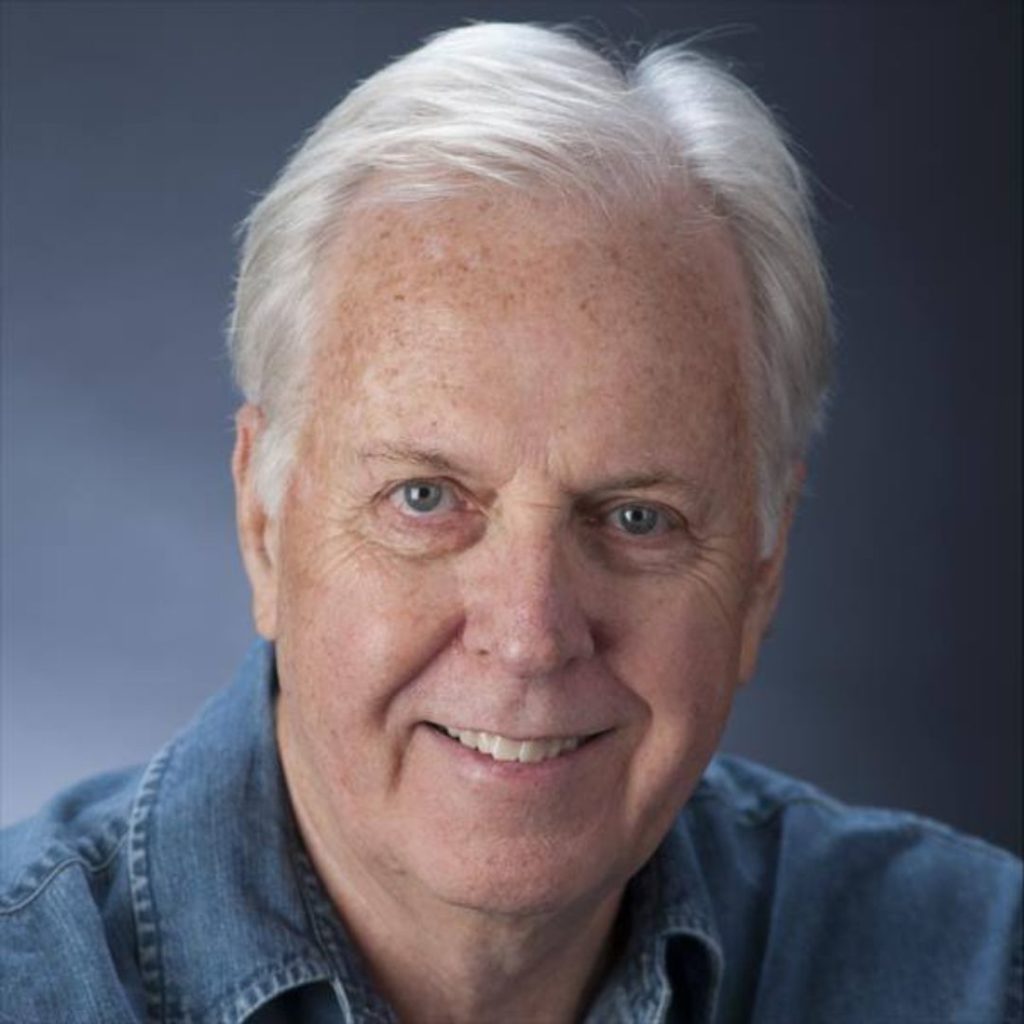
John Lawlor covers Fractional Visibility Systems in this Marketer of the Day episode. John Lawlor shows independent experts how to use AI to end feast-or-famine client growth and build a predictable pipeline. He builds productivity first, using morning voice chats in ChatGPT, NotebookLM for private analysis, and Perplexity for research. In NotebookLM he imports transcripts or 20 YouTube videos that stay walled off and queries them for themes and angles. The outputs power competitive keyword checks and help him lock in positioning, tone, and language to avoid. Because referrals fade after you leave a company, he teaches a visibility flywheel through consistent LinkedIn content and podcast guest spots. His Clarion operating system adds a connected library across notebooks on a modular WordPress base with CRM and automation add-ons.
Leaving the structure of a corporate job sounds freeing—until you’re alone, trying to explain what you do in a sea of people doing the same thing. Suddenly, you’re not just the expert—you’re the brand, the marketer, the salesperson, all at once. The work might be solid, but getting noticed and landing clients starts to feel like a full-time hustle of its own. And the unpredictability—of income, of leads, of what comes next—can hit harder than expected when you’re used to knowing where your next paycheck is coming from.
John Lawlor, AI Marketing Advisor and founder of Fractional Planet, helps fractional executives grow their businesses using smart, practical tools. With a diverse background from photography to tech, he now coaches professionals through career shifts and business growth. Today, he shares how AI tools like ChatGPT and Notebook LM can simplify workflows, boost visibility, and support client outreach. He introduces his “visibility flywheel” strategy to help independents stay top-of-mind and build consistent traction. His focus: making solo work smoother, smarter, and more scalable. Stay tuned!
Quotes:
“AI is either going to make things worse for you or better for you, and that is really up to you—especially if you don’t put the human in the loop.”
“You can’t have an AI book in an hour that’s of any quality. It still takes time to do things.”
“If you talk about something different every single day, people don’t know where to place you. But if you talk essentially about the same thing and find different angles to it, that’s important.”
Resources:
Podcast: Play in new window | Download (Duration: 48:23 — 67.3MB) | Embed
Subscribe: Apple Podcasts | Spotify | Amazon Music | iHeartRadio | Podchaser | RSS
Transcript
Download transcript (.txt)John Lawlor is a seasoned fractional consultant, and his passion lies in helping independent experts find sustainable client growth. He's repeatedly seeing skilled professionals struggle to position themselves effectively, and he shifted his focus to mentoring fractional those who work part time or project based across companies, and he uses cutting edge AI tools as a clarity engine to help you clarify your messaging, define irresistible offers and streamline your positioning without replacing that human insight. And dozens of his clients have moved from feast or famine cycles into reliable, predictable pipelines by pairing their expertise with precise, AI driven insights. So if you are one of these fractional frustrated by missed client opportunities, this is going to be the most important podcast episode you watch, maybe this year, maybe for the rest of your career. It's Mr. John Lawler. He's known for his practical, no fluff coaching style and his deep understanding of the fractional mindset. So Mr. John, glad to see you. Glad to be speaking with you.
Robert, thank you very much for that. Very impressive I must say, I'm going to play it for my wife, and she'll be happy to hear all those good things about me. Well, so thank you. Thank you. I look forward to the chat.
So am I You have to put your best foot forward. And spoiler alert, that was aI generated, but it's one of those situations where I worked on it for a couple of weeks, went back and forth, said, I want more of this, less of that. Here's the inputs, here's the outputs, and then we use it as a tool, right? We don't use it as something that makes us dumber or lazy, or use it as something that enhances what we do, gets us to better results, make us go faster. That's what AI can and should be, if we use the tool correctly. And so I'm excited to wax philosophical with you, but also get practical. So having said all that, what are you all about? What's your focus and passion?
Well, first of all, let's start with a little bit about my background. I started life at my professional life as an advertising photographer. I was I was 20 years old. I started in New York City. Shortly after putting my shingle up on the wall, I got recruited and moved to London by an agent, and spent five years there, traveling all over Europe and went to the Far East. And then I got recruited by another agent out of New York and moved back to New York, and that kind of kept me in this country ever since. And eventually I moved to LA after six years in New York, and I had clients, major clients around the world, Honda in Japan,
Marlboro, I did for six years, lot of fun riding with the Cowboys. Riding with them wasn't as much fun, because they go like hell, and I didn't ride that well, but things like that United Airlines a lot of different clients along the way, and in after 25 years of doing it, I decided that there had to be something else in my life to do, other than just creating images for clients. And I also knew that the business was changing, and, you know, it was not going to be there to support the level of jobs that I like to do, which meant, you know, I would have very large, very large crews and big budgets and so forth. And that era was going away. So I, at that point, I had a sort of the long term, an infomercial company for corporations. Made a beta and infomercial actually for prodigy, which at the time, was the largest online service at that point, and was owned by Sears and IBM. And unfortunately, they closed the company down shortly after we made the infomercial, and then I had a little earthquake in LA and ended up moving to Florida, so where I opened the first email services company in the country and ran that and got venture money for it, until the goodold.com bust came and the venture capitalist decided that they didn't have any more money. So then I consulted blogging, mainly business blogging, and then I created co created a company doing research for labels, things like wine labels. We worked with within the wine industry for seven years, until covid hit. And then I kind of dug into basically imagery again, and then back into AI, into AI imagery. And then I decided that I was much more interested in the business aspects of AI. And for the last year, year and a half, I focused on the fractional market, learning what it's a relatively new term, you know, fractional executives, fractional leaders, and learning how they thought, how they how they what their problems were in that so that's kind of where I am at this point in time.
Very nice. And now you're the fractional AI whisperer, aren't you? And you tell. YOUR Story. And it sounds like there's a lot of adapting, of saying, Well, you know, you get to this next step on the staircase, and then that runs its course, and you see the next opportunity. And that's, that's wonderful, because many times people play it safe, or they look back in hindsight and said, Oh, you know, I should have jumped ship three years ago. I should have pivoted careers 10 years ago. So there is in the present, we have that feeling of safety and security, and it's like, Man, if only it took the risk and went to the next opportunity. But I think that we worry about maybe being being too entrepreneurial ADD, as they say, right? Just jumping from thing to thing, and how that relates to AI is, I only use a handful of tools, right? I use chat GPT every day. I use some notebook LM, but then all these people that are using, say, like grok and Gemini, and I guess I use, like, cursor and a few other tools, but it's like 80 90% chat GPT. And then I'll have these friends where, like, there's one guy in particular where, like, every couple of weeks, he says, Hey, I'm using this AI tool, this service. And I'll, like, drop everything I'm doing, and I'll spend, like, a whole day just letting myself get distracted. And then two weeks later, I'll say, hey, you know I was using this AI video editor, this copywriting tool. How do you like it? And he's like, Oh, I'm already off to the next tool. And this kept happening. This kept repeating. Like, he'd say, Hey, there's this new tool, and I use it more than him. And when I would try to, like, reconnect with that friend again, he would just be jumping from thing to thing. And it just, it felt like the old days of, like, reformatting your computer every couple of weeks, or, like, you know, trying out the latest share, or just all these distractions. So have you dealt with that? Or have you seen that? As far as, like, AI can do so much, but there's that, that kind of danger zone of just there's always the bright, shiny object, and you never get any progress made. There's never any output or usage, because it's always just like the new, latest, fancy tool.
Well, I have a rabbit holer. I have always been a rabbit holer, and AI has just increased that. But I learned a long time ago to give myself permission to go down the rabbit holes and then reach a point where no make a choice, stick with something the I used to do back in the 2000s I did a lot of beta testing on products. I loved it. It was great seeing all these new products. 99% of them ever went anywhere. But today I focus on productivity. What I could get out of it in terms of tools, chat, GPT, and I spend about two hours each morning having a chat, having multiple chats, and I then that's before I get off the couch, having after having my tea and my coffee and so forth, before I get near the computer. When I get near the computer, I then work with notebook LM. It's my second favorite tool. Notebook LM is, to me, a walled garden. I can bring my own information in, put it in, and process and use it there. The other tool that I use on a regular basis is perplexity. I'm using more and more perplexity. If I have any kind of research, which is probably 20% of what I do, I go to perplexity. Perplexity is definitely the best. And now that they have, you know, you can, you know, perplexity labs and so forth that have come out in the last, what two, three weeks, at least, I've been wearing the last two weeks the I spend more time on perplexity. A lot of times I'll work on perplexity, bring it back over to either notebook, LM to manipulate, or into chat, GPT to use for strategies, etc. So I, I agree with you. It's an easy thing to go, you know, after every single tool that's out there. But the bottom line is, with AI, you really can't follow all the tools to too many of them. The I will occasionally go back and and look at things I haven't looked at for a while. I find that most things I've already registered for that come along that are the hottest and a hot thing, but it's, it's really, it really depends on the individual and how much time they have. And one of the things about fractional is, for the most part, they don't have the time, they don't have the time to explore all these tools. Most fractionals Come are coming out of a corporate environment. Almost all of them come out of a corporate environment and moving into a freelance. Freelance world is challenging for them. I've been in the freelance world for 59 years. Somewhere around there, I've seen people, friends from advertising, who thought that they could make a become photographers, become directors and so forth, and jump into it and realizing that it's really it's a challenging job to have. You lose your support systems. You lose the support systems within the company, in any with outside the company, or health insurance and other things, your networking. So fractional have they? They have a they have a challenging road to go. And one of the biggest things that they seem to be lacking, I guess, is in experience, in promoting themselves. Most human beings do not promote themselves well. And if you've been in a corporate environment, you know how to work and promote yourself within that corporate environment, but now suddenly saying, You know what, you really need to be on a podcast like we're being now. You need to be on as a guest on a podcast. You need to think about a book. You need to think about having your own podcast. And having your own podcast means you've got a lot of work to do, so most people don't want to do it until they find someone like Robert who can do all the back end for them, but in and Robert who can help them with a front end podcast, being a guest on a podcast. So I look at the I look at the fractional and I have a concept called tongue tied here. Tongue tied here, visibility flywheel. And the flywheel is something that gets going and keeps going and get faster and faster faster. Amazon was founded basically on the principles of the flywheel, and I've taken that and I'm applying that to what fractionals can do. Fractionals Even freelancers and consultants and so forth, but mainly for me, fractional can do to gain a foothold of visibility. And the foothold of visibility starts with understanding who they are, starts with what they can produce, what they have produced, what can be used by AI to help them to maintain and build that flywheel. And that's, that's the critical thing, that the reason, the reason why AI. And it was interesting that you talked about all the jumping around the it's very easy within AI to have 10 different sources for things, maybe more, that you're working with, and then you go to be consistent in your outreach and your your LinkedIn articles, etc, and they're all over the place. So what I'm developing is a an engine, basically an operating system. I call it the Clarion operating system, and that operating system is a place where you put everything you you you source the material, you curate the material, and you put it in there, and you all operate it based on the AI, asking it questions, asking it to do output. Give me an article on such as such. I Oh, I read something today. I read an article, a news article, and here's the news article. And now I want you to comment on this. And the AI in this black box, effectively Clarion black box. The AI knows what you have input, knows your tone of voice, knows how knows how you like to express things, knows the words you don't want to use because you have already clearated That, clear rated, you have already curated that. And so that's my focus at this point in time, is, how do I help fractional to get the visibility that they need, so that the referrals that they would get don't die off quickly? Because, you know, if you leave a company and you don't have the contact with those people on a regular basis, you know, six months later, maybe a year later, they kind of forgotten about you, frankly, and they, you know, or they just don't quite know what you do. And as a fractional you are going to be adjusting. You refer to that earlier you're gonna you have to adjust in the world that we live in. You can't say, Okay, this is what I've done for 25 years. Is exactly what I'm gonna do in the fractional world, because that position is doesn't work. And in the AI, and in the AI, energized world has a there's a way to put it, it's things are changing much faster than you've ever, ever imagined in your life.
Oh, yeah, that's completely true, and we need to use it as a useful tool. So you're saying that a new skill set is required, right? These fractional that had the career worked in corporate America now, they need to realize that they are the boss. They need to figure out their numbers, their accounting, their leadership, hiring people, making a team. But then a big chunk of that pie chart is the publicity. Because when you worked as an as an employee, then hey, they just assigned work for you, right? You get an office, you get the task list. But if you're on your own, you have to go and find your own business, which is kind of scary, which is unpredictable, until you have some kind of consistent traffic and outreach, and you mentioned these things like LinkedIn so and being on a podcast. So if someone comes to me and they say, Hey, can I be on your podcast, the very first thing, I won't even Google them. I'll look up their LinkedIn, right? And if I can't, if there's a bunch of. On lawlers, and I can't even tell which one I don't want you if I find the right one, if there's no photo, or if the bio is a kind of like out of date, or I can't easily find a website contact details don't want you. And then I'll move on to YouTube, and I'll search the person on YouTube, figuring that, well, I'm not going to go to I want to find out if they've been on podcasts. I don't want to be their first podcast, really. And I won't go into a podcast app. I'll say, if they've been on enough podcasts, they probably have some YouTube content. If I can't find you, don't want you. If the only result is from nine years ago, and I can tell that it's like super old video footage, don't want you. And so luckily, those are some easy things that can be updated which year, even a year or two ago, it was such a tall order. But now AI, right? And you and I have already, like, proved it a little bit when we read some AI generated content. It is a garbage in, garbage out thing. So of course, we've all seen like the the AI drivel, but as you said when you were talking about Clarion and feeding in all your best information, if you feed in good stuff and and the AI is like searching for like the best within it, and not just making things up, then you can get some really good output. Can't you? You can have it. Write your web page content, write your LinkedIn, figure out your podcast bio, figure out your podcast questions and answers, your content based on what you have. So it's like it enhances what you have, instead of just making up stuff. And that's when we get into the low quality, right? When AI just, like, invents things, because it doesn't know what you want, as you do things like the research. And so you mentioned notebook LM, and you and me were coached by Mr. Mitchell Levy, and he says that the notebook LM stuff is fascinating, because, you know, all this attention gets put on, you know, Gemini and Poe and all these other ones, but notebook. Lm, like, I used it for the the guy and the girl chatting in the podcast audio. That was kind of fun as a study tool. But I first heard about it when people were talking about using AI to make books and chat. Sweet. He wasn't quite there. They, like, just added the file uploading, and they said, you know, you can create a notebook, and then you can upload all these files, and then it kind of like, that's your little knowledge base, so to speak. But then what really fascinated me about notebook LM that you mentioned was that it's private, right? It's walled off because so many people, they're afraid they say, like, I've written a book, and I want the marketing materials, but I'm afraid to put it into chat. GPT, because I just know that it's gonna it. Sure it'll give me what I want, but now it gets into the ocean out there right now, anyone can use what I have. So can you explain that if someone says, okay, notebook, LM, I've heard it's private. I've heard that it's like, it's like a read only, not a right, only right. They won't steal my content. What's that all about?
Okay, well, first of all, I was just on a call a number of corporate people on a discussion webinar, and one of the topics was privacy, privacy of your data. And one of the things that's going on in corporate America is it's getting very, very concerned what's always been concerned about privacy, but it's there they are demanding Private llms, large language models that they can run on their own system so it doesn't go out to the world. One of the things about notebook LM it the way it was developed, it's a Google product, or the way it was developed, it was developed to be accessible and acceptable to corporate America. So anything you place into the notebook, okay? And they're called sources, anything you place into a notebook stays there. It does not go out of Vegas, okay, so you have a notebook. LM works as a series of notebooks. You can have. I basically anything that interests me, any topic that interests me. I create a notebook for it. I can I'll grab I'll read an article. And I say, Oh, this is a new area I want to keep track of. I pull that article into notebook, LM, and stick it in there. I don't have to do anything with it. I can go. But I, if I find, let's say, one day I did 2020, videos on someone I was interested in partnering with. I did 20 of his videos, and then I analyzed them with notebook LM, and it's the analyst. And the analyzing is can be two ways. It can be with just text analyzation analysis, or it can be with their audio overview, as they call it, the pot people call the podcast. Both of them work very well. I had a situation last week where I interviewed with I interviewed a fractional wannabe, someone who was thinking about going becoming a fractional we had a great conversation. I was very impressed with the way he thought about the whole his entry into the market, which was unusual, very few people put that kind of thinking in. I took it and I took the the transcript, and I put it into notebook LM, and I said specifically to notebook, LM, give me an analysis of what this person core concepts are from this conversation. Conversation about his transition and his steps into being a fractional and it was phenomenal. It was phenomenal. So I also use it for like, well, I said, I put 20 videos from YouTube into the system. I didn't watch any of them, I didn't watch any of them, but I just I put them in and I said, Okay, give me a summary of the attitudes of this person. Give me a summary of their whatever, however you want to phrase it. It could be, do they have a good attitude? Do they know what they're taught? Well, know what they're talking about, subjective. So that probably wouldn't work. But tell me what the gist of the summarization of what this person is talking about across all these videos, or these five videos, or this one video, and I could do one after another after another, and it's I then I can choose to save it, or I can choose to not save it. I can choose to make it a source. It's a it's very underrated, I think, largely because, a year ago or so, when they came out with a podcast, aspect of it, so many people jumped on it that it became, oh, that's a, you know, notebook LM podcast. And they, they people kind of poo, pooed it. But I don't, I think it's a great tool, and that I think any, anyone can value can, can get value out of it. And I do, also, I do tutoring on that. And it's what I love about it, is it's usually about 20 to 30 minutes in the person I'm tutoring will go, oh, oh, I like that. That works for me. I didn't know that so. And can you do the same thing with chat GPT or perplexity, or Claude, sort of, you could do the analysis. But as you said, it's public. It's not going it's, it's not being held in so if you have something that is proprietary to you and, or and, or you're, you know, you're very concerned about it getting out, you know, that's, that's the place to go with it.
Very nice. Well, I love hearing about the strategy and the techniques and like you say, you you teach someone, and you know you, of course, there needs to be the foundation and explain the concepts and how you do it. But then once you get to the fun stuff, it's like, Hey, you figured out the terms and figured out how to click and set it up, and then cool. Now here's where we import the 20 videos and combine them together, or summarize them, or get the insights like now it's being used as a tool that improves and helps my brain. And so when people talk about fractional, usually hear about like fractional, like CMOS or fractional CFOs. So is there a particular type of fractional that you help in your travels, or like, what are they fractionally doing?
Well, I started off thinking that the fractional CMOS would be, would be my first area, and I've actually backed off from that. I'm actually finding that the ones who seem to be the most interested in in getting the assistance to have a smooth transition and build their visibility are the more technical ones. The CTOs seem to understand more than even, you know, and I'm being brought here with it. But the CTOs seem to be the ones that are more responsive to understanding that, you know, this is not a world they come from CMOS, come from a world of marketing. So even though they most likely are not that hands on, they're not they this the none of the fractional that I've encountered, almost none. I met one, actually, and she was a chief creative officer, and so she by her title and what she was projecting herself as she she had more hands on experience. But most of the CMOS, former CMOS, they don't have this hands on they're more strategic. They're more, you know, managing lots of people and lots of products. And no, you know, we're going to buy a million dollars with the Google ads here, etc. The fractional world is generally not that way, excuse me.
Well, great. And so now I think it could be story time, if you want it to be. And so it's always great to hear about the people that you help, right? And you say fractional CTOs have it more dialed in? Maybe there can be more help applied to them. So as far as these people that you've helped, like, Sure, there's the educating and the training, but do you have any results to share? Is there one of these fractional that came to you and they said, I'm so lost, John, I'm so frustrated. Help me figure out these AI tools. And you set them straight, you gave them a strategy, a plan, some results. You have a fun story like that to share?
Well, I think the best story was a person that I knew when I had my email services company, and she was a very big speaker in that direct marketing industry. We got to know each other. Happens that she lives in the same town I had moved to, and we we talked. Probably hadn't talked in 10 years, and. And we talked, and I said, mentioned, you know, we talked about what she was doing, how her frustrations and her website was going to blow up and and all, you know, all the usual tech stuff that that people get frustrated by. Didn't know how to operate as well as she should, etc. Her developer had gone out of the business and didn't know what to do. And she said I gave me a couple of problems that told me a couple of specific problems she was having, and she's the one that actually went with 20 minutes into it, it was a oh my god. And this had to do with competitors. We were doing a competitive analysis on, obviously our competitors, people who perceive to be or actually, it wasn't even on our competitors. It was on keywords. We were doing a competitive analysis on keywords, and brought them in, and then started working with them and asking it questions within notebook LM, and it just boom. It hit, and the boom. Those are the kind of those are the things I love when somebody, you know, I can bring them to the well, I can bring them to the water, but I can't make them drink. And when they start drinking, you know, it's not kool aid, but it sure is a good, good, positive thing. And that's really, that's my goal, you know. And everything I'm doing in terms of helping and mentoring people is, how can we get you to to a quick success, something that you something that's a problem of yours now, or has been a problem, and we can get you to at least a partial solution on it without going through a lot of trouble, without going to going out to anything really expensive out there, you know? How do we take you from you're just randomly putting prompts into chatgpt, into something that's that's more productive. Okay, I'll give you and give you an example I spend, I spend about hour and a half to two hours each morning, and it's usually ideas that I've had when I was waking up in the morning or trying to refine things I'm working on, and I spend that time talking to chat GPT, voice I used. I finally got used to using the voice I never could dictate. So if anytime I was supposed to be dictating, I just wasn't working for me. But I now am comfortable talking to chat GPT. She doesn't talk back in terms of in terms of voice, she I only have her talking in terms of text, but I can ask any questions. I can take an idea, and this is what I talk to clients about. You can take an idea that may have. May take you two weeks to get from here to a decision on that idea in real life, old life. Now I can do it in half an hour, sometimes two hours. Maybe it takes till the next day to do it, but I can shorten the time it takes for me to process any idea, and I can ask chatgpt, okay, here's this is the idea we've been working on for the last hour. Tell me how it's evolved. Tell me where we are now. Oh, by the way, can you tell me what I was talking about, what we were talking about last week, relating to the clarity engine, and it will bring it up. They can say, Okay, how does that relate to what we just talked about? Is that still valid? And it will do it. I mean, if in the old days you needed a human being to have that kind of conversation with, oh yeah, I don't. And and my wife got tired of having those conversations, probably, well, we've been married 4040, plus years. She got tired of having those conversations with me 39 years ago. So she's very relieved. But I can go to chat GPT and say, Here, here's an article I'm writing. Give me some feedback. What's, what do you think the angle is? What? How do you think a fractional, you know, based on the research I've been working on recently, how do you think a fractional is going to respond to this? Now, is it absolutely 100% accurate? No, but I'm using it for feedback, which means I'm the human in the loop, and the human in the loop is the most important thing, and when people understand that there's the human in the loop, you are in control of the questions you ask, and you're in control of how you interpret the answers you get. And that's that is a incredible feeling to have. So if I can get that through to the people I'm mentoring, it makes that's an Aha. It's not for me, and most of the time it's an aha for them.
Oh, yeah, human and loop H, I, T, L, I don't know if that's a term, but it should be right. It should be one of your terms, along with you mentioned earlier, it was like, like, clarity combined with something else you like, misspoke, a. Word. I'm like, Hey, he should even use that. So it's like, there's the randomness of being a human, and as long as you're a human in the loop, then you can, if you use this tool properly, you have the right rules and boundaries for yourself. If you don't let yourself get carried away, right? You have a finite amount of rabbit holding you say, Well, I want to chat with it. I'm not going to chat with it all day, every day, all day long, just in my kind of morning ritual. And then when it does come time to get things done, you're saying that it shortcuts the time it takes to make a decision, right, two weeks into half an hour, just by talking to it. And then when it does come time to act on those decisions, then it's all about your workflow, and then you use it to help you, but you never just let it run the show, right? You're the the humans in the loop and and it's like, there's so much value in it, because the like, you can easily just go and look something up, like you said, Hey, what did we talk about two weeks ago? When even a few years ago, right? You'd have to, like, go and search some files, or like you wouldn't find it. It might take you days, weeks or never. And then people always say, Oh, well, talk to a coach. Ask a coach. But your whatever coach or your support system or mastermind, it can be way more valuable to you if you come to that mastermind with the evolved questions, right? There's those low level questions like, hey, what sort of landing page should I use? What sort of video camera should I use? But then you go to your actual coach and say, Hey, can I should I do A or B, right? Should my offer be this, or should my traffic source be that? It's like, that's what we want to save the real, juicy, good stuff, those high level questions. And so it's so much to think about. And the kids these days don't know how good they have it right back in our day, Mr. John, we when the days of Dragon Dictate, remember that you'd have to train it for like, 12 hours, and they would get every third word wrong. And now, even if you type into chat, GPT, if half the words are misspelled, somehow it just knows, right? It's it's such a good at fixing them. Yeah, it knows exactly what you should have said, and it gets context. And it's just, it's so amazing. And so as far as, like, there's, there's so many just different changes we could go on to but I want to make sure that we focus on what really excites you and excites your clients. So in this AI conversation we're having, is there a missing, hidden, invisible question? Is there something that I should be asking you? I just don't know what to ask you.
Us an invisible question? Well, I think that you probably hit on it with a human in the loop. The human in the loop is what is the most important. And when people talk about ai, ai this, they are that, you know, you hear about the lawyers who are submitting briefs with cases that don't exist. Oh, yeah, why? Because it was, it was done. It's the human in the loop is the single most important thing. That's what's going to keep you sane. That's what's going to keep you protected. You know, I the the adding in the element of using a closed environment or world garden, like I refer to notebook LM, that helps too, because that forces, that forces you to curate what you're putting in to make sure that what you're putting in is correct, so not Garbage in, gets good stuff in, and then the Clarion operating system that I'm developing that is a closed loop. So that's going to be based on an existing on an existing software basically, is built. It's built all on WordPress. But it's not the WordPress that people know. It's going to be all AI driven, so the front end is not going to look anything like WordPress. And you're going to go in there and you're going to upload stuff, you're going to be walking, walking around with your phone and go, Oh, let me just do this. Blah Blah, blah, blah, blah, blah, blah blah, boom. It's going to go to your private library on in the cloud, and you're going to be able to manage and change, manage and query that with AI. And I think that's, that's, you know, very much, the future. Again, I I hear more and more companies saying, you know, we have to have it. We have to have control. And I think the individuals have to think about control. And it's possible. It's just not it's just not prevalent, but it is possible.
And so I need help understanding this Clarion system, because, like you said, it's helpful to do notebook LM instead of chat GBT, because you have the walled garden. But then what I find is there's like a limit to what you can put in there, right, like, chatgpt, you can put in 10 files, notebook, LM, you can do 50. And then you end up playing around with, like, well, multiple notebooks, and I categorize them. And then, even with all that, there's the context window, right? If you load up too much, or you talk to it for too long, then it starts to, like, be, you know, more and more vague, less and less. Is clear about what it is. And so how does clearing on stand out? Or how does it solve those problems? Like, why should they use that instead of, say, just notebook? Lm,
well, it has more connectivity between you can you're connecting between. I call them libraries, which are all the pods of pods of information, pockets of information. They're all they can talk to each other when you can't do that with a notebook. Lm, your notebook is a walled garden within a walled garden. So if you have 20 notebooks, or 112 or something I have right now, they don't talk to each other. They're great for being a repository, but they don't talk to each other. The Clarion system, they talk to each other. So it's all based on WordPress, and it's based on, you know, good, good hosted databases. So it's, it is customizable, the WordPress what operates something like 50% of the of the websites in the world is a solid based operating system. It has some it has some issues, perceived issues, mainly because the plugin world is a wild west, and people don't seem to care about what conflict conflicts. The developer I'm working with has a small set of plugins that he uses, that he knows don't, aren't conflicted with each other. When they up, they're updated by the by the developer. They're all, they're all checked by him and his his system, before they're put into the system. And it's all, it's all. Everything's built on a razor and, sorry, blade. Razor blade system like you know, you have the you have the you have the handle and you have the blade. The blade is, what do you need? You need a CRM. Okay, here's a CRM blade. You need a marketing automation system, email, marketing automation system. Okay, here's the here's the blade to go on top. And that's what's so exciting about it for me, because I can get the advantage of AI with a closed system that is modular and and I, I am not that high I'm not that highly technical, and I get very frustrated with, you know, even doing some simple things in WordPress, which is what drew me to this developer in the first place, because of what he's doing. So I think that, you know, people have to look at what's important to them at this stage in life, and a fractional that needs to have a fractional who's 45 is probably going to be doing this job for at least another 25 or 30 years. They need to get the flywheel going and just be constant and consistent if they're going to not discover the joys of the revenue roller coaster. And the revenue roller coaster is not a lot of fun. I've done it for a lot of years during my 59 years as a freelancer. Now fractional.
Right and you don't want to trade one thing for the other right? If you're a nine to five employee career focused, then the upside is the reliability, right? The monthly paycheck until you're fired or downsized or something. So even that's not fully reliable. And then the downside of that is you have to maybe go into an office or do things you don't want to do, or show up when you don't want or do with co workers. And then what people want say when they go and do it themselves, it's well, I want to have the freedom. I want to have that income upside. I want to be able to better express myself and just kind of not be confined. And so those are all great things. But then if the trade off is the money going up and down, or maybe my business doesn't grow as fast as I want, because I have these bad months to have to take out more money out like that's not good, right? And so you put these better tools in place, especially the publicity, the traffic, the foundation, the marketing, the sales aspect, all these things that instead of just making it up as you go along, you apply this real strategy. You get the help from John and tells you what to do, what AI tools to use, how to figure out your routine, your habits and your workflow, and how to actually build something, then that's what we want, right? Instead of the frustration, anxiety, chaos, we want to use AI as a tool. Because, yeah, you mentioned you kind of give me a little bit of nostalgia here, Mr. John, because I think back to, like, the year 2000 and it's like, okay, you probably could have imagined up to, like, 2015 and 2020 but then this age of AI we're getting into, right? You start imagining what 2040 2050 will look like. I have no idea, right? Like, I don't even know what the next five years are going to look like. And so. So we need to really take this seriously. Pay attention. Get educated. And if someone is a fractional in the way that you describe here, John is someone who who needs help in all these areas. What are some next steps here? What are some resources, websites to go to?
Well, I suggest you go to a fractionalplanet.com, which is my new my new hub for all things curated fractional by me, including the courses that I offer, or the or the actually, I'm not so much doing courses as one on one mentoring or some group, some group mentoring.
Okay, so fraction of planet is the hub right there where you can figure out about the visibility flywheel. Get your courses, get your training. Know what you need to know to stay up to date and get ahead in this age of AI, because you think that, well, there are some people that will ignore it and they'll fall behind, and then there's the rest of or there's probably, like three tiers, right there's ignore and get left behind, maybe get too obsessed over without a plan. Then it takes over in a different way. But somewhere in the middle is actually putting it to use, growing a business, making money, changing some Lives, Changing your own future. And the place to do that is by going to fractionalplanet.comeverything you need right there on that place. fractionalplanet.com and before I let you go, Mr. John, it's time for the terrifying, frightening, scary part of the show where I try to stump you. I try to put you on the spot by asking about a fun quote or lesson that has served you in life or in business. So as people are going to fractionalplanet.com What comes to mind as far as a fun quote or lesson.
A fun quarter lesson, shit happens. Okay? A fun quote or lesson, I guess the it's going to take longer than you think is going to cost more money than you think, and you better be prepared.You know, it's not nothing, nothing, almost nothing goes according to plan, and I think that AI is either going to make it worse for you or it's going to make it better for you, and that is really up to you, especially if you don't put the human in the loop, if you just go out and do what is being done too often. Well, I can you know, last a year and a half ago, books, AI books. Everybody can have an AI book in an hour. Okay, you can't have an AI book in an hour that's of any quality. You know it does. It still takes time. It takes time to do things. It takes time, but if you find the right people to support you, that's where it makes a difference. You find the right people who can help you cut through the clutter, and that's what I'm hoping to do with what I'm intending to do with fractional planet, because everything that goes up in fractional planet that I'm is going to be curated by me. I'm not putting anything up there that I don't already know about. Have tested, have played with or worked with, you know, you you know. And one of the things I didn't interject this a few minutes ago, but talking about taking some content and then, like with the podcast, what you do? You are very aware of how you can take the 20 minute podcast and cut it up, split it up and make it into multiple pieces of content. That's a big part of what the Flareon system is going to help you. Help one to do, maybe not initially on doing the podcast, but on with copy, with articles, with LinkedIn posts and so forth, taking that and repurposing it. Because repurposing, you know, repurposing is your friend, because if you if you talk about something different every single day, people don't know where to place you, but if you are talking essentially about the same thing, this is, you know, this is how wide my world is in terms of what I talk about and but I find different ways of talking, but I find different angles to it. That's important. It's very important. So I could be interviewed by you five times, six times over the next year, and I guarantee that it would be different, that it would bring on other things. And that's great. That would be very beneficial to me or to any fractional so you think about, you know, you don't, you don't have to do things once. Maybe you don't have to do it every week, but if you did it every two months, it's going to demonstrate for people how you've grown, how you've adapted to the situation. Because I don't think any fractional going into the market, leaving. Cooperation Corporation coming into the market really knows what they're going to be doing in six months.
Right so there's that value in the repetition and in the growth. You think about when you're in a math class, did they teach you two plus two and then say, Okay, we're done. We're never going to touch addition ever again. No, we taught it once they build on it, right? They do like if there is some sameness, but there's also some variety. And like, there's when I open LinkedIn, I usually see there's this guy, I think, like, Ruben Hasid, and he's always demoing AI tools. And I know what I'm getting with him, right? I know he's gonna screen, share and show something. I know that it'll be something new, but even if I have seen something similar, I'll be like, Oh, that thing he did with generating the images of the content. I saw it two months ago, but I wasn't prepared for it. I had other things going on. Now I have the time to devote to this and actually take it seriously and maybe implement it. And so we take for granted, right, that people haven't seen all of our content we have, but others haven't. So that's why we need to have that degree of repetition, and you're saying, on that journey to it, I'm just what you said. The key word that came to mind is expectations, right? You set your expectations. You know that it will probably be more work than you thought to figure out that LinkedIn outreach, make the landing page, make the email sequence, it'll be more difficult than you expected, but, but hey, it's no reason not to try. I don't know the exact Ben Franklin quote, but he said something like, if you make a plan and it hits reality like it never goes to plan, but you still need to have a plan, right? Just because if you have zero plan, you won't even get to that part where it hits against reality. And so the plan that you should have and the person that should help you is Mr. John Lawler from fractionalplanet.com and I'm Robert plank from dfypodcast.com that's the service that John mentioned a couple of times. Or we can put that podcast to repurposing use and get your message out there. But if you really want help, if you're a fractional and you're so dang frustrated, so dang anxious about the future, and you say, I made the leap. I've jumped ship, and now I'm on my own. What the heck do I do? You go to the man, the myth, the legend, the source, Mr. John Lawler, from fractional planet.com, we will see you there. And thanks, Mr. John, for entertaining us, dazzling us, exciting us, teaching us all about AI and the strategy. Really appreciate what you brought here. So thank you very much.
Thank you very much. I appreciate it been fun.