1506: Navigate the Chaos: Leverage Data-Driven Influencer Marketing to Turn Followers into Revenue with Brad Hoos
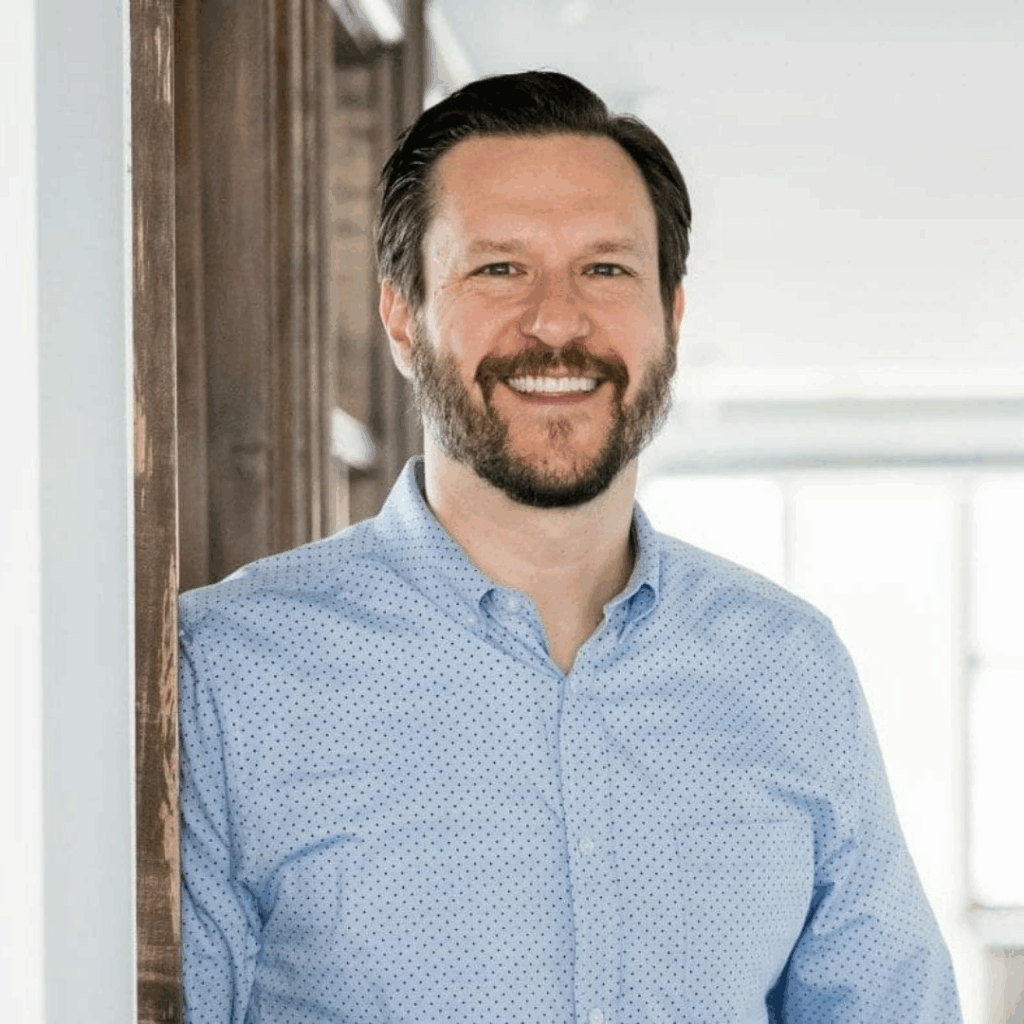
Brad Hoos covers Influencer Marketing Strategy in this Marketer of the Day episode. Brad Hoos shows how influencer marketing beats ad fatigue by turning creator trust into measurable business results. He begins with 'what does good look like' so every campaign has a clear objective and yardstick. Then he matches brand values, value props, and personas to creators, leaning on 18 years of performance data. Creators get high-level concepts, products, and deadlines, while the team reviews content before it goes live. After launch, reporting looks for repeatable creative patterns, but alignment can break when teams move the goalposts. For attribution, he notes MMMs struggle with walled gardens, so he uses post-acquisition surveys, an RSS-feed podcast pixel, and opt-in clickstream studies.
Brad Hoos is a data-driven influencer marketing leader and the CEO of The Out Loud Group. He helps high-growth and enterprise brands achieve real business results by building authentic partnerships with top creators. With nearly two decades of expertise, Brad specializes in managing influencer marketing campaigns across YouTube, TikTok, Instagram, and podcasts. His agency’s client portfolio includes recognized brands such as GrubHub, SimpliSafe, Fiverr, KitchenAid, and Magic: The Gathering. Under Brad’s leadership, campaigns are fueled by deep analytics, creative collaboration, and a strong focus on measurable outcomes.
In this episode of Marketer of the Day, Brad Hoos speaks with Robert Plank about his evolution from engineering labs to becoming an industry leader in influencer marketing. Brad reveals how The Out Loud Group systematically brings order to the chaos of the modern creator economy by aligning brand strategy and leveraging historical performance data. He details the agency’s comprehensive process, from identifying marketing objectives and selecting top-performing creators to overseeing execution and conducting in-depth analytics. Brad candidly addresses organizational challenges, especially around campaign measurement and attribution. Listeners gain insight into real-world brand success stories, like Chomps Meat Sticks, and practical strategies for building trust, adapting to digital change, and achieving sustainable marketing growth.
Quotes:
"People just hate to be sold to... what we do want is people that we know, like, and trust."
"One of Out Loud Group's secret sauces: we identify not just creators with strong engagement, but those who have proven they can deliver real sales."
"The most important question brand marketers need to be asking is, how do you handle attribution?"
Resources:
Podcast: Play in new window | Download (Duration: 30:23 — 41.7MB) | Embed
Subscribe: Apple Podcasts | Spotify | Amazon Music | iHeartRadio | Podchaser | RSS
Transcript
Download transcript (.txt)From engineering labs to the high stakes world of influencer marketing, it's Brad Hus who has transformed his consulting mindset into sparking authentic creator brand relationships that drive real business results. Brad Hus is the CEO of the Out Loud group, and he has built a data driven influencer agency, working with GrubHub, SimpliSafe, Fiverr and more. We're here to talk about the exciting world of influencer marketing. I'm Robert plank. This is the marketer of the day podcast. We are brought to you by D FY podcast.com we handle the podcast, back end, editing, publishing, promoting, so you can deliver the conversation and build your audience without the tech hassle and the conversation that me and Brad are about to have when it comes to building our audience is to navigate this chaos of YouTube, Tiktok, Instagram and podcasts and actually get some real results with this method of influencer marketing. So there's the ups and the downs and all these things. And also we're here to get educated by Mr. Brad. So Brad, who's How the heck are you today?
Robert, I'm doing great. I'm here talking to you. I appreciate you. You having me on, and it's funny. I think you absolutely nailed it when you called it navigating the chaos of influencer marketing across all those four platforms, because we try our absolute best to bring order to chaos, and I think that's that's really the name of the game over the last decade or so.
And it seems like if we can get to the other side of the chaos, if we can get to the finish line, we can have some real results. Because I know that I definitely experience ad blindness as a consumer, right? I'm scrolling Facebook and I'm just like, I don't want to buy anything. I'm just here to catch up with my friends and read some stuff. But then I don't know if it's the algorithm or if the area has changed or whatever, but I find more and more like influencers like showing, like, a kitchen gadget or showing fashion. I'm scrolling, and I'm like, Well, I don't want to see ads, but then I see people like demoing the products, and I'm like, it kind of gets my guard down, and it's less pushy and less forceful on me. And I'm like, hey. And then, you know, I react to one I pause the scroll on one video. Next thing I know, I'm seeing more of like, the food delivery services, and it seems to be all influencers. So I don't know if it's like it ramping up, or if it's just me, but I'm seeing like, more influencers on my feet than ever before.
No, you're absolutely right. I mean, if you think about the world we live in, people just one, they just hate to be sold to in in general. And two, we have all sorts of tools we can choose to use, to use ad blockers and other techniques to not use us. There's certainly the rise of of browsers who don't, don't have as many ads on those but what we do want is people that we know, like and trust. And by the way, there's a ton of psychological significance when you opt to follow someone, right? And we can get into that, but, but psychologically and as humans, we are pack animals, and that indicates this is someone in our pack that I indicate as the norm of our pack, and I want to follow and be like and so when we have trusted voices that are making recommended recommendations to us, we actually really welcome those, because we are searching for ways that we can basically fit in to to the pack in this world of so much noise, you know, we can find our own little swim lane, which is something that we couldn't put, you know, We couldn't do 1015, 20 years ago, and that's the power of influencers. Be able to find that community that you belong to, and then you care about what those trusted voices are saying inside of the community that that you decide you're a part of. I love it.
It seems like we're on track to that wonderful social utopia, aren't we, where we decide what we want, we join the pack. And like, My imagination is going wild, thinking about, like, the the social graph, and how there's, like, there's this whole map of all these people. And if you You say, Well, here's this pack I'm joined. Here's what I like. Then I want to see more of what I like. And then the brain goes crazy thinking about all the AI out there right where someone makes a quick 62nd video, and you watch it, and then the Facebook meta ad platform, whatever they read the video, they transcribe it, they look at the keywords. They say, Well, who else is putting out videos like that? They make the connections. It's like, whoa. Finally, computers do something useful, right? To make us happier, get us what we want, connect us to the right people and the right solutions. And so navigating all because it sounds great, but it also seems like a mess, as we've been saying. And so how does the Out Loud group come in? Do you do you like if someone has something to sell, do you hook them up with influencers? Or what's the path to. Success here. Yeah.
So when we're partnering with with brands, really the first step, and this is so obvious, but, and a lot of people skip skip, it is to really understand what your marketing objectives are like. What does good look like? What are you trying to accomplish? You'd be surprised how many people to this day will come to us and say, Hey, Brad, our board says we need to be on on tick tock. So can you help us roll out, you know, a tick tock strategy? It's like, Well, okay, we can do that. But why do you want to be on tick tock? And what are you trying to accomplish? And by the way, our board says we should be on tick tock. Is not a good reason to be on on tick tock. I mean, I'm sure the board's full of smart people, and there is a why behind it. We need to identify that. So first, what, what is good? What does good look like? And then secondly, we need to really understand the brand, right in this, in this world filled with so much noise, you really need to deeply understand the brand, understand everything that's worked historically for the brand. And then we need to work to identify the right creators. And I think this is one of out loud group secret sauce, because you've been doing influencer for 18 years. We have all this historical performance data we can identify not creators who have like shares and comments that are really strong, but creators who have historically performed in terms of delivering traffic and delivering sales for brand partners. So we identify those, those creators, and we develop and evolve what the creative should be for those creators, while letting them do their thing like we'll share different high level creative concepts, or they can come up with something on their own. And then we make sure they get the product. They stay on, on schedule as much as humanly possible, review the content before it goes live. It goes live. Then we go really deep in terms of the reporting and analytics, terms of identifying what are the common threads that we can pull from the content that was successful, which is defined again, from step number one, in terms of what it's going to look like, what are the objectives? So that's really our soup to nuts process in terms of how we're helping brands run successful influencer programs at scale.
This is amazing, and it seems to be getting more peer to peer, right, more democratized, instead of putting you out, your TV commercial, your Super Bowl, out whatever you say, Well, hey, who already has this 18 years of historical data, who already has strong likes, comments, engagement, and just go in and market through those people, but you're saying you're not just throwing money and seeing, you know, just randomly, you're also doing the data driven analysis afterwards and seeing what works. And this is a fascinating concept. And so who would you say are maybe, like, your favorite industries, or who's like, a really good example of this working?
Yeah, so one of the one of the brand partners that we work with is chomps. So chomps is a meat stick company. They're actually the fastest growing food brand in the United States, very mainstream now. They're in almost every major retailer, and they also sell through through E comm as well. So we partnered together with with chomps, and we help them across the branding piece, and we help them across the performance piece. And we really help to figure out what is the right strategy, right what are the right platforms you should be on? What are messaging? What are the bit with there's big new product launch, how do we, how do we bring that to market and have creators be involved in that, for the for the whole you know piece? So we are, we are looking at using influencers as one key part of the marketing mix for for a brand partner. And they're doing a great job of a few things, right? They're doing a really good job of rolling out new products, or maybe you're in a new market. That's something that these creators are fantastic for. They're also really good in terms of amplifying a tentpole moment that a brand may have as part of an in person activation that you may may be doing. And third, they're great at continuing to reinforce and help people understand what the brand is all about. So a lot of brands are constantly evolving, right? So, hey, we want to change how the brand is known. We're not talking about radical transformation, but there's important messaging points, and creators are great for that. And then fourth is just delivering ROI. I mean, every marketer is being held to performance standards. And influencer marketing is no no different. And we work to identify, you know, and run these creators in a way that delivers real ROI, so the C so the CFO isn't yelling at you as a marketer.
Well, very cool. So there's a process, right? You've been around the block a few times. There's a method to the madness. And what is that process like, like, say, chomps when they came to you. Like, what? How do you even tackle this problem, right? How do you break down, like, which influencers? And then you mentioned about, like, kind of you give them somewhat of marching orders. Like, just, how do you even get the ball rolling here?
Yeah, so. I think it like it starts with understanding the brand, right? Like, what are the core values of the brand? What do they stand for? And then what are the value propositions of of the product? Right? It's high protein, it's it's convenient, it's grown sustainably, whatever the case may be for brands across the board. Like, let's really understand those value propositions, and then let's understand the core markets, like the the customer personas, if you will, right? Like, what? What, if we're targeting, you know, Gen, Gen Z, and urban areas. Like, okay, great. What? What do you what are these individuals care about? What media are they consuming? What are the what are the social issues they care about? What are the trends that are happening in these social issues? What are the trends that are happening in the platforms where they're spending time? And let's, let's really understand the consumer holistically. And so once we understand that, that gives us a chance to say, Okay, well, who are the creators that are really the thought leaders and who are trusted amongst the amongst people who care about all these things? And then we lean upon our data, right? We're very data driven terms of identifying creators who we have seen, you know, move the needle in terms of traffic and sales. And then we're activating with those, those creators, and we're creating, you know, high level creative concepts together with our brand partners that really reflect that understanding of the brand, that it really reflect that understanding of the of the of their audience, and then really understand what the what's currently working and what's currently popular on the platforms where we have decided to activate, and then, then we make things happen, you know? Then it's execute, execute, execute.
Well, nice. So as you're explaining this, my brain is abstracting what you're saying into like, how to, how to solve these big problems, right? This big problem, as you say, well, the starting point is, I've got this brand, like chomps, and they need to get the correct influencers to talk about this for me. And the ending point is, I found those influencers. And you think, Okay, I've got point A and point B. And if there's like a winding road to get there, what will that be along the way? What questions will I ask to break down the problem into more manageable pieces, right? You say, No, I'm not just going to go and jump and see who the influence are. You say, What are those core values? Who's the audience? And then go from there. And it seems like a big problem to solve, but that's why you do what you do, right? Because maybe if someone has tried to do this themselves, they go and they do some keyword searches on Instagram. Who knows what they'll find easy way to waste money versus you with your strategy and your data driven but I'm still curious about the hiccups that might happen, because we're on a podcast, and stories are great, and hearing about struggles and problems are great. So what do you have to share with us, as far as just the the problems that come up, either if someone tries influencer marketing without you or with you, what's interesting just about these difficulties?
Yeah, it is really interesting. So so much of the challenges of influencer marketing come down to measurement, but not from a perspective of you can't measure influencer, you know, it's here in 2025 you can measure influencer, but it's a matter of getting organizational alignment. So one of the best parts, but one of the most challenging parts of influencer marketing is it's a full funnel activity, right? So you can run awareness campaigns for influencer, you can run consideration campaigns and you can run conversion campaigns for influencer. But what one of the biggest challenges that we see is we'll work with a brand and say, Hey, what does good look like? And we'll get alignment that we're really focusing on brand awareness, and we want to try to change the sent brand sentiment around a particular dimension. So we'll, we'll agree on that, and maybe it's something like 80% of what we're focusing on is going to be upper funnel. And then we'll also include some lower funnel links to be able to track as much as we can, because, again, it's, it's, it's full funnel. But what can then, so often happens, is we run the campaign and then afterwards, because there is some performance data, you know, a brand will then look at that performance data and only look at it that and sort of change the way they've, they've viewed the campaign, and now look at it through the lens of a performance based cam campaign, and so so often. That's why, you know, I always start with the beginning. What does it look like? The the goal posts can can get moved. And I think that comes from influencer not necessarily being used holistically. Inside of an organization, so especially larger, more sophisticated, more matrix organizations, you have influencer that's being used by the social team for some paid content, or maybe it's just a post on the owned and operated channels. You have it being used by the brand team as well. And you may have or what I call organic performance, where we do a lot of work, where the creator is posting to their organic audience. Yes, the creator is getting paid, but their audience, however big it may be, and it certainly can be 10s of millions, but they're, they're trying to deliver a performance there. And so you've, you've really got to find a way to get everyone to align on the best way to use influencers and the right process, because that's something that we've struggled with. You know, a lot over time, is trying to really make sure that we're dialed in to measuring influencer the right way and having the brand truly aligned on how they're going to how they're going to measure it. So I think this is something that probably a lot of people can relate to, who work in large, matrix, complex organizations, or work with, you know, or a part of an agency, who've worked with those organizations. So I think that, to me, is like one of the biggest struggles and the biggest challenges that that we that we have, and it
seems like there's definitely the need to have multiple brains on the problem, and to have this kind of obsession, this discipline, because these are tough problems to solve, right? Like, when you're dealing with, like, just crazy amounts of ways this can go wrong, and all kinds of traffic and all kinds of measurement, it just, it seems like quite the beast and and and a lot of it's over my head, to be honest, but it's fascinating just to think about how you approach some of this, and how you say, what does good look like, what does success look like, and so, but if we're speaking to someone that can use your influencer marketing services, if I was someone that was more dialed in with internet marketing, or if I was like, 20 times smarter, I'm sure I could ask you some super duper genius questions. So in this conversation we're having, what's that missing question? What should I be asking you? I just don't know to ask you.
Yeah, I think, I think first, well, the most powerful questions are often the most simple questions. And I think the biggest question I talked a lot about how we select creators and historical performance, that's great. I think that the most important question that brand marketers need to be asking, and that it would be good question for me, is, okay, great. How do you handle attribution? Right? So if a creator goes live with a piece of content, how do I know what happens as a result of of that creator going live and advocating for my brand? And how do you Well, I think there's, there's really four possible ways you can do, do attribution, and I think the future is in an mmm, right? And but that the reality is, mmm today. Are pulling data, in theory, from all different marketing channels, bringing it together and sort, sorting out, shaking out all this data, and then being able to say this marketing channel delivered, you know, 20% of your conversions. This one was responsible for 30% this was responsible for 40 and this one for 10, whatever, whatever the numbers
are. And real quick with the Mmm. Yeah.
So good. Good question. An mmm is, is a marketing mix model, right, which basically is the way to identify where leads and conversions and traffic is coming from for brands. So it's a sophisticated model that can, in theory, be used across all of your marketing channels as a brand. But the reality is, is these MMMs don't have great data, because YouTube's a walled garden. Tiktok is a walled garden. Meta is a walled garden. And so it's sort of garbage in, garbage out. And so at this moment in time, we do not see mmm is being able to successfully attribute influencer marketing, and we've worked with a lot of brands who've spent a lot of years with really, really smart people trying to get to this spot, and they haven't yet cracked that code. So I think that is the future, but there's going to need to be more data sharing. And we live in a world where there's less data sharing, you know, then, then in the past. So we'll see how that progresses. But I think that that's a solvable challenge today. There's three, there's three remaining methods that we use for influencer marketing, right? Attribution. Number one is post acquisition surveys. So, yeah, get a new customer. Where did you hear from us? Right? And we see time and time again, there's a very, very strong lift from from Influencer Marketing. Yeah. Number two, when I mentioned the walled garden piece, what I didn't mention was podcast. So we do a lot of podcasts, and podcast has a pixel, not to get too technical, but you can drop a pixel into the RSS feed, which is basically what delivers the podcast from a recording amongst two people, say Robert and Brad, and they deliver it to the podcast provider, right whether it's apple, Spotify, whatever it may be, an RSS feed can drop a pixel. So now you can track what happens as a result of people who've listened to a brand message. And this allows us to come up with a ratio of the number of actual events that happened relative to the number of events that you can track through people using a promo code or a vanity URL. So the podcast pixel is method number two, and method number three is you can do a click stream data study where users opt in. That's not brands, but it's users. And you can see what happens with people after they watch your piece of content. So if it's a YouTube video, you can watch a YouTube video, and then now, because I as a consumer have opted in to letting someone anonymously aggregate in an aggregate track me around the internet, I can see what the ratio is, again, of the people who actually took action based upon this ad over a period of time, relative to the number that we see coming up through a vanity URL or promo code. And so these three things combined, we find gives a very strong, not perfect, not perfect, but a very strong view of what's happening as a result of running influencer
programs. And this is amazing. I didn't even know about the podcast pixel, like, my brain's going crazy, geeking out about some of these possibilities, right? Because you hear a lot, especially the last like, five or 10 years, about the, you know, the Google's trying to make the cookie obsolete, or there's this or that Apple privacy happening. But then you also hear those little tidbits of what you're saying, of like, well, behind the walled garden of Google Analytics, they might tell you an aggregate, well, someone watched this YouTube video, and then they went and went, came to your website, they won't give you, like, the person by person data, but they'll tell you what those conversions are. So the lesson I'm getting here is that we can piece some of this together, and there's always, there's always things to navigate, right? There's like, the tug of war of like, well, let's have the privacy and the good user experience, but all these platforms, they still want to make money, and it's in their best interest to track these and allow you to track on on your ad platforms. And so it's just, it seems like quite the arms race when you think about it, but with the help of someone like the Out Loud group, we can solve these problems. Can't We? We can, if someone like you can say, hey, here's the plan, here's the strategy, his rule, combine all these things together and get you some result. Get you introduced to some of these influencers, to put your brand out there. And I'm just, I'm amazed at some of these brands that you've worked with, right? You work with Magic, The Gathering, Kitchen Aid, Whirlpool, simply say, AG, one so many. And and, so how can someone, number one, identify if they're the right fit for you, and number two, if they are, where should they go?
Yeah, so folks who are good, good fit for us are generally organizations that are high growth or enterprise brands looking to, you know, whether you're starting at Ground Zero or you're, you know, been doing influencer for a while. We're really looking to grow and scale their influencer program. That's that's really somewhere where we excel. And the, honestly, the best place to find us is just to go to out loud group.com, you can reach out to us through that way. And we're always happy to have a conversation and talk strategy. Maybe we're a fit. Maybe not. But any way that we can, can help folks out there. We're game to do so.
Very nice. And that's out loud group.com to have that conversation. And I'm just, I'm so impressed that my brain is still going with momentum here. Mr. Brad, when we talk about some of these, like brand values, and you think about some of like these companies that are just kind of, you instantly recognize them. They're always there. There's like that kind of quasi organic influencers keeping the buzz around. It's like they've thought these things through. And sometimes it helps to have that outside perspective, isn't it? If there's been the in house influencer marketing at work or just the the marketing just seems stale, I can see how it helps someone like you and your team thinking this through and contacting people and getting some new, you know, fresh ads, so to speak, in place, and that's out loud group.com to go there, have that conversation, discuss possibilities. But before I let you go, Mr. Brad hoose, it's time for the scary part of the podcast where I try to stop. You, I tried to put you on the spot by asking about a fun or interesting quote or lesson that has served you. So what comes to mind as far as a fun or interesting quote or lesson?
Yeah, it's interesting. I think there's two I'm debating between. So let me go with this one. So first, I'm a big college football nerd and one of the lesser known, but I think most powerful and most applicable traditions in college football as it pertains to the rest of the world, in a professional world, is Northwestern University. Ironically, I got my MBA from the University of Chicago, so it's a rival school, but before they run out onto the field in the first half and the second half, there's an assistant coach who holds a very simple sign that says, Trust yourself, and he holds it in the air, and each of the players go and taps it. And one of the things that that I've come to believe is just the importance of really trusting yourself. I mean, for instance, on our team, we have incredibly smart people who are driven and humble and, you know, fantastic team players. And if there's one thing that you know the team needs to continue to know is that they are fantastic. They do know what they're talking about, and they should feel confident about communicating those those messages out there. So to me, like one of the one of the sayings, it's it's two words, but I think that it can be tough at times to live out, because we all, we all, you know, at times your question, are we? Are we really, you know, worthy of the the audience that may be in front of right? But it's just simple, like, trust yourself, you, and to get to that point, you need to do a lot of work, and, you know, homework to be able to do that. But ultimately, it comes down to just believing in yourself and entrusting yourself. And I think that's a message that's always resonated with me, and it's something that I'm always trying to, you know, impart upon our team here at the Out Loud group
as well. Oh yeah, that's very helpful, very amazing, this idea of trusting yourself, because you mentioned that, and I think, like, there's like a.in the future, right? There's something that you want to achieve. And it's like, there's kind of, in my weird imagination, there's like two colors of threads getting us there, right? And there's like you're thinking in your actions. And if you just, if you hope to luck into it by accident, that doesn't seem very likely. And it's like sometimes you have to have the belief, the faith, the optimism, enough to get you there. And you say, I don't know exactly every step along the way, but I believe I will get there, and I trust myself to get there. And that's a message we need to hear. We need to hear on a regular basis, because it doesn't last. Right? You get the message motivation once, and it fades, and you have to continue getting the positive messaging and get yourself on track and surround yourself with the right people and build a great team and all those wonderful things that I know that you do, and you can't do it alone, as you know, more than anyone doing the influencer marketing right, you have to have a lot of people on your side. And this influencer concept is the way of the future. It's been developing for so long with YouTube and the social media and a tick tock. But if you're out there and you're saying, Oh, well, I just want tick tock, just because it seems good, well maybe you need to have this conversation with someone like Mr. Brad, who's at out loud group.com and say, Well, does it make sense to do this? Are we doing this for the right reasons, or are we just doing it out of jealousy? Grass is greener over there. And so have this conversation about influencer marketing with Mr. Brad, who's at out loud group.com they see themselves as an extension of your team. They work in your working environment. They're not going to force you to change your process, but And so they'll get this whole all this stuff figured out. Podcast, advertising, influencer marketing, brand ambassador, have that conversation out loud. Group.com to build your next influencer marketing campaign. Book that strategy call so Mr. Brad Hoos has been wonderful, speaking with you, discussing possibilities, ideas, problem solving. Thanks for being here. Thanks for doing what you do.
Robert, absolutely a pleasure. Thanks for having me on and thanks for sharing the goodness with your, your audience, with your your podcast. Every day, we appreciate you. So thank you, sir. Super great.
Subscribe
If you enjoyed this article, subscribe to receive more just like it.


