Published Last updated
Read Kathleen Gage’s bio and speaker profile →
View in Podcast Library: stories, quotes, books, and resources in one place.
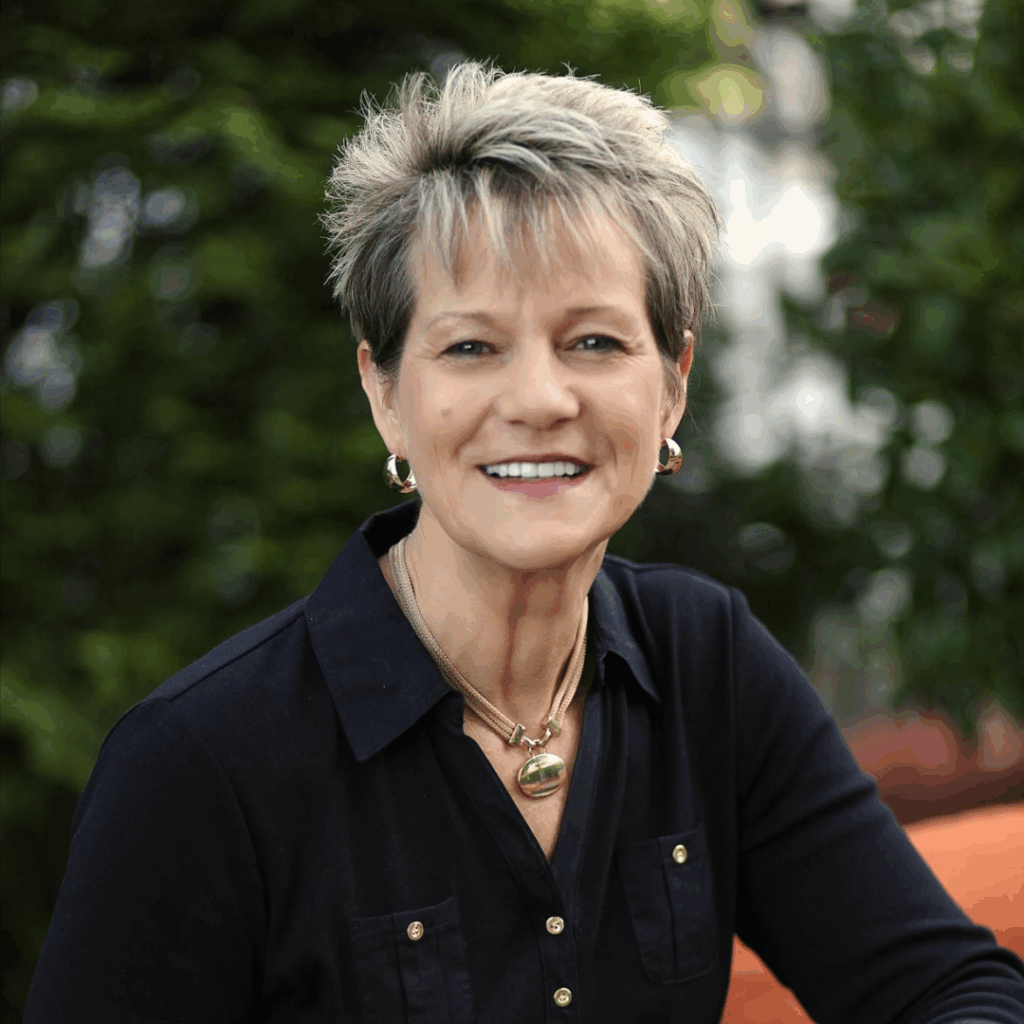
Kathleen Gage covers Vegan Visibility Growth in this Marketer of the Day episode. Kathleen Gage explains how she rebuilt her work around vegan advocacy and visibility so her speaking and podcasting directly support animal rescue. When COVID canceled conferences, she narrowed her focus to the vegan and sanctuary niche instead of trying to be everywhere. She draws a clear line between vegan as a philosophy and plant-based as an eating style, then uses her Plant Based Eating for Health podcast to feature experts on topics like reversing type 2 diabetes. She also runs a private, self-funded sanctuary with animals like horses and chickens, and says funding is the toughest constraint for most sanctuaries. To show what visibility can do, she cites making $250,000 at a three-day self-staged event and $200,000 from a career expo, plus guesting on 1,500 podcasts. Best takeaway: pick the mission you are most aligned with and take daily actions that vote for that life.
Kathleen Gage is the founder of Vegan Visibility and the author of “Power Up for Profits: The Smart Woman’s Guide to Online Marketing.” After decades of business success, she transitioned to align her life and work with her values, focusing on plant-based advocacy and animal rescue. With over 30 years of experience as a professional speaker, Kathleen empowers purpose-driven experts to grow their reach through effective speaking and podcasting. She hosts the “Plant Based Eating for Health” podcast and manages a self-funded animal sanctuary, promoting veganism, animal welfare, and vibrant living.
In this episode of Marketer of the Day, Kathleen Gage joins Robert Plank to discuss the power of aligning your career with your core values. Kathleen shares her journey from traditional business success to becoming a leading voice for vegan visibility and animal welfare. She dives into the distinctions between animal rescues and sanctuaries, the challenges of funding advocacy work, and the transformative power of speaking and podcasting for building a movement. Kathleen also discusses her upcoming book “Speak Out,” healthy lifestyle shifts, and practical strategies for making an impact with your message.
Quotes:
“My whole mission is to raise the awareness around really a lot of the horrendous treatment these animals get that most people wouldn’t even have any idea of.”
“I want to share the information that will help people to live a healthy, vibrant life. I don’t care how long I live; I just want to live to be healthy and vibrant and be a contributor.”
“If you say you want something, there are certain actions you need to take, and every day you show up and you take an action that moves you closer to it.”
Resources:
- Power Up for Profits: The Smart Woman’s Guide to Online Marketing (Amazon)
- Kathleen Gage on LinkedIn
- Kathleen Gage on Facebook
- Vegan Visibility Productions (official site)
Podcast: Play in new window | Download (Duration: 28:59 — 39.8MB) | Embed
Subscribe: Apple Podcasts | Spotify | Amazon Music | iHeartRadio | Podchaser | RSS
Transcript
Download transcript (.txt)Kathleen gage walked away from decades of business success to align fully with her values, and now she is using her voice to amplify others. Kathleen Gage is the founder of vegan visibility, and she is the author of speak out. She helps purpose driven experts harness the power of speaking to grow their business and make real change. We are about to have an exciting discussion about all this. It's the marketer of the day podcast with Robert plank, brought to you by D, F, y, podcast.com we handle your editing, publishing and promotion, so you can focus on the message. And today's message from Kathleen Gage is so many aspects of being a great person, right? There's the veganism, there's the animal rescue, there's podcast guesting. She has so much going on. We can't wait to hear about it. Miss Kathleen Gage, third time guest how are you? You
know, I'm doing great, Robert. It is so great to be back. Thanks.
It's been a, I think, a lot of years. Like, I don't know the exact number of years, but like, based on the the number, we're like 1500 something, and I think you were around in like, the seven hundreds and the eight hundreds. So it's like you were there in rapid succession. And then maybe, like, five, it might have been five or six years easily, because time flies so much, and that's what we have to pack in all those important things that we can and have to and should do. So what have you been up to? What's your current focus and passion?
You know, with covid, a lot changed, because I actually used to go out and speak at conferences quite a bit. I was always on the road, and when covid hit and everything shut down, a lot of conferences were canceled, and clients I was working with, they said, Sorry, we can't send the deposit check. So it's kind of like you reinvent yourself. And for a while, I thought I was going to completely retire, and I'm semi retired now, but I still have my finger in the pie of podcasting. I work primarily within the vegan space, in the animal sanctuary space, working on my next book, which is speak out, comes out in January 2026 and I have a small, self funded Animal Sanctuary, a bunch of rescues that this is where they're going to end their life, and they're going to for however long they're going to be around. So that's kind of in a nutshell what I've been up to,
nice and you're saving the world and doing your taxes and getting the band back together and getting all sorts of things. But that's a good jumping off point there, because it seems like every decade there's some kind of cataclysmic worldwide event, right? Great Recession, covid, nine eleven.com, bubble, 1987 right? There's like something something catastrophic, and it sort of forces all of us to, in a way, reinvent ourselves. And it seems like it shakes out the weak hands, the people that were kind of maybe a little bit stubborn. I know that with the speaking and speaking on stages like I was, I was kissing so many butts and only getting a few stage speaking gigs. But then when covid happened, I felt like it was kind of a blessing, because you can focus more on the podcasting and do more of the base hits. And I'm curious about just the publicity, right? Because you've been on 1500 shows, and you do these things like the the animal rescue and the book, and it seems like the amount of self promotion that's required, it seems to be, like, 10 or 20 times what we think is required, right? We wish people would find us, but it seems like we have to, like, feed the machine to a insane amount, doesn't it
seem so well, you know, yes and no, I think that sometimes people spread themselves too thin, and they try to be all things to all people, or they try to be seen everywhere. And what I've learned in the 31 years that I've had my business is that I need to just focus on the niche that I'm most aligned with. And as I've gotten older, I'm going to be 72 in a few months, and as I've gotten older, a lot of things that used to be important to me are no longer important, like the faint that used to be really important to me, and now I seriously I could care less. I mean, if I don't have to go out and do a networking meeting, I'm quite fine with that. But what I want to do is put my message out there and my mission out there to work with people who are saving animals, people who have aligned with the vegan lifestyle, and a lot of it is through speaking and through podcasting. And speaking is different. Now it's interesting because I've been a paid conference speaker, where I've been a keynote speaker, made 1000s upon 1000s of dollars for one engagement, and I've also done self staged events. And I make more money with self staged events because I have all control. I can sell back of the room. The last one I did was about seven years ago, and we made a quarter of a million dollars at a three day event. And so very profitable. And then when covid hit, that kind of wiped that out for a. While, and I actually, as I've been writing the book, and it's near, near being published, I kind of got the bug again, and I'm thinking, you know, there, there was something to that. Not only was it very profitable, but I really enjoyed it. I do enjoy being in front of a live crowd, wonderful.
And that's a great aspect to tap into, because I enjoy it, too. And you hope that people like you and me will hope that we were different, right? We're the weirdos, because the public speaking, they say, is the number one fear, and number two fear is death. So it's like, if you are good at it, if you enjoy it, then go with it. And so you're you're the speaker, and you're this podcaster, and you get the word out. And so as far as the awareness that we should have about the animal rescue, when I hear Animal Rescue, I think, like three different things. I don't know if it's like horses or dogs and cats or what, but you tell me, like when you're talking about the animal rescue that you do, what should we know?
Well, one is funding is the most difficult part of running an animal sanctuary, and there's a difference between rescue and animals or animal sanctuaries. Rescues, usually people will rescue a dog or a cat, and it's more domestic type animals animal sanctuaries, they can rescue one one sanctuary that a client of mine interviewed on her podcast was focused on lab monkeys. And these are the monkeys that get tested on horrendous, horrendous stuff that goes on. And so part of our job is to shine the spotlight on that. Another rescue that we talk or a sanctuary we talked to was about goats. Another one was about pigs. Some have various types of animals. But a lot of people, when they think sanctuaries, they mostly think farmed factory animals. And it could be the lab animals, it could be the circus animals, it could, you know, and what, what I really love about what I'm doing is I'm being educated on really a lot of the horrendous treatment these animals get that most people wouldn't even have any idea of. And so my whole mission is to raise the awareness around that. But what I love is we're doing a summit in January, as a matter of fact, with better life for animals. And what we're doing is we're bringing in successful animal sanctuary CEOs board of directors, anybody who really knows how to raise funds. And we're going to teach people how to raise funds for their sanctuaries.
Ooh, nice. So you say that you've you've been around the block, you've heard a few things, you've got your own sanctuary, so others can learn from what you've accumulated.
I personally have a private, self funded one where we have three horses, we have a couple of chickens, a rooster, a couple of dogs at this point in time, but we've had ferrets, we've had goats, we've had, you name it, we've probably had it. And it's not open to the public. And most sanctuaries are not open to the public, where you can just walk in, let's say, like a zoo, they have very specific times that people can come in, because many of the animals that are in animal sanctuaries are very, very traumatized. And, I mean, they've had they ended up there for a reason. And what's really interesting is oftentimes people who have never felt a connection to animals when they go to a sanctuary, all of a sudden they have a different take on things. One story I heard was about a gang banger who never felt loved. He was very harsh. He was on the streets, and he went to a sanctuary. He was basically court ordered to go to the sanctuary. He actually petted, I don't know if it was a pig, if it was a rooster, whatever it was, but he connected with this animal, and he said, I've never felt love before. And that changed his life. All of a sudden, he saw a different perspective in life.
We stumbled upon a new type of therapy, perhaps
absolutely, absolutely and so
when you when you talk about, like the the animals that are in these sanctuaries, and my first impression is that, like, the number is kind of low, right? Because, like, when I'm near a town called Livingston, where they do, like, massive, like, chicken production, so much so, like, if you're driving within 20 miles of this town, like you can smell it. And I think, like when I hear the crazy high numbers of, like, how many, just chickens, they just run. They run through, like, on mass. And I think, like, how can the world ever decrease the production and the demands, and when there's the the sanctuary? Like, how, how can that number even keep up with just the production that
you know? It real simple answer is they can't. And yet, there are people who are committed to bringing in the animals that they can, because sometimes they have to say no, because there's the vet bills, there's the feed and all that, but what their whole purpose is is to give whatever animals they can the love that they've never experienced. Based and to educate the public around it, because it'll never be a problem that is completely solved. I mean that to to really even think that for the people who say, Oh, we're going to wipe it out. We're never going to have factory farms, that's not realistic, unfortunately. Because again, you know, it's a whole topic that a lot of people don't want to hear about, because they say, Oh no, no, don't. Don't impose your beliefs on me. And it's like, well, it's not my belief. It's about the animals. But it's a start. You know, the sanctuaries are a start. People who actually take in maybe it is a dog or a cat, you know, they might be in labs. That's another way to do it. But as far as completely fixing the problem, no, it's not going to happen.
Okay, well, fair enough. Well, what has, I mean, what's improved in the last few years? Because I don't, I don't know. I'm not educated much about the lab testing, but I know with, like, the lab grown meat and the Beyond Meat and things like that, have, have, you know, been more mainstream, but like, what should we know just about how maybe, what's on the uptick, as far as decreasing these cruelty to animals? Well,
one is having conversations like this, because there might be somebody that that listens to this that thinks I never considered that, and so they may do a little bit of research. And another thing is, is that a lot of people that buy the beyond burgers and the beyond meats and the non dairy products, most of those are not committed vegans. It's real interesting. A lot of vegans are plant based. And people say, Oh, you're on that vegan diet. It's not a diet. Vegan is a philosophy. Plant based eating is the diet. And actually, you know, what's interesting is there is a whole different level of what people need to know about factory farmed animals, and it's terrible for your health. The reason we have an uptick in diabetes and heart disease and cancers and high blood pressure and dementia, all of that is connected to animal based products. And a lot of people don't want to hear that. They say, Oh no, no, that can't be true. And all I say is, do your research.
And so, like, what's, I mean, have you come across someone that's like, maybe wasn't convinced and went to being convinced is, I mean, you say, do our research, but like, if there's someone saying, Oh, that'll never be me on it, I'll never change my lifestyle. Like, is there anything
you're you're talking to her right here. I was 64 when I went vegan. That was in 2018 and I, seriously, I was such a carnivore. And that's another misconception. People think that we came out of the womb, and I'm a vegan. It's like, no, most of us were very heavy duty carnivores, and we just at at the moment, it could have been through a presentation, it could have been through a blog post, it could have been through a podcast. We heard something that made us do some research, and it was kind of going down the rabbit hole, because there's a lot of information out there, and there's a few different things that people can look into. One is the animal cruelty, the other is your health, and the other one is the environment. And I bet, when you drive by those chickens and you have that smell, the water there is probably so polluted and it's undrinkable and unusable, and yet they put it on fields, you know, so there's this whole chain reaction that takes place. But what's really exciting is I recently joined a an animal sanctuary for on their board of directors, and what appealed to them is that I like to do presentations. So I'm going to be going out in my local community, and I'm going to be doing presentations on behalf of this sanctuary.
Well, fun. So you're using your lifetime of public speaking skills to be the person that steps up and, you know, educates people. And I know that you're you guess on podcasts, but you also host a podcast, right? You have the plant based eating podcast.
I have plant based eating for health, and I have vegan visibility. And the vegan visibility has kind of it's on hiatus right now, but the plant based eating for health that one what I really enjoy about it is I am educating people, not me, per se, but I bring on guests. I bring on leading experts who will talk about different ways to eat that can reverse type two diabetes, for example, it can minimize your risk for cancer or heart disease or dementia, and so to me, it's exciting to bring on these experts because it makes me really go the straight and narrow with being a plant based eater and a vegan, because it's like, well, I'm bringing all these experts on. I think I should walk the talk, yeah.
And there's that saying of surrounding yourself with the people that you want to be more like, right? You're the average of those people that surround yourself, and so if you surround yourself with a lot of meat eaters and people that that love the fast food or the slaughterhouse, that's what you'll be. But if you're around people that you aspire to be more like or stay more like, then it works. It works for the aspect of you and your. Your Podcast networking. But also, if someone has your podcast in their ear and they're like, you know, I've got this health issue, or I want to stave off the family history of the cholesterol, dementia, live longer, feel better, all those things to ease themselves into it, maybe they can tune into the plant based eating for health podcast as a way just to kind of get on the right track. And so you've had these amazing guests on your podcast, and is there anything from these guests that maybe has surprised you recently?
Well, one is how long some of these people live? I've interviewed people in their 90s, and there was a woman 91 recently that I interviewed, and she's been plant based and vegan for about 45 years, and it's like, holy heck, you know? I mean, I What has surprised me is how how hidden it's been for so long, because I know people that have been vegan for 6070, years, and like I said, they're now in their 90s, and it's shocking how vibrant they are. So you know that that's one of the things that excites me, is I look at these people and I say, Okay, I'm a baby vegan compared to some of these people, but I can learn from them, and I can live a life that's very, very in line with what I feel about the animals. And that was one thing that was interesting Robert was the cognitive dissonance of here I was saying how much I loved animals, and I was rescuing animals, and I mean, truly into rescuing animals, and yet I as soon as I was done, I'd go and get a hamburger, or I'd go and have chicken wings, and I used to love chicken wings, and it's like, one day it hit me, and it was Like, wow. I didn't realize that I had been that that blindfolded to what the truth is.
Yeah, it's you feel like you're counteracting the good you were doing by just adding to the problem again. And you bring up something interesting, of the you know, there's like, specific foods. It's like, oh, it's so good I can't give up my hamburgers. But then you also hear about some of the the vegan recipes are, like, really well done and really well made. And so do you still get the cravings or the hunger pangs or like, what's it like on the other side, as far as the the taste, the deliciousness of it all?
Well, one thing is, your your taste buds change when you give up meat and dairy. It's really interesting. And as far as craving it absolutely not, and because I I've kind of crossed that invisible line, it's just like with alcohol. I've been sober for 42 years. I have no desire to drink, because when I drank, I was one of those people that you would not even politely invite to leave a room. It was like, Get out of here. I was not a good drunk, and so that's why I don't drink. And so I look at that, and it's, I can see a comparison of like, once you you have an awakening, if you will. And it can be with anything. It's like a certain behavior. It's like with my health. I'm so into staying healthy, because I see people my age who are struggling, and it's through the lifestyle choices they make. And that's really like when I go out and I do presentations. A lot of my presentations now have to do with personal responsibility. So in answer to your question, no, I have no desire whatsoever, and there's plenty of foods out there with spices and like, for dinner, I'm making a what is that pinto bean soup that has carrots in it, it has spices in it, has onions in it, and I'm going to put tofu in it. And people go, Oh, tofu. Tofu is one of the most amazing foods. I mean, you know, it's like, I didn't think we'd be talking recipes, but I'll tell you, it's, it's really, really interesting to learn how to cook in a whole different way and use spices instead of relying on what on animal based products.
Very fantastic. And so it's like a new skill set. And so if someone has this resistance to the plant based diet, vegan lifestyle, then someone might you might say, well, you know, you have all these objections, but if it meant that you could live into your 90s and beyond instead of just 60 or 70, I mean, decades of your life, isn't that worth it a little bit, if you could be healthier, more active, it seems like it's a great trade off. Well, you you hit
on the right word, which is healthy, because it's one thing to live into our 80s and 90s, and a lot of people are but they're living based on medical advances, that they're living miserable lives. And for me, I want to share the information that will help people to live a healthy, vibrant life. So there's a there's a difference. You know, when people say, oh, I want to live to be 90, I'll tell you what. I don't care how long I live. I just want to live to be healthy and vibrant and be a contributor. That's that's really where the distinction is for me. And you really hit the nail on the head with that one about living healthy.
I like it. So not just the high number, but also being. Active and being alert and feeling good, not just prolonging the misery of pain and hoping for death, being like, Hey, I'm alive and I feel good. And so we've touched on so many subjects, and you're such a great speaker, great podcast guest, accomplished so much, but you're the star of the show here, so I want to make sure that in these last few minutes, we tackle what's important to you. So do you think there is a missing question in our conversation? There's something that I should be asking you, I just don't know to ask you. Well, one would
be, where can people find me? So where can we find you? Okay, great question. Boy, that was a good question. Vegan visibility.com. That's vegan visibility.com. And as far as you know, the question to ask, I would love to come back and share about speaking and about different strategies that people can use to actually grow a business, to create a movement, to represent an organization. Because I've, I've created a number of different strategies that have been very, very effective when, when somebody has a book, it's like, are they going to know how to promote it? And one of the best ways to do that is to get on podcast shows and to get out on the platform and talk about your book without saying, buy my book. Buy my book. But you talk about the book in a certain way that people are intrigued and they want to buy it.
Oh, yeah. And I've had so many fruitful discussions on a podcast like that, including with you. But like when I have someone who's buried up the to sell a book, and we have a conversation, and it's like, you know this topic and that topic, it's like, we get a taste of it, and then it's like, well, if you want to know more about that, go to chapter three. If you want more about that, go to chapter six. Of they can so this is great because we have the freedom of, kind of dancing around and being creative and outrageous, but then if someone wants the structure, if they want to dive deeper, then it's like, hey, there's the next step, there's the book. And so it's like, that's such a best of both worlds, because there's also, like, a logical place to go. Sometimes you have a podcast and it's like, oh, well, what? What's the next step? Well, I don't know. Message me on LinkedIn. I'm like, But how about something direct? And it's like, hey, we had all this conversation. And it's not just a necessarily, go buy my stuff. It's like, hey, check out this book, right? To get further enriched. And then if it makes more sense for the coaching or the course, or the next step, then after the book, comes that, and now that's a very well educated prospect. And so it's like you see some of these speakers where they just have it dialed in, right? They they talk about something that they're just so passionate about, and they're, they're so such a slick, smooth presentation. But when we see it, we only kind of get that outer layer right. We just get the tip of the iceberg. And someone like you can say, hey, done this for 31 years, plus there's a strategy, there's a method to the madness. And if someone says, Well, I can't wait for Kathleen to come back on the show, is there like a specific part of your website or book or something where someone can find out about the kind of speaking strategy.
Yes, they can. They can go to vegan visibility.com, and if they go to the blog, they're going to see a lot of posts that tie in with podcasting, with speaking. And so yes, and and there's a free resource, you know, who wouldn't have a free resource to give, and it's very, very high content on how to be a how to shine on podcasts and and so you know that, and you and I both know Robert, that you can get somebody on your show and they do yes, no answers. You ask them a question, they go yes, and then they stop, and you're going, Okay, this is going to be interesting. So yes, on my website, there's a lot of different resources that will help them along on their journey.
I had a guest once who was a she went and did like improv shows like comedy, and she said answer with a yes, and she said, Don't just say yes, but like, lead it off to the next thing, and it becomes a fun, playful, witty banter, tug of war, and that's what's enjoyable to be on and enjoyable to listen to. And so you say vegan visibility.com you have all that knowledge. They call that thought leadership, right? You give away information on podcasts and their blog posts, and if someone becomes a fan of yours, then they gobble up everything that you put out so there's vegan invisibility.com to get those blog posts on my other understanding is that you have a book coming out called Speak Out, correct?
I do. I do. It's coming out in January, and it's all about my 30 years as a professional speaker. There's a difference between a public speaker and a professional speaker. And I share strategies on how, with my last event, pre covid, I made a quarter of a million dollars during a three day event. And it wasn't just the three days, it was what we built up to that. I talk about how I grew a Career Expo, or a career development company with a Career Expo where we made $200,000 on that. And it's not just about the money, but I will tell. You when You can make money doing what you love, you can do the other things that you love too. Because I'll tell you, having three horses, a couple of chickens, a rooster and a couple of dogs, it's not an inexpensive proposition, and fortunately, I'm able to fund that through the blessing of having clients and just being semi retired and being good with my finances,
very nice. So you're adulting, you're being strategic. And you hear that sometimes with like musicians or like filmmakers, like Christopher Nolan, right? They'll do the Batman and then the fun movie, and it's like, one for me, one for you. And it seems like that might be a secret to life of saying, Well, let me do this thing that maybe I'm only like, 60 70% excited about, but the money's there knowing that once that project or that business is done, now I can do the thing like the animal sanctuary that like, I'm like 135% excited about. So it's like, you kind of play the chess game, right, and make the moves. And so you've been speaking about all these wonderful subjects, and the place to go is vegan visibility.com and we've been speaking with Kathleen Gage, who specializes in developing and implementing proven strategies and systems to maximize your visibility to your ideal clients and customers, whether that means you're promoting that animal sanctuary, that book, you're appearing on podcasts, it's all important if you can overcome some of the hang ups, right? The nerves, the anxiety, the not knowing what to do next. Well, if you're stuck, you go and you learn from someone who has already blazed the trail before you, and on vegan visibility.com you can find out about how to strategically grow your purpose driven business, and you can also click around and find out about the vegan lifestyle and animal rescue. So vegan visibility.com. Is that hub? Is that next place to go? But before I let you go, Miss Kathleen Gage, it is time for the scary part of the podcast where I try to stump you, I try to put you on the spot by asking about a fun or interesting quote or lesson that has served you. So what comes to mind as far as a fun or interesting quote or lesson?
Well, I would say a fun or interesting quote is by James clear, and I'm probably going to destroy it, but it every action we take is a vote for the life we want and so or lack thereof. And if you say you want something, there are certain actions you need to take. And every day, you show up and you take an action that moves you closer to it. But it's by James clear, and I think it was in his book atomic habits. And, you know, he talks about habit stacking and how important that is. But I love that book, and I loved his quote,
me too. It's a great message that it's sometimes feels like a test of how bad do you want it, and especially if you make excuses for why there's not time to do it, or you come up against a roadblock, it's like, well, it's what is your resolve? What is your commitment? And that applies to the vegan lifestyle and making healthier choices or building a business so that way you can have a better future for yourself, your family, your loved ones. And we've been speaking with Kathleen Gage, who is all about living on purpose, with purpose, and you should check out her website, vegan visibility.com, thanks so much. Miss Cathy. Engage for another wonderful podcast appearance. I feel like I learned like 15 different things, and I had so much fun with you. So thank you for being was a
blast. Thank you so much, Robert. Have a great day. All.