Published Last updated
View in Podcast Library: stories, quotes, books, and resources in one place.
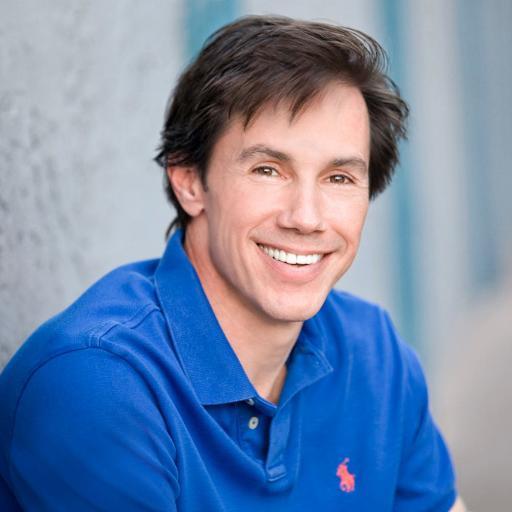
Jason Hartman (JasonHartman.com) is all about having that healthy entrepreneurial mindset and wants to talk to you not only about his own up’s and down’s, but the common mistakes and solutions that we all face.
First, Jason realized early on that he loves to work and that his business actions represent his own creative expression. He also discovered that to narrow down that perfect niche, find your passion (that also results in income) and diversify so that it remains evergreen. To tackle frustrations and roadblocks, he treated himself as his own first client when it came to solving a problem and “building a better mousetrap.”
Finally, Jason explains what drew him into the world of podcasting, as well as his number one secret about podcasting: that it’s all about the listener, and not the guest.
Quotes:
“Every business starts out of somebody’s frustration with something. If it frustrates you, it probably frustrates a lot of other people too.” – Jason Hartman
“People want someone who’s real, so I share my failures and problems on my show because I learn from them, and I want my audience to learn from me so they don’t have to make the same mistakes I did.” – Jason Hartman
“A higher level of thinking would be to look around at what other businesses are doing and think about how you can bring that idea to your industry.” – Jason Hartman
Takeaways:
01:48 Real estate remains a reliable investment because land is a fundamental asset that doesn’t disappear.
06:23 Every great business starts from solving a personal frustration in the market.
14:15 Stop following competitors and instead look at successful strategies in other industries.
22:25 A podcast or content show should always prioritize listener value over guest comfort.
23:49 Consistent content creation doesn’t mean you’ll become overexposed if the content remains high quality.
Resources
- Jason Hartman (Official Website)
- Hartman Media (Website)
- Jason Hartman Economist (Website)
Podcast: Play in new window | Download (Duration: 27:55 — 25.6MB) | Embed
Subscribe: Apple Podcasts | Spotify | Amazon Music | iHeartRadio | Podchaser | RSS
Transcript
Download transcript (.txt)Robert Plank Show, episode 261, the entrepreneurial mindset, find your passion, narrow down your niche, and diversify your income with Jason Hartman. Hey everyone, and welcome back to the Robert Plank show. And our guest today is Jason Hartman, and he's the CEO of platinum properties, investor network, the Hartman media company and the Jason Hartman foundation as one of America's foremost experts on long term wealth creation and starting with very little. Jason Hartman, as a 19 year old college student, embarked on a part time career in real estate, and Jason has combined his dedication and business talents to become a successful entrepreneur, public speaker, author and media personality and his highly sought after educational events, including semi annual meet the Masters events, speaking engagements and acclaimed creating wealth podcast, inspire and empower hundreds of 1000s of people in 164 countries worldwide. So Jason, welcome
to the show. Hey. Thank you so much, Robert. It's great to be here. It is great
to have you here, and so we kind of read you buyer a little bit. But, I mean, what specifically has you kind of charged up, fired up these days?
Well, you know, I have always loved real estate as an investment income producing real estate. So that is, is really been my, my only real career that I've been in all my life, and I have other little entrepreneurial ventures. But as I was saying at a mastermind group I was in over the weekend, real estate seems to have a lot of gravity. It just always, it always keeps me focused on that, because it's just such a it's such a dependable, reliable thing, you know? And so I'm still charged up after about about it, after all these years doing that same thing, awesome.
And I mean, makes perfect sense, because I mean real estate. I mean, there will be, like, the highs and lows, but the land is never gonna go away unless maybe it falls into the ocean. But by that time, maybe we'll have some like, underwater or some space real estate or something. And so, I mean, do you is that like, Is that normal? Like, have you seen like, a lot of your sort of real estate, maybe competitors or colleagues or friends or whatever? Have you seen them sort of move off into different things and like, Are you, are you following, like, the usual track, or like, Are you different than most people who've been in this for so
long? Well, you know, I started my career in traditional real estate business in my first year of college. When I was 19, I got my real estate license, but I was always interested in it because I wanted to be an investor and that, you know, I had been buying properties over the years for my own investment portfolio and then just selling to regular homeowners and selling their homes for them. And I did that for many years. I worked for REMAX. I bought a failing real estate company, turned it around, sold it to Coldwell Banker. And then when I was negotiating that deal with Coldwell Banker, that really took about a year to do. It took a long time, you know, big publicly traded company, lots of bureaucracy, etc. And I knew, you know, I looked around and thought again, you know, like, what am I going to do with my life? You know, I was still, long before I wanted to even have any thoughts about retiring, regardless of the money. I just love to work. I love business. I love the creative expression that comes with business. You know, artists, no matter how successful they become, I assume they still want to practice their art, right? And business people, you know, it's an art for them, a lot of them, and and I would say that's definitely true. And so what I did is I thought, I'm going to have a big check coming to me from the sale of the company. And I went around and I looked at the traditional financial advisors, at Merrill Lynch, Ameriprise, Charles Schwab, et cetera, et cetera, and they all said the same thing. It was just so boring. It was like nobody had any creative ideas. They all gave me these pretty little pie charts with lots of colors on them, modern portfolio theory. It was the same plan. Nobody had anything much original to say. And I thought, why am I even talking to these people? I'm a real estate guy. I love income property. I've done extremely well with it as an investor and also in the business side of it, doing it for other clients. And my clients have done well with it. And you know, as I was in traditional real estate, I worked with lots of investors too, but majority was homeowners and home sellers. And so I looked around the country, and I thought, you know, this time, I don't want to just be investing in one market. I was in Southern California, and I thought I'd been through a couple of cycles. And I thought, well, you know, what's the natural thing you want to do to insulate yourself from cycles in the economy, or the real estate market, or any market for that matter, you want to diversify, right? And so I thought, here's the most historically proven asset class in the world, income, property. And all you really need to do. Is diversified geographically, because there's an old saying in real estate that all real estate is local. And so I started looking around and researching different markets around the country. I got all those. I'll call them best places books. You know, the best place to live in America, the best place to retire in America, the best small towns in America, the best large cities in America, cities ranked and rated all of these things. And I started reading all those books. And then I started traveling to all these different markets and going online and looking at the US Census website and just doing like all this research. It was a real geek fest, believe me. And I did that for a long time. I spent a couple of years doing that really, but I started to try. As I was doing this research, I started to try and buy properties for investment in some of these markets that I liked, and I remember how difficult it was. I couldn't get anyone with a brain. I couldn't get anybody to help me. You know, the traditional Realtors were, they didn't know anything about investing too much. You know, they mostly sold homes like I did, to regular home buyers and home sellers, and that was the majority of their business, usually. And it was just really difficult. And so basically, I got into the business I'm in now to be my own first client.
Awesome. And I
my own client, because I had to have a support system. I had the staff of you that would go find the properties, find the markets, research the providers of those properties, and sign referral agreements with them, and then help manage the properties, because that's where it all lives and dies. Is on the management, okay? And, and so basically, I created, essentially the business I'm in now to be my own customer. And, and then we started doing it for clients as well. And, and the rest, as they say, is history
awesome, and there's so much good stuff kind of packed into that story. And like, the first thing that I, that I hear from you kind of talking about your journey there is, like, number one, sort of, to find your niche, you have to kind of try out different things. Like you tried out different, like, forms of real estate, and you went in and looked at, you know, after getting your big paycheck from the sale of that, like, where am I going to put the money? Like, there's nothing wrong for sure, in just kind of trying out different things and then and seeing where they were going and then when you, when you landed on this, this idea of kind of having this income producing real estate, it's like it sounded like it was like a combination of, like your passion, sort of like you said, like it's something that you probably would still do, even if you had all the money in the world, but it's still something that's sort of viable and still brings in that income. And then you kind of diversified, and you geeked out and you researched. And then when it came to sort of figuring out, like, what you're gonna gonna really put your attention to within the business, or what you're gonna excel at, it sounds like that you came across all these frustrations and roadblocks, and you said, Okay, now I'm my own first client. And then you kind of figured out what was the the weak point, and that sounds like that's the management of that property, and then that's where you can kind of beat out your competition. That's sort of what I'm hearing from you telling that story, yeah. And
you know, I there's a couple of maybe good nuggets that people can learn from this story. And you know, not just about real estate investing, but about being an entrepreneur, right? Every business? Well, I don't want to say every business, but almost every business starts out of somebody's frustration with something, right? Either they just wanted to buy something or have a service that was available to them, or they had an idea for an invention, or they, you know, felt that there was a cause, you know, something that upset them, something that got made them angry or frustrated. And pretty much, that's the way every great venture starts, right? And so that's the first part of it. So if anyone is listening to this, thinking, Well, you know, I want to go into business for myself and, or, you know, maybe I want to change my business. Just look around your life and think of what frustrates you, and there you go. There's a good, a good potential opportunity right there, because if it frustrates you, it probably frustrates a lot of other people too. Okay, so, so that's one thing, and then the other big, I think, thing that really set me apart is that I was in before this, I was in the traditional real estate business, and in that business, it's a it's, it's a me too. Business, it's very competitive, because everybody's pretty much offering the same thing. And I remember hearing Dan Kennedy talk many, many years ago. And, you know, he's a sales and copywriting direct response guru, if, if you don't know who he is, and he said something that really impacted me, and some things really stick with us. I know we all have that, that we remember something from 20 years ago like it was one minute ago sometimes. And he said, You know, every. Somebody in business is looking around at what all their competitors are doing, and they're just trying to copy their competitors and maybe outdo them and do it better, right? And, you know, that's fine, but that's sort of the lowest level of thinking. I think a higher level would be to look around at what other businesses are doing, and think about, how can I bring that idea to my industry? And that's what I did. I saw what the financial services industry does. You know, Wall Street I I'm not a Wall Street fan. Let me just tell everybody that now I call Wall Street the modern version of organized crime, and I and most people agree with me when I interview Wall Street people as I interview many of them on my podcast. You know, whether it be Wall Street Journal reporters or people that work for or had worked for big brokerage firms, and you know, sometimes big execs that work for them, you know, they usually agree with me when I say that, even though they're part of it. And I'm not saying all the people on Wall Street are bad, but I think the system itself is just kind of corrupt. Okay, so, but you know what, what Wall Street's really good at is they have a very good sales force. They they have a, I think, a crappy product, but the sales force and the sales system they have is quite good. You know, they use, they use financial planning, which is a valid art and science. They use the idea of diversification, which is very valid. You know, you can go to Merrill Lynch, for example. And you can invest in a ton of different financial products, a ton of different stocks, a ton of different industries, sectors, international, small cap, large cap, all of this kind of stuff, right? And I thought here we've got the real estate industry that has the best product, but they don't have a very good sales system or sales force. And I thought, Why? Why not kind of marry those two? And that's what I did. And and so I think that concept of not looking at your competitors, but looking into other industries and trying to bring those ideas to your industry, if it's appropriate, can be very valuable,
and that's awesome. So two really great nuggets there. One is that to crack that entrepreneurial nut and figure out, like, what's your big idea, what's going to sell? Look at what makes people angry and frustrated. And then, as far as building your own business and out doing your competitors, don't look at what your competitors are doing and copy them, because then you'll just be a me too. But look at what people are doing in your in other industries, and I totally get that because, like, um, you know, we've seen, like, you know, some some membership sites, or, like, recurring business models, and like, the porn industry doing stuff that's really great. And then some, you know, internet marketers or other businesses kind of took some of those recurring business models and applied them to their other niches. Or we kind of saw years ago that there were, like, you know, a lot of bloggers out there, and all that it was doing blogging, and then at some point, all these bloggers sort of absorbed the author, speaker, coach, niche kind of stuff, and having a coaching program, and having, you know, books and having a website. So I totally get that, and I totally see that in, uh, you know, in pretty much any space like, you know, over over time, the smart people, I guess, kind of absorb the the things that are going well in other niches, and then sort of the copycats and kind of copy along. But then it's always those people who are, like, leading the innovation, or whatever, are the ones who are doing what you just said there, where they're looking at other niches, at other markets and stuff, instead of just what their you know, their buddies are doing,
Right exactly. You know, if you look at what your competitors are doing, or your buddies in your own industry are doing, you're playing follow the follower, because everybody's following each other. And that, you know, you can certainly learn from your competitors. There's no question about that. But I think a higher form of that is to go outside of your own pool and see what they do in an entirely different industry, and ask yourself if that can be applied to yours. And maybe it can't. It can't. It doesn't always fit, but sometimes it does all
right. So you you have this real estate investment company, and then we also mentioned a few times that you have the podcast and you have speaking engagements. So what brought on that side of things? What led you to saying, Well, I don't want to do just this real estate stuff. I also want to talk about it and have these conversations. What started
that? Yeah, well, you know, I used to, I mean, one of the things I did early on when I got into this business, is I started a terrestrial radio show on a Los Angeles radio station. I was in Southern California at the time. I currently live in Las Vegas. Have I told you about living in a no income tax state?
Sounds amazing. I'm in California, so I'm jealous. Oh, listen,
one piece of advice I can give anybody listening, if you can. Do it? Go live in a state with no income tax? Washington, Nevada, Tennessee, Texas, Florida, you know, and Wyoming, and there's a couple others. There's like 11 of them, I think, out of 50. And it's just great not to have I mean, California, you got to pay 13.3% of your income to the government, and in Nevada, you pay zero. It's pretty cool. And you can visit California pretty much as much as you want, you know. So, so you get the benefits of both worlds, but a little little side tangent there. So I had this radio show. It was on krla, a Los Angeles based radio station. And, you know, I was doing that, and then I discovered podcasting one day when I was driving on jamboree Road in Newport Beach, listening to Leo Laporte, the tech guy on KFI am talk radio. And some listener called in and asked him about podcasting. And I got really curious, and I thought, what's that that's interesting? And we used to spend about a quarter million dollars a year advertising on various radio stations, also, in addition to the half hour show I had on once a week, and in 60 seconds, we could not get anyone to understand what we were doing. We could not develop any trust with them. We could not explain anything to them. And it just wasn't very effective. Yes, it made the phone ring. We got hits to our website with just traditional advertising, but it didn't work very well. The thing we do requires consumer trust, and it requires a deep amount of explanation. And so podcasting was a really good medium for that. Certainly, you can do that with blogs. You can do that with YouTube channels, just anything where you have this longer format type of thing is the point. But for me, it was podcasting. But I, you know, I've met many other people that do it other ways. So, you know, I don't want to say that's the only way
awesome. And so you have this, this creating wealth podcast. And so what's the format of that? Is it just you talking? Do you have guests? Is it a panel? What's the topics and stuff like that?
Yeah, you know, great question. So, so the first approximately 70 episodes, I pretty much just talked myself, and it was kind of mostly a monolog. And, you know, honestly, I with 45 minute, hour long episodes, I was kind of running out of things to say, and I thought, you know, we've got to get some guests here so I can interview some people. And right away, I was able to land a couple of big names. I landed Peter Schiff, who, by the way, I dramatically disagree with, even though I think he's very smart and interesting to listen to, but I think his philosophy is totally flawed. I just want to say that, but he sounds good. I mean, you know, he's really makes a lot of sense from a theory point of view. It's just doesn't happen the way he says in practice, usually. But I landed Peter Schiff to be on my show, Harry Dent and Pat buchann, the former presidential candidate. You know, I love him or hate him, conservative guy, but, but I had all those three people on my show, and then we really started focusing on booking more guests. So now, what I would I would say that about maybe 75% of my content or or two thirds of my content is guest, and the other third or so is just me. So for every show, I pretty much do a monolog. And I always think the monolog is only gonna be 510 minutes. But as you can probably tell, I like to talk. And so, you know, it goes a little longer, like yesterday I recorded one for today's show. We produce that show, Monday, Wednesday and Friday, three times a week, and you know, I was 25 minutes into my monolog, and I'm thinking, God, we got to put the guest on here, right? So, yeah, but you know, I talk about current events and things in the news and things like that, and, and then I have guest interviews. So now it's a blend about two thirds, 1/3 maybe, and, but in the beginning, it was mostly just yours truly talking awesome.
And that's sort of the path that I'm on right now. Like for my first 100 episodes, it was the same thing, monolog. I'd always plan for 20 minutes. It would go 45 minutes, 60 minutes, and then I kind of needed, needed to switch things up. And now we're on kind of the, you know, only interview guests. And now I'm sort of thinking to kind of blend the two. And I'm looking at your podcast now, and at the time we're recording this, you have almost 800 episodes. And so, I mean, do you have any like, like secrets or gold nuggets to share about about podcasting, or maybe things you wish you'd known 800 episodes ago? Yeah,
well, actually, I do need to tell you that I. Actually have over 3000 episodes, because I have a whole bunch of different podcast shows. Not just I started with the creating wealth show, but now I've got a bunch of different shows on everything from longevity and bio hacking to holistic survival to the jet setter show that's about travel and expat living. And, you know, just any topic I'm kind of interested in. I've done a show on pretty much so, so I've got a bunch of shows out there, about 3000 episodes a little over that, I think, and, and, you know, but, but keep in mind that's not that many when you do it over 12 years, okay, or 12, even 13 years, maybe now. But so I've had a long time to do that. It didn't all happen in the last year. But, um, yeah, you know, I mean, gosh, where to start with things? Um, you know, one thing I would say is that, remember, your show is for the listener, not for the guest. The guest, the show is not about the guest. It's not about being buddy buddy with the guest. It's about giving value to the listeners. Okay, so that's one general philosophical underpinning that I think is good to have. And so if the guest is kind of, I don't know, oversimplifying something, or, you know, not really getting to the point, you know, make them get to the point. I mean, you know, don't be a jerk. And don't, you know, don't alienate your guests, you know. But there are some guest interviews that were just, they were just bad, and I didn't run them. That's one way that you know, you you know, the show is for the guest. It's not or for the audience. It's not for the guest. The listener doesn't pay for your show, but that's a myth. They really do pay. They pay with their most valuable asset, their time. Even though the show doesn't cost money, it costs time, and time is a lot of money, right? And so if they're spending the time to listen to you, you know, if you record a bad interview or the guest just isn't interesting or doesn't provide any value, don't run it. You know, just because you recorded it doesn't mean you have to run it. And and so there are many guests that I've just they're in the can. They'll probably never be aired unless I just have nothing else to talk about which I can't imagine that, right? So that's one thing with
3000 episodes. I mean, I imagine not. And, I mean, I hate to say it, but I have not too many, but I have maybe one or two interviews like that. Luckily, this is not one of them. But, you know, as we're sort of winding down, I mean, one, one final question I want to ask you about about the podcast is like, do you, do you ever like listen, or do you have any of those doubts about, like, putting out too much stuff, or being or being too overexposed? Or is that just kind of a myth that some people think, well,
you know, one of the things I wanted to do is I wanted to really, and this, this is going to sound kind of weird. Okay, so, you know, take it for what it's worth, but I'm just gonna say it because I really try to be very transparent with my guests, which, by the way, is another Hot Tip, if you will. You know, people want someone who's real, so I share my failures and my problems on my show. You know, not to the extent that it hopefully doesn't bore the listeners. But you know, if I have a real estate deal that doesn't go right, I talk about it, you know, because I learn from it, and I want my audience to learn from me, so they don't have to make the same mistake I did, right? And it wasn't always my mistake. Sometimes things just don't work out right. And so that's one thing. But what was your question? I'm sorry I was answering my own question there. My
question was, are you worried about overexposed?
Yeah, well, no, I'm not. You know why? Because I looked around and I looked at the radio landscape of terrestrial radio, and you think of all these big name hosts, and at the time, Bill O'Reilly was on the radio, I don't think he's on anymore, but, you know he was on, he was trying to compete with Rush Limbaugh. There's Howard Stern. There are all these big hosts, and they're on five days a week. Okay, you know, if you look at like the most famous love him or hate him radio talk show host, it's Rush Limbaugh. I mean, he really, single handedly restarted am radio many years ago. You know, it was a totally dying medium, and he's the one who brought it back. And he's on 15 hours a week, three hours a day, five days a week, right? So I don't know, you know, he has a lot of people that tune into him every day, and so I don't think a podcaster really needs to worry about that too much if they like your content. And it's not just you, because any one person will stop being interesting after a while, but if you have guests on, then the guest takes some of that burden. And for you. So, you know, no, I don't think, I don't think that's too much of a concern, you know, I mean, if you, if you were on three hours a day, five days a week, you could probably still hold an audience, as long as your show is good, awesome,
good advice. And I'll keep that in mind whenever I have those doubts or when anyone tries to tell me that, I'll tell myself that. You know, if someone out there, everybody comes better than or more popular, or more or more, you know, followed than Rush Limbaugh or Howard CERN or Dave Ramsey or whoever. Then Ramsey's another one. Yeah, if they have more of a following, then they can feel free to to do something different. But really, really good advice there. And so I really, like you know, all the things that we talked about today, from, you know, podcasting to the entrepreneurial mindset, to your story, and I want to make sure that those people who listened, they who were hooked by your message and your story and your advice, if they're curious, they want to know more. Which websites should they go to to find more about this really cool Jason Hartman guy? Well,
the first thing is, I want to make a disclaimer everything I said could be wrong. So when I say, you know, don't be overexposed, I don't know I could be wrong, but you know, that was just my perception looking at those other radio hosts. But Jason hartman.com is the website for my real estate company. So that's just my name, j, A, S O n, H, A, R, T, M, a n.com, Jason hartman.com and I believe that income property is the most historically proven asset class in the world. It's the most tax favored asset class in America, and that's the reason I and my listeners and many other investors just love it. And then for all of my podcast of course, you can just type my name in iTunes or any podcast platform or go to Hartman media.com hartmanmedia.com and follow me on Twitter at Jason Hartman Roi. Roi is for return on investment. Awesome,
good stuff. So everyone should make sure to go right there on Twitter and follow Jason Hartman ROI. Go to Hartman media.com to check out those podcasts, and then Jason hartman.com to check out the real estate stuff. So lots of cool breakthroughs today. And thanks for stopping by the show, Mr. Jason, for sharing what you had to share with us. Thank
you, Robert. Subscribe
to us right now, while it's still fresh on your mind at Robert plank.com/itunes or just search Robert Plank in your iTunes App you.