Published Last updated
View in Podcast Library: stories, quotes, books, and resources in one place.
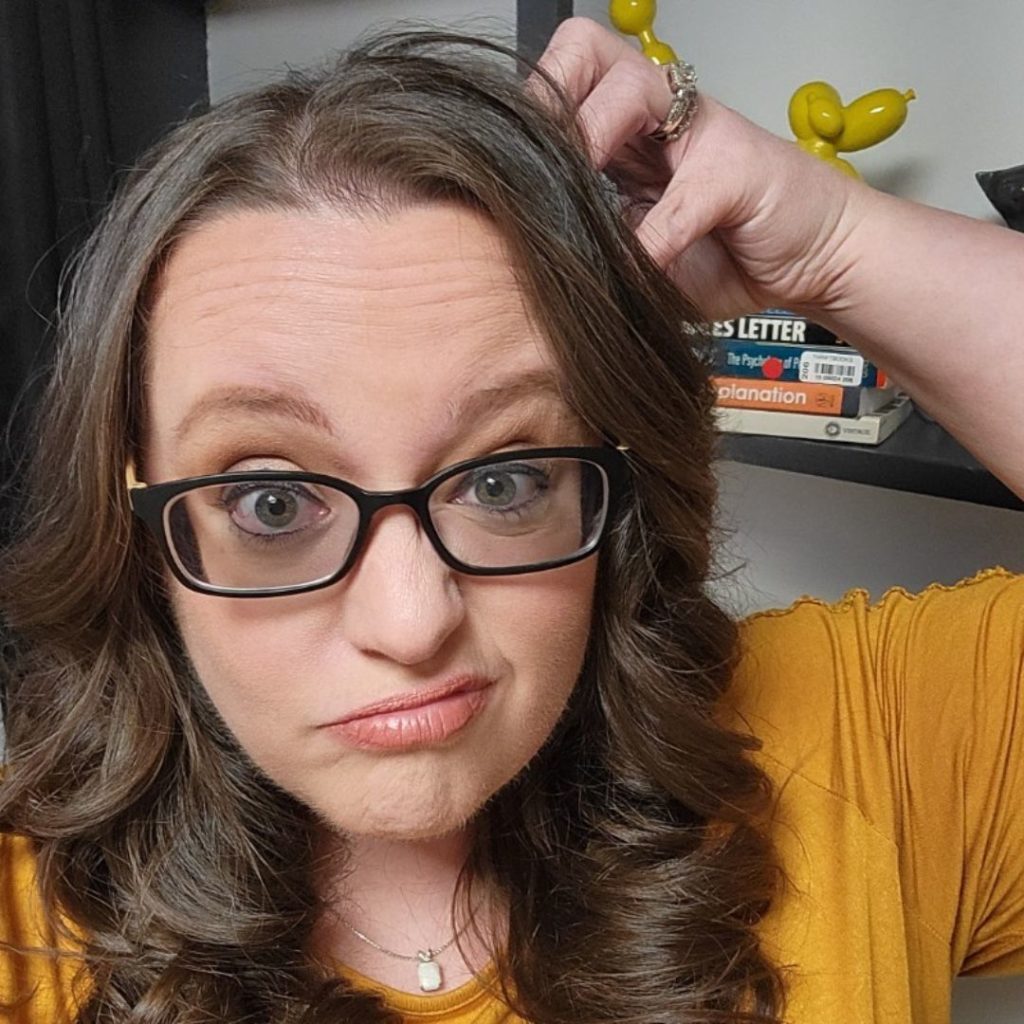
Alyson Lex is a copywriter who specializes in high converting sales letters and in empathizing with prospects to create more effective sales letters.
Podcast: Play in new window | Download (Duration: 38:21 — 35.1MB) | Embed
Subscribe: Apple Podcasts | Spotify | Amazon Music | iHeartRadio | Podchaser | RSS
She believes in four levels of research:
- socially (how prospects relate to friends)
- relationally (how prospects relate to you, i.e. have they bought or tweeted you)
- psychologically (what keeps them up at night)
- demographics (gender, age, location)
Research for Alyson consists of checking out industry news articles, social media (especially the comments section) and sites like RipOffReport to get a handle on peoples’ problems, frustrations, fears, and beliefs. Then, her five step copywriting process is as follows:
- get attention (headline, pre-head, sub-head)
- identify the problem
- introduce a solution
- explain how to get it
- don’t let them walk away without it
Alyson also talks about common copywriting mistakes, such as using the word “I” within the first three paragraphs of a sales letter.
Quotes:
“They don’t care about you as the copywriter, product creator, or business owner at all. They care about themselves—their fears, their aspirations, and what you can do for them.” – Alyson Lex
“I want my clients to be successful. So if they have someone who is more of an expert than I am in something like web design, then it doesn’t serve my client for me to hold on just because I think it should be a certain way.” – Alyson Lex
“I like to learn principles rather than shiny techniques, because at the base, those principles stay the same. They just adapt to the technology and the trend.” – Alyson Lex
Takeaways:
04:08 Effective copywriting starts with deep research into your target audience’s psychological, social, and relational experiences.
11:20 The language you use in sales copy should mirror exactly how your customers speak, not industry jargon or technical terms.
24:02 Sales copy principles remain constant, even as design trends and graphic styles change over time.
29:05 The first few paragraphs of any sales letter should focus entirely on the customer’s problems, not on the writer’s experiences.
34:23 Entrepreneurs can overcome writer’s block by following a structured copywriting formula and conducting thorough audience research.
Resources
- Alyson Lex (Official Site)
- Headline Generator (Site)
- Alyson (Twitter)
- Alyson (LinkedIn)
Podcast: Play in new window | Download (Duration: 38:21 — 35.1MB) | Embed
Subscribe: Apple Podcasts | Spotify | Amazon Music | iHeartRadio | Podchaser | RSS
Transcript
Download transcript (.txt)Robert Plank Show episode 343, high converting sales, copy formula, find your sales, hook through empathy and make money by following a simple copywriting formula with Alice and Lex. Hey everyone, and welcome back to the show. We're talking right now with Alice and Lex and in order to get to her website, let me spell it out for you. That's a l, y, s o, n, l, e, x.com, and creating better copy means more of your prospects will become your customers, which leads to a bigger business and more dollars in your pocket. So Allison Lex is the copy coach and the direct response copywriter that makes the magic happen in your sales letters, your landing pages, your lead magnets and email campaigns, and she helps entrepreneurs, just like you, create winning copy for your business, whether you simply need a second set of eyes or you want someone to do it all for you. So Allison, welcome to the show.
Thank you so much for having me. I am stoked to be here. It's gonna be a lot of fun. I am
stoked as well, and I'm planning on having a lot of fun too. And I just kind of want to get it out of the way, whenever we bring up copywriting, I feel like I always have to say that when we're talking copywriting, we're talking about salesmanship and print. We're talking about putting those words on your web page that way people buy from you. And it's not the when you draw a C and put a circle around it. I feel like sometimes I have to sort of mention that. So, so copywriting, um, can you kind of tell us as far as copywriting goes, like, I mean, is there anything that you do that kind of makes you special and you kind of stand out in the world of copywriting?
Well, so yeah, I focus on high converting sales copies. So another thing that I like to talk about is the difference between sales copy and content, because a lot of times people think, Oh, you mean my blog posts. And no, I don't. I mean your sales pages and your funnels and your services tab on your website and anything, your your landing pages, your autoresponder emails, all of that stuff that's designed to get people to give you their time, attention, information or money. And so that's, that's what I mean by copy. And, um, yeah, I've been doing it for a long time. I love direct response, and I even have, I have my own formula that I've published and developed and published as a product that I use to create sales copy and also teach other people how to do it.
Awesome. Well, I can't wait to crack that open. Dive into that a little bit. And I'm glad that you you made that distinction that there's content like, you're like, a blog post. You put out a blog post, and people might like, click on it and read it and leave, or maybe they'll tweet it. And then there are these others, like sales copy, usually. Then there's actual landing pages where we might want someone to, like, opt in or book an appointment with us or buy something from us. So I'm really glad that you, that you made that distinction. And so when, when you have a like, a client coming to you, what do they say exactly? Do they say, like, I need a website, or my website isn't converting, needs to be cleaned up. I mean, what's the starting point if someone first comes to you? Yeah,
so we have a lot of different starting points. Sometimes it's I don't know why I'm not making sales. And sometimes you have people who have done all of the deep dive work for me already, and say, I need a new sales page written for my product, or I'm launching a new product, or I'm going into a new market, or I'm having this special offer, this campaign or this event, and so then we have something really specific in mind. So really you have either people who just need help, kind of diagnosing and then treating a problem, or people who are ready to put something new out into the world, and they know specifically what they want. And I can either work with people to develop the strategy and and then the deliverables for the product or project rather, or, Hey, you tell me what you want, and I'll make it happen.
Awesome. And so since I'm kind of, like curious about your thought process, and you mentioned this copywriting formula that you had at the beginning, so I'm really curious. So if someone comes to you and they say, All right, I want something new. I mean, what happens then, like, what sort of questions your Do you ask, and what's your thought process there? Yeah,
so I do a whole pre writing analysis, and some of that I do with the client, and some of it I do on my own, because research is a big part of any copy process. And whether you're writing your own copy or hiring a copywriter, the research has to be done, no matter what. You've got to not only know who your audience is on a demographic level, but there are actually three other levels that I talk about that you need to know your audience. You need to know them socially, how they relate to their friends. So things you would know, if you're their friend on Facebook, relationally, how they relate to you have they, you know, bought from you tweeted you come into your shop, if you have a brick and mortar kind of thing, and then you need to know them psychologically. And that is, that's the deep dive, copy gold stuff that I call, I call copy gold. And it's things like, what keeps them up at night? What are they worried about? Um. Um, essentially, what problem are they paying you to solve for them? That's what it's going to boil down to. And once you've done all that work, then you can begin to talk about how your product or your service addresses those worries and those aspirations and those problems. And you can do that through the little the formula that I have that I mentioned already, and I've kind of broken that down to a high level, five steps, which I'm happy to share with you, if you'd like, Yeah, sure. Okay, so step number one is to get their attention, identify your audience, and get their attention. And that's going to be done in the headline area. Headline, pre, head, sub, head, all those, you know, headline related parts. And then step two is to identify the problem. Step three is to introduce your solution. Step four is tell them how to get it. And step five is, don't let them walk away without it. And so if you follow those some and obviously super high level, super fast. I just rattled it off, but also easy to remember. And then there are different elements within those five steps. That is part of the Ultimate Sales generator program that I have that kind of gives you exactly where in there the testimonials go into step three, by the way, and that kind of thing, so that you can make sure you have all of the elements in the right spot, cool.
And I think that, you know, like, I'm sure that we don't have time to unpack all this, and I'm sure that we want to save that for, you know, your freebie or your product, or stuff like that. But so just to kind of recap, though, so when you you do your research, you look at that audience, and you break it down to the three levels, socially, which is how they relate to friends, relationally, which is how they relate to you, how they bought from you or tweeted from you. And then psychologically, which is that problem that keeps them up at night, which is kind of how, how you, how you, you know, base the copy out of around this problem that there's a solution for. And then after that sort of solution is apparent, then there's the product, and those five steps that you just mentioned. So step number one, get attention, which is the headline, pre head and sub head. Step number two, identify the problem. Step number three, introduce the solution. Step number four, explain how to get it. And step number five, don't let them walk away without it. I think that it's really helpful to kind of get that, that whole high level overview, because I'm hoping that now, if people are listening and they look back at their sales letters, either that maybe they made themselves or they hired someone else, maybe they can now look at those sales letters and kind of see about those steps there, and then maybe, you know, if they can look at other people's sales letters or get ideas, or know if they're, you know, a co operator is doing their job if they kind of go through those steps. And so thanks for for breaking down those steps. And so can you kind of give us some, like, an example of maybe, like a client you've had, and they came to you and they said, I have these problems. I have these things that needed solving. And you kind of did your research, ran it through this formula and came up with something super awesome. Yeah,
so I actually just wrote a new sales page for a self storage info product. Okay, so it was a guy that was teaching people how to make money investing in self storage properties. You know, those places you go when you're in between houses? Um, I had a storage unit for so long, um, and he had a sales page, and his problem was that he just hadn't paid a lot of attention to it, right? So he had a lot of other businesses going on, and this was just always on the back burner. And he was finally, like enough, I have this asset. Let's actually make it some money. And so I went in, and I looked at his sales page, which was basically just a description of the product, you know, which, hey, something's better than nothing. And then so I got, he sent me the product, and I was able to kind of dive in. I went and looked at a lot of different social sites and things like that, of people in that particular space. So I got a little bit about his customer, and I was able to find some forums, and I read blog comments a lot, and comments on news articles. Comments Section is really good if you want to get insight into your audience. And then I was able to go ahead and build kind of a sales letter from scratch. And what I determined was that the way that he presented his product was not done the way that I think it would have been done to be more successful. He didn't have bonuses built in. So I was able to split his product out create some bonuses out of things he'd already offered. Just called him something different, and was able to make a much more attractive package. And I think that's being implemented and launched now,
super cool. And so there's lots of good stuff in there, and I like that you, you kind of went on Facebook and you. Looked at, you know, new sites and comments just to kind of get, get a feel for the customers. And, I mean, what were you really looking for with that exactly? Were you looking for, like, like, a common, repeated problem, or to get specific language, or something else, like, what was the reason for diving deep into these comment sections?
That's actually, you hit the nail on the head right there. So I look for like I said, you want to get to know your audience psychologically, and the best way to do that is to look at the problems they say they're having, or the frustrations that they have, or, you know, why they think this didn't work? I read rip off report a lot because, you know, they these people have invested in something that they think didn't work. Why did they think it didn't work? There's an objection that I can overcome in my sales copy. And like you said, the language, I really am a big advocate of using the words that your customers use. You know, I and I'm guilty of it myself. I use my own words. I'll say, hey, I can write some really high converting sales copy. And it's like, no wait, I hope you get more sales. Like nobody's coming and saying, I want some high converting sales. Copy, they say, I want more sales. So by using the language that your customers use, you're going to connect with them on a better level, and you're going to, well, you're going to see more conversions or more
and I think that's a really important reminder that I'm I'm bad at, and I need to be reminded of every now and then to, like, sort of tone down the jargon and to make things more accessible. And I think that the time that it really clicked with me was I was an attendee on someone else's webinar, and this person literally started the webinar and started talking about autoresponders and AWeber and they're like talking about a Weber code. I'm thinking, Well, geez, if I just happen to come across this person, and maybe if I didn't even know what an autoresponder was, or if I had like, the wrong idea, I would be completely lost. And so out of curiosity, when you looked at the comment sections about those people who use self storage units? I mean, what sort of stuff jumped out at you?
Well, so actually, in this instance, it wasn't necessarily people who use the Self Storage Unit. It's the people who are investing in the entire properties, so they're buying them in order to make money and running the business. And so, um, I was able to identify the demographic. So in the in the about your audience part, you mentioned the the three levels, but the fourth level is actually the demographics. So you start with who they are, then what they like, and then how they relate to you, and then their psychological stuff. But I knew the demographics, and it tended to be a little bit older looking for an investment property, so they had some disposable income, and we identified a few occupations or professions that they were most likely to be in. And so I was able to take that information, and at one point I even I there's some assuming that goes in. So I made an assumption based on their potential political beliefs. And I, you know, it's always fun when you dive into the political comments, but you're able to to just kind of see that okay, they're frustrated with with the state of the economy, and they're they're a little unsure about the future of the world or the country, and there's some changes, and what does that mean for my family and my income, and is my money safe in the banks? And where can I get a really good investment property that's going to have a good return? Or, you know, I'm looking to reduce my initial cash out like, like. So you have a lot of different, different fears and different problems that they talk about. And it doesn't necessarily need to be on a self storage website. It can be on any website where your target market hangs out.
Does that make sense? Yeah, it does. And what's, what's sort of, I don't know, like, weird and magical about this whole copywriting thing is, like, when, as you're sort of describing their their fears and their problems with, like, all this, like, you know, economic uncertainty, and at the same time the like, you know, the sort of the reliability and the ability for them to make this passive income, it's like just kind of, for some reason, just hearing about these sort of problems, like, almost gets me excited about renting out storage units, even though I've never done it. Have No, no interest in it, but just kind of like, kind of diving into it, sort of like, almost like, excites me. Just sort of, sort of hearing about it, and I think that that's sort of interesting. We're taking like, sort of a boring topic, where, before you said it was just a description of a product, and now you're talking about, you know, possibilities and about, like, the fear of, like, providing for their family. Now it's getting into all this sort of, like, sort of fun stuff, and it sounds like that. I mean, like, the research is a lot, is a lot of that, right? I mean, it sort of sounds like if you didn't do that sort of research, or you only did the research for a few minutes, you kind of wouldn't get into like that demand. Magical, exciting part is that about right?
Absolutely, the more you know about your customer, the more you can get into their head, the the easier the copy is. You know, one of, one of, I guess you call it almost a dirty little secret is, I can write the copy in a day. I mean, I could sit down and write the copy in just a few hours. It's the research that takes all the time, and so I really understand the where you're going to come from, and that's where you find the hook, if you will, the reason that these people are going to read this letter, because, quite honestly, they don't care about your product. They don't care about why, you know, why you're so excited to launch your product, they don't care about you as the copywriter or the product creator or the business owner at all. They care about themselves, and they care about their fears and their aspirations and what you can do for them. And you know, that's not saying anything about the human condition. It's just that's how it is. There's so much noise out there that unless you can tell me why I should be reading this, or what's in it. For me, I'm not gonna pay attention because I just don't have time.
So when you're doing this research, and you're, you know, trying to find the hook, and you're trying to find, like, you know, the the one thing to sort of grab them, do you do you like, budget a certain amount of time? Like, do you say I gonna spend, you know, 10 hours on this or 10 days? Or is it a matter of, like, you go out until you find the hook and then you're done? Or, like, how do you sort of budget or a lot that research time?
Yeah, I mean, I'm not gonna stop researching just because I've hit a certain budgeted time. And also, some audiences are easier for me to write to than others. You know, I'm a mom of a one year old. So if you've got a product geared at one year olds and their moms, well, I don't really need to do much research, because I am that person. But if you're speaking about a 50 year old man who is an investment banker, I've got a little more to do, because I've never been that person. And so there's a degree of empathy that comes with it, and being able to imagine myself in those, you know, in other people's shoes. And you know, that might be something earlier in the show you asked what I bring to the table that's kind of unique. And maybe my empathy, my ability to empathize, is one of those things, but to be able to to understand somebody, it's going to be easier if I, if I am that person, or have someone that I know is that person, then if it's a totally foreign market for me, Okay,
fair enough. So, so some things you can relate to very easily, and you don't need a lot of research, and some things require more research. But I mean, like, about how long are we talking? Like, is it like, a few days, a few weeks. Like, about how long, I know that it it takes different lengths time, but I mean, about how long does it
take? Um, I think if you probably put all the time together, it would be a couple of days, you know, if I was to sit and do it straight for a couple of days, then it would be, it would be the right amount, um, you know, but that is often spread through, like you said, a couple of weeks because I can't just sit and do research for three days,
I couldn't either my eyes start to cross together, yeah,
yeah. And it, it's so funny, I was a big Mad Men fan. I don't know if you were as well, but Don Draper came to sit and do nothing a lot, and there is a degree of that. There is a degree of the sitting and doing what looks like nothing, but it's really kind of letting things digest. And you know, some of my best headlines I've come up with while I'm sitting out at the pond in my backyard, because I'm thinking and I'm seeing and I'm building my swipe file, and I'm on 85,000 different lists. I don't even know anymore. My email inbox is crazy, but I'm always looking for different ideas and different things, and they kind of stitch themselves together sometimes in my subconscious, and that can take time too. So by the time I actually sit down to write. I've at least got the idea together. I know which way I'm going to go with it. And at the same time, if you're writing your own copy, you've got to do the same thing too. You're always kind of looking at your business and looking at other people's businesses and saying, Oh, this might work really well here, and maybe I can talk about this experience, or this customers told me about this problem, so I need to address that in my copy. And you're always kind of building and working
awesome, and I can relate to a lot of that, the like the subconscious doing the work for you, or just when you try to stop pushing it so much, and you just kind of take a break and go into nature, or just like, unplug and relax, and then sometimes, like different ideas combine. Or like an idea, kind of, you can take an old idea and update it. Or kind of, like you said, like, see an idea from like, some other niche or something else, and like, sort of take a piece of it and then try to apply it to your project. So that way it's like it does. Doesn't look like it came from the original thing, but it's kind of the same, like, you know, like the same, like idea, or like message or whatever behind it. I can relate to a lot of that. And so, so there's this whole whole phase of, like, researching and thinking, and then when it comes time to actually, like, sit down and write the thing. I mean, what's your process there? Do you like write the the copy in order? Or do you write like the end first of a headline, first, or kind of jump around? Or like, what sort of your process when it comes to actually writing these sales letters, I try
to start at the beginning. If I have an idea for a headline, I will throw it in there. If I'm stuck, I'll skip it for the time being. But I do write a lot of different headlines over and over again before I settle on one. So sometimes I'll throw a placeholder headline in there with an idea, and then I'll write a little bit of the intro, and then I'm like, Oh, that would that would make a good headline. So I rearrange it, and I stop, and I I, you know, I fix. Some people write an entire first draft and just then go back and completely edit. And I edit as I go, but I do tend to write in order. So the really, the only part that stays out of order is that really the step one of that five step formula I told you about that introduction call out headline area just because sometimes that's the hardest, because there's a lot of pressure on the headline right and but I write it in order. I may go edit and move things around and fill in, but that's just my process. Everybody's different there.
Okay, fair enough. But I think that that's, there's a really good lesson in there that, you know, if in whatever you're doing, if, I mean, if it's copywriting or writing in general, I mean just even if you can't think of, like the best, most amazing headline ever, if you can think of a good enough one, why not put it out there, have as the placeholder, write the rest of the copy, and then your subconscious might even think of a better one, and you can just go in there and update it. And if not, well, then that's the best headline that you came up with. And so, you know, as you were explaining, like, your process and about, like, writing and stuff, one thing that's always kind of, I don't know, like, not really confused me, but kind of, I feel like I don't 100% grasp it is, it seems like maybe 510, years ago, the trend kind of shifted to more of, like, you know, more graphics, or, like, less text. Or sometimes I'll go to a website and it looks super slick, like they'll have, like, you know, multiple columns and, like, icons and pictures and stuff like that. And so, I mean, how does, how does that sort of, how does that relate? Because I feel like, um, a lot of like, you know, old school copy is, like, you know, how, like, a web page, it's 1020, 30 pages long, and it's all text. And now, like, some of this, like, you know, graphical sort of fun, less words on the page is taking over. And so, I mean, like, what are your thoughts on that? And has that changed your process at all?
It really doesn't change my process, with the exception that in the initial client consultation, we'll have a conversation about what the end result will look like, if they want more the old school, which I love, old school, that's just, I, you know, I worked at Glazer Kennedy, so Dan Kennedy style is my style for a lot. But if they want the graphics, we tend to keep the same, the same foundation, those same five steps, or the same 23 elements of the Big Daddy formula, as I call it. They're still there. They just look different. They might have some different backgrounds, or we might split it into some columns or things like that. But if you break down some of the big name sales pages of these, these old school copywriters that have adapted to some new school methods. They're going to have all of those elements there. They just, they've been updated. And that's one of the reasons that I like to learn principles, rather than the shiny technique, because at the base, those principles stay the same. It just, it does adapt to the technology and the trend, as you said,
Cool. So the the foundation is the same, but then just sort of the the fad or the the trend is, is what changes. And so if we're trying to, like, adapt to those, those new changes. I mean, how do we do it? Like, do you? Do you write all the text first, and then if, if you have that client that they want, sort of the modern look do you then go and update it? Or, like, what sort of your your thought process? If you're trying to take this sort of, like, you know, proven and tried and tested sort of sales letter, and then make it look as if it's if it's brand new, what's your process? There you
hit it again. So I write it the way that I would write anything, and then I adapt it for the medium. So if I'm writing a VSL, I write the sales letter, and then I just make it a script. And the I mean, because I write conversationally anyway, so it's not a whole lot of editing, but this way the foundation, like you said, is there, and it's based in what I know works, and then we can make it look. However, we need to make it look if I need to go back and put in a box, or say, this is where a Section Breaks going to be, or, Hey, make this a different background color, or whatever instructions I'm going to give to the web implementer, then that's what I do. And a lot of times I will say, you know, does your web guy know what he's doing, or does your web girl know what she's doing, and if the answer is yes, then I just give them a copy and say, Here's my thoughts. But you know the design and so I really am a big believer in letting the expertise be where it is. I have my ideas about user experience, I have my ideas about design. That doesn't mean I'm the expert. And what it does mean is I can give my ideas and let them implement as they see fit.
Awesome. I like that a lot. And so as you're as you're sort of making these changes, like you said, like if you're saying, Well, you know, put, put these check boxes in here, or hand it off to the web designer. Do you fight any kind of perfectionism or anything like that.
I think there's always a degree of perfectionism, because you do get attached to it. You like the way it's turned out. You wouldn't deliver it to the client if you didn't. But I also recognize that, hey, once you pay me the copyrights yours, you're going to deal with it what you want anyway. So why don't I get on board? Give you what I think, is the best idea so that you can go forward owning you're the business owner, you're in charge, so you just own this copy and have the best experience you can I want my clients to be successful. So if they have somebody who's more an expert than I am with something like web design, then it doesn't serve my client for me to hold on just because I think it should be a certain way. I mean, of course, there's ego at play and perfectionism, like you said, but you also got to just let it go and know what battles are worth fighting.
Good way of looking at and like how you said that, it would sort of like, well, you're just putting your best ideas forward. And if you're and your client might have a different idea, or they might, you know, have someone else beef it up, or they might, you know, they might do any number of things with it. And so all we can do is our best. So really great stuff. And so, so I'm sort of struggling to wind things down here, but um, you know what seems what keeps coming back to mind with me is, you know, you're mentioning about like, different pieces of copy on a page. And even in your bio, we mentioned that, like, sometimes it helps to get that sort of fresh set of eyes. And so, you know, when you look at all these sort of sales letters around, do you see like the same mistake, or like a really common mistake being made, if you just looked at like a random sales letter on the internet. Is there like a mistake? You'd almost like guarantee we would see
yes. You want to know what it is. Heck, yeah, I do. Okay. The mistake is using the word I in the first three paragraphs of the sales letter. So I say this because the beginning of your sales letter all the way up until my step three, where you're telling your customer about the solution you have for them, is the sales letter is not about you. It at all. It's completely and 100% about them, their problem and their experience. And so a lot of times I'll see a sales letter that'll say, Is this the problem you have? Well, I have the solution. Keep reading. No, here's the problem, here's the problem, here's about them, about them, about them, and the solution doesn't show up until way later, because that's when you start talking about yourself. The only time you can do that is if you're you're telling them how you were there, and you understand. So if I was to say something like, you know is your business struggling because your copy isn't doing well, I know what that feels like. I was there just last year. I know how it feels to feel this way you're feeling like, back to you, you know what I mean. So you really shouldn't be talking about yourself at all for a long time in your sales copy.
That's really good advice. And that's one of those things where I think that that the times that I've noticed that, well, there we go again. I've right, but what I've noticed the word I being in the copy so much. It's like, it's like, hard to not notice it. And it's like, if it's not there, I don't even notice that's not there, but if it is there, it's like, that's, that's sort of all I see. And as you were sort of explaining how to, like, saying, like, here's a sentence that has this sort of too much of I mentioned it's what I realized was like, as you were saying, like, I was thinking, like, a way to clean up that sentence. You could cross out like, half the words and still say the same thing, but in less words. So if it's like, Who are you having, having this problem? So do I keep reading? Well, if you just say, are you having this problem? Or if yes, keep reading, then it's like, not about you, and it says the same in less words. And even as you were just kind of explaining, you know, like using the word I too much what it also kind of brought to. Mind for me was like, you know, like, if you try to tell someone about, like, Oh, I just had like, the worst day, and then instead of them, like, listening to you, they say, oh, no, wait, my day is even worse. And it's like, well, now you're kind of one upping me, and you're kind of minimizing, like, what, what my problem is. So definitely I can see that being a huge kind of, kind of thing to avoid that, having that, that I in there. And I've noticed too, like, because I used to, like, write a lot of copy for myself and then get it critiqued, to kind of beef it up. And a problem that I had for a long time was using, like, don't or can't, or using, like, a lot of negative stuff. And just by kind of making that pass on it, and by flipping some of that language around, it was more concise, more simple, easier to follow, kind of flowed through. And it was just like, it's sort of weird how we all have those sort of language patterns, and not just in the like the usual tics, but even just like you said, like saying I or certain things are kind of embedded in our own words. That if we don't know to look for some of those things to fix, then we're not even gonna notice that they're there. But our customers notice, because they won't buy so better to get those sorts of things.
That's exactly it. That's exactly and you want to just, you want to audit your copy for any stumbling blocks that your customers might hit, like, like we talked about earlier jargon, or words that might be difficult to understand too high of a reading level, talking about yourself too much, and even once it's implemented graphically, reverse print, which is white text on black background. If you have too much of that, it hurts your eyes. Pictures that are distracting or confusing calls to action where they're not sure exactly where to click. You want to you want to audit your your sales pages for those things, because those are very easy places for your customers to say, Okay, I'm done reading. Let me click x now.
And maybe even not even realize why they were clicking x, just it was, like, exactly, too much kind of turn them off, slowed them down, or whatever. And then they were, they were out of there. So I'm sure that people are listening. They've gotten a lot of, like, really good stuff. And if they're like me, they've kind of gotten excited about about, I feel like I want to go write a sales letter now or something. Yeah, do it. That would be awesome. But so we've got a little, like, a lot of things to do and a lot of things to avoid. And I'm sure that a lot of people listening kind of would like to, sort of have have us all in one place, or have the whole blueprint. And so if someone either wants to hire you to get their copy written, or they want to find some resource of yours to make a sales letter without making all the usual mistakes. I mean, do you have any stuff like that? And can you tell us about your websites and your
products? Yeah, so you mentioned it at the beginning. Allison lex.com, is my website, and that's my home on the web. And of course, my mom couldn't spell it normally, so it's a l, y, s, O, N, and last name is L, E, x.com, and if you want to grab I have a headline generator. So we didn't even talk about headlines like I usually do, but it's going to help you create six headlines in 30 seconds by answering just a few short questions about your business. And it's a PDF download, so super free, and that's at WWW dot ask a copy expert.com/generate and currently, right now, after that, like on the thank you page of that, there is a an opportunity to snag a free video where I go through those five steps we talked about a little more in depth and actually with slides so you can write it down, rather than struggling to scribble down notes as we talked very quickly Back and forth.
Super cool. So, so what's good about today is hopefully they kind of whet their appetite a little bit, and then now they've they're excited, and they say, Okay, well, there were a lot of there were a lot of steps in there, and it sounded great, but didn't have time to write it all down. And they should go to ask a copy expert.com, forward, slash, generate, to get two bonuses in one, right? They get that generator, they get that those headlines cranked out, and they can get that resource as well,
that free video, yeah, I love helping people create their own copy. I believe that entrepreneurs and small business owners are going to save the world, and I would love to help as many people be successful as possible. So definitely snag those free resources so you can build your businesses
super great. And everyone should do that, because, I mean, just having having writer's block and stuff like that, isn't a good enough reason to hold you back from all your hopes and dreams and taking care of your family and all that usual copywriting stuff that that gets everyone all jazz and everything and so. So ask a copy expert.com forward slash generate to get the headline generated. And then, if someone is looking kind of to hire you as a copywriter, is that a thing people can do as well?
Yeah, people can definitely hire me. I do have openings for clients, and so you can contact me, either on my website. Allison lex.com, or if. You want to browse around, ask a copy expert Comm, there's contact information. There too, great
stuff. So make sure that while you're either at Ask a copy expert.com/generate or at Allison lex.com to see what she's all about. If you finally seen enough and you're ready to pull the trigger, find that contact form, fill it out and let Allison know your needs, and you'll set up a time to meet, and you'll get the ball rolling on that stuff. And so I want to thank you so much, Allison from Allison lex.com for stopping by and sharing all this sort of entertaining stuff about copywriting. And what I really liked about our talk today is that it sounds like a lot of it is just like uncovering the good ideas. A lot of it sounds like, you know, researching your those customers, and then, you know, going and checking out things like rip off report or social media or comments or new sites, or just kind of digging deep and kind of getting into their heads. And then once they get once you kind of get the hook and get those ideas and get those terms, and it sounds like just plugging it into that step by step process goes a lot smoother, as opposed to either people trying to wing it and not having a plan, not having a formula, sounds like a really easy way to get writer's block, but I'm sure a lot of other people, they still get stuck. And they say, okay, great. Got to have a headline. Got to do all this. But if they don't, kind of start it with some of those raw materials, some of that research first, then they're also going to have trouble with the form, with the, you know, the step by step formula. So research first and then all these different steps and then also avoid different stumbling blocks. So lots of great stuff. And everyone should go to Allison lex.com and ask a copy expert.com/generate and thanks so much, Allison, for stopping by and sharing with us what you know about copywriting.
Thank you so much for having me. I really had a good time. Do
you run your online business using WordPress? Did you know that the number one reason why people's WordPress sites get hacked is because of outdated plugins, outdated WordPress or just flat out not knowing what they have out there. I mean, how many times have you created a test site and just let it sit there? You're leaving yourself at risk. Besides that, you're wasting a ton of time every single time WordPress updates or your plugins update, there's a better way check out website remote where you can manage all of your WordPress sites from one simple to use dashboard. I'm talking about comparing what's on each site, comparing what versions are out there, and most importantly, choosing what you want to update when you want to update it with one single click. This is the way that you need to be managing all of your WordPress sites. And we have a special just for you for being a listener of the Lance thomashiro Show. Head on over to website, remote.com, forward slash LTS. That's website, remote.com, forward slash LTS, to get your 99 cent trial started today. You're never going to look at managing your WordPress sites the same way again.
You.