Published Last updated
View in Podcast Library: stories, quotes, books, and resources in one place.
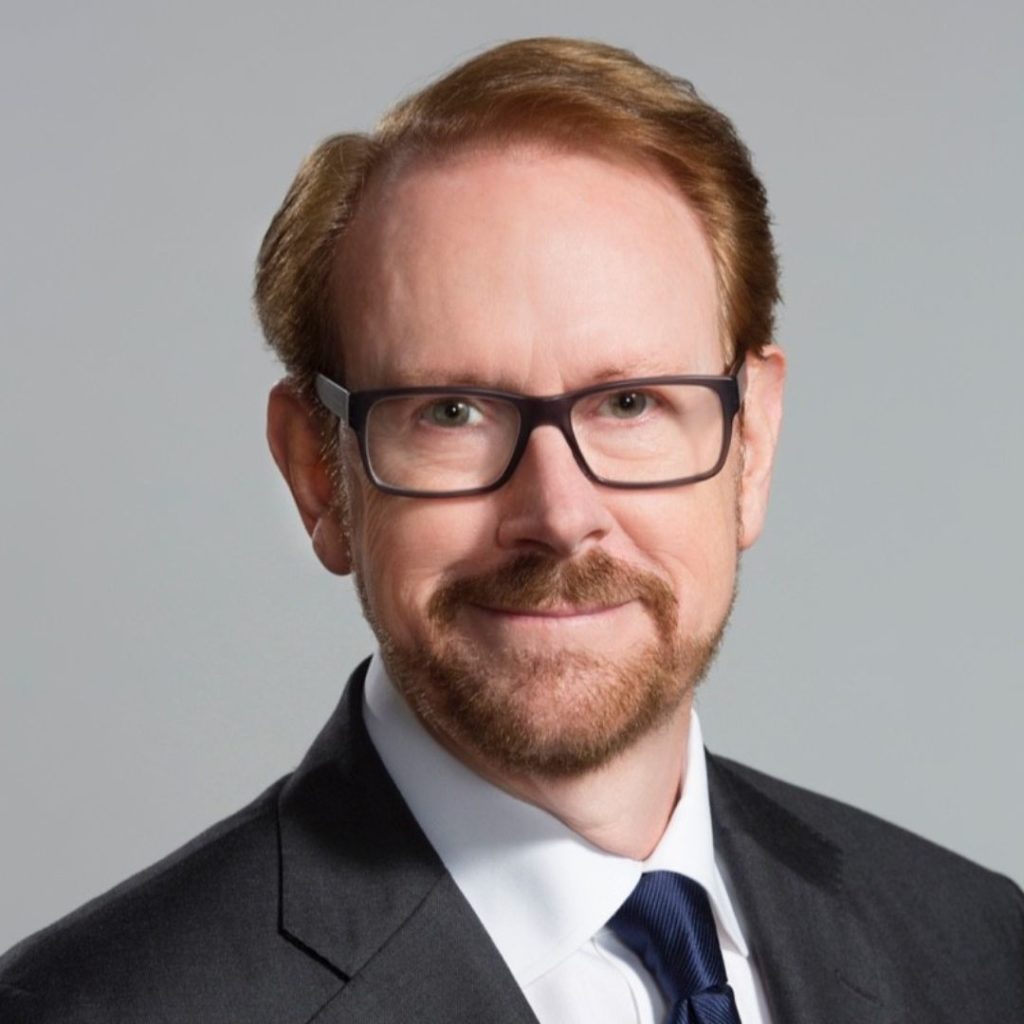
Daniel Burrus covers Anticipatory Strategy in this Marketer of the Day episode. Daniel Burrus explains how anticipating hard trends can turn disruption and change into opportunities before competitors recognize them. His Hard Trend Methodology separates future facts that will happen from soft trends based on assumptions that can still change. Daniel recommends skipping apparent problems, questioning assumptions, and searching for the larger opportunity instead of staying busy solving the wrong issue. He identifies demographics, government regulation, and technology as three major areas where predictable developments can reveal new markets. His mobile real estate app example used a predictable technology trend, outside programming talent, and a recurring revenue model that reached $1.1 million monthly. Daniel also advocates "opposites work better" and repeatedly expanding a big idea into the "bigger big." The key takeaway is to base bold decisions on visible certainties so you can act before disruption forces you to react.
Daniel Burrus is considered one of the world’s leading technology forecasters and innovation experts. He is the CEO of Burrus Research, a research and consulting firm that monitors global advances in technology driven trends to help clients profit from technological, social and business forces that are converging to create enormous, untapped opportunities.
He is a strategic advisor to executives helping them to develop game-changing strategies based on his proven methodologies for capitalizing on technology innovations. He is the author of seven books, including The New York Times bestseller Flash Foresight, and his latest book, The Anticipatory Organization. Daniel has a ton of interesting stories to share with us, as well as the three categories of hard trends that you should be looking for:
- demographics (i.e. baby boomers -> a smartwatch for seniors)
- government regulation
- technology
Quotes:
“If it can be done, it will be done. If you don’t do it, someone else will.” – Daniel Burrus
“Take your problems and skip them. Use the hard trends that are shaping the future to gain confidence to make a bold move.” – Daniel Burrus
“Instead of trying to be successful, which is inwardly focused and measured by you, don’t create a life of success. Why not create a life of significance?” – Daniel Burrus
Takeaways:
06:05 Skip problems that seem impossible and focus on innovative solutions.
14:59 Create a life of significance by helping others, not just pursuing personal success.
19:42 Solving real problems for specific demographics creates powerful business opportunities.
23:57 Make your business ideas newsworthy to gain free marketing and credibility.
28:12 Think bigger than your initial idea – there’s always a “bigger big” waiting to be discovered.
Resources
- The Anticipatory Organization (get a free copy of the book)
- Daniel Burrus TedX Talk
- Daniel’s books (Amazon author page)
Podcast: Play in new window | Download (Duration: 29:35 — 27.1MB) | Embed
Subscribe: Apple Podcasts | Spotify | Amazon Music | iHeartRadio | Podchaser | RSS
Transcript
Download transcript (.txt)Marketer of the day number 422, the anticipatory organization turn disruption and change into opportunity and advantage. With innovation expert Daniel Burress, Hey everyone, and thanks for listening. We're talking right now with Dan Burrus, and Dan is considered one of the world's leading technology forecasters and innovation experts. And he's the CEO of Burroughs research and that's a research and consulting firm that monitors global advances in technology driven trends to help clients profit from technological, social and business forces that are conversing converging to create enormous untapped opportunities. And Dan is a strategic advisor to executives, helping them to develop game changing strategies based on his proven methodologies for capitalizing on technology innovations. And he's the author of seven books, including The New York Times bestseller flash for site, and his latest book is called The anticipatory organization. And Dan has all kinds of amazing things to share with us today. He just told me that he just passed a million followers on LinkedIn. Gonna have a lot of fun. How are things? Mr. Dan,
hey, I'm doing great, and thanks for having me on your show. Glad to have
you. And I think I might have kind of butchered your last name there. I know that we just kind of asked what it was, and then kind of had a little bit of a brain fart. So one more time. How did we say last name,
a Burris burrow. You didn't do bad Burris, yes.
All right, so I was, I was close. All right. So anyway, so, so what do you have going on these days? Well,
first of all, it may sound like this book is only for really big companies, but actually it's not. It's for individuals, entrepreneurs, people that are just have a 12345, employees. This is right up your alley, because again, I've started six companies over the years. Five were profitable in the first year, four were national leaders in the first year. So I don't just write books. I know how to do this, and I'm sharing all of those techniques in the anticipatory organization,
great. And I'm excited to jump in all of that. And so, I mean, just, kind of just jumping off here. Do you see everyone making like, a mistake all across the board, like every business that you see that it's maybe like having trouble getting going or growing? Do you see like, a huge, like, number one problem just happens again and
again? Yeah. You know, that's a really great question. I think what happens is we all get, number one, we all are really busy, and we get really busy missing the bigger opportunity. So you can busy yourself today, right out of business. So you also have to schedule some time to be strategic. Secondly, we get a lot of barriers in our way, a lot of big problems. Maybe you think, Well, I got to raise money, or I got to do this or that, but actually one of the principles in the book is to take your biggest problem and skip it. And it shows how to do that. And when you understand problem skipping, you can succeed faster. And I'll give you one more. I think we all think big about our future, but here's what I would say, think big about it, but then realized you just thought way too small. There's a bigger big. So never do the big, do the bigger big? And again, I'm trying to show you how to see that bigger, big,
great. And I can definitely relate to that, that kind of stuff, in letting just something silly hold me back or and not thinking big enough. And it reminds me kind of like, you know, like, if you're, if you're playing baseball, and you like, you swing the bat to hit the ball, you you swing through the ball. Or when they heat you, like karate and stuff like that, they teach you to punch through stuff. Or even, like, if you're running, and you say, you know, I'm gonna run until I get to the next street or the next telephone pole. And then you run a little further, or you set your sights further. And then you have to be knowing that even if you fall short, then you'll you'll be further than you thought. So if you're like, Well, I'm just going to go like, you know the next I'm going to run the next minute. But if you say, Well, I'm going to run the next three minutes, even if you fall short at like, two and a half minutes, you're like, that's way further than I thought I was going to do it.
Yeah. So it's kind of like the idea of, you think you need a lot of money to start a business, or you need investors. And again, you know that's just, that's your assumption. And if that's your assumption, and you think that's a fact rather than an assumption, you know you're gonna be looking for money, and you may or may not find it, which is, by the way, a barrier keeping you from moving forward faster. So you know, there's even even things that you might think are impossible, are doable. I'll give you a quick example. One of the principles in the book is opposites work better. And back around 2001 or two and a lot of people were putting out free e zines. I thought, why not do the opposite? Why not put out a monthly electronic magazine and make it really expensive, so I launched e zine. I charged 120,000 a year for it. So obviously it was a bit expensive, and it ended up really, really well. But here's why it worked. First of all, you would if you never asked. Yourself, what would be, what would have to be in an E zine that would get someone to pay 120,000 a year for you see, if you don't ask that question, you're never going to find that answer. But if you ask something big and bold and like that, all of a sudden you start getting answers. And it changed how I market it. For example, the first fund to subscribe to it was a head of marketing at Walmart. Now probably no one else in Walmart is going to subscribe to it. Hey, I don't care. 120,000 a piece. One per company is good. In other words, it changed how I market it as well. Now I'm only bringing up that example to show Wow. You would have thought no one could do that. Yes, you can. And by the way, I didn't need a staff to do that either. You know, I took a lot of those problems and skipped it. So let's not get hung up on that current problem. Matter of fact, here's the insight, whatever problem you got, it's the wrong one. That's why you're stuck. If you peel the onion back, and there's a technique to do that I teach in the book, you can get to what the real problem is, which is completely doable and solvable.
Well, great, and I can, I can definitely relate to that. And I think that a lot of my customers and people that struggle, they struggle with, like, silly stuff, like technology stuff, they say, you know, I need to have a website, or I need to finish this website, or things have to be perfect. And then sometimes I look at the really simple thing that's holding the Mac, and I think either like, well, that thing that you're you're putting in your own way, you can just, you can just avoid that, or you can hire someone to do it for you. And so, so yeah, I can definitely see where, where people, they just, they maybe almost invent these problems that are in their way. So do you think that it's like, like, a confidence thing, or that they like, they're not as passionate about their businesses, they should be like, Why do people put these barriers in place? And why do they they just let like the silliest thing hold them back?
Well, Robert, you said something that you a word you said stuck out, and that is confidence in the book, one of the things that I do is I talk about how to separate hard trends. By the way, these are the based on future facts. They will happen. The good news, you can't stop them, but you can see them coming. And if you can see disruptions before they disrupt, it turns it into an opportunity, and that from the other kind of trends, which are soft trends, those are not based on future facts, those are based on assumptions. Now here's how it ties into your comment, and that is, when we live in an uncertain world, there's so much uncertainty out there. And you know what? Uncertainty doesn't Empower Me, not only that personal strategy and business strategy based on uncertainty as high risk. On the other hand, business strategy and personal strategy based on certainty gives you the confidence to make bold moves and as low risk. So what I've done in this is a proven methodology that allows you to find certainty in a seemingly uncertain world, and gives you the confidence to make bold moves. And as a matter of fact, I can, I'll share with you just a couple of minutes here to tell you how I used my own principles a number of couple of years back to with no employees and no investment, no money and not technical knowledge, started a business that, in six months was generating 1.1 million a month in recurring revenue. So how did I do that? All right, well, I use the principles that I'm teaching here, and that is, first of all, this is in the halfway through 2009 we're in a big recession. And I thought, how can I start a company with no employees and no money and do well? So I looked at the hard trend shaping the future, and one of the hard trends, future facts, was mobile applications, apps for our smartphones, and they weren't many back in 2009 most of them were games and toys showing us how to make a phone looked like a beer can when you tipped it sideways, it looked like you were drinking and that's 99 cents. And I thought, you know, is it a hard trend? Future factors going to be more and more mobile apps, or is this a fad? And I thought, hey, know what? That's a hard trend. That's future fat. And will there be Mobile Apps for Business? Well, yeah, as a matter of fact, it's going to be mobile apps for all kinds of things. So I thought, what are the mobile apps that will happen? Not that might that will happen? And I generated a list of about 100 of them, including finding your lost dog because it's got a little collar thing that's giving out a sensor, remote disease monitoring for patients, which, of course, we now have. And one of the apps I came up with was, we're going to have mobile real estate apps so you can actually see homes and where they are using a map on your smartphone. And I came up with that one, and I thought, You know what? I'm going to create the first national mobile real estate apps, which I did, by the way, but I'm not a programmer. So what did I do? I skipped that problem. I call. Called the local university. I said, Give me the computing division. I talked to the head of that part of the university, and I said, Give me the name of an undergraduate that is smarter than all of his teachers getting a degree in software programming. And he said, Oh, you mean Steve? And I said, Yeah, Steve. So I called Steve, and I said, Steve, what are you doing on the side while you're going to college? And he said, I'm programming websites. And I said, I bet you're bored. He said, Yeah, I've been doing it since junior high. I said, How do you like to develop a mobile app that no one has ever seen before that will be amazing? And they say, oh, yeah, I'd love that. I said, Well, I can't pay any money, but I'll give you 5% of the profits for the first two years, as long as you don't drop out of school, no matter how much money you make. And he said, Hey, I'm in so now I had free labor. Took six months to create three apps because really was the same software. I called it complete foreclosures, complete homes and complete rentals. But instead of charging 99 cents for a for the app, which means then you got to support it for free forever. I made the apps free because I could make more money by making them free. By the way, that's an opposite and and I ended up with the 17th most downloaded app in the first week in the Apple Store, and had millions of users within a couple of months. How did I make money? I came up with the first recurring revenue in apps. What I did is I charged real estate agents $24.95 a month for an exclusive zip code. Didn't take long, and all the zip codes are gone. That's 1.1 million a month in recurring revenue. I then sold that software, licensed it to a company that you probably use now at Zillow. So the point is, I didn't have employees, I didn't I didn't know how to program. I didn't want to spend a lot of money. And there's a solid example of using the principles in my book, The anticipatory organization of how you can do something like that. So look, here's the message to people out there, take your problems and skip them. Use the hard trends that are shaping the future to gain the confidence to make a bold move. And there's many, well, actually, I got 25 principles like that in the book that can help you out great.
And that's an amazing story. And it sounds like once you begin to combine some of these principles together, you can tap into some really powerful stuff with like the doing the opposite and skip your problems and stuff like that and so and so. That's a really great story there, especially because, like, as as the story was beginning to unfold, I was kind of thinking like, well, uh oh, he's going to make it out. Like, how many, how much of a time commitment? How many years is he going to get stuck on that? But then that's great, because you just partner with someone who did the work for you. So that way you didn't have to put a lot of you didn't have to, like, make it, like, your kind of full time job there. And so when Robert
let me just, let me just jump in, because you're you're making a good point here. See, we all think we don't have the time. While I was doing that, and that whole thing took six months while I was doing that, I was writing a book, I gave over 50 speeches around the world, and I was doing consulting for companies like Deloitte and some others. So hey, I was doing plenty. The point is, we don't think we got enough time, nonsense.
If the excuses I don't have enough time, then there must be a way to skip that problem as well, right? Absolutely. Well, cool. And so when, when you were figuring out the idea for this, how did you avoid the problem of getting your head stuck in the clouds, like when you were looking at the the future, hard trends and listing out ideas for apps? How did you prevent that from just being like a constant project where, like, you know, every day, you just kind of come up with more and more ideas and never get anywhere. How did you remain focused enough to actually get somewhere? Well,
it took, it basically took about an after one afternoon to come up with 100 apps that one of the principles I teach Robert is that if it can be done, it will be done. If you don't do it, someone else will. So I was asking myself, What are the apps that don't exist today that I know will happen for sure, and when you use that kind of confidence? And again, there's a little more to the hard trend area that we can talk about in a few minutes. To even make this more solid, you can end up seeing the future. In other words, I ask myself, will there be apps for customer support in the future? Will there be mobile apps for customer service? Will there be apps for purchasing in companies, for logistics? And of course, I was coming up with the answer. Well, yeah, of course there will be, and if I don't make them, someone else will. It wasn't that hard to come up with that many apps. So how do you see it? And basically, there are three categories of hard trends, and if it's okay, why don't I just share those three and give you an example of how you could very quickly make a lot of money with each one of those. Would that be a okay thing to do? Sounds perfect. Let's
do it. All right.
Let's do it because. That again, I'm here to try to teach and stimulate. So one of the categories, because this isn't that hard, one of the categories is demographics of the three. So example, in the United States, there's 78 million baby boomers. Hard trend, future, fact, they're going to get older, they're going to get younger, they're going to get older. So there's opportunities that you can see and have the certainty around it. So let's talk about one that doesn't exist today, that any one of the listeners could do, and that is, well, as people get older, a lot of them love to go boating, but if they get oh, as they get older, it gets kind of hard to launch the boat. It gets kind of hard to even get in the boat. Maybe you've got a mom or dad or a grandpa or grandma that are like that. Now, why don't you and I create the easy launch trailer for seniors? If we did something like that, would we have a fully predictable growing market every year? Well, yeah, would we know which countries to export to and which countries to avoid? Well, of course, Istanbul. Average age is 28 Japan, very aging. They got a lot of water. Well, that's a perfect one. You see what I mean? You've got opportunity. Let me give you one more on demographics, just to show you how this works. How about a smartwatch, but, or a smartwatch app, even? But, let's make it for seniors, 80 years old and older, they're not using smartwatches now, good. I love untapped markets. And you might say, well, they're not going to buy one. They're old. They don't care about that. They're not going to buy it. Who's going to buy it? You're going to buy it for them. And why would you buy it for them? Well, all of the smartwatches, like all the smartphones, have a little chip in it that lets you know about motion. And you know, north, south, east, west, when you move your phone sideways and so on. Well, if 90 year old grandma, watch rapidly moves four and a half feet, what happened to grandma? She probably fell. Does Grandma need to know that? No, she's on the floor. Who needs to know it? You do if it's your grandma. And let's say grandpa takes a bunch of walks and loves to go out, but he's getting a little dementia and forgets how to get home. How does he get home? He just asks his watch, how do I get home? And it tells him, take a walk block to the right and take a right. Now, I could give you more things that watch could do, but you're starting to see, wow. Those are two amazing things that, by the way, those are going to happen. Why? Because if I don't make them, and Robert, if you don't make them, someone else will, because the market is there. The need is there, and the tools already exist. Let me give you another category very quickly, and that is this will shock a lot of listeners. Government regulation. You see, when a law goes in, a new regulation comes up, most of us either ignore it or we read about it and we get all upset, but again, here's where opposites plays in do the opposite. Let me tell you about a 28 year old teacher that did really well with that no investments and started a big company. And that is January of this year. California passed a little over 1000 laws just in that state. One of those laws said, in three years, every kindergarten and first grader, half of their reading material in school has to be non fiction, by the way, right now it's all fiction. The Little Engine That Could is fiction. Half of it has to be you got three years to do it. So most of us hearing that would say, well, that's stupid. Oh man, what don't they have something more important to do when we get all upset. But at 20 but a 20 year old teacher in San Diego did the opposite. She made three phone calls. She called the San Diego School District, the San Francisco School District and the LA School District, very large ones, and she said, Hey, you got three years to get half of your books to be non fiction for those little kids. If I supplied the books, would you be interested? And they said, Well, yeah, we didn't know how we're going to do it. To make a long story short, they underwrote her business and became a guaranteed customer, and she didn't have to go on Shark Tank. Why? Because she was being anticipatory, rather than reactionary. A third one, because now you're starting to get the idea of how this works. A third one very quickly is technology. And you might think technology is surely you can't predict the future of that, but absolutely you can, matter of fact, if some of you have read my other best selling books, look at my 1993 book, techno trends, there's even a section in there that says blockbuster is busted. And if you read the paragraphs under it, you'll see a description of Netflix and when Netflix would happen, and you'll see in their smartphones what the accurate time frames and everything else. Well, I'm not the only guy that can predict the future. I'm teaching you in this book how you can do it. And let's face it, if you can predict the future and be right, you've got an advantage that's
amazing. And there's that so many good stories, uh, kind of put in there with the demographics. What's great about that is there's a lot of, I can hear the excitement in your voice, and a lot of focus on, like, the different uses for this product, as opposed to just the product itself, like, you know, the boat launching app. Here's who's going to use it. Right? The smart watch for seniors. Here's all the ways that it's going to be helpful. As opposed to, I think some people are kind of short sighted and would say, Oh, well, here's this watch. It connects on Wi Fi. It does Bluetooth. Well, who cares it but, but when I connect it to that specific type of person, now there's all these, these interesting ways of using it, and like the government regulation thing, what I got from that, well, as you explained that, was that, as a business owner, we kind of forget sometimes that our job is to solve problems and to kind of fill that gap. So if someone out there, if a bunch of businesses out there, have just this requirement coming up that they have no choice but to do, and maybe they're they have a deadline. And, I mean, you can't fight city hall and all that kind of stuff. So if they have that looming deadline of some kind of change that they have to make, why not contact them and make that change easier? And then, as far as the technology stuff, I mean, you're making all kinds of light bulbs go off. Because I remember maybe when Netflix only shipped out DVDs, and I had a conversation with a friend once, thinking like, you know, it'd be great if Netflix had a way where you can just download the movies that you were gonna play and just play them on a computer or play them on a TV screen, and even, but even before the iPhone and smartphones came out, I saw a discussion once on some message boards of people just saying, like, Wouldn't it be great if you could have like, a little, small computer and it was like a Hard Drive, and it would, you could, like, go on Wi Fi, and you could share files, and it was almost to the point of, like, with the brainstorming process, almost to the point of what, like an iPhone and a smartphone was. But then the technology hadn't quite come, you know, caught up yet. Like, you know, cell phone coverage and battery life and all that kind of thing. But the idea was there. And what's great about that is that you can get the things in motion, and then once the rest of the technology catches up to you, you're already in there. And so this is all great stuff, three categories,
something very quick, based on what you just said, Perfect in the book. I give you what I call the three digital accelerators. These give you the when something will happen exactly. I've been doing this for over 34 years, and you know, like, when is 3g, 4g, 5g, how powerful it will be. So what I'm getting at is when you're having a brainstorming session, like you just described with your friends, but you don't know when it'll happen, you're just going to have to wait. Waiting means you're going to react and someone else will do it before you. But with the book, what I'm doing is teaching you how you'll know exactly when it will happen, so you can be there at the time of need. And you know, I'm so excited about what this book can do. I've done something for you and for all of your listeners, if you can go to Amazon and buy it. But you know what I've done for your listeners is, if you go to the T, H, E, V, A, O, book.com I'm going to give you a hard cover copy. I'm charging you a very small amount for shipping, because I'm having FedEx Ship it directly to you. But it's a small amount. I'm actually losing money on every book. But the reason I'm doing it is I think all of your listeners are going to like this book so much you're going to tell a friend, they're going to end up buying it, and I'll end up doing fine. So I'm giving it to you.
All right, perfect. Very generous. So everyone make sure that you go to V A O book.com if you feel like you need to do more in your business, which you do, and you need to up your game and have a proven plan. And if all of these this advice and strategy sounds good to you, and as we're kind of winding down here, Mr. Dan, one thing that I'm curious is, do you have a secret to your marketing? Because you know, you mentioned that real estate app, and having a good idea and creating a product is one thing, but then actually getting people to use it is another thing. And same deal with that $120,000 newsletter. So when you're when you make a product or a solution or something, and then you say, All right, now I need to get people to go out there and use it. Do you what's your mindset on that? And like, what kind of actions do you take to get some people looking at your stuff?
Another great question. And again, I use a lot of the principles that I'm sharing in the book, and one of them is skip it. So someone, when I was launching the real estate apps, someone said, Well, there's already 100,000 apps in the store. Now, of course, that's a small number today, but that seemed big back then. How are you going to be found? How are you going to advertise that? And I said, Well, I'm going to skip paying for ads. I make everything I do newsworthy, because if you can frame it so that you get in the news, actually, that makes it more legitimate. It's not an advertisement, and it's free. So what I did, like with the real estate apps, is I said, every time a foreclosed home comes into a community, the prices of all the homes goes down, and you end up with more foreclosures. Remember, I launched this in 2009 so I said, so what I'm going to do is create, I've created this app. I've made it free, so that people can find these foreclosed homes, they can buy them, and we can flush them out of the system and turn this economy around. Well within the week that was in while you. Say today it was in Wall Street Journal. It was in New York Times. By the next week, I was on Fox Television talking about it, and I didn't pay for any of that. And that's how I did it, with $120,000 newsletter, similar things. What you do is take what you've got and write it into a news story, make it newsworthy, and all of a sudden, whoa, you are doing fantastic. And I think the reason I have a lot of followers on Twitter, and, you know, a million on LinkedIn and so on, is because I'm empowering people with my messages. So again, you go to Daniel Burris and Twitter, any of those you can find me, and I'm just by giving a lot of really good information, just like you do in this podcast. I mean, the reason you've got a lot of people listening is because you create a lot of value, not not just in having someone like me on, but also because you're a smart guy sharing really good stuff in here. And you know what that ends up growing your tribe as well, because you're helping people, you're serving others. And with that, by the way, I want to thank you for having me on because you're allowing me to get this important message of not just reacting to change after the fact, not just being agile, which is still reacting, but rather being anticipatory, so that you can jump ahead with low risk and the certainty to make bold moves. I love
it, this concept of the anticipatory organization that part of it of thinking ahead, and, you know, getting ahead of things, and having that abundance mindset and giving and all that, this is making a lot more sense, and I think it's going to help a lot of people who are maybe making things too hard for themselves, and maybe they need to take a step back and be more strategic and think more about the people that they're helping, the people that are going to be on their team, and as opposed to just being in that worker employee mode, trying to grind it out, if you grind it out, you try to do it all yourself. You just try to push through with willpower. Next thing you know, you spend a lot of time on something that didn't really get very, very far, and then all these other competitors came and kind of stole your thunder. So if I think a lot of people out there who need to be working smarter instead of harder, really need to grab this book, and once again, the web address for that is the A Oh, book.com you go there, you fill out the form, you and you'll get that hard cover copy of the book sent to you, and all you have to do is pay for shipping. So why wouldn't you grab that? Especially if maybe you out there need a new perspective, a new guide, a new mentor, so to speak. And I'm sure that everyone listening got at least one or two takeaways. So if you got one or two takeaways just from our conversation here, imagine how much of a great plan you'll get by going through this book and then figuring out, okay, instead of just doing things randomly, instead of just doing things day to day, expecting things to happen to me. Now I'll take the control back, and now I can figure out a strategy to get to where I want to go and skip the problems that I need to skip, get that confidence back. And so as we're kind of wrapping things up here, Mr. Dan, you said that you've been doing this for years and years, if you could kind of send a message back in time and tell your younger self a really great piece of advice. Does anything come to mind?
Well, that's a great question. I do have something that comes to mind, and that is, think big about your future and then realize you just thought small. The reason, you know what, there's a bigger big never do your big thing, always come up with your big idea and then render it obsolete by coming up with something that's even bigger. And actually the bigger big is the thing you're going to want to do. And one last little element to that that relates to it, and that is, instead of trying to be successful, which is inwardly focused and measured by you don't create a life of success. Why don't you create a life of significance? Because when you do, when you're focusing on being significant, you're focusing on others, and when you help others, you'll find yourself doing really well. Great
stuff. Great advice, especially for anyone who needs that extra push to reach farther, do more, set bigger goals. I love it. The website to go is V, A, O, book.com and then Dan burris.com want to thank you so much Dan for stopping by and sharing these amazing stories and giving us some really powerful stuff, but at the same time making it super duper simple so anyone can use it. So I appreciate that. I appreciate you, and thanks for coming by.
It's been my pleasure. Thank
you. Want to listen to more fantastic marketers of the day. Subscribe to us at marketer of the day.com/itunes and browse past episodes at marketer of the day.com