Published Last updated
View in Podcast Library: stories, quotes, books, and resources in one place.
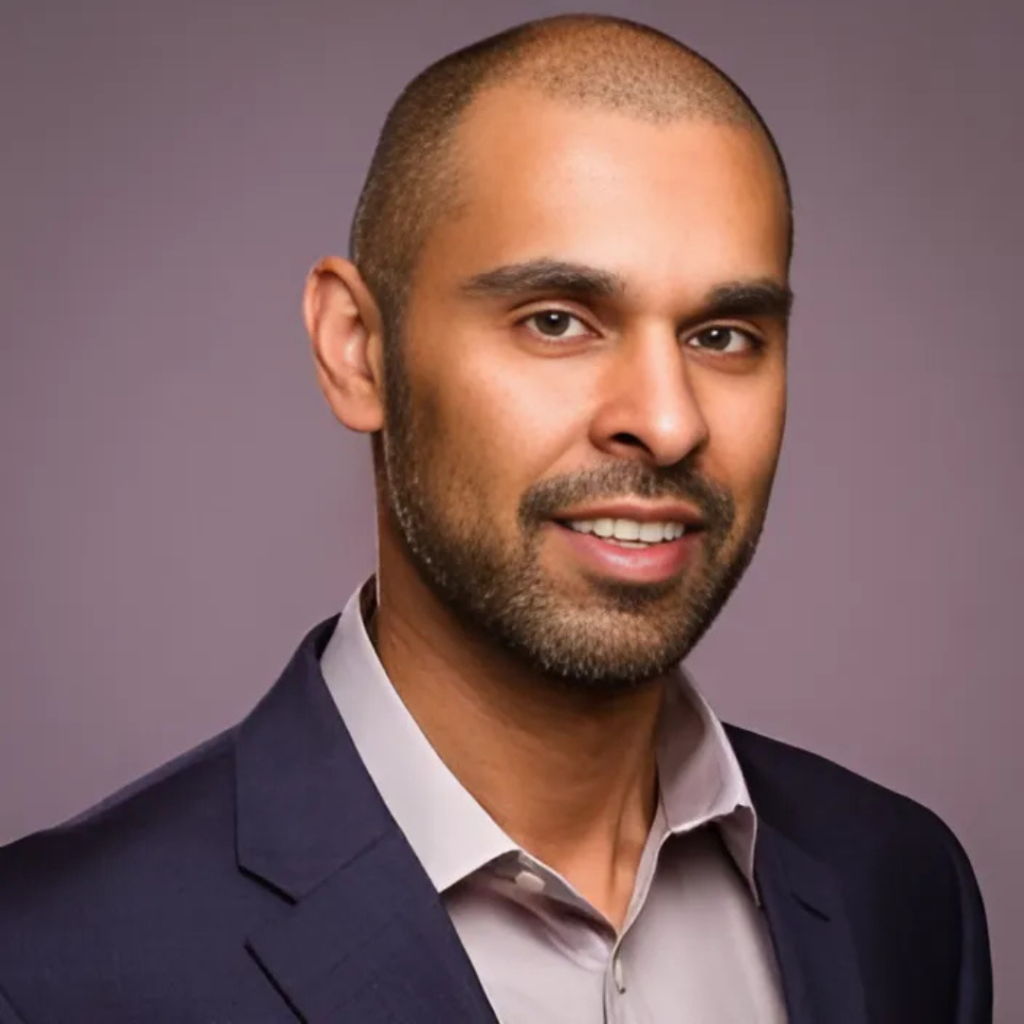
Nauman Naeem covers Holistic Health Performance in this Marketer of the Day episode. Dr. Nauman Naeem explains how entrepreneurs can improve health, focus, and productivity by addressing the whole person instead of treating physical symptoms alone. His approach considers nutrition, sleep, movement, stress, emotions, energy, and consciousness alongside conventional medical care. He recommends prioritizing sleep and aiming to add even one extra hour when seven to eight hours feels unrealistic. Daily movement can be as simple as a brisk 15-minute walk rather than an intensive gym routine. He also encourages a stillness practice such as meditation, yoga, or quiet walking to reduce outside distractions and become more aware of internal signals. Nutritional improvements can begin with small substitutions, such as replacing processed snacks with nuts, figs, or dates.
Dr. Nauman Naeem is a pulmonary and critical care specialist who has been interested in human behaviour and how to achieve our highest potential since his adolescent years. His intellectual curiosity and drive motivated him to become a pulmonary and critical care physician.
Podcast: Play in new window | Download (Duration: 32:21 — 74.2MB) | Embed
Subscribe: Apple Podcasts | Spotify | Amazon Music | iHeartRadio | Podchaser | RSS
During the course of his career, which has spanned two countries and has involved caring for tens of thousands of chronically and critically ill patients, he noticed that the majority of patients do not heal and remain trapped in the paradigm of chronic disease. This motivated him to dive deeper into the roots of true healing through studying ancient healing traditions, the psychology of healing, consciousness and metaphysics which culminated in the writing of his book. He continues his medical practice in Ontario, Canada with the goal of bridging conventional medicine with a more holistic multi-dimensional approach to healing.
Dr. Nauman Naeem talks to us about four areas of low-hanging fruit where entrepreneurs can improve their health: nutrition, movement (15-20 minutes), sleep (an extra 1 hour), and stillness (meditation, mindfulness, and journaling).
Quotes:
“I’ve always been interested in human potential and human behavior ever since I read my first Tony Robbins book when I was at my teens, Unlimited Power. And that just blew my mind and set me on this path. And I just started to dive further into human potential and human behavior.” – Dr. Nauman Naeem
“We’re trying to get all sorts of different things. We’re trying to get at the business level, and that’s great. But the most important aspect of your focus and productivity as an entrepreneur, is your health comes first.” – Dr. Nauman Naeem
“Listen to your body, because there are going to be days if you’re an entrepreneur that you’re going to have to do that 12-hour marathon. And you just have to get things done. However, you can’t keep doing that day after day, so I would say listen to your body.” – Dr. Nauman Naeem
Takeaways:
04:19 Holistic healing means addressing all levels of human experience – physical, mental, emotional, and spiritual – not just treating surface-level symptoms.
11:37 Entrepreneurs must prioritize personal health and balance to maintain long-term productivity and success.
17:57 Small, incremental lifestyle changes can significantly improve overall well-being and prevent chronic health issues.
21:45 Listening to your body’s signals and checking in with your physical and emotional state is crucial for preventing burnout.
27:16 Daily practices like nutrition management, movement, extra sleep, and stillness can transform personal health.
Resources
- Dr. Nauman Naeem (Official Site)
- Dr. Nauman Naeem (Blog)
- Healing from the Inside Out: Overcome Chronic Disease and Radically Change Your Life (Book)
Podcast: Play in new window | Download (Duration: 32:21 — 74.2MB) | Embed
Subscribe: Apple Podcasts | Spotify | Amazon Music | iHeartRadio | Podchaser | RSS
Transcript
Download transcript (.txt)Marketer of the Day episode 618, healing from the inside out, focus productivity and incremental changes with Dr Nauman Naim,
Hey everyone, and welcome back to the marketer of the day podcast. We are chatting with Dr nomon name and Dr name is a pulmonary and critical care specialist who has been interested in human behavior and how to achieve our highest potential since his adolescent years, and his intellectual curiosity and drive motivated him to become a pulmonary and critical care physician, and he's had a huge, amazing career, and he's cared for 10s of 1000s of chronically and critically ill patients, but he noticed that the majority of patients do not heal, and they remain trapped in the paradigm of chronic disease. So this motivated him to dive deeper into the roots of true healing through studying ancient healing traditions, the psychology of healing, consciousness and metaphysics was which culminated in the writing of his book, and his book is called healing from the inside out, overcome chronic disease and radically change your life. So we're going to hear all about that Book, why you should check it out, especially if you are an entrepreneur or you're self employed. And we're going to hear about a lot of No Man's trials and tribulations and his journey, and all of the kind of bumps in the road he's gone through in order to build his business, get awareness, help more people, and just kind of go with the take his business in the direction that he wanted it to go. So no man, glad to be talking to you.
Thanks a lot, Robert. I'm really looking forward to this conversation.
Me too. And so I guess, right off the bat, you know, whenever you talk about some of the things like, like holistic healing, or something that's off the beaten path to the traditional medicine, do you? I mean, it seems like you get sometimes sort of the pushback, right? It's like some of this stuff is kind of, kind of weird, kind of kooky. So if someone is hearing about, well, these other treatment methods, but they're kind of skeptical over the over they've heard about some real wackadoo stuff, what do you have to say about that?
Well, you know, I gotta start kind of, you know, from the beginning, and then tell you what led to this journey that I've been on. I've always been interested in human potential and human behavior ever since I read my first Tony Robbins book when I was 16 or 17, unlimited power. And that just blew my mind, and it set me on this path, and I just started to dive further into human potential and human behavior and my intellectual curiosity has always been been a defining factor in my life. Which led me to medical school, led me to become a physician. And because, you know, medical being a physician combined a lot of things that really attracted me, working with people, being able to work anywhere in the world, being of service. But when I got into medical practice after my training, I realized that people do not heal. They get stuck in the paradigm or chronic disease, and they remain stuck in this paradigm. So I started to look at, why does this happen? And what I what I realized, and I already knew at some subconscious level, but it brought to the surface is that the problem with conventional medicine and healthcare is that we only deal with one level of who we are, which is the physical. All our treatments are physical, whether they're medications, procedures or surgeries. So when we talk about holistic healing, I mean, for some people that may sound like it's, it's, it's like, far out there, off the beaten path, but all I'm talking about is addressing all the different levels of who we are as human beings. You know, the mental, the emotional, our energy and deeper levels of consciousness. So that's all I'm talking about, and I think that's something that most people can relate to at some level of their life, whether it's in their health, their relationships, or their their their their career or their business. So that's where I'm what I'm talking about, and I can take, I'm happy, to take this conversation in any direction you'd like,
okay, yeah, I guess to help us understand it better, Can Can you do some sort of a comparison, or maybe, like a before and after of is there, say, like a common medical issue, where people maybe get trapped in this chronic cycle where, right? That's that one level fails them, versus what's a better solution, where you when you account for all the layers,
excellent. So, so let's talk about, let's talk about, say, a condition, an inflammatory condition, an autoimmune disease, for example, like, let's just say, something that people can relate to, that's quite common, rheumatoid arthritis. So conventional medicines. When someone comes with rheumatoid arthritis, and what that is is inflammation in the joints, and it's usually autoimmune. And what I mean by autoimmune is your body's own immune system is attacking the lining of your joints. So you go to a general physician. They'll refer you to a specialist, and the specialist will examine you, do some blood tests, do some X rays, and determine you have rheumatoid arthritis, they will treat it on the level of the physical body, meaning the inflammation, meaning they will give you medications for pain, anti inflammatories and that sort of thing. However, in the meantime, all these medications have their own side effects. They suppress your immune system. So because it's an autoimmune condition that can lead to other complications, it can make you more susceptible to infections and susceptible to cancer and other things as well. When I'm talking about a more holistic or approach, what I'm talking about is looking at all the different factors that led to that autoimmune condition so it didn't just come out of nowhere. Your body is not just attacking your joints for no reason. So we have to look at several different things. So we have to look at nutrition, we have to look at stress, we have to look at our mind and our thinking, because negative thinking is one of the biggest epidemics on the planet right now, and a lot of that has to do with the subconscious mind and how we've been programmed early in our childhood. We have to look at emotional blocks, because there's nobody in this planet who doesn't suffer with some, you know, emotional issues at some point in their life. They don't have to be major. There could be minor things as well. And then we have to look at our overall energy, you know, how we're handling our fundamental energy of our body, and how we're going from day to day. Are we getting enough sleep? Are we moving our body? And then we have to look at the deeper level of who we are, which is our consciousness. So so what I'm talking about is looking at that autoimmune condition, rheumatoid arthritis, in a multi faceted level, not just treating the symptoms, looking at all these factors. So that's an example that I hope your listeners can relate to.
It makes a lot of sense. So you're not just putting the band aid on it, so to speak. You're not just saying, Take this medication and then it's got side effects. So then here's some other medication to take care of those side effects. And then, all together, long term kind of make, make a person's health decline. You're looking at more of the big picture. You're not You're not throwing out the the traditional science and medicine. You're just saying, let's, let's have this. But then also look at the sleep, the stress, the lifestyle, the mental state, things like that.
All of those things are very important, and this is relevant for I know a lot of your listeners are entrepreneurs, and the reason I feel this is relevant for entrepreneurs and people who have their own business and professionals is that everybody deals with stress. There's not if you're living on this planet, by definition, you're going to be under stress, especially if you're an entrepreneur running your own business. And the thing is that lot of entrepreneurs are concerned with focus, and right? That's one of the highest things on their list, that you want to be able to be focused and productive, get the things done that you need to do to to run your business successfully, move it forward, but And often, we're trying to get all sorts of different things, you know, we're trying to get, you know, at the business level, and that's great, but the most important aspect of your focus and productivity as an entrepreneur is your health. Is your health comes first all those things we already discussed. So that's why I think it's relevant for your audience.
I agree completely that, that it's, I mean, it's hard, it's hard enough, health wise, to be at a desk job, right? You work at York behind a desk. If it's a nine to five, just that alone, it, it kind of sets you up for failure. A little a little bit, as far as the the weight gain over the years, unless you take some kind of effort to do some exercise. And then you, you add that to working from home, so that's even less exercise than a nine to five. And then you add to that that you might be putting in weird hours. There's all the stress, as you've been saying, all this kind of uncertainty. And then then you, you end up getting into the point where you might have to, sometimes, like, listen to some of that self help, or Tony Robbins stuff, or get in a good state in order to actually show up in ways that you know you might not have to as as a nine to fiver. And then you hear about things where you know, like how, like, Steve Jobs passed away from pancreatic cancer, and that all started when he was sort of work, working non stop. That's what he was. He was making all of his his driving to Pixar and all this time in the car. And then he started having his health issues, and then he kind of ignored it for a while, and then went on, went kind of the hippie way, and tried to change his diet. And. And it turned out that, you know, maybe, if he had, if he had tackled it early on and and didn't, maybe, like, took it easy earlier on, or looked at all the avenues, not just the diet aspect, he might still be with us, if he just kind of took it easy
Exactly. And that's a that's a great example, because, you know, Robert, when I think about life, right? Life is about being in balance, right? So you have to be in balance. Yes, we all want to be successful. Yes, we all want to have the finances, the freedom we want to have, you know, all of the time to do the things we love, spend time with our loved ones, vacations and all those things. But you have to look at, you know, if you're an entrepreneur, businessman, so what are you having to do to achieve those goals, like, are you spending, you know, are you spending adequate time with your loved ones? Are you looking? Are you truly paying attention? Attention to what you're putting in your mouth and what you're putting into your body? Are you moving your body? Are you getting enough sleep? Are you doing some stress relief practices, meditation, yoga, whatever, martial arts, things like this. So, you know, as an entrepreneur, I think one of the important, I said, one of the most important things, is focus and productivity. But I want to step back from that. It's actually being in balance, right? And the example you gave of Steve Jobs. I at one point in his life, he was completely out of balance. And I'm not saying I understand why he developed pancreatic cancer and what led to his demise, but I believe that one of the major factors was his life was out of balance, just like you said,
scary stuff, and sometimes we let that life creep creep more and more out of balance, until next thing you know, you you settled, or you compromised, or you, you let one part of your life suffer, until then it becomes time like I need to make a correction. I can't I can't ignore this anymore. And so what? What sorts of things do you do yourself to stay out of that, that bad zone. What do you do right? As far, like you listed all these, these fun things we can do, like martial arts or or meditate. So, so what do you do to get that balance
right? So, so this is so let me tell you, it's been quite a journey that I've been on. So I want to break it down into several different areas. So the first thing I want to talk about is, I want to talk about nutrition. Obviously, we're not well, not obviously. But when I was growing up, I mean, my nutrition wasn't the best, because I grew up in a South Asian household, and, know, a lot of oily foods, spicy foods and that sort of thing. But when I got out of that environment, I really started looking at, you know, the my nutrition, and I have dramatically changed what I eat. And to go into the details of that is probably beyond the scope of the time we have, so I won't get into the details, but anyone can contact me if they want to know more about that. So I've dramatically altered my nutrition, and I've cut down, I've cut out a lot of foods such as sugar, dairy, gluten, soy, corn, peanuts, things that are inflammatory. So that's one thing I've done. The other thing is I've done is I've prioritized my sleep. I mean, I know a lot of entrepreneurs who will, like, you know, be, you know, killing themselves, you know, working into the wee hours of the night trying to get things done, and they'll get, like, little sleep, like, you know, four hours of sleep some nights. But the thing is, if you are to make the most of your day and be productive, you need to get, they say at least. They say seven to eight hours of sleep, but I would cut that back to at least six you need in order to be productive the next day. So I have prioritized my sleep. I do some sort of movement practice every day, not necessarily, and I do strength exercises, but I also do some sort of movement, whether it's like I practice martial arts. So I do at least 10 minutes of that every day. The other thing is, I really tune into what I'm feeling in every moment of the day. Often, you know we feel that, you know we're only supposed to feel positive things and not negative things. But the thing is, you're going to feel negative things. You're going to get angry at people once in a while, you're going to feel sadness, you're going to feel overwhelmed and those things. So I really try to tune into what I'm feeling in every moment of the day, and I try to find out, why am I feeling this? What is at the root of this, and I don't resist those feelings. I allow myself, in an appropriate way, feel those feelings and express those because I believe that emotional blocks are one of the another thing that is too too common in our society, and another epidemic that people are not allowing themselves to feel those emotions. And then I tried to meditate on a daily basis. Now, when I talk about meditation, what I'm talking about is taking time to withdraw from the outside world and go within. Some people may not like the word meditation, but I'm talking about is stillness, a stillness practice because there's so much vying for our attention, especially. As an entrepreneur, businessman, business person. There's so much, I mean, you know, there's deadlines to meet, there's clients to call, there's like, you know, you got to get the, you know, you got to work on your website. You got to, you know, all of these things marketing. But the thing is that there's so much overwhelm, you know, pulling us into the outside world, but we need to take time to withdraw our attention and be in stillness, be with ourselves. When all of that is turned off, it can just take a few minutes a day, a few minutes in the morning, few minutes in the afternoon or in the evening. So that, I think that's important for all entrepreneurs. And I have a gratitude journal. I do a gratitude practice at the end of the day. I write down, or I think, in my mind, three things I'm grateful for, and different things every day. So that's a nutshell of what I do. And there's more details to that, but we can get into that if you'd
like.
Well, I mean this, this is a great list so far. This is a great bunch of ideas for people to consider, and they might be things that they have heard before. But it's like, if you keep hearing it and you're not applying it, maybe there's something to it, right? And if successful people out there in the world do these same things every single day, you know that they get up early, they have that quiet time, they aren't rushed. They get enough sleep that they do these things to to start the day off right, and to basically take care of themselves. I mean,
there's
definitely something to that, and, and, and I think that I don't know. It's almost like, you know how when, back when we're all in our 20s,
our bodies
are almost indestructible, like, yes, and we can go to college, we can stay up all night. We can do
all night,
yeah, all night cram sessions and be fine the next day. But then as we get into, you know, 3040, 50 years old, then
yes,
reality sets in, right? Our bodies catch up with us. And I noticed this probably when I went into, probably, like, like, very late 20s, early 30s, that I needed to at least do a walk or a run every morning,
right?
And, and it started off as just like, oh, it's, it's a good thing to do, you know, put in the exercise, be a little bit healthy. But then I noticed that, as I began to get older, that those days that I didn't walk or run first thing in the morning, right?
Whatever
reason, it was just a bad day, like I'd be, I'd be kind of negative and sluggish and maybe have some anxiety, and then need to hit some caffeine, and then that's a whole other downward spiral. So it's almost like, almost superstitious, right? It's like, if I, if I don't do the morning walk, then I it won't be a good day. But if I do do the morning walk, then it is a good day. And then sometimes I'll forget, like we all do, and then I'll write, like, Man, why is the last three days been so bad? I'm like, oh, because I didn't do that morning walk. And then I remember, just do that quick, you know, 2030, minute walk. And then somehow, just these simple things that you're listing here, they work. It's like magic.
You're right. So I want to unpack that for a minute. Robert, you know what you're doing is that you're grounding yourself and you're setting the tone for your day, right? Because if you get up in the morning and the first thing you do is you check your email or your social media, and you have all these things that are vying for your attention right from the outset, you know you're you're already distracted, and you're already kind of in a reaction mode. So what I would say about your practice of running in the morning or walking in the morning, you're setting the tone for the day. You're grounding yourself. You're giving yourself time for yourself, getting centered, so that when you're centered and you're grounded and you're conscious, no matter what the day throws at you, you are, I'm not saying it's not going to be challenging or stressful, but you will be better able to face that. For some people, it could be meditation. For some people, it could be like going for a walk. It could be yoga. It could be what. It could be anything. I'm not even telling you what you have to do, but you have to do something to set the tone for the day in the morning, just like you've described,
very good advice. So how do you reconcile this idea of doing things right and being balanced versus being super duper productive? Because I think that if we're entrepreneurs, we love that whole idea of the sky's the limit. I can scale my agency. I can build all these different things. And so, I mean, some days I'm thinking, you know, I'd love to be able to just put in a 12 hour day, right? 20 podcast interviews, back to half my content scaled up, super like, way ahead of time. So do you have any thoughts on that? Like, is it possible to to have our cake and eat it too, and right, have the balance, but also just have insane amounts of productivity also.
So. So what I would say is that the most important advice I can give to your listeners is that listen to your own body. Listen to your body, because there are going to be days if you're an entrepreneur that you're going to have to do that 12 hour. Marathon, and you just, you just have to get things done. Like, there's just so much on your plate. You have to get that done however. You can't keep doing that day after day, right? So I would say, listen to your body. Listen. It's like when I talk about being in balance, it's listening to your body, listening to feeling like how you you feel, and just checking in with with what's going on within yourself. Because, you know, we talked about Steve Jobs and how he developed pancreatitis, right? It wasn't like one day he woke up and a doctor told him, Well, you got it. You I mean, sorry, you got pancreatic cancer. No, he had symptoms leading up to that, which he likely ignored because he was too busy, and he had the needs of, you know, his his his his work vying for his attention. So what I'm saying is that there will be days where you have to do those marathon marathons and those sprints, where you have to get a lot done, but you need to check in with check in with your body. I mean, our bodies are wonderful machines. I mean, the greatest machines ever created. I don't think anything will equal that. But the thing is, it's we have inner they're always giving us messages. The messages are like fatigue, pain, just kind of feeling run down, generalized malaise. So I would say, just check in with how you're feeling, not just emotionally, but physically. Your body will tell you when it needs that break, that rest, sometimes you may need to just get away for a day or two. You know, I've had that as well, where I just, I just, I just need to get away. So we need to really be in tune with our own selves.
That's really good advice. So I guess the disadvantage to getting older, the disadvantage to be becoming less indestructible, is that, I mean, you you kind of have more ups and downs, but then you know what works for you, and you know what messages your mind and your body are telling you so you get to know yourself better, so that maybe you can you can anticipate things better, and you can get ahead of things better if otherwise you might have gone through a slump or a funk or depression or whatever, if you know your body well enough and you know These things are coming on, and you can take advanced steps, right? And
then this is just not for entrepreneurs, but this is for anybody, like any I'm talking about general health and preventing disease, chronic disease, like no, no chronic disease just comes full blown, like you have symptoms leading up to that. So you need to look at yourself. What are these symptoms telling me, what are they telling me about? You know, my lifestyle, I need to be eating better. Do I need to be sleeping more? Do I need to be exercising? Do I need to be meditating? Do I need to do? I need to be dealing with my toxic relationship. Do I need to forgive somebody who's who I wronged? Do I need to do, you know? Do you know do you know I need to deal with? You know someone else who I've had a conflict with? Right? So we're always getting messages from whatever we are experiencing in the moment. I mean, the world is always giving us messages. Our bodies are always giving us messages. It's a matter of just being tuned in. And when I talk about that stillness practice, right? Whatever it is meditation or yoga, or whatever it's it's about with not just withdrawing from the world and going within, but it's about being in tune with yourself at the deepest level, so that when you do get those messages from your own body or from the outside world, that you are better able to receive them and act on them more effectively. So that's, yeah, that's what that's all about.
Well, really good advice. And so, so with all the things that we've mentioned here about how we need to be tuned in and listening and take care of our bodies, especially if we're work at home entrepreneurs or we don't get maybe the exercise that we used to we need to be proactive about that. We need to be better about managing our stress and do this meditation and stillness. Is there a low hanging fruit, like, is there? Is there something that anyone out there can easily implement so that way they can say, you know, I've heard all these problems, or heard all these solutions, something I can do today in a few minutes. What is it
so? So I would just give you about three or four points here. The first thing is, really, look at your nutrition. Look at what you're putting into your bodies. And, you know, there's so much knowledge out there about, you know, there's this diet and that diet, there's all sorts of things. But, you know, the thing is, even though we people may argue about what's the ideal diet, I think there's very little argument about but what we should not be eating, right? I mean, junk food, fast food, processed food, you know, these sorts of things. So, so, and it's not about making dramatic changes. It's about, I'll give you an example, like, say, for example, you know, you get hungry in the middle of day, and you're used to eating a bag of chips or cookies or donuts or whatever. Instead of that, keep some healthy snacks with yourself. Keep some I don't know, like assuming you're not allergic walnuts or pecans or pistachios or or Brazil nuts. I do this all the time. I keep them in my car, so when I get that hunger, I'm not reaching I'm not stopping at a donut shop and grabbing a bunch of bagels or donuts. I'm just eating these healthy snacks. They're always with me at all times, figs and dates and these sorts of things. So that's one thing, looking at your nutrition making incremental changes, right? You're not going to change your nutrition overnight. That's one thing, number two is you have to have some sort of movement in your day. That could be as simple as just going for a 15 minute a brisk 15 minute walk at your lunch hour at work, or taking some time out of the day, some sort of movement. It doesn't have to be. Doesn't mean going to the gym for an hour every day. That's not what I'm talking about. It could even be parking far from your office building and going for that extra walk, walking at noon hour, like we said, some sort of movement practice. The other thing is, I know I talked about sleep, and you know there may be people listening right now that only get like four or five hours of sleep at night, so I'm not telling those people you need to start sleeping seven or eight hours a night. No, this is all I'm saying. Whatever amount of time you're sleeping, if it's not seven or eight hours a night, try to structure your day so you get an extra hour of sleep. So if you're sleeping four hours a night right now, structure your day so you get five hours of sleep. And I know that everyone who I've worked with, who I've talked to, can get that extra hour if they're more efficient throughout the day. And the fourth thing would be some sort of stillness practice throughout the day. Withdraw from the world, go within, whether it's meditation, whether it's going for a walk two times a day, whether it's yoga or whatever it is. So some sort of stillness practice. So these are what I say, the low are the low hanging, hanging fruit to start out with. And there's a lot more that I can get into, but, you know, it's beyond the scope of this interview, but that's what I would say that people should start thinking about, at least, and moving towards,
yeah, and that's all very durable. And you always, you always, you know, hear about things or experience things where, many times the the procrastination of doing something takes way, way longer than actually doing it. And by the time you actually do something, you're like, I should have swept up the garage, you know, months ago. Why was I stressing about it this whole time? So,
right,
if people are stressed out about their their health, their aging, their their sleep, their nutrition, their exercise, their stillness, from their mental health, right? Maybe, maybe the answer is just to keep it simple and just take these little baby steps so that way they can see those quick results from just some slight lifestyle changes. And then when they see that, that positive outcome, they'll say, Oh, well, I mean, if I got these results from this, from having the walnuts in my car, or from getting the extra hour of sleep, or breaking up the day from some extra movement, imagine if I just did 1.1 times this,
right?
So, right,
if we just get it started, then we'll make some progress.
Interesting point you made is that, you know, we often overthink these things. We think, Well, how am I going to do this? How am I going to just if it comes into your mind, and you know what's good for you, just do it. Just act. Don't even think. Just act. And then see what happens. Like we overthink these things, right? I mean, because we know where you as entrepreneurs, we're used to thinking all the time, and, you know, thinking about her business and how to get more clients, and, you know, get more be more productive. So just act. I would say, just take even the simplest act, even the four things. I said, just do one thing. And I can guarantee you, if you stick with it, you will notice a difference. It's it's guaranteed. You just have to stick with it.
I love it. See what the results are so if people's curiosities are peaked here about getting getting our mind and our body in order, and they want to find out more about you and your business and your look and things that you offer, where can they find out about all those
things? Yeah, so I encourage them to go to my website. It's no man name calm. I'll spell that for you, N as in Nancy a, u m, as in Mary A, N as in Nancy, then another n, as in Nancy A, E E M, as in mary.com and there they can learn about some information on my book. I have a bunch of other podcast interviews I've done. I have a weekly blog, and there's articles there for like, at least almost two years that you can check out, and I have information on my coaching program to help people you know, take their life to the next level. And there's also a contact form if they want to contact me have some questions, I'm open to being contacted, and I also I'm on Facebook and Twitter. My Facebook. Book pages healing from the inside out. So yeah, they can, but my website is the best way to get, get to get a hold of me.
All right, fantastic. So that is at nomon name, and once again, we know that that was kind of a lot of letters that, but it's n, a, u m, a, n, n, a, e, e, m.com, yes, and that's a great jumping off point, if you are at all concerned or just want to up your game a little bit with your mind and body health, like Like Dr Naim said, There's you can find his book, interviews, blog posts, and then if you're ready to get things moved over to the next level, there's his coaching program. There's a contact form where you can ask him questions or tell him about your particular situation, or even at the very least, just tell him he did a great podcast interview, and maybe that will get the ball rolling. You will. They'll get a nice conversation started with him, and maybe you can figure out if some of his advice can give you a better lifestyle. So anything just to say here, Dr Naim, to wrap things up as we're done here?
No, I all I would say is that there's not one person who I haven't met, whether it's a patient or a client, who cannot, who, who, no matter how successful they are, where they are in their life, who is not able to take their life to a higher level. I think that we can always up level. You know, who we are in our success, in our in our outlook, so there is always room for improvement. And I just encourage your leader, your listeners, to check out my website, and if you're interested, to contact me, and I'd be happy to answer any other questions through my website.
Super great. Well, we'll see you there at nomon name.com and do what you got to do on on that site, and hopefully that you'll have fun and learn a lot of new things, and, most importantly, implement and have live your best lifestyle and all the good stuff that comes with that. So thanks so much, Dr Naim, for stopping by and for telling us what we need to know here.
Thank you very much, Robert. I enjoyed this time.
Check out the latest episodes of our podcast on the web at marketer of the day.com and subscribe to us on iTunes at marketer of the day.com/itunes or search the phrase Robert plank in your iTunes app to find us there
you.