Published Last updated
Read JP Maroney’s bio and speaker profile →
View in Podcast Library: stories, quotes, books, and resources in one place.
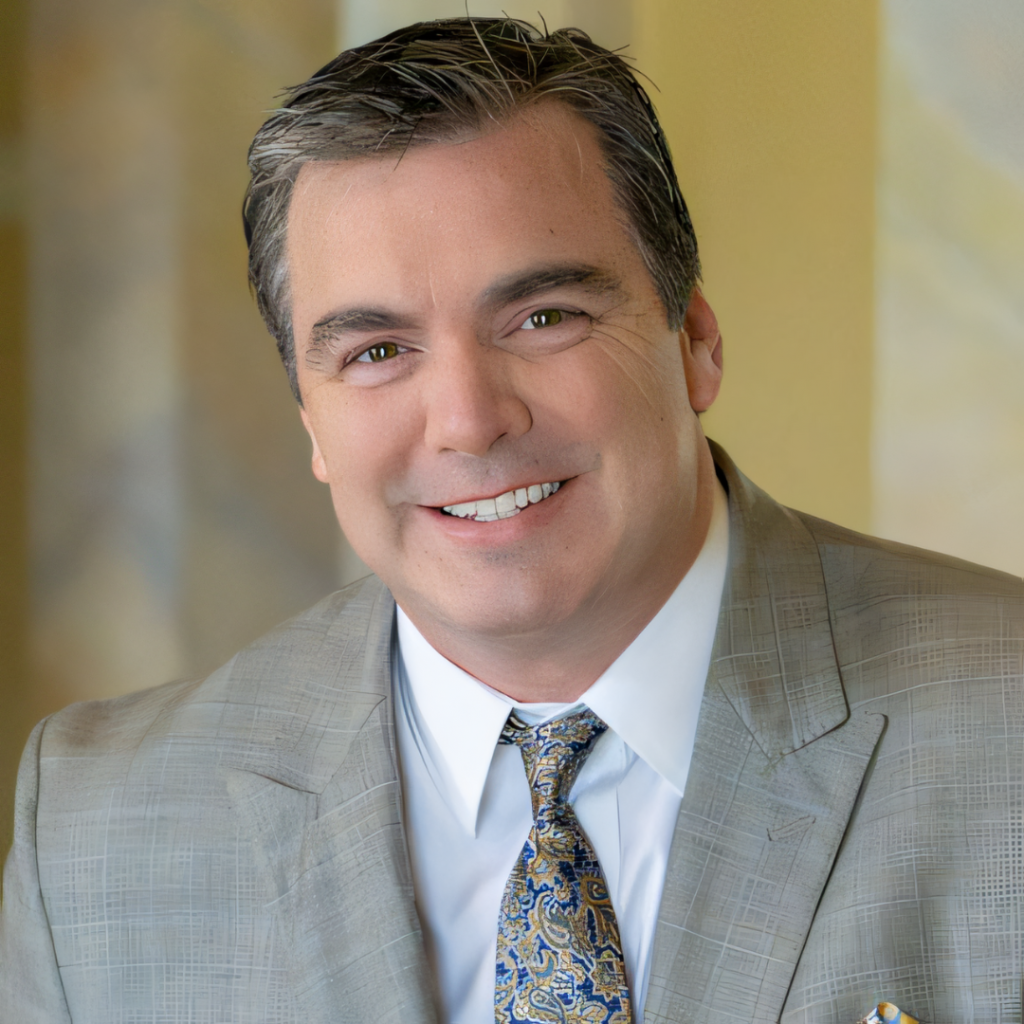
JP Maroney covers Referral Marketing in this Marketer of the Day episode. JP Maroney explains how business owners can turn referrals into predictable growth by building strategic alliances before they need leads. For real estate and home services, he describes local alliances built around one realtor and 80 to 100 complementary categories. He also shares a jewelry store campaign using $50 and $100 gift certificates through Chamber of Commerce members. Because the customer acquisition cost was $400 and lifetime value was $2,400, the offer made financial sense. The campaign produced 58% higher December sales and 110% higher February sales year over year.
How can we reach more people and create a bigger network? How can we get powerful referrals and marketing leverage to extend our reach? The most effective way of getting our name known is by word of mouth, especially when it comes from highly reputable people. The more they share about you, the more you will build your network through their connections with other people.
JP Maroney is an entrepreneur, investor, and philanthropist with more than 30+ years of experience starting, building, buying, and selling companies in publishing, media, advertising, software, e-commerce, textiles, training, real estate, and consulting. JP’s business group includes a collection of companies and joint ventures involved in publishing, software, media, training, consulting, and internet commerce. He also serves as an advisor and/or board member with several other companies. Today, he shares the power of referrals and the concept of marketing leverage.
Quotes
“The more you give, the more you get. I believe that we get back in direct proportion to how much we give to the universe and give to other people.” – JP Maroney
“I often say ROI or die. You’ve got to make a return on your investment, and it may not be a front-end return. You need to know the numbers for your business.” – JP Maroney
“The ability to leverage one point of contact to reach a lot of people is so powerful.” – JP Maroney
Takeaways
02:49 Identifying and using relationships with individuals or businesses that already serve the same target customer base can be a highly effective strategy for rapid customer acquisition and growth.
08:57 Taking advantage of strategic alliances and referral networks can significantly boost customer acquisition and sales for businesses.
22:56 Knowing the key business metrics, such as customer acquisition cost and lifetime value, is crucial for making informed marketing decisions.
30:17 Understanding the nuances of a local real estate market, down to the street level, is key to making informed investment decisions.
34:41 Building relationships and providing value to others, even without expectation of immediate return, can lead to unexpected opportunities down the line.
Resources:
- Serve Alliance: Elevate Your Homeowner Experience With Serve Alliance
- JP Maroney: My Mission: Make Money. Make Memories. Make A Difference!
- Follow JP Maroney on Facebook
- Connect with JP Maroney on LinkedIn
- True Story Why I Married You JP Maroney
- The JP Maroney Audio Vault hosted by JP Maroney on Apple Podcasts
Podcast: Play in new window | Download (Duration: 36:38 — 50.5MB) | Embed
Subscribe: Apple Podcasts | Spotify | Amazon Music | iHeartRadio | Podchaser | RSS
Transcript
Download transcript (.txt)marketer of the Day episode 874. Build your network with marketing, leverage and powerful referrals with JP Maroney.
Welcome back to the marketer of the day podcast. We're here with the man, the myth, the legend Mr. JP Maroney himself. JP is an American entrepreneur. He's an investor. He's a philanthropist with more than 30 plus years of experience starting building, buying and selling companies in publishing, media, advertising software, e commerce, textiles, training, real estate, and consulting. He does so much GP glad to be talking to you.
Hey, man, it's been a long time. I'm glad to be on your show.
It has been it has been over a decade. But I'm in a way it feels like yesterday. So just to make sure that we're promoting the right thing. Can you drop a URL for us? What is the link? What is the website that we're talking about today?
If someone wants to connect, they can get to me on any social media and in LinkedIn, but JP maroney.com. And simple enough,
all right, JP maroney.com. But social media and LinkedIn is preferred. So it has been over 10 years since we last spoke so much to catch up on. But what has been your passionate last six to 12 months.
The last 12 months have been a reboot actually, for us. You know, I've been building companies for more than 30 years, I've been saying 30 years. And then I looked up the other day, and it's been about 32 years, almost 33. But building companies I've done, as you said in the bio, a variety of things between 2014 2022, which was sort of post after we did a lot of stuff at the walks and all of that, which was I think 2013, maybe, or 12. But yeah, from 14 through 21. April, I built a company that was kind of a marriage between the digital media Legion space and financial services. And then we have been focused on lately helping other entrepreneurs build out their businesses, I've acted or served as sort of like a fractional Chief Marketing Officer for a couple of people, that it made sense for them, because they didn't have the budget or the demand or whatever, for a full time person to spend 234 1000 a year for so doing that. But right now just looking at ways that I can, you know, repurpose and take a lot of knowledge and experience that I've, you know, put to work over the last I call it hammered out on the anvil of experience, and use those to add value. So we're working on a variety of projects.
Well, exciting. So how does somebody know if they're listening or watching our podcasts? How do they know if they are your ideal client? Like? Are you seeking someone who's looking for a fractional CMO? Or who is exactly the right person to be listening today?
Yeah, so we're building a company in the real estate and home services space, it's a new brand. I can give that link out now, but I'm not sure exactly when this will go public. But anyway, that's surf alliance.com. I've been a big believer for many years and have had some of the most dramatic success in my own businesses as well as others. Using what Jay Abraham has historically called Host beneficiary relationships, some of us call it JV strategic alliances, you and I were talking off camera earlier about the some of the world that we came out of together, where it was very common for someone who was looking to launch a product or grow an existing business to go find other people that already sold the same target customer client that they did, and leverage off of their knowledge, leverage off of their trust and bonding with their list and leverage off of their ability to go to market really quickly because they had built a list of people that was non competitive, but complementary, and use that to accelerate new customer acquisition very, very quickly. And so I've had, I've got a long list of case studies over the years where we've helped companies online and offline, utilize this marketing leverage or strategic alliance approach to marketing. And so we've applied that specifically to the home services industry, anyone that basically sells to homeowners. So it's everything from a realtor or mortgage broker, title, company, etc. That's part of the transactional journey of buying a home. But it's also anyone who sells to services homeowners once they're in their home, which is air conditioning guy, plumber, etc. And we're building a national network right now. Of home service businesses on a local level. All, where we have one from each category. So one AC, one plumber, one pool guy, one landscaper, etc, one realtor, we're building it around real estate agents as the sort of center of influence. It's one of the things I was so excited about to find out about your services that you're growing now with the gun for your podcasting. So we're looking at centering each local market around a real estate podcast that's hosted or co hosted by a local real estate agent will provide a lot of syndicated content, so they don't have to create everything from scratch. And then we'll build their authority out, and then we're going to surround them with an entire Alliance. There's about 100 categories, give or take where you're at. So like in Florida, where I live, we don't have snow blowing. And then, you know, northern states, they most of them don't screen in their pools, like we do in Florida. But you have core services, 80 to 100 categories. And we will surround that agent with those categories, we'll help them put a model together where they become the party starter, so to speak, as Will Smith used to say in the zone for their market, bringing together people for strategic alliances and cross marketing. But as a result, they become the recipient to all of those leads coming in for homebuyers or home sellers. So either listing or buyer leads. And that's we plan to be at 100 markets in the next 12 months and build that into something substantial. And that really, you know, again, leverages off of what's been kind of one of my go twos as far as marketing strategies. Over the years, almost everything I've done, I've built list overnight, you know, with four or 510 1000 people and done it just with other guys mailing for me. But we've never really seen anyone apply it in this sort of fragmented home services industry in the way that we're doing. So we're really excited about that.
And it sounds exciting. And so it seems like ever since I've known you that that's been kind of your secret is finding the right people to network with instead of trying to do it yourself. Because you do it, you try to build a list yourself it takes 30 years, you find five or 10 of the right people, it takes you three days to reach who you need to reach. And this is a pretty cool concept because it seems like at least least from what I've seen, most of these realtors out there are invisible and there's a handful like in my town and like a town over where there's like one or two in town who are like the like the celebrities like the like the Better Call Saul of real estate and they're like larger than life like cartoon characters. Like there's one guy in my town. And his first name is Elvis, his name is like Elvis Diaz or something and his his for sale signs say, I can't sing but I can sell your house. And I can't I could name it as silly and clever and kind of like kind of embracing the cheesiness of it. And I think all the time about how the I lived in the house, I'm in for 14 years. And I don't think I've ever heard from the My realtor since in the past 14 years. I remember her first name, but I don't even know her last name. And then it like the the it was one of those things where like, I had my realtor and someone else was selling this house. And so there's like the two realtors. And even that guy, the guy that had like the for sale sign out out front before we found this house. I think I got like a fridge magnet one year and a calendar like that was it. And it's it seems like so that's why I think it's really exciting what you have going on, because they're not super common. But it seems like in almost like every every area, there's like the one quasi celebrity realtor who kind of has those leadership abilities and those kind of the personality where they can be like, now I can use my network of the the lender and the age back person and the landscaper and all these other things. So I think that's a really cool idea that you have going for you. And so why has this not been created yet? Why are you the first person because it seems like something that is almost a no brainer to create? Well, it
goes back to referrals. And no one in the real estate industry is a stranger to the idea of generating referrals. So it's not necessarily that it's a new idea. It's just a better model to get something done that should have been done a long time ago. We've been a part of, I don't know if you ever did but I've been a part of referral clubs, you know, BNI was one last tip is another and then there's a bunch of independent ones, where local business people would get together and then hand out business cards and they were trying to generate referrals and that's a good thing. In fact, I made a post today in a group I'm in in Facebook and somebody had the admin for that group and asked about you know, what are you guys doing to generate referrals and I ended up making this long post it was so long I had to truncate it into three different comments. And I'm going to tweak it because I tailored it to that industry. But I will tweak it a little bit and put this out as a public poster free report or something here shortly. But there's basically three levels of referral marketing. There's what we call reactive than proactive. And then the third is what I call hyperactive. Reactive is where most people live. One of your customers, one of your friends runs across somebody that needs what you sell, they refer them to you, and then you get a voicemail, or you get an email, or you get a phone call, or somebody comes in your restaurant or your store, whatever. And they say, Hey, my friend told me about you want to buy from you. And you go through your process, you sell them. And at the end, you look at the phone, or you know, they leave the store, whatever. And you're like holy smoke, that was the easiest sell I've made all week or all year or ever. I wish I could get a lot more of those. But you don't have a system, you don't have a process, you have nothing in place that's driving that. That's where most people live. For the few people who put something in place. It's what I call proactive referral marketing. They go join a referral group like I was talking about, and they hand out their business cards and they say, Hey, if you run across somebody who needs a dentist's, please have him call me or whatever.
And every once in a while that works. Or maybe they'll put a follow up email process in place that goes out call new customers, or a letter or a handwritten card says, Hey, if you know anybody else, or if your friends and family, you need somebody to buy a car, you know, from having them come see me. And there's nothing wrong with that, because it's certainly better than not doing anything. But it creates a trickle, just enough to drive you crazy, right? Because you're getting a few referrals every once in a while from that, and you go man, I wish I could fill my calendar with people like this. And then there's what I call hyperactive marketing, referral marketing. And that is what I was saying. And that's where you go find somebody that already sells to and serves the same exact target customer you want to go after. And you form a relationship with them or leverage your relationship with them to form a campaign. And there's a bunch of different ways I've created training on this, where you know, you can do an endorsement, where they write a letter or an email and send it out to their list, you could do something like we're doing technically, today, it's kind of like a strategic alliance, right? Because presumably, this is gonna go out in front of your audience. And people that never heard of me or knew about me in the past, will now know about me. So you can easily do something like this with your other people. And, you know, they can use your done for you podcast services, and go out and interview everybody that they'd like to do an alliance with, and easily create those relationships. So you can do a cooperative event, you can do host all your best customers. So one of the things we're doing with several clients is we're getting all of them together as they join the group in the local market, and doing a customer appreciation, after hours, have some hors d'oeuvres, have some drinks, and everybody invites their best customers. And then all of a sudden, you now you know, homeowners in your local market that you didn't know and they know about you that they didn't know about you before. And it's a very casual environment in a way to generate those referrals. But that hyperactive approach it what it does is it creates what I say marketing leverage. So if you look back at the old days, you know the picture of the caveman, there's a rock, he's trying to push the rock, hard time moving the rock, but he can go and he can get another log or another rock and set it next to it and take that's what we call a fulcrum, if you want to get technical, and then another lever or long stick and puts it under that rock and he pulls down on that lever. And with a small amount of effort compared to what he was trying to do before he can move the rock that's too big for him to move by himself. Marketing leverages like that. So you have one effort, or relationship with that partner, that strategic alliance. But because of that lever point where they've already put on all these layers of trust and bonding with their audience, their buyers, those people already know like, and trust them, they don't know you, but they already know like and trust them. And then you come along and they put their stamp of approval on you and they make an irresistible offer. We've talked about that if you want to, but they make some kind of an offer. That's just like too good to be true. Just oh my god, I'd be stupid if I didn't take this deal. And all of a sudden, instead of getting a trickle of one or two or three referrals all of a sudden you have this port of new business come all at once. And we've had such crazy success. I was talking with my mother in law. We're in Louisiana right now staying with her. And I was talking to my mother in law this morning about this. I did a campaign with a jewelry store years ago retail jewelry store. And we did one of these types of strategic alliance marketing approaches. And we kicked it off at the beginning of December I just brought him on as a client At the end of October, we took, you know, the month of November to kind of get our feet wet and figure out where we were going with this company and build this campaign. And we kicked it off at the beginning of December, where we gave away gift certificates to every company in the Chamber of Commerce who wanted them. And it was a $50 gift certificate, and it looked and was a real gift certificate, you could bring it in, if you wanted only get $50 for the jewelry and go home, you didn't have to spend a dime with this guy. And we did another thing with it, whoever was the business owner, whatever. That sort of asked for them for all their employees. We gave them $100 gift certificate to use themselves. And this was back in the days of fax, we faxed it out to all the Chamber members. And we offered them this deal. And it was funny because I had a hard time convincing him he was like, they'll they'll clean me out. I'm gonna give away oh my god, I was like, You don't understand. Most people, once you understand like the lifetime value of a customer for his business, we figured out it was $2,400. And we figured out what he was currently spending for client acquisition, which was $400 to get a new customer. And
yeah, told you. We had figured out like what we did is we took his last 6090 days worth of ad dollars and everything he had spent on marketing for new customers, divided it by the number of new customers he'd gotten during that time period and figured out, it was costing him and he was doing some really stupid things like billboards and all that. But it was costing $400 to get a new buyer. And I said I want you to think about this. If we give away somebody $50 worth of jewelry number one he didn't have much in his whole store was less than $50. Anyway, so there wasn't a lot of risk. But I said, Look, if somebody comes in and just gets $50 for the jewelry, and you only have Keystone, which is double markup, 50% Cost of Goods, then it costs you $25 to get a new buyer in your store compared to 400 that you're currently spent in some of his stuff was double Keystone, which means like $17 to get a new customer. I said, just trust me on this. It'll work. So anyway, we put the campaign out, we faxed it out to all the Chamber members, and offered them I wrote a really compelling letter saying, hey, it's Christmas time we know your small business, we know it's tough. If you'd like to give your employees a great gift for Christmas, we'd like to help you do that. Tell us how many employees you have will prepare that many $50 gift certificates in your name, just like you walked in here and bought them. And for you taking the time to do it. We're gonna give you $100 gift certificate. We sent it out. At the end of the day. He called me the next morning he said Oh my God. And he had one of those old fax machines. It was thermal. So had the curly paper coming off of it, you know. And he had come in the next day and it had run out of paper and all the faxes were in memory. He put another roll around out of paper, he put another roll around out of papers. He had stacks and stacks and stacks of these forms that we've given them to tell us you know how many they wanted and who they were in the name of their company. But here's the result of that. That was at the beginning of December. So they started coming in picking them up. But he also told me the first day that people started later that day, people started coming and picking him up. He was really concerned about the $100 gift certificates. The first guy that walked in was a manager of a local company. He got his gift certificate stock for his employees, he got his $100 gift certificate, he shopped in the store and bought a $400 watch with $100 gift certificate. So my client actually made a profit off of bringing in that new customer. They're real sales. This is not free giveaways. Their real sales for that month of December are 58% higher than they were the previous December year over year 58%. And they were just getting out there because a lot of employees didn't get them until a lot before Christmas. When the company was handing them out the last day before they went home for Christmas. When these really got into the marketplace and started to work, February his sales were 110% What they were the previous February. That's Valentine's historically a very big time of the year for jewelry retail 110% more than double his sales of the previous February year over year. My point is, is that we could have run around all year long trying to hand out gift certificates. Even if we came up with that idea. We could have done a lot of things run ads to paper. We did some amazing other campaigns for him. But the ability to leverage take one point of contact and reach a lot of people. It's so powerful. I've been doing working with a buddy of mine that sells merchant services to restaurants and bars. And I've got an itch of had this for years, but I've got an itch to help a restaurant owner, blow up their business using this thing thing. I've even thought about acquiring a restaurant just to do it because I believe I could pack the house and keep it back seven days a week or however many days that they're open. utilizing this same form of marketing, if they deliver a good product and have good front of them back of house, I think I could just keep a restaurant completely packed using the same thing. But marketing leverage is so powerful.
I can tell that you're passionate about this leverage concept and, and that there's so much good stuff in the stories. I love stories like this. So we were talking about how important it is to involve other people how whisperers your referrals go, there's reactive, there's proactive and there's hyperactive. And the lesson that I'm getting from you here is that we need to always be networking and to kind of be kind of fish before you're hungry and find those people that you need to have in your network before you need them. Because it's it's kind of a long term thing. And it's a lot of fun hearing about how you brainstorm these sorts of like, outside the box deals that in a way, it's almost like a three way deal. And you look at the numbers to see, okay, well, we want to do this experiment, this campaign take this risk. And you look at the the current numbers, which it's tempting to, to think more intuitively and not number space. And that leads to a lot of stupid decisions, right. And that leads to a lot of fear. And a lot of not wanting to take these risks, like in the case of this jewelry store how they were already spending, like you said, $400 to acquire this customer. And there's so many situations where we're already losing money, before we even get started. I mean, you go to a live event, you're already lost money on the hotel and the flight and your time. And then your work. And once you get there, you're worried about spending money to build your business and buying some kind of offer or joint venturing you'd like but you already, you already worked for free, right? You already drive for free to drive to the nine to five job, you're already losing money ahead of time. And so why not look at the numbers and say, Okay, well, if it already costs us this amount of money, using stupid methods that we're not measuring that we're not testing, why not try this thing with a limited amount of time and see if it works. And if it works, then we can repeat the process. And it might be something that's kind of pisses off our competition. And it might be something where the average person looks at that and says, Why are they doing that, that weird marketing technique that's getting my attention, and I can't figure out how they're making money. But that's their problem. And so it's always fun to, to hear stories like this where you say, I'm going to completely defy expectations or defy what I emotionally think I should do in favor of what it is that the data says. And so I mean, we could talk about this all day long. But I don't want to keep you too long, just for a few more minutes. And as we're winding down our conversation, what do you think we're all missing out on because it's easy to say you need to network, you need to figure out these like time limited promos, and things like that. But what is the average business owner entrepreneur out there? What are they not doing that it just drives you crazy that they should be doing?
Well, you mentioned the numbers. I often say ROI or die. And so you got to make a return on your investment. And it may not be a front end return on your investment meaning as, as you said, you need to know the numbers for your business. And a lot of businesses do not know the number for their business. They need to know the formulas, the basic formulas, at least for customer acquisition costs and lifetime value of a customer. If they have those two, they can at least make some intelligent decisions about what kind of campaigns that they can afford to put on. If you understand the lifetime value of a customer, you know, let's say that they spent $1,000 a year with you and they're with you on average for three years, well, you know, each customer is worth $3,000. So in theory you could spend if you were doing the info products or something like that, where your margin is extremely high. In theory, you could spend up to 2500 $3,000 to get a new client, you would never want to do that. But theoretically, you could and you still make a profit sort of an extreme way to look at it. And let's say that they on that fire that $1,000 a year, let's say it's broken up into two purchase average a year. So let's say the average first purchase $500. And let's say your margins are 50%. So you could theoretically spend up to $250 to get a new customer and still breakeven on the first sale. And then you have all that lifetime value on the back end. You just have to know your numbers. And that's the key. And I find that a lot of business owners don't know their numbers. You mentioned you use the analogy of fish before you're hungry or something like that. There's a great book that Harvey Mackay wrote years ago called digger well before you're thirsty, same idea. And that is build that those relationships build that network before You need them. And, and that comes back to just going out and delivering a lot of value all the time. I often say the more you give, the more you get, but you gotta give, give give before you get get get that's law. And that can be constantly making introductions. You've been the recipient. And if somebody that in the last three to five days, I tagged him post, I introduced you to people, I told two people that I know, one has a podcast, and I think the other might, if he doesn't, he needs it, he speaks all the time is author. And I said, you need to know Robert. And I even said, you need to know Robert, because of his services and all that. That cost me nothing, but my time. But it builds equity in those relationships. And I think people should be doing that all the time sending out a common text or common email saying, Hey, Bob, you should know, Fred, you know, and hooking those two guys up and asking for nothing in return. To do that, it just builds equity in those relationships, and it comes back to you. Even if that relationship never pays you back. The Universe pays you back, you cannot outgive the universe, the more you give, the more you get returned. So I find that that's important. But a question that every business owner could ask themselves if they kind of got the tickle in their mind about me. And this idea sounds pretty cool. I'd like to leverages, there's a question you can ask yourself, start asking yourself all the time, who has my buyer, who has my client, who has my prospect? Meaning who out there already sells to and serves the people that I want to reach? Once you identify them, then it's tactical, right? How you build those relationships, etc. And how you leverage those relationships and build those campaigns. It's all tactical, I've got a new book I'm working on called the Alliance factor that will talk about a lot of those things. But yeah, strategic alliances and joint venture, just keep asking yourself, Who has my buyer, who has my prospect? Who has my target customer, or client? And you'll start to answer that question for yourself. In fact, you'll probably go to sleep at night, if you ask yourself that question. You'll wake up the next day with some of those answers.
And that's true with so many things. You say, I'm stuck on this problem. Well, am I even me even asking myself a question? Or am I just rambling? Or am I just sitting there miserable? What's the exact question and then go to sleep and let your subconscious computer minds with get to work on it? And so you have this? Who has my who is my buyer concept? It reminds me like Grant Cardone has the who has my money, but yours is even better, because yours has the two layers, right? And if you think about it, I mean, everyone has your buyers, even if you say I'm an E commerce seller, well, Amazon has your buyers, even if you say I'm an info product marketer, will Google how's your buyers, so your buyers always live somewhere? You mentioned earlier, Facebook groups, right, that Facebook group has your buyers. So it's never in a vacuum, someone already has your buyers and as you mentioned a few times during this call the the goodwill it takes to to build up all that trust. It's way easier if someone just can just endorse you. And then you can shortcut all that extra hard work. And I've heard a lot from you in like, you're always thinking about, like the type of person that you're going after, right? Like you're saying, Well, I'm going after Realtors specifically. It's not everyone, you just you have your exact kind of target market dialed in. And then it seems like your thought process is you're saying, well, here's my target market. But then here are all kinds of my referral sources where it doesn't make a difference to me if it leads to a sale or not. So I'm just going to put the goodwill out there into the world. And it pays off on all kinds of ways, right? You're helping others. It makes you look good. It makes you feel good as a person. And I tell you, JP, as soon as somebody did one of these three way hookups on Messenger, like I got a group message with me and the person bringing me the, the prospect and then the other prospect. And and it just happened a few years ago. And the person just said something like, Well, I thought you two should know each other. And this person does this, and this person does that. And then they just are completely gone from the chat. And then sometimes I go and click on the name and we just have a at the very least and polite and we just get a conversation started. But as soon as that happened to me once that three way chat happened, I thought I feel almost like I owe the universe something now I have to do it and this thing that you've mentioned of like hooking two people up, I don't do it as often as I should, but it probably happens at least once a week and it like it feels good to do it. And I feel like at the very least I'm kind of keeping these two people on on my radar at once and who knows if it if it leads to something but it's good to kind of just have that as a as a habit or a quota or what whatever it gets the job done right some kind of like weekly schedule or at least say has it been a few months since I hooked these people up maybe it's time to You put some good out there in the world. So you have an amazing message. You have amazing ways of thinking. And we definitely want to know more. And we mentioned before, there's JP maroney.com, and your JP Maroney all over social media. So what why should someone run not walk to go and follow the one social media? What will they get by connecting with you?
Well, I'm always looking for quality people to come into my life. So. And I, as I said, and I genuinely believe this. If you start every relationship without expectation of getting back something in return, then you're only surprised with the when it happens, the good, the good comes from it. So if there are people out there who well first, if you're, you know, I'm gonna get very tactical here. So if you're a realtor, and you're busy enough, you got a business going, a real business going, you're not part time and all that. But you still have room for more clients and room for growth, that you're trying to build something substantial. And you're not completely dominating in your market, we should talk because right now we have a very compelling reason to help you. In you know, to exponentially grow your success and create success in your market. So I'd be more than happy to talk to people to have them reach out for that. And then if you're a business owner, and you're looking at how do I, how do I get from where I'm at to where I want to be if it's another million dollars in sales, or if it's doubling and tripling your business over the next 1218 months, whatever it is, I'm always open up generally, if it's somebody that has a real business, and they can answer a couple of questions for me in advance, I know that we're not going to waste each other's time, I'll hop on the call with them for 45 minutes or so. And I give people are always surprised, because I charge $1,000. Now we're for private consulting. But people are always surprised when they get on the phone with me and one of those and I just give and I give and I give and I'll lay out a game plan for him and everything. And they're like, you're not charging for this, you know, so I don't, it's not some contrived, like strategy session to get them into buying something or whatever. And at the end of those calls, I often find that there's opportunity for us either to continue together to help them execute on what I've suggested, or maybe I know somebody they should meet that would be strategically aligned with them in business. So I'm open to those kinds of conversations, entrepreneurs that are serious about building businesses serious about growing, and, you know, maybe need a Kickstart to help get to that next level.
Well, very generous of you. And something that's stuck with me for so many decades is that Eben Pagan concept moving the free line, and it ties in with just giving a nod expecting the receiving and even like with my, with my customers. I mean, if someone asked me to sit for me to send my book in the mail, I will even though it cost me a few dollars, but it's worth it just because we both know that so few people actually take action even during the podcasting, having a guest on even just the fact that someone has a bio and sets aside the time to get on a call like we're on here. I mean, just that alone. It's so rare. So you out there in podcast land, your listening and hearing to JP Maroney. And so few people will actually go to LinkedIn right now while we're still on the call. And so people will search JP Maroney on LinkedIn and so few people will just click the connect button or click the Message button and say hey, JP, I heard you on Robert planks podcast. Let's chat. Let's talk. So you have a choice to make. You could either be one of the many people who like listen to a podcast and say, okay, cool, click next, I'm done. Or you can actually take some action, especially if you're a realtor, especially if you're the kind of person that JP wants to have in his network. So that way, he can help you that way. Everybody wins. But even if you're not, you need to go to LinkedIn and social media right now and search JP maroney.com Or just JP Maroney and add him so that way, he's always there on your feet. And he's your friend and you'll be glad you did and open a second tab and open JP Maroney because I personally I know that I need to go from our conversation. I need to go and contact my affiliates. There's one person in particular that I want to hook you up with. So you are inspiring me and I hope that we're inspiring people out there in podcast land, JP maroney.com and JP Maroney on social media. Any final parting words of advice here JP before we wrap up?
Well, as I said, the more you give, the more you get. I believe that we get Back in direct proportion to how much we give to the universe and give to other people. If you start living by that mindset, share this podcast, not just this episode, but the entire Robert plank podcast, share this podcast with others. Think about who you know, somebody that needs to hear from you today that you may not realize it, but it may be the moment in their time in their life when they need some encouragement, or they need a boost or an introduction or something to help them get through this day. Reach out to people give to people think of all the knowledge you possess, post something on social media that's not about you selling something, it's about you sharing from your storehouse of knowledge. And I promise you that will come back to you many times over.
I love it. We have the assignment now it's time for us to deliver. So thank you, JP for showing up and we all need to get out there and send that one message to that one person who needs our help. So go ahead do it right now. And thank you JP for showing up.
My pleasure.
This is Robert plank from the marketer of the day podcast which you can find at marketer of a day.com for more episodes and d f y podcast.com forward slash free if you want to know more about running your own podcast or running a better or more fun or easier or less time intensive podcast. Go to DF Why podcast.com/free To find out more right this instant