Published Last updated
View in Podcast Library: stories, quotes, books, and resources in one place.
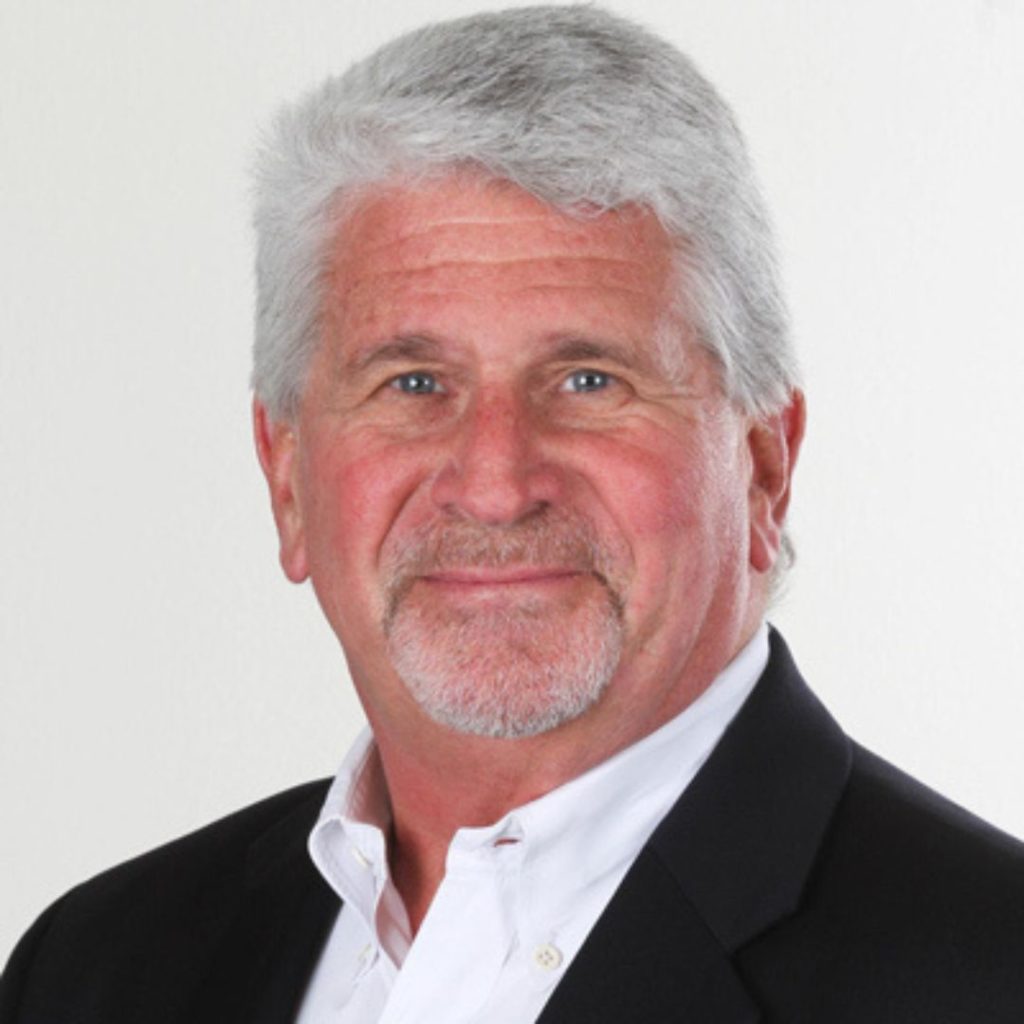
Wally Hauck is a seasoned business consultant with 20 years of experience helping leaders improve their management techniques. He specializes in teaching organizations how to have fearless conversations and optimize employee performance. Wally is the author of the book “Stop the Leadership Malpractice,” which explores innovative approaches to leadership and organizational improvement. His work focuses on challenging traditional management models and promoting a more collaborative, process-oriented approach to leadership.
Wally Hauck, author of Stop the Leadership Malpractice: How to Replace the Typical Performance Appraisal, realized that many employers and managers can actually kill their own business by not communicating properly with their employees. If you’d like to provide a better customer experience have self-managing employees, then you need to ask these three questions:
1. What process in the business isn’t working?
2. What is the first 15% of that process?
3. What should be done to improve that process?
He shares not only great business advice, but a few case studies and examples along the way.
Quotes:
“When an employee makes a mistake, you need to look beyond the obvious and identify the unseen factors at play—unless they’re doing it intentionally, which is highly unlikely.” – Wally Hauck
“The answers are with the people that are actually doing the work.” – Wally Hauck
“If you’re evaluating employees for mistakes they make, we’re performing what I call leadership malpractice.” – Wally Hauck
Takeaways:
01:15 Leadership success hinges on having fearless conversations that help employees improve performance without creating fear or blame.
11:39 Most workplace problems stem from broken processes, not employee incompetence, so leaders should investigate system issues first before criticizing workers.
14:08 Effective leadership means partnering with employees to identify and fix root causes, not controlling them through threats or punitive metrics.
16:31 Traditional performance management models that judge employees create distrust and encourage cheating, while collaborative process improvement builds stronger teams.
24:25 Organizations should focus on creating operational values centered on respect, agreement-keeping, and customer service to drive self-management.
Podcast: Play in new window | Download (Duration: 28:48 — 26.4MB) | Embed
Subscribe: Apple Podcasts | Spotify | Amazon Music | iHeartRadio | Podchaser | RSS
Transcript
Download transcript (.txt)Robert Plank Show, episode 215, stop leadership malpractice, discover the new business model, refine your process and get optimal employee performance with Wally Huck, Hey everyone, and welcome back to the Robert Plank show. We're talking about running an online business and working from home. My guest today is Wally Hawk, and we're going to talk about how to stop the leadership malpractice and how to how to basically be a better person and a better business owner. So Mr. Wally, how are things today?
Excellent. Thank you, Robert, thanks for having me on. I'm
glad that you're on. And so could you tell us about this new this new idea, this new thing you have for us, as far as like leadership malpractice, and you can tell us about what it is that you do.
Sure, I'm 20 years in business, helping leaders to think, behave and improve differently, and my main focus is how to have fearless, fearless conversations, or give fearless feedback to employees or people who work with you, so that you're conducting challenging conversations that can really make a difference. So when, when
we're talking about like these, these sort of fearless conversations, could you tell me what that means exactly?
Well, a lot of times, employees are behaving in certain ways that they need to change in order to serve customers, or they need to behave differently or focus differently in order to perform better. And when you're talking about small business, you cannot afford small business. Large business can't afford it either, but a small business especially cannot afford to have people that are not optimally performing. So in my experience, many, many leaders are excellent at the product or service that they provide and excellent at being visionaries, and they're not so good at giving feedback to employees such that employees change. So my focus is about helping leaders to have these fearless feedback conversations that enable them to really optimize their most important asset, which is their employees, the employees that deal with their customers, the employees that deal with each other. And so that's my main focus with this, stop the leadership malpractice.
And so So you're saying, Stop the leadership malpractice. And so are you saying that? So the malpractice that's happening is that people aren't having these fearless conversations. People aren't getting this feedback that they need to get their employees to be at their best state. Is that what's happening
that's correct malpractice is a non intentional error or incompetence that leaders perform, that actually make things worse. So when you think about malpractice, there's malpractice with doctors. They don't purposely hurt or harm patients. In fact, they take a COVID the Hippocratic Oath, you know, to not do any harm, but they do harm, and so they get sued, and that they call it malpractice. Same thing with attorneys, same thing with leaders. In my experience, leaders think they're doing the right thing, and they're actually making things worse, and they're unaware of it. So they're ignorant of the mistakes that they're making, and so my job is to help them to stop being ignorant, but to instead think, behave and improve differently, so that they are aware of what they could be doing to help their employees to be much more productive, much more effective than much more serving their customers,
awesome. So just to make sure that we all sort of understand this, Could you walk us through, like an example or a case study of some sort of time where, where, you know, you were helping some other business out and and they were kind of maybe guilty of this leadership malpractice, and then you went and changed their ways for them, sure.
I'll give you a couple. I'll give you one of my, my most famous stories, which is a story about myself. I love Dunkin Donuts, coffee. So for years, I would ask for a cream, no sugar, a large cream, no sugar, and I would stop. If I saw Dunkin Donuts, I'd stop and I'd get that coffee. If I had just an extra minute, I would get that coffee because I really enjoy their coffee. I still do today about 10% of the time. So I'd ask for a large cream of sugar, about 10% of the time. I'd get sugar which I can't drink. I often pick up the cup from the drive thru. I pay them, I drive away, I take a sip. I realize there's sugar. Now I I'm out two bucks. I can't drink the coffee. I'm really upset. This one place did it to me twice in one week, and I was so angry that I turned around. I called the client. I was on my way to a client. I called the client, said, I'm going to be a few minutes late. I was going to go back and yell at the clerk, yell at the manager. Don't you people listen? Are you stupid? Well, so that now I assert that what I'm doing there is I'm actually contributing to that dysfunction, and that's what leaders do. Because what I want leaders to do is to ask three questions, if something goes wrong, what process is not working? What's the first 15% of that process? And what can I do to improve the first 15% of that process? So in this example, let's just go back to this example, what process is not working when I get sugar in my coffee, because it's not about the clerk, it's not about the employee, it's about the process. That's the key thought, and that's that's something that we don't do, and when we don't do that. That's malpractice. So what process is not working there? It's my process of ordering. My process of ordering is saying the word sugar. Why am I saying sugar? Why am I saying cream? No sugar. I'm mentioning word sugar. That's a flaw in my process. By putting that flaw in my process, I'm encouraging the probability that I'm going to get sugar from that clerk. So I changed the process. I said, Wait a minute, if I change my process, this, this mistake is going to go away. So I changed it to just cream. That's five years ago. I've not gotten zero amount of sugar in five years by asking for a large just cream, by changing my process as a leader, I've changed the employee performance and because the typical leader, what the typical leader does, that's that's behaving with malpractice, is they are doing something unknowingly to cause more problems for employees and then blaming the employees. And that's what I want to stop. That's what I'm calling malpractice. That's what I want to stop. So by asking those three questions, what process is not working here? What's the first 15% of the process? Which is me mentioning sugar. How can I change that? I stopped mentioning sugar. I've changed everything, and now I can focus on something that's more important, like the customer,
and you're seeing and so and so. So that's pretty cool. So instead of just, you know, you you freaking out, you changed your way of like you were, you were delivering the same information, but you deliver what you had to say in a more in a way that worked better. And so, I mean, how does this line of thought sort of translate into if you have an employee of your own who's not doing something, or if you're not unhappy in that area, what can people do to sort of change things there?
You can ask those three questions, what process is not working? So I'll tell you another quick story. One of the clients that I worked with years ago, one of the first clients I worked with many years ago, was a laboratory, and the director of the laboratory said, you're going to have to really work with Ben, because Ben is really having problems with his employees. He's not able to give them feedback and and they avoid him at all costs. So I went to talk to Ben, I said, Ben, is it true that your employees that avoid you? Said, Yeah, you know, I find these mistakes that they're making. They were doing water testing. And I find these mistakes, so when I find the mistake, I go to them and say, you made a mistake. I want you to stop making these mistakes. And they, they get mad at me, they, they avoid me, they, they get frustrated. They don't they don't listen. And all I'm trying to do is just tell them that their mistakes. I said, well, so Ben, well, tell me what. So what's the first 15% of the process that the that your employees use in order to test water? And he said, Well, the first 15% is they go and they get glassware from the glassware cleaning department. I said, Well, let's take a walk down there and see what's down there. So we walked down and there were two machines, two washing machines that were just large dish washing machines. One was 25 years old, not well maintained, and the other was 40 years old, not well maintained. And I said, Well, you realize. Is that the glass cleaning is not, it's not happening properly here. Are you sure that you got clean glass Well, you know, we, we put, you know, a trained employee in there. So, well, how much training of that? Well, they've only been here a week because it was like to put the new employee in where the glass cleaning is because they get to meet everybody, and so you've got a new employee who's not really thoroughly trained. They have two pieces of old equipment. We actually did some testing. We found out that there was an invisible film on the inside of the glassware that was coming from both machines. Because the person was new. They weren't fully trained. The equipment wasn't well maintained, and so we changed all of that. We trained the person, we updated the equipment and the and guess what happened to the errors? The errors went away. So Ben giving feedback to the employees made absolutely no sense. It was in the process of the glass cleaning that really was the root cause, and it was invisible. And that's what I'm saying to leaders. When you see a mistake show up by an employee, you've got to look for the invisible things unless they're doing it on purpose, which is very unlikely, because if they're doing it on purpose, get rid of them. Okay, but it's very unlikely they're doing it on purpose. If they're not doing it on purpose, you've got to ask what process is not working? What's the first 15% and how do I improve that first 15% if your listeners do nothing else, but remember those three questions, it's going to help. Awesome
and and so and so, yeah, and that's great, because in that scenario, it was like, Well, no one really did anything wrong, right? Like, they didn't technically do anything wrong by putting the new person in the in that in the in the washing area. They didn't necessarily do anything wrong by having the out of date equipment. It was just that all those combinations of those little things that seem to, seem to add up to a lot. And so, like you said, the answer is to ask, what are the three questions to ask, or what process is not working? What's the first 15% of that process that's not working? And then how can you improve that process? And so is there a reason why it's 15% in particular, like, why not 10% Why not 20% of looking at the process that's not working. Yeah,
it's just a rule of thumb. It's just a rule of thumb. You could say 10% of course, in other words, the beginning part of a process. This is from a W Edwards Demings profound knowledge. W Edwards Deming is the father of quality, and he used to say it's the beginning part of the process that generates 85% of the results. So I use just as a rule of thumb. It's not a perfect rule of thumb. It's just rule of thumb the first 15% of the process. In this case, it was the glass cleaning. In my case, in the Dunkin Donuts, it was me using the word sugar, and that's where we need to look. We don't. Here's what here's what most leaders do, and here's what we've been taught. We've been taught that there's a problem with the employee and it's the employees fault that the mistake was made. So we evaluate employees. We do that most organizations still do it through the typical performance appraisal. It doesn't work. It creates fear. It shuts people down. It prevents new ideas and innovation. It damages trust. It damages the relationship. It causes employees to hide things. So instead of doing that, you look partner with the employee, to look at the process together. In fact, you train the employee to help look at the process even without you, so that they come up with ideas on their own. And that's the approach that we need to take. And if, as long as we're evaluating employees for mistakes they make, we're we're, we're performing what I call leadership malpractice, and that's what I want to stop. I
think we should all want to stop that and so, and one thing that you mentioned there that sort of interested me is that you said that at Sometimes you ask the employees themselves for possible solutions for solving that. So could you maybe tell us about that a little bit.
Sure that's where the answers are. The answers are with the people that are actually doing the work. And that's the other thing that we've been taught. We've been taught that somehow, as a leader, as a teacher, think about this in terms of school, this is where we first learn it. The teacher has all the answers. So the teacher has the answers. Your job as the student is to open up your head, let the teacher pour the knowledge into your head, and then they'll give you a test later, and you're supposed to spit it out onto the test, and if you're not able to spit. It out onto the test, effectively you don't get a good grade. So it that whole, that whole model, is the same model that organizations are using where the leader supposedly has all the knowledge. That's why they get promoted. A lot of, lot of people get promoted because they did a great job. And let's say, for example, as a salesman or a sales woman, they do a great job. So what do they do? They they promote them to sales manager. Well, why did they promote them? Because they had so much knowledge about how to do the job, so they could tell the sales people how to do their job, but that that's missing out on asking employees, what is it that we could do to improve process? What is it that's part of the first 15% of the process? How can we improve that first 15% How can we do it as a partnership, instead of having this relationship where the manager is supposed to know, be all knowing, all and all powerful and be the all powerful judge. Why not partner with the employee and work together to figure out what process is going to help serve the customer better and generate better results for the organization? We just, we just had this. We just had this big story. I don't know if you saw this story about Wells Fargo. Have you seen that? That story about Wells Fargo Bay, where
they're telling people to open up too many bank accounts? Well,
that's they set goals for the salespeople, and they paid them a commission, and they said, If you don't sell a certain number, if you sell a certain number or pay a commission, if you don't sell a certain number, we're going to fire you. So what did they do? They cheated and created accounts that customers did not want. And that's another example of leadership malpractice. Instead of looking at the process, asking the employees, what can we do to make things better? They They manipulated them and control them and force them to a situation where they had to cheat in order to keep their job. That's leadership, non practice all over the place.
And I can relate to that. And I think that the first time that this, this idea that sort of clicked for me was, you know, maybe 10 to 15 years ago, when when someone was explaining, like, as far as online businesses go, like the like the online help ticket system, and that there were some employees who, I think they were, they were program like computer programmers. And when customers came with bugs in the software, things needed to be fixed. The you know, the programmers would use that ticket system, but then that some of the bosses in that particular company started tracking the metric of which employees took longer to answer tickets and which employees had the most bugs. And that sort of led to a similar scenario that you're explaining, where a lot of the employees would then go around the ticket system, they would, you know, get a request coming in, and they close it really quickly because they wanted to, you know, they wanted to keep their jobs. They didn't want to have that low score, and when some some customer had a bug with the software, some of the programmers began cheating, sort of like you explained there, where some of the programmers would say, Well, I don't want to get this ding on my rating, so how about we mark this ticket that it's okay, but I'm gonna sort of help you out outside of the ticket, and, you know, defeating the point of that whole system that was in place. So I can completely relate to some of these scenarios. You're explaining where, where it's like, the they're like, going after the wrong metric, and then it's kind of undoing what the system was supposed to do in the first place, right? That's
exactly correct. That's another that's another great example of leadership malpractice. Here's another one. The Veterans Administration, veterans are waiting in line for months to see doctors actually dying. I don't know how many have died, but the story was a couple years ago that at least they pointed to at least 40 veterans that died just waiting for medical services. And so there was a lot of pressure on the Veterans Administration to change that. So what did they do? They incentivize the people to reduce the backlog. What did they do to reduce the backlog? They cheated by doing the easiest ones first, not the most difficult ones. So they reduced the backlog. But still, people die. So, I mean, not every organization has a situation where customers are actually going to die if there's leadership malpractice, but that is one,
that's one area where it's serious stuff, right? Like, if it's not done right, then that's really not good. And so, so. So, you know, we've mentioned some of the these, these things so far where, you know, some of these, these businesses or these setups just are, are not working well. And you have this book called stop the leadership malpractice. And I'm sort of flipping through it right now, and it's organized into parts for, like, the claim, the causation, the verdict and the settlement. So you could, you tell us a little bit about this book and like, what's in it, and what kind of things that people can get from it?
Yeah, there's really four parts to the book. The claim is some of the things that we've already talked about Robert where we've been taught to think the wrong things, and it causes all kinds of injuries. So the examples that we've used already are about the injuries that are caused by our our flawed way of thinking and and then it talks about, well, what is the real root cause of that? And the real root causes is to look at a different way of thinking about how an organization operates and how an organization can improve, and and then the the next part is, well, here's here's an answer to that on how we can address it. And then finally, I have a replacement performance appraisal process, which is the fourth part of the book. So the real replacement is something I call, or the real answer is something I call, the values and system model. Values and system model is way to think about organizations, small or large, on how you want to manage, not manage people. You want to lead people and manage process. One of the lead people and manage process. We talk about managing people, but managing people is the old paradigm, managing people. Do you know where managing people came from? That whole thought it came from slavery. The slave owners in the South had to as they grew they had to hire managers in order to control the slaves, and so that's the model that we have. And I could make the case that that's the model that we have in many organizations, but somehow managers know what to do. They tell the employees what to do, and if they don't do it, they get some kind of punishment. Okay, they're not whipping anybody, but they're threatening to fire them like they did in Wells Fargo. It's exactly the same model. It's just without the violence, okay? It's just mental mental anguish, not physical pain. So the replacement for that in my research is something called the values and system model. The values have to do with how we want to behave with each other and the system part of the model is about how we want to improve in the values portion for small businesses, what I would recommend. And anybody that wants to contact me, I'd be happy to send them a free copy of a set of operational values. It's behavior that you want to expect from a leader and that leaders should expect from their employees. For example, you always want to keep your agreements as a leader. If you make an agreement and you break it without telling anyone and without replacing it, you're going to damage trust and performance in the organization. You want to always be respectful, regardless of whether or not you have a conflict, so there's a description about how to be respectful, and then you always want to focus on your customer. When you have employees, they may or may not be interacting with external customers, but they always have internal customers. They don't have external customers. So how do you want to serve? You've got to best serve your customer and give that customer a great experience. A whole set of behaviors for that. So that's the value side, it's how we behave. And then in the system side, it's looking for group causes. It's looking it's asking those three questions, what process is not working? What's the first 50% of the and how can I improve that percentage? So in the values and system model, it gives you a paradigm. It gives you a philosophy about how you can approach problems, and that's what I did with the Dunkin Donuts. I approached the problem differently. I didn't blame the I wanted to blame the car, because that's what I've been taught, but I realized that that's not the root cause. Root cause is in my process, and I found it and I fixed it, and the clerk's behavior changed, and that's and same thing with Ben in the laboratory. We found the root cause. And guess what happened? The relationships between Ben and the employees, it got so much better because the process changed. So that's the system part of the values and system model, and that's the replacement that I'm recommending. And that's the one I use with my clients for 20 years. Awesome.
So just to make sure that that we're all on the same page here, I mean, who exactly is, is this book for? Is it if they for people who, if they think that they're not communicating well with their employees, or if they think that they have a leadership problem, or if you think that their systems are broken, or that they're not using systems, or is it for everybody? I mean, who should I mean, who, who is in who should look at their situation and say, Okay, I kind of need this book. And who says I really need this book, like, who really could benefit from this?
That's a great question. Thanks for that question. Well, in I'm biased on it. I think everybody should have it. Okay? So on the other hand, if you have employees and you want to improve how they behave, and you want to improve how they perform, and you want to do it through trust and respect, this book is for you. If you want to do it by controlling them, this book is not for you. That's the old that's the model that that we're in the midst of right now, that is is not working optimally, that is causing all kinds of unintended consequences, like Wells Fargo. But if you want a new way of thinking and discussing and conversing with your employees, such that they are self managing. See, that's where you make more money. What if everybody were self managing at work and in a way that was optimal trust and optimal learning, that if you want that, that this book is greater
awesome. So slavery is the old, outdated a way that doesn't work, and trust and respect is the new way. And so Doctor Wally work people go to grab the book and to get that that free set of operational values you mentioned, and to to get anything else you have out there,
sure, go to my website, which is Wally hop com, W, A, l, l, y, H, A, U, C, k.com, and they can, they go to that website, they can click on the link, contact me, ask for the values, and I'd be happy to send them right out to them. No charge. Awesome.
And then to get the book itself. Is that also available from the website? Or do they have to go to go to Amazon for that? It's
on the website, it's also at Amazon, and the title of the book is, stop the leadership malpractice. And they can do a search on that title. Or they can do a search on my website, Wally out.com, or they can go to Amazon and type in Wally out, and the books will come up
awesome. So, so lots of it all goes to the same place, and lots of ways to get that so. Wally huck.com, W, H, L, L, y, H, A, U, C, k.com, and thanks so much, Wally for hopping on the show and telling us what you had to tell us today. Robert, thanks so
much for the time. Appreciate it. I appreciate you.
Who else wants to control all their WordPress websites from one convenient location. You can do this within the next few minutes, and it's with website remote. Get your access right now at website remote.com/trial. Website remote allows you to see all your sites in one place. It updates all your sites, and it allows you to log into your sites without typing. Don't leave WordPress updates up to chance. Stop writing down passwords dealing with scraps of paper or spreadsheets. Use the website remote tool to manage and update your sites. Go to website remote.com/trial, and take control of WordPress again. And have a great day. You